TLP:CLEAR · Disclosure is not limited.
Sudan Conflict: Drone Harm, Contested Fronts and Diplomatic Strains
Time window: Last 7 days · Audience: General analyst · Type: Situation report · DTG: 2026-11-24 22:10Z · Overall confidence: HIGH
BLUF
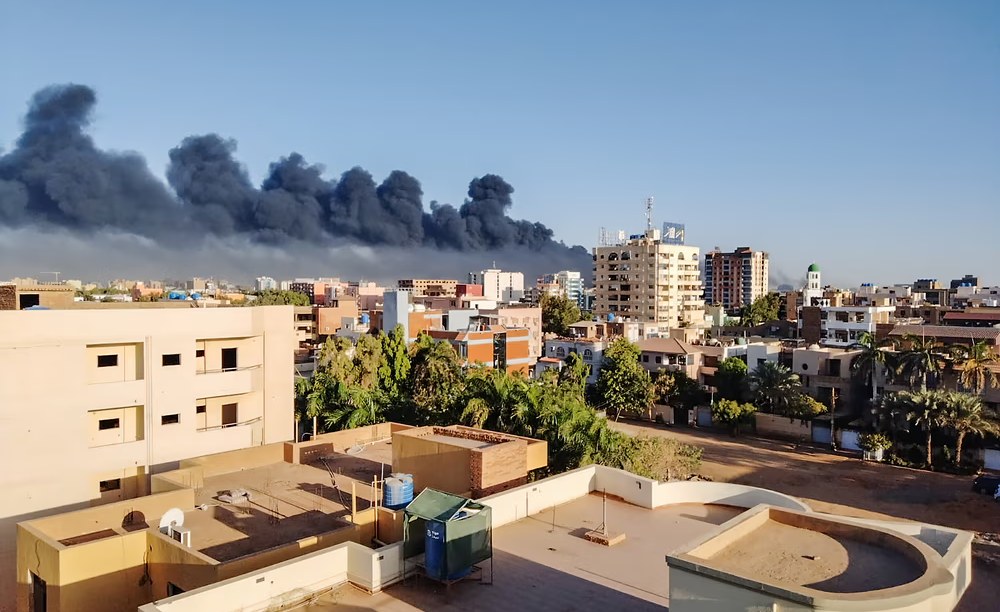
Very likely, armed drone strikes will remain a leading source of civilian harm in Sudan. Reports say drone attacks in Khartoum on 22 November killed at least four people and damaged UN premises, but they do not establish who operated the drones or verify Sudan’s allegation that they originated in Ethiopia. SAF gains in West Kordofan and a new Ethiopian dialogue proposal have not yet changed the conflict’s high humanitarian costs or produced a pause in fighting.
Executive summary
Between 17 and 24 November, reporting documented civilian harm from drone strikes, further displacement in West Kordofan and new allegations of launches from Ethiopian territory. Reports of air-defence interceptions on 22 November sit alongside reports of deaths and damage to a UN building, so the number of drones intercepted remains unclear. The SAF recently retook el-Khuwei, while more than 5,200 people fled Abu Zabad and nearby villages. Ethiopia proposed a Sudanese dialogue on 24 November, but announced neither a start date nor participation arrangements. A reported defection by RSF counter-intelligence chief Al-Tayeb Jabara adds to earlier defections, though its operational effect is unknown.
Change from previous assessment
Since the prior brief, the assessment that drone strikes are a leading source of civilian harm and that humanitarian needs remain acute is unchanged. New reporting adds SAF gains around el-Khuwei, more than 5,200 people fleeing Abu Zabad, and the reported defection of RSF counter-intelligence chief Al-Tayeb Jabara. Ethiopia’s 24 November dialogue proposal adds a diplomatic opening, but its lack of a date or participation mechanism does not yet alter the assessment that a negotiated pause is unlikely. Sudan’s allegations of Ethiopian drone launches remain unverified, so the low-confidence assessment of direct Sudan-Ethiopia military escalation remains unchanged. The El Fasher burial allegation is now framed narrowly: the current reporting alleges bodies were buried east of the airport but gives no count and does not verify the earlier claim of thousands. No settled prior forecast outcomes were supplied for scoring.
Key judgments
- Very likely, armed drone strikes will remain a leading cause of civilian harm in Sudan over the next 1-3 months. The UN Human Rights Office reported more than 1,630 civilian deaths from drone strikes between January and October 2026. Amnesty International separately investigated nine RSF drone strikes around El Obeid that killed 37 civilians and injured 10. Confidence is high because UN reporting and Amnesty’s separate investigation support the broader trend, although neither establishes responsibility for the 22 November Khartoum attacks. (Confidence: high · ASSESSED)
- I&W: A new UN Human Rights Office update attributes civilian deaths to drone strikes in Sudan. (0-3 months)
- I&W: The next two UN updates record fewer drone-attributed civilian deaths than deaths from other causes. (1-3 months)
- Unlikely, Sudan and Ethiopia will exchange direct military strikes over the next 1-3 months. Sudanese officials have alleged repeated drone launches from Ethiopian territory, including Bahir Dar, while Ethiopia denies supporting the RSF. Abiy Ahmed’s proposal to host Sudanese dialogue offers a diplomatic opening, but the launch allegations remain unverified. Confidence is low because the launch claims in the supplied reporting come from Sudanese officials and local reporting, with no independent verification. (Confidence: low · ASSESSED)
- I&W: Sudan or Ethiopia acknowledges a strike by its regular forces across the border, or independent evidence verifies a drone launch in Ethiopia linked to an attack in Sudan. (0-3 months)
- I&W: No verified cross-border strike or independently verified launch site emerges. (0-3 months)
- Likely, fighting and displacement will persist in West Kordofan and Blue Nile over the next 1-3 months. The SAF recently retook el-Khuwei, the IOM reported that more than 5,200 people fled Abu Zabad and nearby villages, and the RSF and SPLM-N claimed five captures in Blue Nile State. Confidence is medium: the SAF advance and displacement are reported separately, while the Blue Nile capture claim is not independently corroborated in the supplied reporting. (Confidence: medium · ASSESSED)
- I&W: The IOM reports new displacement from Abu Zabad or nearby West Kordofan communities. (0-14 days)
- I&W: Independent reporting confirms a change in control of a named West Kordofan or Blue Nile location and identifies the controlling force. (1-3 months)
- Likely, the SAF will use Al-Tayeb Jabara’s reported defection to encourage further RSF defections, but the reporting does not establish a change in battlefield capability. Jabara’s defection rests on one local-media account; separate NGO reporting describes other commanders and fighters joining the SAF. Confidence is medium because the wider trend has more than one reported instance, while Jabara’s status and any unit transfer remain unconfirmed. (Confidence: medium · ASSESSED)
- I&W: The SAF publicly places Jabara or another named RSF defector in a formal recruitment or regularisation programme. (0-3 months)
- I&W: Jabara’s defection is retracted or contradicted, with no further named RSF commanders or units reported to have joined the SAF. (0-3 months)
- Very likely, humanitarian pressure in Sudan will remain acute over the next 1-3 months. The IOM reported more than 5,200 new displacements from Abu Zabad and nearby villages; UN reporting attributed 29 strikes on power and fuel facilities to the RSF between 20 October and 4 November, disrupting health care and access to clean water. The UN Human Rights Office also warned that outages and fuel shortages put dialysis and surgery at risk. Confidence is high because the displacement, infrastructure damage and health-service effects are reported through separate UN and IOM-related reporting. (Confidence: high · ASSESSED)
- I&W: The IOM reports further displacement from West Kordofan, or UN reporting records additional attacks on power and fuel facilities. (0-3 months)
- I&W: The IOM reports sustained returns to affected communities and UN reporting confirms restored power and fuel services there. (1-3 months)
- Unlikely, Ethiopia’s 24 November initiative will produce a negotiated pause in fighting within the next 1-3 months. Abiy Ahmed proposed an inclusive dialogue and a national unity government, but set no start date or participation mechanism. A UN official recently said the Sudanese parties showed no credible commitment to compromise or a negotiated pause. Confidence is medium because the initiative and the UN assessment are reported, but neither establishes how the SAF and RSF will respond. (Confidence: medium · ASSESSED)
- I&W: Ethiopia announces a start date and participation mechanism, and both the SAF and RSF confirm attendance. (0-1 month)
- I&W: No date or participation mechanism is announced, and UN reporting continues to find no credible commitment by the Sudanese parties to a pause. (0-1 month)
- UN and NGO reporting supports concern about arms transfers to the RSF, but the UAE’s role remains contested in the supplied reporting. A UN panel described allegations of transfers through Um Jaras as credible, and Amnesty International has documented UAE-supplied weapons and drones; the UAE denies providing military support to any party. Confidence is medium because the panel finding and NGO reporting support the concern, while the official denial and lack of a specific transfer chain in the current claims leave important details unresolved. (Confidence: medium · REPORTED)
- I&W: A new UN expert finding or independently documented shipment record traces a named transfer from a UAE origin to the RSF. (1-3 months)
- I&W: Independent verification of a cited shipment shows it was not transferred to the RSF. (1-3 months)
- There is a low-confidence allegation that civilian bodies, including women and children, were buried east of El Fasher airport. The claim is attributed to Ammar Mohamed Zein Rabah in social-media material and does not establish the number of bodies, the date or the circumstances. It does not substantiate the earlier allegation that thousands were buried there. Confidence is low because the supplied reporting provides no independent verification. (Confidence: low · REPORTED)
- I&W: Geolocated imagery or forensic access independently confirms burial activity east of El Fasher airport. (0-3 months)
- I&W: Independent inspection or geolocated imagery contradicts the reported location or finds no evidence of burial activity there. (0-3 months)
Outlook & scenarios
Continued attrition and civilian harm (60%)
Likely, the SAF and RSF continue fighting without a negotiated pause. Drone attacks remain a major source of civilian harm, and displacement continues around West Kordofan as the SAF and RSF contest territory.
Ethiopian dialogue begins without a ceasefire (30%)
Unlikely, Ethiopia sets a date and convenes initial Sudanese talks, but the SAF and RSF do not agree to a sustained pause. Sudan’s allegations against Ethiopia continue to complicate the initiative.
Cross-border escalation (10%)
Very unlikely, a verified drone launch from Ethiopian territory or a direct Sudanese-Ethiopian military exchange turns the current diplomatic dispute into open interstate confrontation. This is a low-probability, high-impact wildcard; the supplied reporting does not verify the launch allegations.
Recommendations
- Track the 22 November Khartoum attacks by separating three questions in reporting: who operated the drones, where they launched, and how many Sudanese air defences intercepted. Do not present RSF responsibility or an Ethiopian launch point as established.
- Prioritise independent monitoring of el-Khuwei, Abu Zabad and the five areas the RSF and SPLM-N claim to have captured in Blue Nile. Record verified control changes separately from party claims and link them to IOM displacement reporting.
- Seek confirmation of Jabara’s defection and any personnel or equipment that followed him. Track SAF regularisation or recruitment measures while preserving separate accountability checks for commanders accused of abuses.
- For the Ethiopia initiative, monitor publication of a start date, participation mechanism and named SAF and RSF attendees. Treat a proposal without those details as a diplomatic signal, not evidence of a coming ceasefire.
- Maintain separate evidentiary tracks for arms-transfer allegations and official denials. Give priority to UN expert findings and independently documented shipment evidence before attributing a specific transfer to a state.
- Do not repeat the El Fasher burial allegation as a casualty estimate. Seek geolocated imagery or forensic access before describing the site as verified or assigning a body count.
Confidence & uncertainty
Overall confidence is high because reporting on the 22 November civilian deaths and damage to UN premises is corroborated across local, major-media and NGO accounts, while the broader drone-harm pattern is supported by UN Human Rights Office figures and a separate Amnesty International investigation. IOM and UN reporting also support the recent displacement and infrastructure impacts. Confidence is lower on responsibility for the Khartoum attacks, Sudan’s allegations about Ethiopian launch sites, the scale of recent defections and the El Fasher burial claim.
Intelligence gaps
- [EEI 1.1 · PARTIAL] Observed concentrations and movement of armed units (size estimates, unit identifiers if visible) within X km of named towns/roads/airfields (e.g., El Fasher, Geneina, Nyala, Khartoum neighborhoods) including timestamps and direction of movement. Recommended collection: imagery/satellite
- [EEI 1.3 · PARTIAL] Reports or intercepts of orders, operational directives or public statements from RSF/SAF commanders indicating planned offensives, ceasefire acceptance/rejection, defensive postures or orders to withdraw from named locations. Recommended collection: signals/communications intercepts
- [EEI 1.4 · PARTIAL] Status of critical infrastructure and lines of communication: control or denial of named bridges, main highways (identify route numbers), airfields, fuel depots and telecommunication hubs and any reported sabotage/blockage incidents. Recommended collection: human intelligence/field reporting
- [EEI 2.1 · PARTIAL] Counts and locations of newly displaced persons arriving at formal sites, informal camps, border crossings or collective centers (daily/weekly arrivals, site coordinates), including demographics (women, children, elderly) where available. Recommended collection: humanitarian/UN OCHA reports
- [EEI 2.2 · UNCOVERED] Access impediments to humanitarian assistance: reported attacks on, blockages of, or denial of passage for named humanitarian convoys (dates, GPS locations, responsible actor if known) and closure status of specific routes. Recommended collection: human intelligence/field reporting
- [EEI 2.3 · PARTIAL] Functional status of medical infrastructure in named locations: number of operational hospitals/clinics, reported shortages of key medicines/blood, and hospital casualty/occupancy figures for the last 72 hours. Recommended collection: medical/health cluster reporting
- [EEI 3.1 · PARTIAL] Detection of flights, ships or overland convoys delivering military materiel or foreign personnel to named airfields, ports or border crossings (flight/IMO numbers, manifests if available, timestamps, route origin/destination). Recommended collection: air-traffic / maritime / border customs
- [EEI 3.2 · PARTIAL] Imagery or on-the-ground confirmation of foreign military personnel or private military contractor bases/forward operating elements at specified coordinates or compounds, including vehicle/weapon types observed. Recommended collection: imagery/satellite
- [EEI 3.3 · PARTIAL] Financial and sanctions-relevant indicators: atypical large transfers, use of designated front companies, or shipments routed through third states linked to procurement of weapons or fuel for RSF or SAF (transaction dates, parties, amounts where obtainable). Recommended collection: financial intelligence
Red cell review: CONCUR WITH COMMENT
TLP:CLEAR