TLP:CLEAR · Disclosure is not limited.
Sudan Conflict: Drone Strikes, Abyei Fallout and Famine Risk
Time window: Last 7 days · Audience: General analyst · Type: Situation report · DTG: 2026-10-23 22:10Z · Overall confidence: HIGH
BLUF
Drone attacks by the SAF and RSF continue to kill civilians, while the strike on Amiet Market in Abyei has caused a reported death toll above 150 and remains unattributed. Humanitarian conditions are likely to worsen: 19.5 million people face acute food insecurity, and aid providers report ration cuts and reduced access.
Executive summary
Reporting through 23 October describes at least 306 people killed by drone attacks during the first three weeks of October, alongside continued SAF airstrikes in Darfur and Kordofan. A drone strike at Amiet Market in Abyei reportedly killed more than 150 people; Abyei officials blamed the Sudanese army, while Sudan’s government denied involvement. Separately, 28 European countries, Australia, Canada, the US and the European Commission warned of famine risk. We assess that civilian exposure and humanitarian needs are likely to remain severe over the next 1 to 3 months. The Geneva consultations did not include the SAF or RSF, leaving no clear indication of a near-term ceasefire.
Change from previous assessment
Since the 22 October brief, OHCHR reporting adds a count of at least 306 drone-attack deaths during the first three weeks of October, while new reporting details the Amiet Market strike and preserves a sharp attribution dispute between Abyei officials and Sudan’s government. The famine assessment is more specific: 19.5 million people face acute food insecurity, 5 million face emergency levels, and the IPC’s 14 affected areas are expected to double. New BBC and Amnesty reporting adds detail on attacks against El Fasher’s health system and continuing detention and aid restrictions. The ceasefire assessment is unchanged. The prior border warning is supplemented by a report of a strike in Chad’s Wadi-Fira Province, but its operator remains unknown.
Key judgments
- Drone strikes are likely to remain a direct civilian hazard across Sudan over the next 1 to 3 months. OHCHR documented at least 306 people killed by drone attacks during the first three weeks of October and attributed attacks to both the SAF and RSF, including strikes on homes, markets, hospitals, displacement sites, power stations and water sources. The UN separately reported more than 1,100 civilians killed by drone strikes during the first half of 2026. These figures cover different periods and should not be combined; incident-level casualty totals remain unevenly verified. (Confidence: medium · ASSESSED)
- I&W: Confirm: OHCHR’s next Sudan update documents additional drone casualties in Darfur, Kordofan, Blue Nile or Khartoum. (0-14 days)
- I&W: Break: the SAF and RSF announce and sustain a monitored halt to drone operations for 14 consecutive days, with no civilian drone deaths reported during that period. (1-3 months)
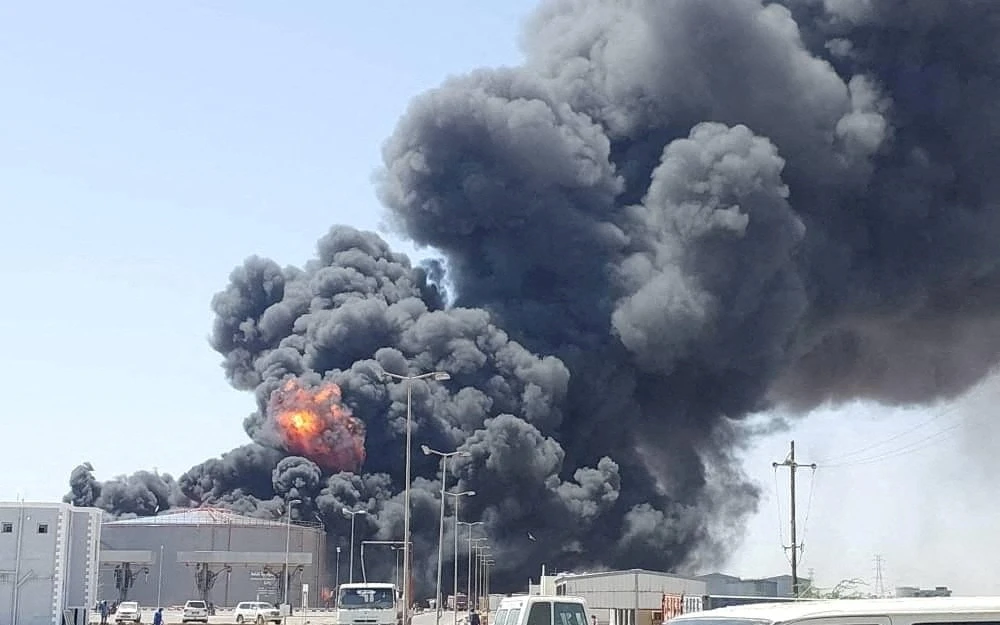
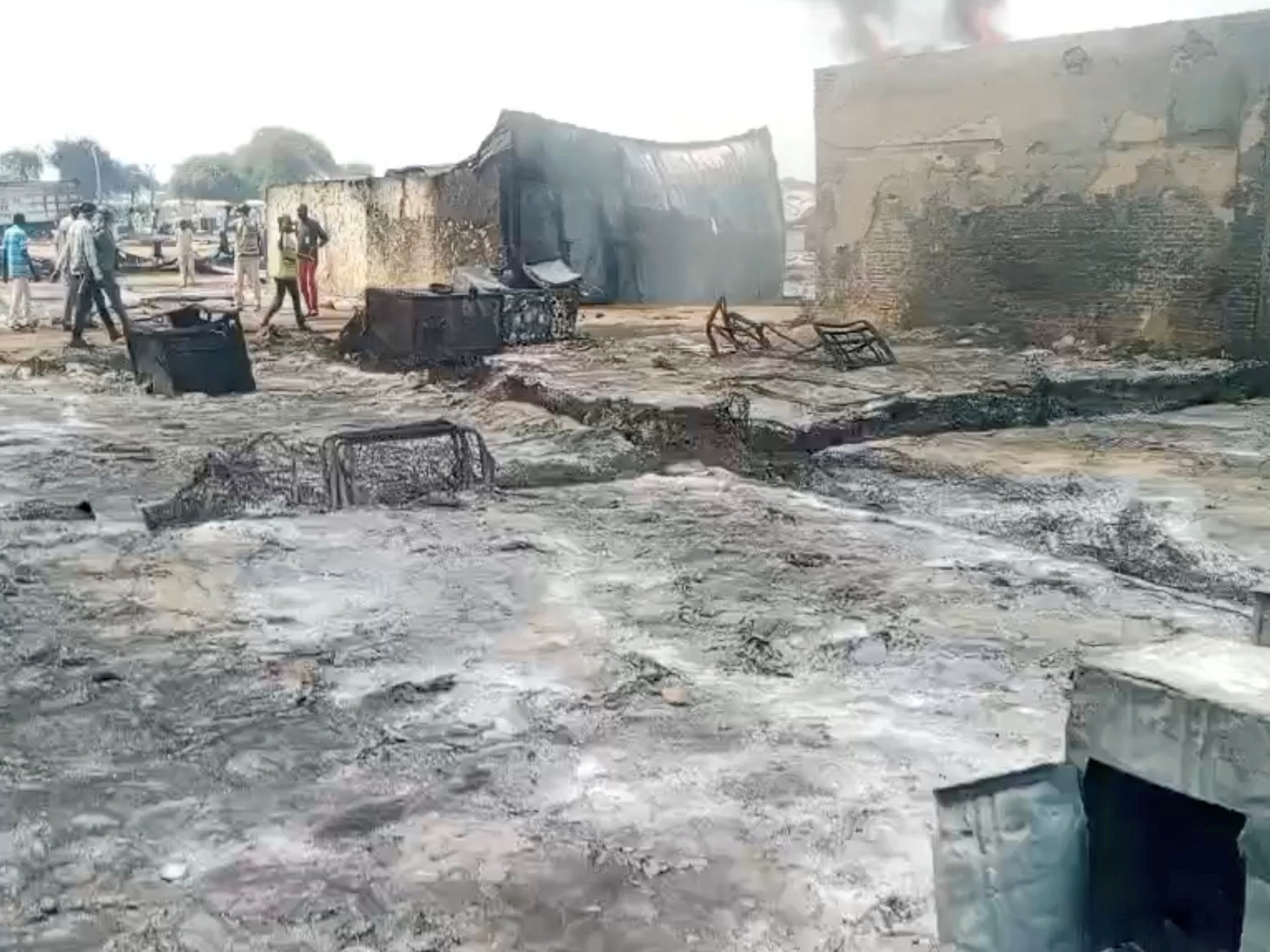
- The Amiet Market drone strike in Abyei likely killed more than 150 people, but responsibility remains unresolved. Reports place the strike around 19 October, with Abyei district authorities reporting 153 deaths. Abyei caretaker information minister Yohana Akol Ngor blamed the Sudanese army; Sudan’s government denied any connection. Reporting that Amiet Market formed part of a fuel network serving the RSF, and that a fuel depot was struck, does not establish the operator or intended target. The conflicting attributions and reliance on local accounts leave this judgment at low confidence. (Confidence: low · REPORTED)
- I&W: Confirm resolution of attribution: an investigation by Sudanese or Abyei authorities, or UNISFA, identifies the operator and publishes supporting evidence. (1-3 months)
- I&W: Break the reported casualty assessment: an independently supported revised count places deaths below 150. (0-14 days)
- Humanitarian conditions are likely to worsen over the next 1 to 3 months, especially in North Darfur, South Darfur and South Kordofan. A joint ministerial statement put acute food insecurity at 19.5 million people, including 5 million facing emergency levels, and warned of famine risk. The IPC’s 14 food-insecure areas are expected to double. The World Food Programme reports that it cannot reach all 5 million people it is targeting and has cut rations; Emergency Response Rooms reported closing 70 per cent of communal kitchens. Drought and unusually low rainfall add pressure. Officials also warned that the projected 825,000 children with severe acute malnutrition is not a ceiling absent immediate action. (Confidence: medium · ASSESSED)
- I&W: Confirm: the next IPC analysis expands the 14 food-insecure areas or identifies additional areas at famine risk. (1-3 months)
- I&W: Break: the World Food Programme reports full access to its 5 million priority caseload and restored rations. (1-3 months)
- Civilians in El Fasher are likely to remain exposed to detention, torture and restricted humanitarian aid over the next 1 to 3 months. Amnesty International reports continuing abuses one year after the RSF captured the city and says the RSF detained 17 of 19 residents it interviewed. The BBC documented at least 43 attacks on health sites between May 2024 and October 2025, and reported 55 medical workers killed, 120 injured and 10 disappeared or abducted between April 2023 and October 2025. The Amnesty interview sample is small, so the prevalence of current abuses is less certain than the historical evidence of attacks on healthcare. (Confidence: medium · ASSESSED)
- I&W: Confirm: Amnesty International or UN reporting documents new detentions or torture cases in El Fasher, or continued restrictions on aid delivery. (0-14 days)
- I&W: Break: monitors report verified releases of detained civilians alongside renewed humanitarian access into El Fasher. (1-3 months)
- A comprehensive SAF-RSF ceasefire is unlikely within the next month. The 21 October Geneva consultation involved international representatives but neither the Sudanese government nor the RSF; participants called for de-escalation and a humanitarian truce without securing a commitment from either belligerent. The absence of the parties is a stronger indicator of limited immediate progress than the mediators’ stated objectives. (Confidence: medium · ASSESSED)
- I&W: Confirm: no direct SAF-RSF meeting or signed ceasefire is announced by 23 November. (0-1 month)
- I&W: Break: the SAF and RSF sign and publicly acknowledge a monitored nationwide ceasefire. (0-1 month)
- There is a roughly even chance of another drone incident affecting the Sudan-Chad border area in the next 1 to 3 months. A reported 22 October strike in Chad’s Wadi-Fira Province killed four people and injured at least 14, but the perpetrator and launch point are unknown. The conflict has repeatedly spilled over into Chad, although the recent incident is supported here by a single report and does not establish who carried it out. (Confidence: low · ASSESSED)
- I&W: Confirm: Chadian authorities report another drone strike in Wadi-Fira or a neighbouring border area. (1-3 months)
- I&W: Break: Chad publishes investigation findings that identify a non-Sudan-related origin for the 22 October strike and reports no further border incidents. (1-3 months)
Outlook & scenarios
Continued drone attrition and worsening humanitarian conditions (65%)
Over the next 1 to 3 months, the SAF sustains air operations in Darfur and Kordofan while the RSF continues drone attacks against SAF-held centres. Civilian casualties remain high, and drought, restricted aid access and reduced food assistance deepen pressure in Darfur and Kordofan.
Limited humanitarian pause without a political settlement (20%)
Geneva participants secure a limited agreement on humanitarian access or a short pause in fighting, without a comprehensive SAF-RSF ceasefire. Aid routes into Darfur improve temporarily, but neither side ends military operations.
Further cross-border tension around Abyei or Chad (10%)
Abyei remains a focus of Sudan-South Sudan diplomatic tension after the Amiet Market strike, or another drone incident occurs near Chad’s border with Sudan. The strike’s unresolved attribution impedes efforts to contain the dispute.
Wildcard: a border strike triggers a wider regional crisis (5%)
A new strike in Abyei or Chad is credibly attributed to a Sudanese belligerent and prompts a direct security response by a neighbouring government. This low-probability, high-impact outcome would widen the conflict beyond Sudan’s current battle areas.
Recommendations
- Keep the Amiet Market casualty count and attribution separate in reporting. Track the Sudanese government denial, Yohana Akol Ngor’s accusation and any investigation findings as competing accounts until independent evidence resolves them.
- Prioritise updates from OHCHR on drone incidents in Darfur, Kordofan, Blue Nile and Khartoum. Record each incident’s date, location, attributed operator and casualty count separately; do not combine totals covering different reporting periods.
- Track the next IPC assessment alongside World Food Programme access and ration reporting. Use the 14-area baseline and 19.5 million food-insecurity estimate to identify whether needs are expanding or assistance is reaching more people.
- Monitor whether the SAF and RSF attend direct follow-on talks, sign a truce or agree to specific humanitarian access arrangements, including air access into Darfur.
- Seek updates on Chad’s investigation of the Wadi-Fira strike and on any further incidents along the Sudan-Chad border. Keep operator attribution open unless authorities publish corroborating evidence.
Confidence & uncertainty
Overall confidence is high for the broad pattern because UN and OHCHR reporting, IPC warnings, official ministerial statements, World Food Programme reporting, and separate BBC and Amnesty investigations converge on civilian harm and severe humanitarian need. Confidence is lower for individual strike attributions and some casualty totals. In particular, accounts of the Amiet Market strike conflict over responsibility, and the Wadi-Fira report is single-source.
Alternative analysis (red cell)
The available evidence supports concern about a cross-border security risk, but not a roughly even chance of another drone incident within one to three months. One A3-reported event (ab62fb99-ee5f-4421-8a2e-8139b3af1b27) and a general account of the war's origins (ca8abeba-7b4e-4bb0-a07c-da0ff0988e47) do not establish recurrence, attribution, or a meaningful base rate. The probability is therefore indeterminate on the present record.
Intelligence gaps
- [EEI 1.1 · PARTIAL] Observed concentrations and movement of armed units (size estimates, unit identifiers if visible) within X km of named towns/roads/airfields (e.g., El Fasher, Geneina, Nyala, Khartoum neighborhoods) including timestamps and direction of movement. Recommended collection: imagery/satellite
- [EEI 1.2 · PARTIAL] Changes in employment of heavy weapons and systems: documented use or emplacement of artillery, multiple-launch rocket systems, tanks, combat helicopters, and airstrikes at specific coordinates and times. Recommended collection: open-source/media
- [EEI 1.3 · PARTIAL] Reports or intercepts of orders, operational directives or public statements from RSF/SAF commanders indicating planned offensives, ceasefire acceptance/rejection, defensive postures or orders to withdraw from named locations. Recommended collection: signals/communications intercepts
- [EEI 1.4 · PARTIAL] Status of critical infrastructure and lines of communication: control or denial of named bridges, main highways (identify route numbers), airfields, fuel depots and telecommunication hubs and any reported sabotage/blockage incidents. Recommended collection: human intelligence/field reporting
- [EEI 2.1 · PARTIAL] Counts and locations of newly displaced persons arriving at formal sites, informal camps, border crossings or collective centers (daily/weekly arrivals, site coordinates), including demographics (women, children, elderly) where available. Recommended collection: humanitarian/UN OCHA reports
- [EEI 2.2 · PARTIAL] Access impediments to humanitarian assistance: reported attacks on, blockages of, or denial of passage for named humanitarian convoys (dates, GPS locations, responsible actor if known) and closure status of specific routes. Recommended collection: human intelligence/field reporting
- [EEI 2.3 · PARTIAL] Functional status of medical infrastructure in named locations: number of operational hospitals/clinics, reported shortages of key medicines/blood, and hospital casualty/occupancy figures for the last 72 hours. Recommended collection: medical/health cluster reporting
- [EEI 3.1 · PARTIAL] Detection of flights, ships or overland convoys delivering military materiel or foreign personnel to named airfields, ports or border crossings (flight/IMO numbers, manifests if available, timestamps, route origin/destination). Recommended collection: air-traffic / maritime / border customs
- [EEI 3.2 · UNCOVERED] Imagery or on-the-ground confirmation of foreign military personnel or private military contractor bases/forward operating elements at specified coordinates or compounds, including vehicle/weapon types observed. Recommended collection: imagery/satellite
Red cell review: PARTIAL DISSENT
TLP:CLEAR