TLP:CLEAR · Disclosure is not limited.
Sudan Conflict: Drone War, External Support and Humanitarian Pressure
Time window: Last 7 days · Audience: General analyst · Type: Situation report · DTG: 2026-09-10 22:04Z · Overall confidence: HIGH
BLUF
SAF and RSF drone attacks on civilian sites and infrastructure are very likely to continue over the next 30 days, with risk extending across Darfur, Kordofan and other areas beyond established front lines. Foreign support networks are likely to sustain both sides' strike capacity, while displacement, food insecurity and damage to health infrastructure worsen.
Executive summary
The conflict remains divided between RSF control of much of Darfur and SAF control of eastern Sudan, Khartoum and other central areas. Recent reporting documents RSF drone attacks in El Obeid and Kalogie, SAF attacks on Ad-Da'ein Teaching Hospital, and foreign-supplied drones used by both sides. UN reporting also identifies recruitment, weapons and logistics networks supporting the RSF, including up to 2,000 former Colombian military contractors. More than six million people are internally displaced, 4.5 million have crossed Sudan's borders, and 19.5 million face crisis-level or worse food insecurity. Diplomatic and accountability pressure is increasing, but a nationwide arms embargo remains unlikely in the near term.
Change from previous assessment
Since the 9 September brief, there is no material change to the core assessment. The judgments that the SAF-RSF conflict, long-range drone threat, foreign support networks, humanitarian deterioration and diplomatic pressure will persist are retained. Confidence remains high overall, while the specific attribution of UAE-linked supply activity and the competing displacement totals continue to warrant medium-confidence treatment.
Key judgments
- SAF and RSF drone attacks on civilian sites and infrastructure are very likely to continue over the next 30 days, extending risk beyond established front lines. Recent reporting attributes repeated RSF drone attacks on water and energy infrastructure in El Obeid, North Kordofan, and strikes on a kindergarten and hospital in Kalogie, South Kordofan, that killed 114 people, including 60 children. SAF attacks on Ad-Da'ein Teaching Hospital killed at least 70 people, while UN reporting found reasonable grounds to believe that SAF operations used foreign-supplied drones that harmed civilians and civilian objects. Multiple UN and major-media reports support the incident pattern, but the forecast of continued attacks is an analytic inference. (Confidence: high · ASSESSED)
- I&W: Confirmation: within 0-14 days, UN or major-media reporting records a new RSF drone strike on El Obeid or Kalogie, or a new SAF strike on a civilian site in Ad-Da'ein. (0-14 days)
- I&W: Break: over 30 days, credible UN, WHO or major-media reporting records no new SAF or RSF attack on a civilian site or essential infrastructure. (0-30 days)
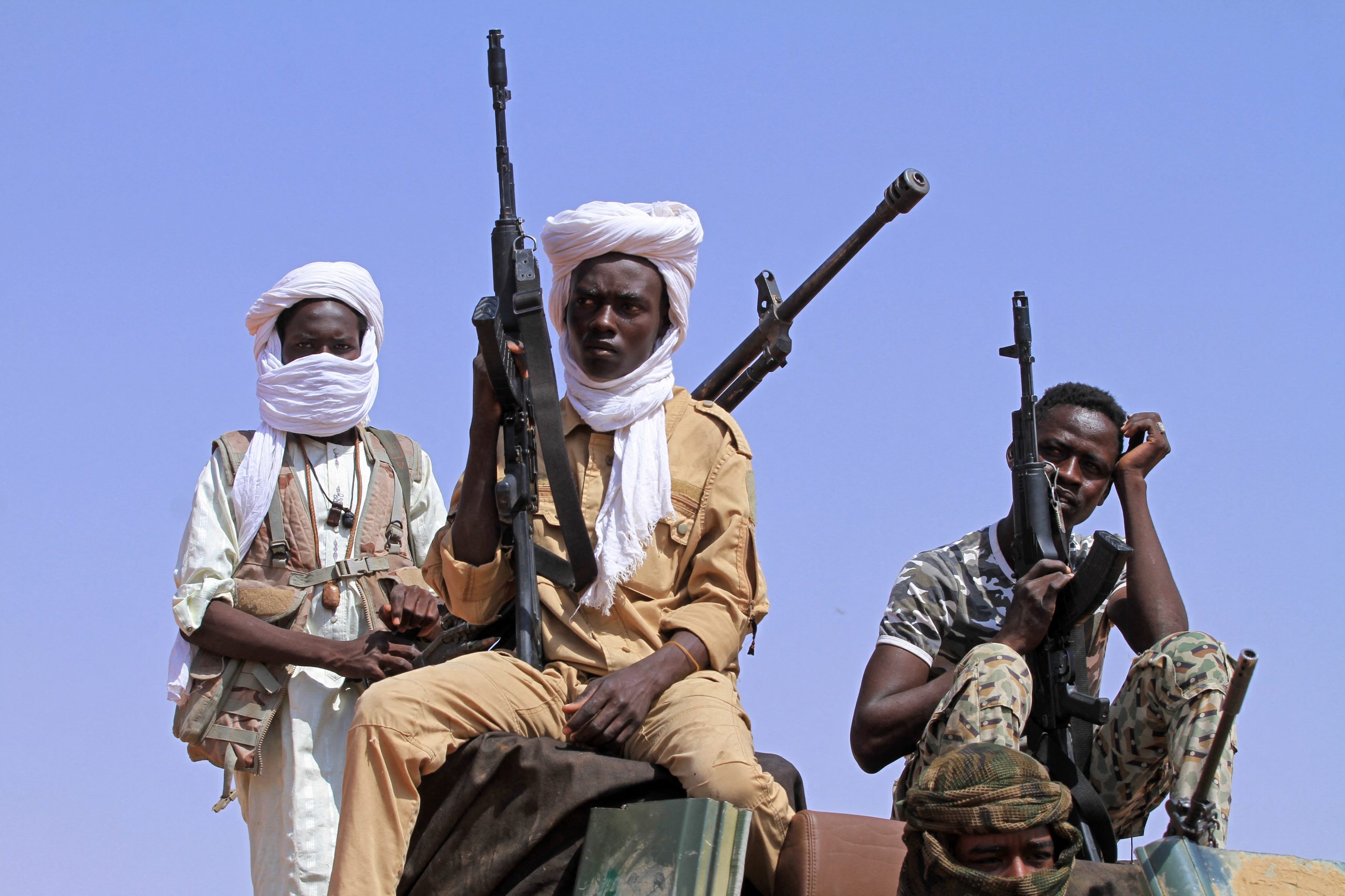
- Foreign support networks are very likely to remain available to the RSF over the next 1-3 months, and foreign-supplied systems are likely to preserve SAF long-range strike capacity. The UN Fact-Finding Mission documented routes through Chad, southeastern Libya and Bosaso in Somalia, transnational entities facilitating weapons and logistics transfers, and up to 2,000 former Colombian military contractors operating combat drones, artillery and advanced weapons with RSF units in Darfur and Kordofan. UN and major-media reporting also identifies foreign-supplied drones used by the SAF and Egypt as the SAF's principal external backer. The specific allegation of more than 44 UAE flights to an RSF base in Asosa, Ethiopia, remains independently unestablished, and Ethiopia and the UAE deny related allegations. (Confidence: medium · ASSESSED)
- I&W: Confirmation: within 0-30 days, UN experts or major-media reporting documents new personnel, weapons, drones or military logistics moving through Chad, southeastern Libya, Bosaso or Asosa. (0-30 days)
- I&W: Break: within 1-3 months, UN reporting records a sustained halt in the documented recruitment, transit and weapons networks supporting the RSF, alongside reduced evidence of foreign-supplied SAF drone operations. (1-3 months)
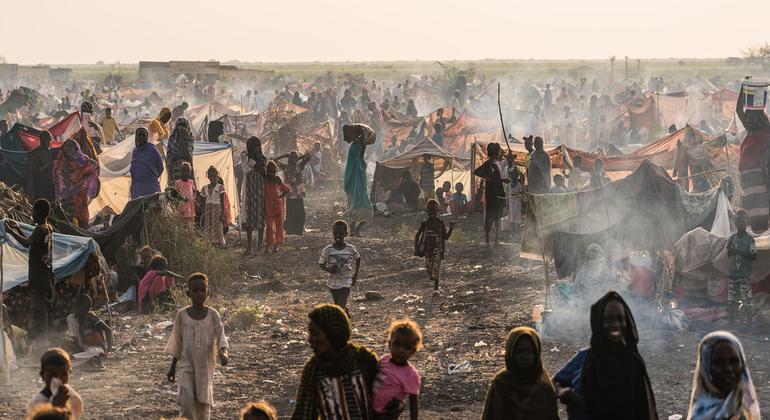
- Humanitarian conditions in Sudan are very likely to worsen over the next 30 days. More than six million people are reported internally displaced and another 4.5 million have crossed Sudan's borders, while separate reporting records 8.62 million internally displaced people. A further 22,000 people were reportedly displaced in seven days around Geissan in Blue Nile State, 19.5 million people face crisis-level or worse food insecurity, and Khartoum Teaching Hospital, the Ophthalmology Hospital and the Dental Hospital require urgent structural repair. The displacement totals use different reporting periods and methodologies, but UN, WHO and major-media reporting all indicate continuing deterioration. (Confidence: high · ASSESSED)
- I&W: Confirmation: within 0-30 days, UN reporting records new displacement from Blue Nile State, West Darfur or the El Obeid area, and WHO reports further damage or loss of service at a named Khartoum hospital. (0-30 days)
- I&W: Break: within 30 days, UN and WHO updates record no additional displacement in the reported hotspots and document restored access or service at the named Khartoum hospitals. (0-30 days)
- International diplomatic and accountability pressure on the SAF and RSF is very likely to intensify over the next 1-3 months, while adoption of a nationwide UN arms embargo is unlikely during that period. The UN Fact-Finding Mission has called for enforcement of the Darfur embargo and its extension to all Sudan, UN human rights chief Volker Türk has called for an immediate ceasefire and an end to foreign involvement, and civil society organisations have requested an ICC investigation into foreign officials. The US proposal to extend the embargo was condemned by Sudan and rejected by Russia, leaving the path to adoption unresolved. (Confidence: medium · ASSESSED)
- I&W: Confirmation: within 1-3 months, the Security Council schedules formal action on extending the arms embargo, or additional states publicly endorse enforcement measures against SAF or RSF supply networks. (1-3 months)
- I&W: Break: within 1-3 months, the Security Council formally adopts a nationwide arms embargo covering Sudan, including drones. (1-3 months)
Outlook & scenarios
Protracted drone-enabled conflict and worsening civilian harm (70%)
The most likely path is continued SAF-RSF fighting, with the RSF retaining much of Darfur and the SAF retaining eastern Sudan, Khartoum and other central areas. RSF attacks continue around El Obeid and in South Kordofan, while SAF strikes remain capable of reaching civilian locations. Displacement and food insecurity worsen as hospitals and essential infrastructure remain damaged.
External support persists while attribution remains contested (50%)
Foreign recruitment, logistics and weapons networks continue to sustain RSF operations, including through routes linked to Chad, Libya and Bosaso, while foreign-supplied systems preserve SAF strike reach. The UN-documented involvement of Colombian contractors remains part of the support picture. Sudanese allegations of UAE supply through Asosa and Libya remain disputed because the specific flights have not been independently established and Ethiopia and the UAE deny related allegations.
Diplomatic pressure rises without a nationwide embargo (40%)
UN calls, Fact-Finding Mission reporting and accountability initiatives intensify. The US proposal to extend the arms embargo remains blocked by Sudanese opposition and Russian rejection, leaving enforcement of the existing Darfur embargo as the more immediate diplomatic focus.
Cross-border incident and atrocity shock (15%)
This unlikely but high-impact wildcard involves another drone incident near the Chad border or a further attack on civilian infrastructure in Darfur or Kordofan. A new incident with civilian deaths and displacement would sharpen regional tensions and accelerate external pressure, while attribution remains disputed.
Recommendations
- Maintain a 14-day watchlist for El Obeid, Kalogie, Ad-Da'ein, West Darfur, Blue Nile State and the three named Khartoum hospitals. Record the incident, platform, target, casualty figure and claimed perpetrator separately so that attribution disputes do not obscure confirmed activity.
- Track reported movement of personnel, drones, weapons and aircraft through Chad, southeastern Libya, Bosaso and Asosa. Treat the Asosa flight allegation as unconfirmed until independent evidence establishes the route and the role of UAE state authorities.
- For diplomatic reporting, distinguish the UN Fact-Finding Mission's call to extend the Darfur embargo, the US Security Council proposal, Russia's rejection and Sudan's condemnation. Do not treat these as a single adopted initiative.
- Use both the lower and higher displacement estimates in humanitarian planning. Prioritise changes in Blue Nile State, West Darfur and the El Obeid area, where recent reporting indicates fresh displacement or attacks.
- Prepare briefing lines that separate direct UN findings from allegations attributed to Sudanese officials, private entities or unidentified attackers. This is particularly important for UAE involvement, attacks near the Chad border and attribution of El Obeid attacks.
Confidence & uncertainty
Overall confidence is high because the core incident, humanitarian and external-support picture is corroborated by multiple UN and other multilateral reports, WHO reporting and major-media coverage. Confidence is lower for forward-looking judgments than for the underlying events, and the main uncertainties concern displacement methodologies, responsibility for some attacks, and whether alleged UAE-linked supply activity reflects state direction.
Intelligence gaps
- [EEI 1.1 · PARTIAL] Observed concentrations and movement of armed units (size estimates, unit identifiers if visible) within X km of named towns/roads/airfields (e.g., El Fasher, Geneina, Nyala, Khartoum neighborhoods) including timestamps and direction of movement. Recommended collection: imagery/satellite
- [EEI 1.2 · PARTIAL] Changes in employment of heavy weapons and systems: documented use or emplacement of artillery, multiple-launch rocket systems, tanks, combat helicopters, and airstrikes at specific coordinates and times. Recommended collection: open-source/media
- [EEI 1.3 · PARTIAL] Reports or intercepts of orders, operational directives or public statements from RSF/SAF commanders indicating planned offensives, ceasefire acceptance/rejection, defensive postures or orders to withdraw from named locations. Recommended collection: signals/communications intercepts
- [EEI 1.4 · PARTIAL] Status of critical infrastructure and lines of communication: control or denial of named bridges, main highways (identify route numbers), airfields, fuel depots and telecommunication hubs and any reported sabotage/blockage incidents. Recommended collection: human intelligence/field reporting
- [EEI 2.1 · PARTIAL] Counts and locations of newly displaced persons arriving at formal sites, informal camps, border crossings or collective centers (daily/weekly arrivals, site coordinates), including demographics (women, children, elderly) where available. Recommended collection: humanitarian/UN OCHA reports
- [EEI 2.2 · PARTIAL] Access impediments to humanitarian assistance: reported attacks on, blockages of, or denial of passage for named humanitarian convoys (dates, GPS locations, responsible actor if known) and closure status of specific routes. Recommended collection: human intelligence/field reporting
- [EEI 2.3 · PARTIAL] Functional status of medical infrastructure in named locations: number of operational hospitals/clinics, reported shortages of key medicines/blood, and hospital casualty/occupancy figures for the last 72 hours. Recommended collection: medical/health cluster reporting
- [EEI 3.2 · PARTIAL] Imagery or on-the-ground confirmation of foreign military personnel or private military contractor bases/forward operating elements at specified coordinates or compounds, including vehicle/weapon types observed. Recommended collection: imagery/satellite
- [EEI 3.3 · UNCOVERED] Financial and sanctions-relevant indicators: atypical large transfers, use of designated front companies, or shipments routed through third states linked to procurement of weapons or fuel for RSF or SAF (transaction dates, parties, amounts where obtainable). Recommended collection: financial intelligence
TLP:CLEAR