TLP:CLEAR · Disclosure is not limited.
Sudan conflict: drone warfare and humanitarian pressure intensify
Time window: Last 7 days · Audience: General analyst · Type: Situation report · DTG: 2026-09-13 22:05Z · Overall confidence: HIGH
BLUF
SAF and RSF drone operations are very likely to continue across Kordofan, Blue Nile and Darfur over the next 30 days, sustaining high civilian risk and infrastructure damage. Humanitarian conditions are very likely to worsen, while international pressure will increase without an early nationwide UN arms embargo.
Executive summary
The SAF and RSF continue to expand long-range drone use beyond traditional front lines, with reported attacks affecting Kalogie, El Obeid and Ad-Da'ein. Ground fighting remains active in North Kordofan and Blue Nile, while the RSF retains control over much of Darfur. Sudan's humanitarian burden is acute, with tens of millions requiring assistance, millions displaced and nearly 20 million people facing crisis-level or worse food insecurity. The United States and United Kingdom are pressing to strengthen the UN sanctions regime, but Russian and Chinese reservations constrain prospects for rapid nationwide measures.
Change from previous assessment
The core assessment is unchanged: fighting is likely to remain active, drone operations are likely to continue, humanitarian conditions are likely to deteriorate, the RSF is likely to retain much of Darfur and international pressure is likely to increase. This update strengthens the immediate civilian-risk assessment with new UN reporting on long-range drone use, the 114 deaths reported in Kalogie, at least 70 deaths at Ad-Da'ein Teaching Hospital and damage to three key Khartoum hospitals. It also records the United Kingdom's formal vote for a technical sanctions rollover to 9 October. Confidence is raised for the continuation of drone activity because the latest reporting provides stronger multilateral and major-media corroboration, but remains medium for Blue Nile ground-control claims, RSF coercive behaviour in El Fasher and the external support network because those assessments retain single-source or media-relayed elements.
Key judgments
- The SAF and RSF are very likely to continue long-range drone operations during the next 30 days, with attacks reaching beyond traditional front lines and civilian infrastructure in Kalogie, El Obeid and Ad-Da'ein remaining exposed. UN, multilateral and major-media reporting documents expanding long-range drone use by both forces, attacks on hospitals and other civilian infrastructure, and severe casualties. Confidence is high for the continuation assessment because the operational pattern is corroborated across multiple sources. Confidence is lower in the cumulative civilian toll and attribution of individual strikes, as one official account reports more than 1,000 civilian deaths between January and May while the UN Human Rights Office reports multiple deaths for the first quarter, and reporting differs over responsibility for some attacks. (Confidence: high · ASSESSED)
- I&W: Confirm: UN, multilateral or major-media reporting records another SAF or RSF long-range drone strike on a hospital, market, water facility, energy site or other civilian infrastructure in Kordofan, Blue Nile or Darfur. (0-30 days)
- I&W: Break: 14-30 days pass without independently reported long-range drone activity by either the SAF or RSF in the named regions. (0-30 days)
- SAF and RSF are likely to continue contesting North Kordofan and Blue Nile through ground operations, attacks around El Obeid and drone strikes during the next 30 days. The SAF has reported gains along the North Kordofan export highway, including Bara, Umm Sayala and Jabra Sheikh, while the RSF has renewed attacks on El Obeid and is reported to have taken Kurmuk and Qaysan with SPLM-N. Confidence is medium because North Kordofan activity is reported by major-media and local-media sources, whereas the Blue Nile account and the reported RSF-SPLM-N role rely on thinner local-media reporting. (Confidence: medium · ASSESSED)
- I&W: Confirm: reporting records renewed SAF or RSF ground clashes around Bara, Umm Sayala, Jabra Sheikh or El Obeid, or records sustained RSF and SPLM-N control around Kurmuk and Qaysan. (0-30 days)
- I&W: Break: independent reporting records a sustained cessation of ground fighting around El Obeid and the North Kordofan export highway, with no new fighting or displacement reported around Kurmuk and Qaysan. (0-30 days)
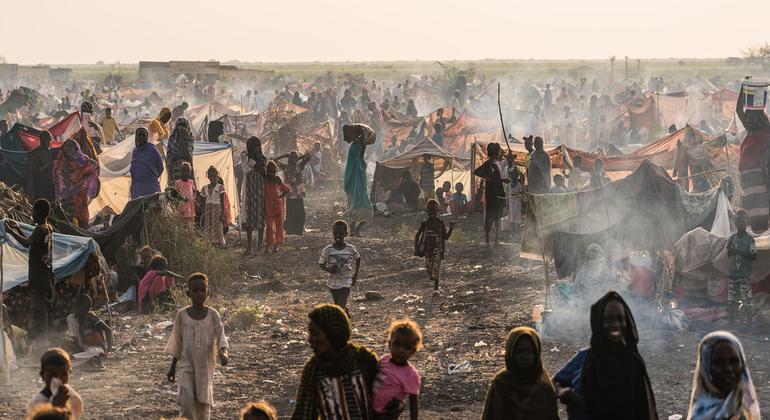
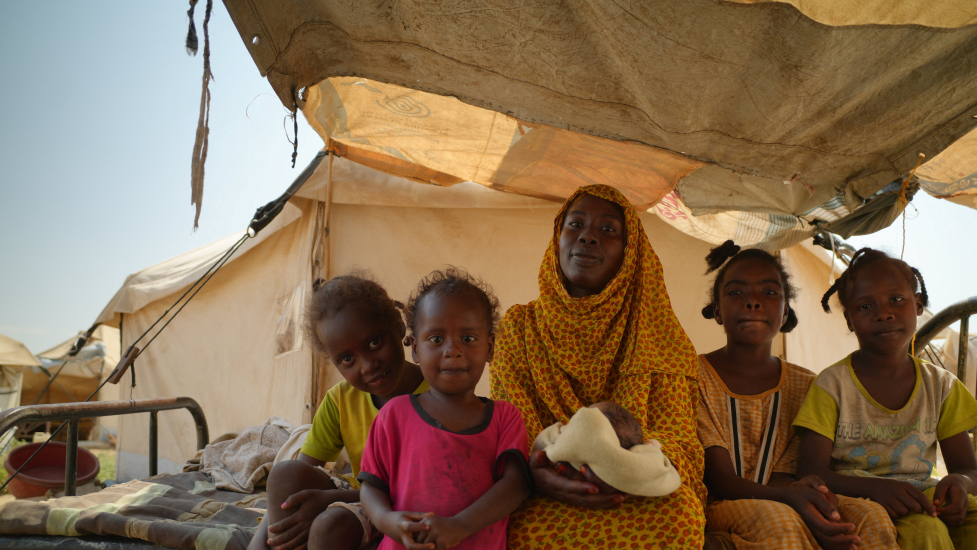
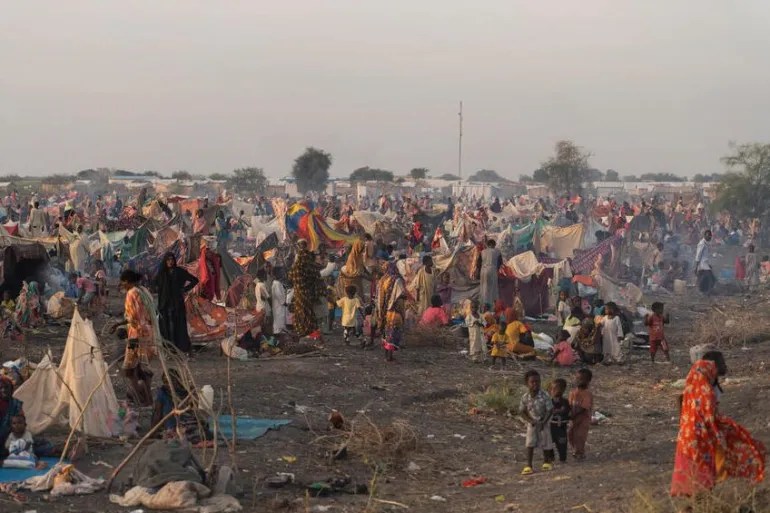
- Humanitarian conditions in Sudan are very likely to worsen during the next 30 days, with the sharpest pressure in Blue Nile, Kordofan and Darfur. The UN estimates that 33.7 million people require humanitarian assistance, including 28.9 million requiring food assistance; separate reporting places internal displacement at 8.62 million and crisis-level or worse food insecurity at 19.5 million. Fourteen areas in North Darfur, South Darfur and South Kordofan were at risk of famine as of May, while nearly 22,000 people were reported displaced in one week in Blue Nile. Confidence is high because UN, UK government, WHO and major-media reporting corroborate the scale of need, although internal displacement estimates range from more than six million to approximately 8.7 million because of differing dates and methodologies. (Confidence: high · ASSESSED)
- I&W: Confirm: UN or local-authority reporting records additional displacement from Geissan and elsewhere in Blue Nile, or new closures of medical, water or power facilities around El Obeid. (0-30 days)
- I&W: Break: UN humanitarian reporting records sustained access gains, no new displacement concentration in Blue Nile, and restored operation of the affected water and medical facilities. (0-30 days)
- The RSF is likely to retain control over much of Darfur during the next 1-3 months and is likely to continue coercive behaviour affecting civilians in El Fasher. Major-media reporting supports the territorial-control assessment, while a UN Human Rights Office investigation relayed through a blog documented thousands of killings, sexual violence, ransom kidnappings, torture and enforced disappearances during the RSF's final offensive on El Fasher. Confidence is medium: the territorial assessment has stronger sourcing than the forecast of continued abuse, which lacks current independent confirmation of each reported pattern. (Confidence: medium · ASSESSED)
- I&W: Confirm: UN or major-media reporting records continued RSF control in El Fasher or other major Darfur locations alongside new reports of killings, sexual violence, ransom kidnappings, torture or enforced disappearances. (1-3 months)
- I&W: Break: reporting records SAF removal of the RSF from El Fasher or the loss of RSF control across multiple major Darfur locations. (1-3 months)
- RSF transnational support networks are likely to remain available during the next 1-3 months, sustaining access to weapons, drones, aircraft and foreign personnel. UN and major-media reporting describes Boeing 727 aircraft carrying weapons, drones and mercenaries, Colombian personnel fighting alongside RSF forces in Darfur, and a network linking individuals and entities in the United Arab Emirates, Chad, southeastern Libya and Puntland in Somalia. Separate reporting alleges supply activity through Asosa, Ethiopia. Confidence is medium because the evidence includes draft and media-relayed findings, and the reporting does not establish direct United Arab Emirates state responsibility; the United Arab Emirates denies providing military support to the RSF. (Confidence: medium · ASSESSED)
- I&W: Confirm: UN experts or major-media reporting identifies another Boeing 727 movement, new drone or weapons deliveries, or additional foreign personnel entering RSF-held areas through Ethiopia, Chad, southeastern Libya or Puntland. (1-3 months)
- I&W: Break: independent reporting records the cessation of the described aircraft and cross-border supply activity, with no new foreign personnel or weapons movements linked to RSF operations. (1-3 months)
- International diplomatic and accountability pressure on the SAF and RSF is very likely to intensify through 12 October, while adoption of a nationwide UN arms embargo before 9 October is unlikely. The United States is the sanctions penholder and has proposed extending the Darfur regime across Sudan and adding drones to prohibited weapons; the United Kingdom supported a technical rollover to 9 October. The UN Fact-Finding Mission has called for nationwide extension of the arms embargo, but Russia and China have expressed reservations about the United States proposal. Confidence is medium because the pressure trend is supported by official and UN reporting, while the nationwide proposal and some timetable reporting rely on lower-confidence local-media material. The 9 October sanctions rollover and 12 October Panel of Experts mandate are separate deadlines. (Confidence: medium · ASSESSED)
- I&W: Break: the UN Security Council adopts a nationwide arms embargo that covers drones before 9 October. (0-26 days)
- I&W: Confirm: the sanctions measures are rolled over without nationwide expansion, while Russia and China maintain reservations and the UN Fact-Finding Mission repeats its call for a wider embargo before the Panel of Experts mandate expires. (0-29 days)
Outlook & scenarios
Sustained multi-front conflict (65%)
This is the likely near-term scenario. SAF and RSF drone operations continue across Kordofan, Blue Nile and Darfur, while ground fighting around El Obeid, the North Kordofan export highway, Kurmuk and Qaysan remains localised but active. Civilian infrastructure damage and displacement continue without a decisive territorial shift.
Contested territorial gains (40%)
There is a roughly even chance that the SAF consolidates positions around Bara, Umm Sayala and Jabra Sheikh while the RSF retains pressure on El Obeid and maintains its position in Darfur. RSF and SPLM-N gains in Blue Nile would preserve a fragmented front and keep the Sudan-Ethiopia border area unstable.
Humanitarian acceleration (50%)
Humanitarian conditions worsen faster than the military balance changes. New displacement in Blue Nile, continued damage to hospitals and water facilities, and restricted access in Darfur and Kordofan push assistance needs above current estimates and increase famine pressure in the areas already identified as at risk.
Cross-border conflict convergence (15%)
An unlikely, high-impact scenario is a clearer convergence between Sudan's war and the conflict around Ethiopia. Reported cross-border drone activity, mutual accusations between the SAF and the Ethiopian federal government, and alleged RSF use of Ethiopian territory as a supply corridor generate direct interstate escalation or a wider external support network.
Recommendations
- Maintain a 0-30 day collection priority on long-range drone activity in Kalogie, El Obeid, Ad-Da'ein, West Darfur, Blue Nile and the North Kordofan export corridor. Record the platform, target, claimed perpetrator, civilian impact and infrastructure damage separately.
- Reconcile casualty and displacement estimates before using them in formal reporting. Keep separate entries for the more than 1,000 drone-related deaths reported for January to May, the UN Human Rights Office's first-quarter figure, and displacement estimates ranging from more than six million to approximately 8.7 million.
- Track RSF external support indicators by monitoring Boeing 727 activity, reported weapons and drone deliveries, foreign personnel, and routes linked to Ethiopia, Chad, southeastern Libya, Puntland and the United Arab Emirates. Treat alleged network activity and direct United Arab Emirates state responsibility as separate analytic questions.
- Maintain a dated UN Security Council watch through 12 October. Track the 9 October sanctions rollover, the 12 October Panel of Experts mandate, the United States proposal to cover all Sudan and drones, and Russian and Chinese positions.
- Use Blue Nile, North and West Darfur, South Kordofan, North Kordofan and El Obeid as priority humanitarian monitoring locations. Pair displacement reporting with hospital, water, power and fuel-service status to distinguish fighting intensity from its civilian effects.
- Use NASA FIRMS thermal detections only as corroboration of heat signatures. Do not use them alone to attribute a strike to the SAF or RSF or to distinguish strikes from shelling, industrial fires or wildfires.
Confidence & uncertainty
Overall confidence is high because the central findings on expanding drone warfare, civilian harm, humanitarian need and diplomatic pressure are corroborated by UN and other multilateral reporting, UK government reporting, WHO reporting, major media and official monitoring data. The principal uncertainties concern the exact civilian death toll, inconsistent displacement baselines, attribution of individual strikes, the reported role of SPLM-N in Blue Nile and the extent of direct United Arab Emirates state responsibility for RSF support.
Intelligence gaps
- [EEI 1.1 · PARTIAL] Observed concentrations and movement of armed units (size estimates, unit identifiers if visible) within X km of named towns/roads/airfields (e.g., El Fasher, Geneina, Nyala, Khartoum neighborhoods) including timestamps and direction of movement. Recommended collection: imagery/satellite
- [EEI 1.2 · PARTIAL] Changes in employment of heavy weapons and systems: documented use or emplacement of artillery, multiple-launch rocket systems, tanks, combat helicopters, and airstrikes at specific coordinates and times. Recommended collection: open-source/media
- [EEI 1.3 · UNCOVERED] Reports or intercepts of orders, operational directives or public statements from RSF/SAF commanders indicating planned offensives, ceasefire acceptance/rejection, defensive postures or orders to withdraw from named locations. Recommended collection: signals/communications intercepts
- [EEI 1.4 · PARTIAL] Status of critical infrastructure and lines of communication: control or denial of named bridges, main highways (identify route numbers), airfields, fuel depots and telecommunication hubs and any reported sabotage/blockage incidents. Recommended collection: human intelligence/field reporting
- [EEI 2.2 · PARTIAL] Access impediments to humanitarian assistance: reported attacks on, blockages of, or denial of passage for named humanitarian convoys (dates, GPS locations, responsible actor if known) and closure status of specific routes. Recommended collection: human intelligence/field reporting
- [EEI 2.3 · PARTIAL] Functional status of medical infrastructure in named locations: number of operational hospitals/clinics, reported shortages of key medicines/blood, and hospital casualty/occupancy figures for the last 72 hours. Recommended collection: medical/health cluster reporting
- [EEI 3.1 · PARTIAL] Detection of flights, ships or overland convoys delivering military materiel or foreign personnel to named airfields, ports or border crossings (flight/IMO numbers, manifests if available, timestamps, route origin/destination). Recommended collection: air-traffic / maritime / border customs
- [EEI 3.2 · PARTIAL] Imagery or on-the-ground confirmation of foreign military personnel or private military contractor bases/forward operating elements at specified coordinates or compounds, including vehicle/weapon types observed. Recommended collection: imagery/satellite
- [EEI 3.3 · PARTIAL] Financial and sanctions-relevant indicators: atypical large transfers, use of designated front companies, or shipments routed through third states linked to procurement of weapons or fuel for RSF or SAF (transaction dates, parties, amounts where obtainable). Recommended collection: financial intelligence
Cited sources
[1] anewz.tv · UN urges Sudan ceasefire as drone warfare escalates (B) · Wed Sep 09 2026 14:41:00 GMT+0000 (Coordinated Universal Time) · sha256:f14b193a7130 [2] United Nations News · Human rights chief Türk renews call for end to spiralling Sudan war (A) · Mon Sep 07 2026 11:16:38 GMT+0000 (Coordinated Universal Time) · sha256:904391a511c8 [3] Government of the United Kingdom · The United Kingdom has long supported strengthening the UN sanctions regime: UK Explanation of Vote at the UN Security Council (A) · Fri Sep 11 2026 20:14:22 GMT+0000 (Coordinated Universal Time) · sha256:135b57e86d51 [4] Justice in Conflict (JiC blog) · Yielding justice now, and in the future: The case for an independent investigative mechanisms for Sudan (D) · Mon Sep 07 2026 16:34:38 GMT+0000 (Coordinated Universal Time) · sha256:4ab37a370ed8 [5] The Media Line · Sudan’s Borders Have Become as Dangerous as the War Itself - The Media Line (B) · Mon Sep 07 2026 10:11:40 GMT+0000 (Coordinated Universal Time) · sha256:698d092d583a [6] Sudanhorizon · UNSC Session Expected This September on Extending Sanctions on Darfur (D) · Mon Sep 07 2026 10:12:42 GMT+0000 (Coordinated Universal Time) · sha256:9407f849587f [7] UK Home Office (Country Policy and Information Team, gov.uk) · Country policy and information note: humanitarian situation, Sudan, September 2026 (accessible) (A) · Mon Sep 07 2026 13:34:40 GMT+0000 (Coordinated Universal Time) · sha256:c7f44389fa6c [8] The Media Line · Weapons, Drones and Mercenaries Deepen Sudan’s Dangerous Entanglements - The Media Line (B) · Mon Sep 07 2026 11:00:44 GMT+0000 (Coordinated Universal Time) · sha256:d25f61c9d746 [9] Sahara Reporters · UN Demands Enforcement Of Darfur Arms Embargo As Sudan War Escalates (D) · sha256:8e5ac78d270e
Source content hashes were computed at collection time; the cited text is preserved unmodified for the life of this product.
TLP:CLEAR