TLP:CLEAR · Disclosure is not limited.
Sudan Conflict: Drone Warfare, External Support and Rising Civilian Risk
Time window: Last 7 days · Audience: General analyst · Type: Situation report · DTG: 2026-09-07 10:23Z · Overall confidence: HIGH
BLUF
Civilian casualties in South Kordofan and Darfur are very likely to increase over the next 30 days as RSF and SAF drone operations continue. External networks are sustaining advanced capabilities for both forces, while new reporting strengthens the case for investigating RSF commanders linked to the fall of El Fasher and adds detail to contested allegations of an SAF chlorine-weapons programme.
Executive summary
The reporting period produced strong corroboration of civilian harm, external military support and abuses linked to the RSF and SAF. RSF drone strikes in Kalogi killed 114 people, including about 60 children, while SAF strikes in Ad-Da'ein killed at least 70 people and destroyed a major hospital. UN reporting describes up to 2,000 former Colombian military contractors operating with the RSF and identifies supply routes through Chad, southeastern Libya and Bosaso. A separate UN report attributed responsibility for the attack, siege and fall of El Fasher to six RSF commanders. Investigative reporting and a US finding support allegations of an SAF chlorine-weapons programme, but the SAF denies developing or using such weapons and the public evidence on actual use remains contested.
Change from previous assessment
The core assessment is unchanged: civilian harm and external military support remain the dominant near-term risks. This brief raises the evidentiary weight on RSF responsibility for the fall of El Fasher by incorporating the UN report naming six commanders and documenting more than 6,000 killings. It also adds greater detail on the alleged SAF chlorine-weapons programme, including the reported Merowe stockpile and a witness account, while leaving actual use unresolved. The UAE attribution judgment remains medium confidence. The prior cross-border incident judgment is not carried forward because the current event set adds no corroboration.
Key judgments
- Civilian casualties in Kalogi and other parts of South Kordofan, Ad-Da'ein in East Darfur and El Obeid in North Kordofan are very likely to increase over the next 30 days. Recent RSF drone strikes killed 114 people in Kalogi, including about 60 children, while SAF strikes in Ad-Da'ein killed at least 70 people and destroyed a major hospital. Repeated RSF attacks on El Obeid have also damaged electricity, fuel and other essential infrastructure. (Confidence: high · ASSESSED)
- I&W: Confirmation: an additional RSF drone strike in Kalogi or El Obeid, or an SAF strike affecting civilians or civilian infrastructure in Ad-Da'ein, is reported. (0-14 days)
- I&W: Break: verified reporting records no new civilian casualty incident in Kalogi, El Obeid, Ad-Da'ein or South Kordofan during the remainder of the 30-day period. (15-30 days)
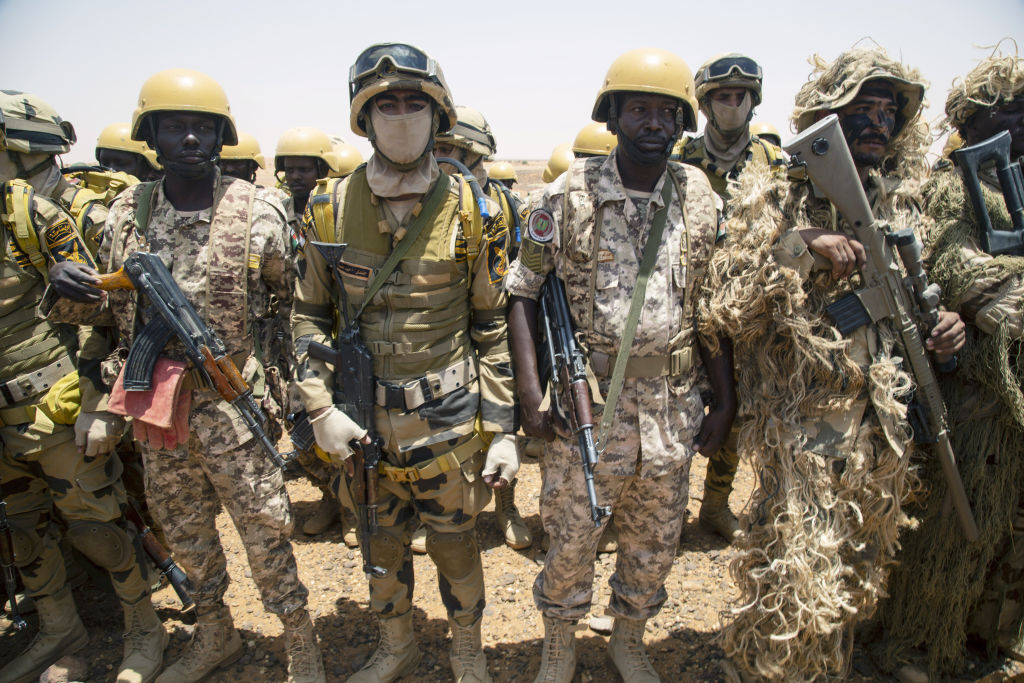
- External personnel, weapons and logistics are very likely to remain available to the RSF over the next 1-3 months, while SAF access to foreign-supplied drone capabilities is likely to continue. The UN mission found networks operating from Colombia and the UAE used routes through Chad, southeastern Libya and Bosaso to move personnel, weapons, training and supplies to the RSF. It also documented up to 2,000 former Colombian military contractors operating combat drones, artillery and advanced weapons with RSF units, alongside Chinese CH-95 drones for the RSF and Turkish Bayraktar Akıncı drones and YIHA-III loitering munitions for the SAF. The evidence on external support to the SAF remains less developed than the evidence on RSF networks. (Confidence: medium · ASSESSED)
- I&W: Confirmation: reporting identifies new foreign personnel, weapons or training moving through Chad, southeastern Libya or Bosaso to RSF-held areas, or records further RSF use of CH-95 drones or SAF use of Bayraktar Akıncı systems. (0-3 months)
- I&W: Break: credible reporting shows sustained interruption of the identified transit routes and no further evidence of foreign personnel or advanced drone transfers to either force. (1-3 months)
- The available reporting does not establish direct UAE government direction of support to the RSF. It does establish that individuals, private entities and intermediaries operating from the UAE were identified in networks moving personnel, weapons, training and logistics to the RSF. The UAE denies military, logistical, financial and political support, so confidence in any claim of direct state responsibility remains medium. (Confidence: medium · ASSESSED)
- I&W: Confirmation: a new UN finding, official record or investigative document names UAE government personnel, agencies or funds in the transfer chain to the RSF. (1-3 months)
- I&W: Break: a credible investigation attributes the identified transfers to private intermediaries without government direction and produces no new evidence of an official UAE link. (1-3 months)
- The SAF likely developed and stockpiled a chlorine-munitions programme by October 2024, but whether it used those weapons remains unresolved. Investigative reporting describes a July 2024 prototype test, nearly 300 manufactured munitions by October 2024 and as many as 290 weapons stored at Merowe, with 106 reportedly used. The United States concluded that Sudan used chemical weapons, while the SAF denies developing or using them. The public evidence is supported by multiple major-media investigations but remains limited and directly contested. (Confidence: medium · ASSESSED)
- I&W: Confirmation: new independent technical evidence links chlorine residues, munitions or the Merowe stockpile to SAF operations or a named incident. (1-3 months)
- I&W: Break: a competent technical review rejects the reported programme evidence or finds no link between the alleged weapons and SAF operations. (1-3 months)
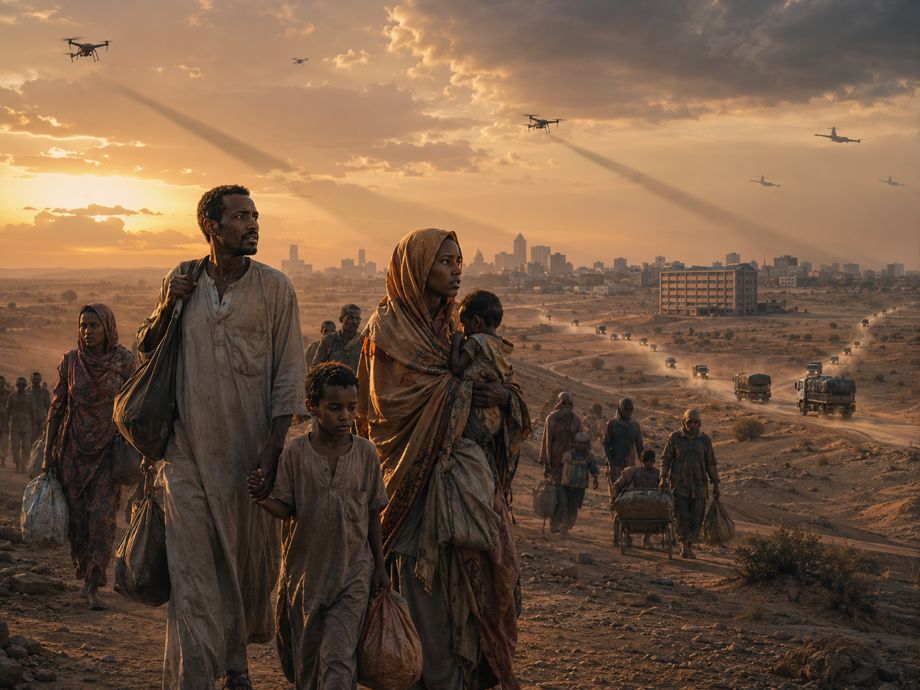
- Humanitarian conditions in North Darfur, South Kordofan and North Kordofan are likely to worsen over the next 30 days. Hundreds of thousands of children have been displaced in North Darfur, hundreds of families have fled fighting in South Kordofan, and landmines, war remnants and insecurity are obstructing returns in North Kordofan. The UN Panel of Experts also reported that 138,000 people had been forcibly displaced from El Fasher by 1 March 2026 and that thousands remained missing. (Confidence: medium · ASSESSED)
- I&W: Confirmation: local or multilateral reporting records new displacement from South Kordofan or North Darfur, or further failed civilian returns in North Kordofan because of landmines and war remnants. (0-30 days)
- I&W: Break: humanitarian reporting records sustained returns to affected areas without new displacement or access restrictions during the next month. (0-30 days)
- A broadly accepted political settlement in Sudan is unlikely in the next 1-3 months. The Sudanese Dialogue committee has announced consultations and direct contacts with political forces, but Sudanese Forces of the Declaration of Principles rejected the African Union Commission's welcome and characterised the initiative as representing one side of the war. The available reporting therefore supports a limited political opening, not broad acceptance. (Confidence: low · ASSESSED)
- I&W: Confirmation: the Sudanese Dialogue begins consultations without participation from the forces that rejected it, or those forces publicly repeat that the process is one-sided. (0-14 days)
- I&W: Break: direct contacts bring the Declaration of Principles forces into the process and the African Union Commission revises or broadens its endorsement. (1-3 months)
Outlook & scenarios
Continued drone-enabled attritional war (60%)
The most likely outcome is continued fighting between the RSF and SAF, with foreign-supplied drones sustaining strikes beyond front lines. Kalogi, Ad-Da'ein, El Obeid and other civilian centres in Darfur and Kordofan face repeated attacks, further displacement and damage to essential infrastructure.
Limited political opening without settlement (20%)
The Sudanese Dialogue committee begins contacts in Khartoum and gains limited support from political or academic figures, but the Declaration of Principles forces remain outside the process. Dialogue reduces neither the RSF's nor the SAF's military activity.
Partial disruption of external support networks (15%)
International enforcement and scrutiny disrupt some transit routes through Chad, southeastern Libya or Bosaso. The RSF and SAF adapt by relying on existing stocks and alternative intermediaries, producing a localised reduction in advanced drone activity rather than a nationwide reduction in violence.
Chemical-weapons attribution crisis (5%)
New technical evidence confirms that SAF-linked chlorine munitions were used in a named incident. The finding generates a sharp diplomatic and accountability response, while the SAF maintains its denial. This is a low-probability, high-impact wildcard because the current public evidence on actual use remains contested.
Recommendations
- For the next 14 days, maintain a named-location incident tracker for Kalogi, Ad-Da'ein, El Obeid, El Fasher and South Kordofan. Record strike actor, platform, civilian casualties, damage to hospitals or utilities and the source of attribution before issuing escalation assessments.
- Separate analysis of UAE-linked intermediaries from assessment of UAE government direction. Attribute each reported transfer to the specific entity, route or official record available, and do not treat the presence of UAE-based actors as proof of state control.
- Prioritise collection on movement through Chad, southeastern Libya and Bosaso, as well as further deployment of former Colombian military contractors. Track reported use of RSF CH-95 drones and SAF Bayraktar Akıncı systems as indicators of continuing external support.
- Keep the SAF chemical-weapons assessment in two analytic lines: confidence in programme development and stockpiling, and confidence in actual battlefield use. Seek new technical or forensic evidence before treating any individual incident as confirmed chemical-weapons use.
- Prepare humanitarian warning thresholds for new displacement in North Darfur and South Kordofan and for failed returns in North Kordofan. Escalate the assessment when new displacement is accompanied by attacks on hospitals, aid routes or essential infrastructure.
- Track the Sudanese Dialogue's participant list and the response of the Sudanese Forces of the Declaration of Principles. Treat direct participation by those forces, rather than announcements from the preparatory committee alone, as the key indicator of broader political relevance.
Confidence & uncertainty
Overall confidence is high because the principal judgments rest on corroborated reporting from the UN Independent International Fact-Finding Mission, the UN Security Council Panel of Experts, UN human rights reporting, major media investigations and an official US sanctions finding. The strongest evidence concerns recent civilian harm, external support networks and the scale of abuses linked to the RSF in El Fasher. The main uncertainties concern direct UAE government responsibility, the strength of evidence on external support to the SAF and whether the SAF used chlorine weapons in specific incidents. Local media, social-media and blog reporting is treated as supplementary rather than decisive.
Intelligence gaps
- [EEI 1.1 · PARTIAL] Observed concentrations and movement of armed units (size estimates, unit identifiers if visible) within X km of named towns/roads/airfields (e.g., El Fasher, Geneina, Nyala, Khartoum neighborhoods) including timestamps and direction of movement. Recommended collection: imagery/satellite
- [EEI 1.3 · PARTIAL] Reports or intercepts of orders, operational directives or public statements from RSF/SAF commanders indicating planned offensives, ceasefire acceptance/rejection, defensive postures or orders to withdraw from named locations. Recommended collection: signals/communications intercepts
- [EEI 1.4 · PARTIAL] Status of critical infrastructure and lines of communication: control or denial of named bridges, main highways (identify route numbers), airfields, fuel depots and telecommunication hubs and any reported sabotage/blockage incidents. Recommended collection: human intelligence/field reporting
- [EEI 2.1 · PARTIAL] Counts and locations of newly displaced persons arriving at formal sites, informal camps, border crossings or collective centers (daily/weekly arrivals, site coordinates), including demographics (women, children, elderly) where available. Recommended collection: humanitarian/UN OCHA reports
- [EEI 2.3 · PARTIAL] Functional status of medical infrastructure in named locations: number of operational hospitals/clinics, reported shortages of key medicines/blood, and hospital casualty/occupancy figures for the last 72 hours. Recommended collection: medical/health cluster reporting
- [EEI 3.1 · PARTIAL] Detection of flights, ships or overland convoys delivering military materiel or foreign personnel to named airfields, ports or border crossings (flight/IMO numbers, manifests if available, timestamps, route origin/destination). Recommended collection: air-traffic / maritime / border customs
- [EEI 3.2 · PARTIAL] Imagery or on-the-ground confirmation of foreign military personnel or private military contractor bases/forward operating elements at specified coordinates or compounds, including vehicle/weapon types observed. Recommended collection: imagery/satellite
- [EEI 3.3 · PARTIAL] Financial and sanctions-relevant indicators: atypical large transfers, use of designated front companies, or shipments routed through third states linked to procurement of weapons or fuel for RSF or SAF (transaction dates, parties, amounts where obtainable). Recommended collection: financial intelligence
TLP:CLEAR