TLP:CLEAR · Disclosure is not limited.
Sudan Conflict: Drone Warfare, Kordofan Fighting and Darfur Pressure
Time window: Last 7 days · Audience: General analyst · Type: Situation report · DTG: 2026-09-12 22:05Z · Overall confidence: HIGH
BLUF
Sudan's conflict is likely to remain active over the next 30 days, with SAF and RSF drone operations, ground fighting in North Kordofan and Blue Nile, and continued RSF control across much of Darfur sustaining civilian harm. International pressure is very likely to increase, but adoption of a nationwide UN arms embargo before 9 October is unlikely.
Executive summary
Reporting for 5 to 12 September records increasing long-range drone use by both the SAF and RSF, including attacks on civilian infrastructure and more than 1,000 reported civilian deaths from drone strikes between January and May 2026. SAF gains around Bara and the Export Road have not ended RSF attacks on El Obeid, while RSF forces have opened a front in Blue Nile State, with SPLM-N involvement reported by some sources. Humanitarian conditions remain severe, with 8.62 million people internally displaced, 19.5 million facing crisis-level or worse food insecurity, and additional displacement in Blue Nile and White Nile. The United Kingdom supported a technical rollover of the UN sanctions measures to 9 October, but Russian and Chinese reservations continue to constrain prospects for a nationwide embargo that includes drones.
Change from previous assessment
Since the 11 September prior brief, the core assessment of continued fighting, drone use, humanitarian deterioration and unresolved sanctions expansion is unchanged. The sanctions picture is now better specified because the United Kingdom's 11 September vote is reported as supporting a short technical rollover to 9 October, while the proposed nationwide embargo remains unresolved. The humanitarian baseline is higher in the current reporting, with one source placing internal displacement at 8.62 million, but confidence in the exact total remains limited because other reporting gives a lower figure. The drone casualty assessment is also narrower: confidence remains high that strikes will continue, while confidence in the exact civilian toll is reduced by the discrepancy between the UK figure of more than 1,000 deaths and the UN Human Rights Office account of multiple deaths in the first quarter. No prior judgment is retired.
Key judgments
- SAF and RSF long-range drone attacks are very likely to continue during the next 30 days across South Kordofan, North Kordofan, Blue Nile and Darfur, including against civilian infrastructure. The assessment is supported by UN documentation of expanding long-range drone use by both forces, UN reporting on attacks against markets and hospitals, and separate reporting of high civilian casualties. Confidence is high for continued drone activity because the pattern is supported by UN, UK government and major-media reporting, although attribution of individual strikes and the exact civilian toll remain uncertain because the UK figure exceeds 1,000 deaths while the UN Human Rights Office reports only multiple deaths for the first quarter. (Confidence: medium · ASSESSED)
- I&W: Confirm: independent reporting identifies a new drone strike on a market, hospital, school or other civilian facility in South Kordofan, North Kordofan, Blue Nile or Darfur. (0-14 days)
- I&W: Break: 30 consecutive days pass without an independently corroborated long-range drone strike in those four areas, alongside evidence that both forces have halted such operations. (0-30 days)
- SAF and RSF are likely to continue contesting North Kordofan and Blue Nile through ground operations, counterattacks and drone strikes during the next 30 days. SAF reporting describes the recapture of Bara and sections of the Export Road, the seizure of military equipment and the lifting of at least part of the El Obeid siege. Other reporting records renewed RSF attacks on El Obeid and RSF advances in Blue Nile, with SPLM-N participation reported by one source and RSF-only responsibility reported by another. Confidence is medium because the accounts conflict over SPLM-N's role and over whether the El Obeid siege was only partially or fully lifted. (Confidence: medium · ASSESSED)
- I&W: Confirm: reporting records a new RSF attack on El Obeid, a SAF counterattack along the Export Road, or further RSF-SPLM-N territorial gains around Kurmuk or Qaysan. (0-30 days)
- I&W: Break: independently corroborated reporting shows a sustained cessation of ground attacks and drone strikes around El Obeid, Bara, Kurmuk and Qaysan for 30 days. (0-30 days)
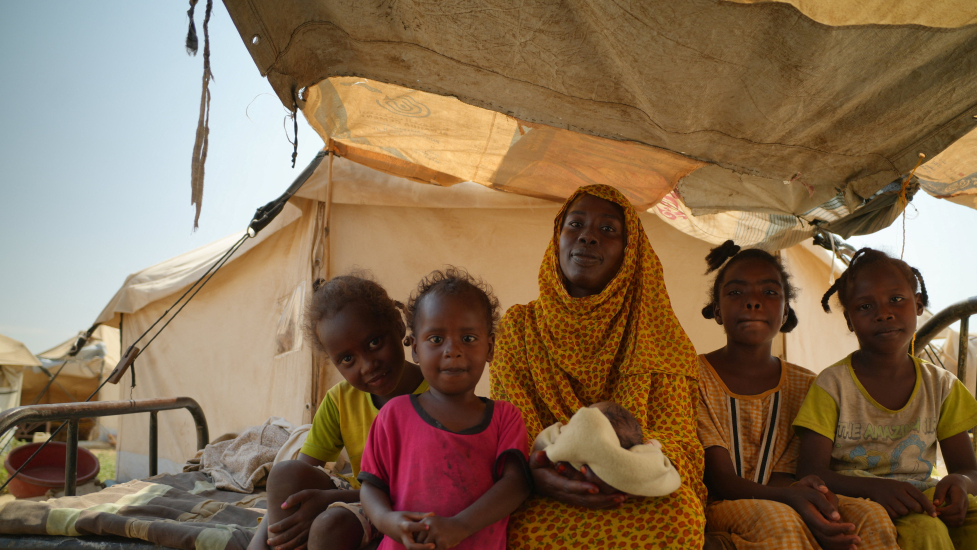
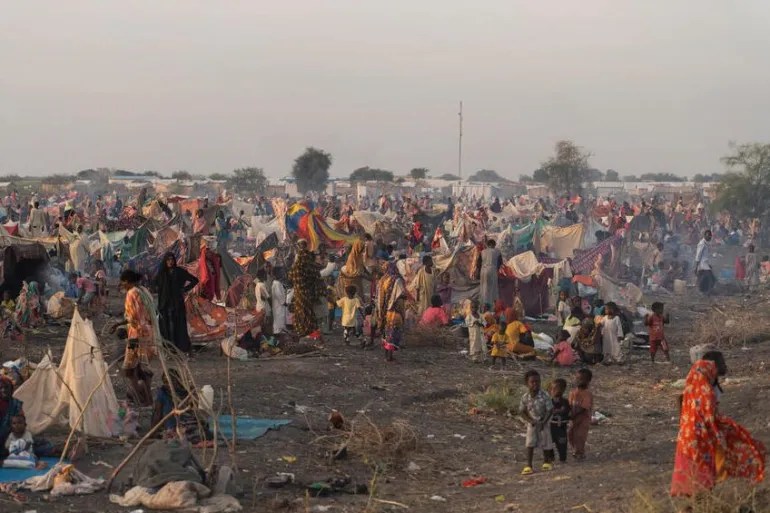
- Humanitarian conditions in Sudan are very likely to worsen during the next 30 days, with further displacement and food insecurity concentrated in areas affected by fighting. Reporting places internal displacement at 8.62 million people in one account and above six million in another, while 19.5 million people face crisis-level or worse food insecurity. Nearly 22,000 people were reportedly displaced in one week in Blue Nile, and White Nile authorities were preparing to relocate 1,150 displaced families. Confidence is high for continued deterioration because displacement, food insecurity and population movement are reported by government, UN-linked and major-media sources, although the exact displacement total varies by reporting period and methodology. (Confidence: high · ASSESSED)
- I&W: Confirm: UN-linked or local-authority reporting records another weekly displacement surge in Blue Nile, White Nile or North Kordofan, or a further relocation of displaced families. (0-30 days)
- I&W: Break: reporting shows no new displacement from the named areas for 30 days and documents sustained access to food and basic services for affected populations. (0-30 days)
- The RSF is likely to retain control over much of Darfur and to continue coercive behaviour affecting civilians in El Fasher during the next 1-3 months. Major-media reporting states that the RSF controls much of Darfur, while reporting on a UN Human Rights Office investigation describes thousands of killings, sexual violence, ransom kidnappings, torture and enforced disappearances during the RSF's final offensive on El Fasher. UN reporting also states that violence in Darfur bears the hallmarks of genocide and warns that crimes seen in El Fasher could recur elsewhere. Confidence is medium. The territorial-control assessment has major-media support, but the forecast of continued coercion relies chiefly on a blog relaying UN reporting and lacks current independent confirmation of each abuse pattern. (Confidence: medium · ASSESSED)
- I&W: Confirm: UN or independent reporting documents new killings, enforced disappearances, ransom kidnappings or sexual violence by RSF forces in El Fasher or other RSF-held areas of Darfur. (0-30 days)
- I&W: Break: independently corroborated reporting shows the RSF has lost control of El Fasher or that civilian access and movement restrictions have been lifted across the city. (1-3 months)
- RSF transnational support networks are likely to remain available over the next 1-3 months, sustaining access to weapons, drones, aircraft and foreign personnel. UN investigators and a draft UN expert report describe routes through Libya and Chad, aircraft carrying weapons and drones, Colombian personnel fighting alongside RSF forces in Darfur, and a wider network linking entities in the UAE, Chad, southeastern Libya and Puntland. Sudanese officials also allege that UAE-linked flights through Asosa, Ethiopia, supplied the RSF, while the UAE denies providing military support. Confidence is medium because the network evidence is partly based on draft or media-relayed findings, and the claims do not establish direct UAE state responsibility. (Confidence: medium · ASSESSED)
- I&W: Confirm: new independent reporting identifies weapons, drones, aircraft or foreign personnel moving to RSF-held areas through Libya, Chad, Ethiopia or Puntland. (0-30 days)
- I&W: Break: verified reporting documents the sustained closure or interdiction of the cited routes and no new deliveries or foreign personnel for 60 days. (1-3 months)
- International diplomatic and accountability pressure on the SAF and RSF is very likely to intensify over the next 1-3 months, while adoption of a nationwide UN arms embargo before 9 October is unlikely. The United States is the sanctions penholder, the United Kingdom supported a technical rollover of the sanctions measures to 9 October, and the UN Independent International Fact-Finding Mission has called for enforcement of the Darfur arms embargo and its extension across Sudan. The United States proposal to expand the regime and add drones has encountered Russian and Chinese reservations. Confidence is medium because the pressure trend is supported by official and UN reporting, but the proposed nationwide measures rely partly on lower-confidence local-media reporting and the exact relationship between the 9 October and 12 October expiry dates remains unresolved. (Confidence: medium · ASSESSED)
- I&W: Confirm: the UN Security Council adopts a resolution extending sanctions across Sudan or adds drones to the prohibited weapons list before 9 October. (0-30 days)
- I&W: Break: the Council maintains only the technical rollover, with no nationwide extension and continued Russian or Chinese reservations through 9 October. (0-30 days)
Outlook & scenarios
Persistent multi-front conflict (65%)
SAF and RSF continue ground and drone operations in North Kordofan, Blue Nile and Darfur. SAF holds or contests Bara and the Export Road, RSF maintains pressure on El Obeid and expands attacks beyond established front lines, and displacement continues. This is the most likely outcome over the next 30 days.
RSF pressure sustained by external networks (35%)
RSF-linked supply routes through Libya, Chad, Ethiopia or other external nodes remain active. New drones, weapons or foreign personnel support operations in Darfur, Kordofan or Blue Nile, increasing the frequency of attacks on civilian areas without producing a decisive territorial shift.
Diplomatic pressure without a nationwide embargo (55%)
The United States, United Kingdom, UN bodies and other international actors intensify calls for a ceasefire, accountability and wider sanctions enforcement. The Security Council preserves the technical rollover to 9 October but does not adopt a nationwide embargo that includes drones.
High-impact atrocity or civilian strike triggers emergency action (15%)
A mass-casualty drone strike on a hospital, school or market, or renewed mass abuses in El Fasher, prompts emergency international scrutiny, additional sanctions proposals and intensified demands for an investigative mechanism. The conflict remains active despite the diplomatic response.
Recommendations
- Prioritise collection on long-range drone launches, flight paths and strike locations in South Kordofan, North Kordofan, Blue Nile and Darfur. Separate confirmed attribution from reports that identify only an unknown attacker, and use NASA FIRMS thermal detections only as corroboration because they record heat rather than cause.
- Maintain a daily watch on Bara, the Export Road, El Obeid, Kurmuk and Qaysan. Reconcile SAF claims of territorial control with RSF counterattack reporting, and track whether SPLM-N forces are independently observed alongside the RSF in Blue Nile.
- Track displacement and food insecurity indicators in Blue Nile, White Nile, North Kordofan and Darfur. Reconcile the 8.62 million and above-six-million internal displacement figures by recording their reporting dates, geographic coverage and counting methods.
- Monitor aircraft and overland movement associated with RSF support routes through Libya, Chad, Ethiopia and Puntland. Seek independent confirmation of alleged Asosa flights, Boeing 727 activity, drone deliveries and foreign personnel before assessing direct UAE state involvement.
- Verify the adopted UN Security Council text and the separate Panel of Experts mandate before 9 October and 12 October. Record whether the United States proposal covers all of Sudan and drones, and whether Russian or Chinese reservations change the final outcome.
- Preserve and cross-check reporting on killings, sexual violence, disappearances, torture and ransom kidnappings in El Fasher and other RSF-held areas. Give greater weight to direct UN documentation and independently corroborated reporting than to single-source or blog-based accounts.
Confidence & uncertainty
Overall confidence is high because the principal judgments draw on corroborating reporting from UN bodies, the UK government, major media and official satellite data. The strongest evidence concerns continued drone warfare, widespread displacement, food insecurity and the broad territorial division between the SAF and RSF. Main uncertainties concern the exact civilian and displacement totals, attribution of individual strikes, the role of SPLM-N in Blue Nile, direct UAE state involvement, and the final wording and expiry dates of the UN sanctions measures.
Intelligence gaps
- [EEI 1.1 · PARTIAL] Observed concentrations and movement of armed units (size estimates, unit identifiers if visible) within X km of named towns/roads/airfields (e.g., El Fasher, Geneina, Nyala, Khartoum neighborhoods) including timestamps and direction of movement. Recommended collection: imagery/satellite
- [EEI 1.2 · PARTIAL] Changes in employment of heavy weapons and systems: documented use or emplacement of artillery, multiple-launch rocket systems, tanks, combat helicopters, and airstrikes at specific coordinates and times. Recommended collection: open-source/media
- [EEI 1.3 · PARTIAL] Reports or intercepts of orders, operational directives or public statements from RSF/SAF commanders indicating planned offensives, ceasefire acceptance/rejection, defensive postures or orders to withdraw from named locations. Recommended collection: signals/communications intercepts
- [EEI 1.4 · PARTIAL] Status of critical infrastructure and lines of communication: control or denial of named bridges, main highways (identify route numbers), airfields, fuel depots and telecommunication hubs and any reported sabotage/blockage incidents. Recommended collection: human intelligence/field reporting
- [EEI 2.2 · UNCOVERED] Access impediments to humanitarian assistance: reported attacks on, blockages of, or denial of passage for named humanitarian convoys (dates, GPS locations, responsible actor if known) and closure status of specific routes. Recommended collection: human intelligence/field reporting
- [EEI 2.3 · PARTIAL] Functional status of medical infrastructure in named locations: number of operational hospitals/clinics, reported shortages of key medicines/blood, and hospital casualty/occupancy figures for the last 72 hours. Recommended collection: medical/health cluster reporting
- [EEI 3.2 · PARTIAL] Imagery or on-the-ground confirmation of foreign military personnel or private military contractor bases/forward operating elements at specified coordinates or compounds, including vehicle/weapon types observed. Recommended collection: imagery/satellite
- [EEI 3.3 · UNCOVERED] Financial and sanctions-relevant indicators: atypical large transfers, use of designated front companies, or shipments routed through third states linked to procurement of weapons or fuel for RSF or SAF (transaction dates, parties, amounts where obtainable). Recommended collection: financial intelligence
Red cell review: PARTIAL DISSENT, KJ-1 downgraded HIGH→MEDIUM (estimative_mismatch)
TLP:CLEAR