TLP:CLEAR · Disclosure is not limited.
Sudan Conflict: Entrenched Fronts and Humanitarian Strain
Time window: Last 7 days · Audience: General analyst · Type: Situation report · DTG: 2026-08-21 22:07Z · Overall confidence: MEDIUM
BLUF
Very likely the Sudanese Armed Forces and Rapid Support Forces remain in active conflict as of 21 August 2026, with the SAF holding much of Khartoum and the RSF entrenched across much of Darfur. AU and UN diplomatic activity will continue, but an AU-mediated, verified ceasefire is unlikely in the next one to three months.
Executive summary
As of 21 August 2026, Sudan remains divided between SAF-held areas, including much of Khartoum, and RSF-held or entrenched areas across much of Darfur. More than 200,000 people have been displaced across Kordofan, humanitarian agencies face access restrictions, and severe food insecurity and health-system disruption continue nationally. The AU Peace and Security Council completed a field visit on 16 and 17 August, while the Security Council is scheduled to hold an open briefing on 24 August. NASA recorded two thermal anomalies over Sudan in the two days ending 20 August, but the product does not attribute cause or responsibility.
Change from previous assessment
Since the 20 August 2026 brief, this assessment adds the confirmed dates of the AU Peace and Security Council field visit, 16 and 17 August, and the scheduled Security Council briefing on 24 August. It revises the NASA thermal baseline from four detections to two detections over the two-day period ending 20 August, without changing the high-confidence judgement that the product cannot attribute responsibility. The core judgements on active SAF-RSF conflict, severe humanitarian pressure, and the low near-term prospect of a verified ceasefire remain unchanged. No prior judgement is retired.
Key judgments
- Very likely the Sudanese Armed Forces and Rapid Support Forces remain in active conflict as of 21 August 2026, with a precarious territorial balance rather than decisive control by either side. The SAF is reported to control much of Sudan and Khartoum, while the RSF remains entrenched across much of Darfur; the SAF also reportedly retook Kurmuk in July. This is an assessed judgement based on current and background reporting, with uncertainty over the precise front line because several supporting claims are dated or lower confidence. (Confidence: medium · ASSESSED)
- I&W: CONFIRM: Reporting during the next 14 days records SAF and RSF operations or exchanges in Kordofan, Darfur, Khartoum, or Kurmuk. (0-14 days)
- I&W: BREAK: The SAF and RSF announce and sustain a verified cessation across the named areas for at least 14 consecutive days. (0-30 days)
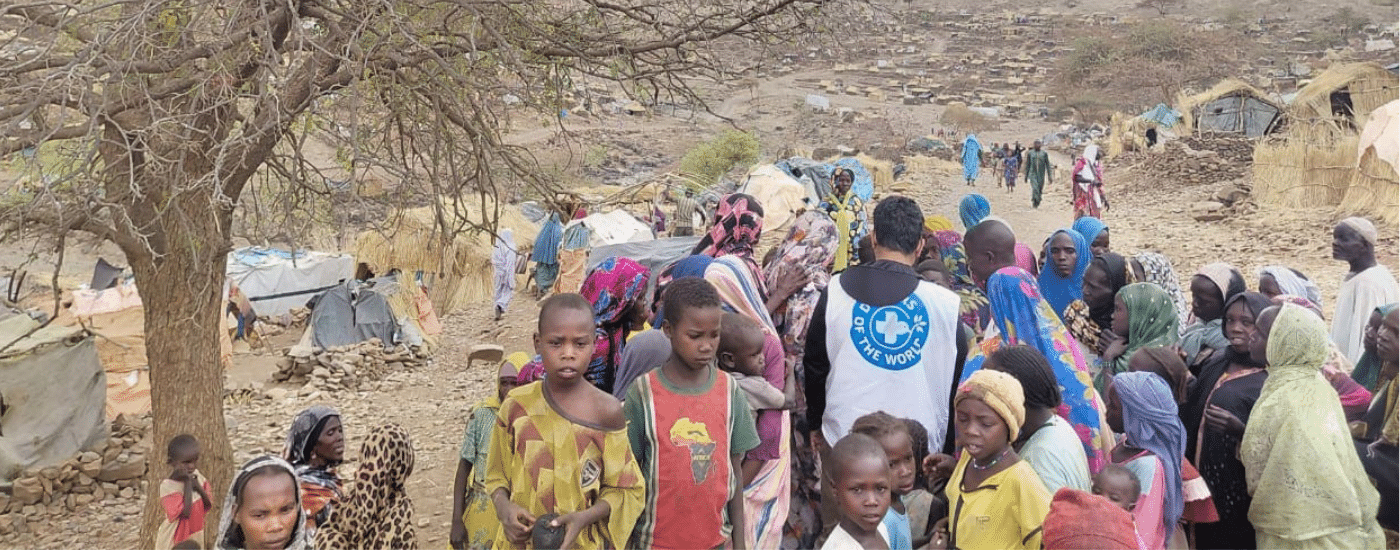
- Very likely severe humanitarian pressure will persist through 31 October 2026. The UN response plan requires $2.87 billion; nearly 25 million people face severe food insecurity; more than 14 million people had been forcibly displaced by 6 July; and more than 200,000 people have been displaced across Kordofan since late 2025. Humanitarian agencies report difficulty reaching communities affected by violence, while approximately 80 per cent of health facilities in conflict-affected regions are no longer functioning. Confidence is high for the direction of the trend, but lower for aggregate totals because the figures have different geographic coverage, reporting periods, and source quality. (Confidence: high · ASSESSED)
- I&W: CONFIRM: IOM or UN reporting records additional displacement in Kordofan and continued difficulty reaching affected communities. (0-30 days)
- I&W: BREAK: Humanitarian agencies report sustained access to previously inaccessible Kordofan communities and a measurable reduction in new displacement. (1-3 months)
- Likely AU and UN diplomatic activity will continue through 31 October 2026, but an AU-mediated, verified SAF-RSF ceasefire is unlikely in the next one to three months. The AU Peace and Security Council undertook a field visit to Sudan on 16 and 17 August and is engaging Sudanese authorities and other conflict parties. The Security Council is scheduled to hold an open briefing on 24 August. The AU lacks leverage to compel the SAF and RSF to stop fighting, and reporting describes the battlefield as a stalemate that risks hardening into partition. This is an assessed judgement with medium confidence because diplomatic activity is well reported, while current SAF and RSF acceptance of monitored ceasefire arrangements is not established. (Confidence: medium · ASSESSED)
- I&W: CONFIRM: The 24 August Security Council briefing is held and the AU records follow-on engagement with both the SAF and RSF. (0-14 days)
- I&W: BREAK: The SAF and RSF jointly accept a monitored ceasefire with implementation arrangements. (0-90 days)
- Likely the current territorial split will persist through 31 October 2026: the SAF will retain much of Khartoum and reported control of Kurmuk, while the RSF will remain entrenched across much of Darfur. This is an assessed inference from dated and partly conflicting reporting rather than a verified current map. Confidence is low because the control claims rely mainly on major-media and think-tank reporting and do not provide a consistent, up-to-date front-line picture. (Confidence: low · ASSESSED)
- I&W: CONFIRM: Reporting during the next one to three months continues to place the SAF in control of much of Khartoum and Kurmuk and the RSF across much of Darfur. (1-3 months)
- I&W: BREAK: The SAF reports control of El Fasher, Nyala, or Geneina, or the RSF retakes Kurmuk or expands into SAF-held areas of Khartoum. (0-90 days)
- Very likely NASA's two active fire or thermal anomalies in Sudan over the two days ending 20 August 2026 will remain insufficient to attribute attacks to the SAF or RSF. NASA states that the detections record heat rather than cause and can correspond to strikes, shelling, industrial fires, or wildfires. This is a reported judgement with high confidence because the limitation is explicit in NASA's explanation of the product. (Confidence: high · REPORTED)
- I&W: CONFIRM: NASA's Sudan product continues to list thermal detections without attributing them to the SAF or RSF. (0-14 days)
- I&W: BREAK: NASA publishes a corroborated attribution that identifies a named Sudanese location, the cause of the heat signature, and responsibility for the event. (0-30 days)
Outlook & scenarios
Protracted SAF-RSF territorial split (65%)
Likely the SAF retains much of Khartoum and Kurmuk while the RSF remains entrenched across much of Darfur. Fighting and displacement continue in Kordofan, with no decisive military outcome and sustained pressure on humanitarian access.
Limited diplomatic opening without a verified ceasefire (35%)
Likely AU and UN engagement produces further meetings, statements, or limited humanitarian arrangements after the 24 August Security Council briefing. The SAF and RSF do not accept a monitored nationwide ceasefire, leaving the territorial split intact.
Worsening humanitarian access in Kordofan and Darfur (40%)
Likely continued fighting prevents humanitarian agencies from reaching additional communities in Kordofan and Darfur. New displacement adds to severe food insecurity and pressure on already damaged health facilities.
Sudden territorial reversal (15%)
Unlikely but high impact. The SAF makes a rapid advance into an RSF-held Darfur centre, or the RSF breaks into SAF-held areas of Khartoum. Either development would invalidate the current territorial split and sharply alter diplomatic calculations.
Recommendations
- Produce a post-event update after the 24 August Security Council briefing. Record whether Rosemary DiCarlo and Tom Fletcher brief, which actors are addressed, and whether the meeting produces any verifiable access or ceasefire mechanism.
- Maintain separate control assessments for Khartoum, Kurmuk, Kordofan, and Darfur. Record the date, location, actor, and source for each territorial claim rather than combining historical and current reporting.
- Prioritise collection on displacement and humanitarian access in Kordofan and Darfur. Track new IOM or UN displacement figures, access denials, health-facility functionality, and conditions at the Dar Omo displacement camp.
- Use the 16 and 17 August AU Peace and Security Council field visit as a diplomatic indicator. Seek evidence of follow-on contact with both the SAF and RSF and distinguish formal engagement from an agreed, monitored cessation.
- Treat NASA thermal detections as corroborative signals only. Do not attribute the two anomalies to the SAF or RSF without separate reporting that identifies the location, cause, and responsible actor.
- Keep casualty and displacement estimates in separate geographic and temporal categories. Do not aggregate figures that cover different areas or reporting periods without first resolving their scope.
Confidence & uncertainty
Overall confidence is medium. UN, AU, NASA, and other multilateral or official reporting corroborate the broad humanitarian, diplomatic, and conflict trends. The main uncertainties concern current front-line control, the effect of AU engagement on SAF and RSF behaviour, and casualty and displacement totals that use different geographic scopes and reporting periods. Several territorial and atrocity-related claims rely on dated, major-media, think-tank, NGO, or otherwise lower-confidence reporting.
Intelligence gaps
- [EEI 1.1 · PARTIAL] Observed concentrations and movement of armed units (size estimates, unit identifiers if visible) within X km of named towns/roads/airfields (e.g., El Fasher, Geneina, Nyala, Khartoum neighborhoods) including timestamps and direction of movement. Recommended collection: imagery/satellite
- [EEI 1.2 · PARTIAL] Changes in employment of heavy weapons and systems: documented use or emplacement of artillery, multiple-launch rocket systems, tanks, combat helicopters, and airstrikes at specific coordinates and times. Recommended collection: open-source/media
- [EEI 1.3 · UNCOVERED] Reports or intercepts of orders, operational directives or public statements from RSF/SAF commanders indicating planned offensives, ceasefire acceptance/rejection, defensive postures or orders to withdraw from named locations. Recommended collection: signals/communications intercepts
- [EEI 1.4 · PARTIAL] Status of critical infrastructure and lines of communication: control or denial of named bridges, main highways (identify route numbers), airfields, fuel depots and telecommunication hubs and any reported sabotage/blockage incidents. Recommended collection: human intelligence/field reporting
- [EEI 2.1 · PARTIAL] Counts and locations of newly displaced persons arriving at formal sites, informal camps, border crossings or collective centers (daily/weekly arrivals, site coordinates), including demographics (women, children, elderly) where available. Recommended collection: humanitarian/UN OCHA reports
- [EEI 2.2 · PARTIAL] Access impediments to humanitarian assistance: reported attacks on, blockages of, or denial of passage for named humanitarian convoys (dates, GPS locations, responsible actor if known) and closure status of specific routes. Recommended collection: human intelligence/field reporting
- [EEI 3.1 · UNCOVERED] Detection of flights, ships or overland convoys delivering military materiel or foreign personnel to named airfields, ports or border crossings (flight/IMO numbers, manifests if available, timestamps, route origin/destination). Recommended collection: air-traffic / maritime / border customs
- [EEI 3.2 · UNCOVERED] Imagery or on-the-ground confirmation of foreign military personnel or private military contractor bases/forward operating elements at specified coordinates or compounds, including vehicle/weapon types observed. Recommended collection: imagery/satellite
- [EEI 3.3 · UNCOVERED] Financial and sanctions-relevant indicators: atypical large transfers, use of designated front companies, or shipments routed through third states linked to procurement of weapons or fuel for RSF or SAF (transaction dates, parties, amounts where obtainable). Recommended collection: financial intelligence
Cited sources
[1] Wikipedia · Sudanese Armed Forces (C) · sha256:915a4f946fef [2] Wikipedia · Rapid Support Forces (B) · sha256:4faadb5ad37a [3] newsonair.gov.in · Sudan: 54 civilians killed in Rapid Support Forces shelling in Omdurman market, Khartoum (B) · sha256:32c053a41b32 [4] sundiatapost.com · Sudan: The Closing Military Gap Between SAF and RSF—and What Comes Next (C) · sha256:ca658c469d28 [5] Al Jazeera · Can the AU make its current Sudan mission count? (A) · sha256:af7bb195e3ad [6] securitycouncilreport.org · Sudan: Briefing (A) · sha256:695305585a75 [7] Wikipedia · Sudanese civil war (2023–present) (B) · sha256:9d7d7352dc41 [8] outlookindia.com · 200,000 More Sudanese Flee Homes As Kordofan Becomes A New Killing Field (B) · sha256:8d45731dd400 [9] Doctors of the World · Sudan's Humanitarian Crisis: Delivering Healthcare in One of the World's Largest Emergencies - Doctors of the World (B) · sha256:6fcc3474b13a [10] allafrica.com · An Attack On Healthcare Every 6 Hours, and No One Held to Account (B) · sha256:05f666848ba6 [11] NASA · NASA FIRMS thermal detections — Sudan (2d) (A) · sha256:dce71acdf105
Source content hashes were computed at collection time; the cited text is preserved unmodified for the life of this product.
TLP:CLEAR