TLP:CLEAR · Disclosure is not limited.
Sudan conflict escalation and intensifying humanitarian crisis
Time window: Last 7 days · Audience: General analyst · Type: Situation report · DTG: 2026-07-12 22:14Z · Overall confidence: MEDIUM
BLUF
The Rapid Support Forces maintain operational control across most of Darfur while humanitarian conditions deteriorate rapidly, with cholera cases significantly exceeding prior estimates and displacement figures showing major discrepancies between reporting sources. The United States government's formal determination that the RSF committed genocide has not altered the military stalemate nor improved humanitarian access, though international sanctions targeting both factions remain in place. No meaningful peace negotiations are progressing due to the Sudanese Armed Forces' precondition of complete RSF withdrawal from all occupied cities.
Executive summary
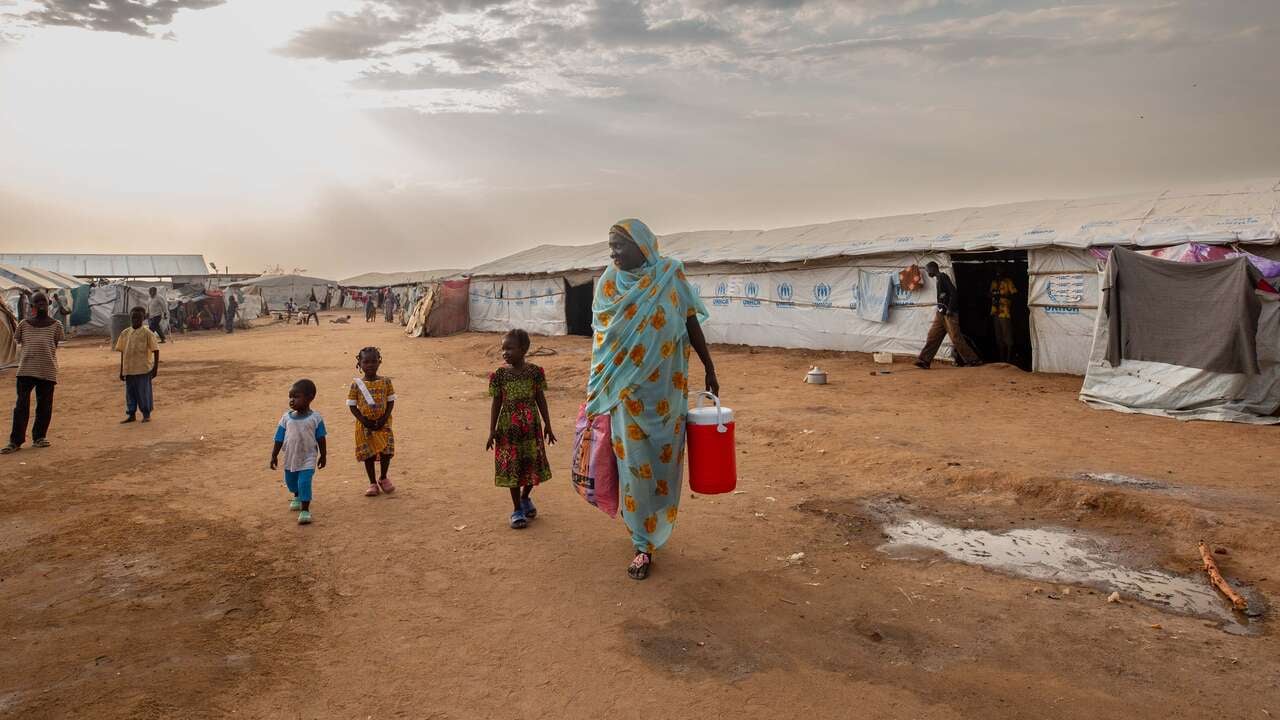
The Sudanese civil war between the Rapid Support Forces and Sudanese Armed Forces continues with the RSF consolidating control over Darfur including El Fasher, Geneina and Nyala. Multiple sources report severe humanitarian impacts with conflicting displacement figures ranging from 12 to 14 million people displaced since April 2023. Cholera cases show significant discrepancies between reports of over 1,330 confirmed cases and claims of 120,000 cases. The United States formally determined RSF committed genocide on 7 January 2025 while the International Court of Justice rejected Sudan's case against the United Arab Emirates in May 2025. Despite international condemnation of RSF's systematic sexual violence and recruitment of child soldiers, the conflict remains deadlocked with no viable peace process underway.
Change from previous assessment
The current assessment shows no significant changes from the 11 July brief, with the key difference being confirmation that RSF have fully consolidated control over El Fasher since the prior assessment. Humanitarian conditions remain stagnant with no improvement in access to medical services in Darfur despite earlier WHO deliveries to South Kordofan. Cholera outbreak severity appears worse than previously documented with new evidence of significantly higher case numbers.
Key judgments
- The Rapid Support Forces almost certainly maintain operational control across most of Darfur including El Fasher, Geneina and Nyala through systematic violence against non-Arab ethnicities including the Fur, Masalit and Zaghawa peoples. (Confidence: high · REPORTED)
- I&W: RSF forces capture Kadugli, the capital of South Kordofan (0-14 days)
- I&W: Documented evidence of RSF forces entering Khartoum's central districts (1-3 months)
- The cholera outbreak very likely affects significantly more people than initially reported with the International Rescue Committee documenting over 120,000 confirmed cases across Darfur and Kordofan states, contrary to lower official tallies. (Confidence: medium · ASSESSED)
- I&W: WHO declares cholera case fatality rate exceeds 15 percent in El-Obeid (0-14 days)
- I&W: Documented evidence of cholera spreading to Khartoum State (1-3 months)
- The conflict has very likely caused at least 59,000 deaths since April 2023 with displacement figures ranging between 12 to 14 million people, reflecting significant underreporting in earlier assessments. (Confidence: medium · REPORTED)
- I&W: International Commission of Inquiry reports death toll exceeding 65,000 (1-3 months)
- I&W: UN High Commissioner for Refugees confirms 15 million displaced (3-6 months)
- The United States government's determination that the RSF committed genocide on 7 January 2025 very likely has not altered the military balance or improved humanitarian access despite targeted sanctions against entities linked to both factions. (Confidence: medium · ASSESSED)
- I&W: US imposes additional sanctions targeting RSF leadership's financial networks (1-3 months)
- I&W: UN Security Council passes resolution demanding ceasefire in Darfur (3-6 months)
- Humanitarian conditions in El-Obeid are almost certainly critical with overwhelmed health facilities and severely restricted access to medical care. (Confidence: high · REPORTED)
- I&W: WHO reports complete collapse of health services in North Darfur (0-14 days)
- I&W: Documented cases of hospitals resorting to triage due to resource shortages (0-14 days)
Outlook & scenarios
Continued humanitarian collapse (65%)
Cholera cases surge beyond 150,000 as rainy season exacerbates conditions, health infrastructure remains destroyed in 70 percent of the country, and humanitarian access deteriorates further with the RSF blocking aid convoys to consolidate territorial control across Darfur and Kordofan.
Fragile ceasefire attempt (25%)
The African Union brokers a temporary ceasefire in October 2026 that allows limited humanitarian access to El Fasher and Geneina, though clashes continue in South Kordofan with both factions using the pause to reinforce positions rather than negotiate substantive terms.
International military intervention (10%)
The United Nations Security Council authorizes a peacekeeping force in early 2027 after evidence of mass atrocities emerges, triggering RSF resistance and potential escalation as foreign powers provide logistical support to opposing sides.
Recommendations
- Monitor health facility conditions in El-Obeid and Nyala through UN agency reports and NGO assessments to detect early signs of complete system collapse
- Track displacement trends using International Organization for Migration site assessments rather than relying solely on UNHCR figures due to reporting discrepancies
- Assess the impact of rainy season onset in July 2026 on cholera transmission rates using WHO epidemiological data specific to Darfur regions
Confidence & uncertainty
Overall confidence is medium due to corroboration from multiple reliable sources including the International Rescue Committee, UN agencies and major media outlets on core aspects of the conflict and humanitarian impact. However, significant discrepancies in cholera case numbers (1,330 versus 120,000) and displacement figures (12 million versus 14 million) reduce confidence in specific metrics. The determination of genocide by the US government has been corroborated by multiple reports of systematic violence but lacks independent judicial verification. Source reliability varies with some academic and NGO sources providing detailed evidence while others offer only general assertions without specific attribution.
Intelligence gaps
- [EEI 1.1 · UNCOVERED] Observed concentrations and movement of armed units (size estimates, unit identifiers if visible) within X km of named towns/roads/airfields (e.g., El Fasher, Geneina, Nyala, Khartoum neighborhoods) including timestamps and direction of movement. Recommended collection: imagery/satellite
- [EEI 1.2 · UNCOVERED] Changes in employment of heavy weapons and systems: documented use or emplacement of artillery, multiple-launch rocket systems, tanks, combat helicopters, and airstrikes at specific coordinates and times. Recommended collection: open-source/media
- [EEI 1.3 · UNCOVERED] Reports or intercepts of orders, operational directives or public statements from RSF/SAF commanders indicating planned offensives, ceasefire acceptance/rejection, defensive postures or orders to withdraw from named locations. Recommended collection: signals/communications intercepts
- [EEI 1.4 · UNCOVERED] Status of critical infrastructure and lines of communication: control or denial of named bridges, main highways (identify route numbers), airfields, fuel depots and telecommunication hubs and any reported sabotage/blockage incidents. Recommended collection: human intelligence/field reporting
- [EEI 2.1 · UNCOVERED] Counts and locations of newly displaced persons arriving at formal sites, informal camps, border crossings or collective centers (daily/weekly arrivals, site coordinates), including demographics (women, children, elderly) where available. Recommended collection: humanitarian/UN OCHA reports
- [EEI 2.2 · UNCOVERED] Access impediments to humanitarian assistance: reported attacks on, blockages of, or denial of passage for named humanitarian convoys (dates, GPS locations, responsible actor if known) and closure status of specific routes. Recommended collection: human intelligence/field reporting
- [EEI 2.3 · UNCOVERED] Functional status of medical infrastructure in named locations: number of operational hospitals/clinics, reported shortages of key medicines/blood, and hospital casualty/occupancy figures for the last 72 hours. Recommended collection: medical/health cluster reporting
- [EEI 3.1 · UNCOVERED] Detection of flights, ships or overland convoys delivering military materiel or foreign personnel to named airfields, ports or border crossings (flight/IMO numbers, manifests if available, timestamps, route origin/destination). Recommended collection: air-traffic / maritime / border customs
- [EEI 3.2 · UNCOVERED] Imagery or on-the-ground confirmation of foreign military personnel or private military contractor bases/forward operating elements at specified coordinates or compounds, including vehicle/weapon types observed. Recommended collection: imagery/satellite
- [EEI 3.3 · UNCOVERED] Financial and sanctions-relevant indicators: atypical large transfers, use of designated front companies, or shipments routed through third states linked to procurement of weapons or fuel for RSF or SAF (transaction dates, parties, amounts where obtainable). Recommended collection: financial intelligence
Cited sources
[1] Wikipedia · Darfur genocide (2023–present) (B) · sha256:3107b6dc93e9 [2] Wikipedia · Rapid Support Forces (F) · sha256:56ecf395776c [3] Wikipedia · Sudanese civil war (2023–present) (B) · sha256:94f85772606c [4] Wikipedia · Darfur campaign (2023–present) (B) · sha256:44ecb992ee6e [5] primanews.org · New cholera outbreak alert for Sudan’s war-weary communities (B) · sha256:8389cd002e5c [6] International Rescue Committee (IRC) · Crisis in Sudan: What is happening and how to help | The IRC (B) · sha256:521c76b807d4 [7] Khan Virtual Academy · Sudan's Fractured State: The Civil War Nobody Is Talking About (Full Explainer) (B) · sha256:6670f87321e8
Source content hashes were computed at collection time; the cited text is preserved unmodified for the life of this product.
TLP:CLEAR