TLP:CLEAR · Disclosure is not limited.
Sudan Conflict: External Support Deepens Drone and Humanitarian Risks
Time window: Last 7 days · Audience: General analyst · Type: Situation report · DTG: 2026-09-03 22:07Z · Overall confidence: HIGH
BLUF
The SAF and RSF are very likely to remain in active combat across Darfur and Kordofan over the next 30 days. A new UN finding that foreign networks, including up to 2,000 former Colombian military contractors, support RSF operations raises the risk of sustained drone-enabled attacks on civilian areas and infrastructure.
Executive summary
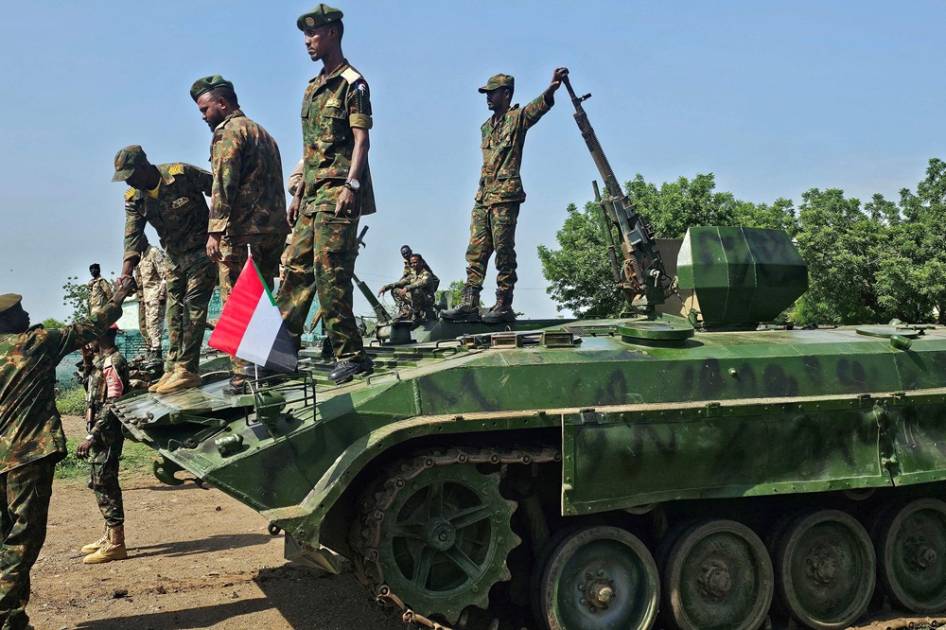
The 3 September 2026 UN Fact-Finding Mission report identifies foreign personnel, weapons, military technology and logistics as sustaining the Sudan conflict. It documents former Colombian military contractors operating advanced weapons with RSF units in Darfur and Kordofan, while foreign suppliers have enhanced the drone capabilities of both the RSF and SAF. Recent reported strikes include an RSF attack that killed 114 people in Kalogi, South Kordofan, and SAF strikes that killed at least 70 people at Ad-Da'ein Teaching Hospital in East Darfur. Displacement is expanding towards Tawila in North Darfur and Chad, while local emergency rooms report cholera deaths in West Kordofan. International pressure for a nationwide arms embargo is increasing, but UAE and Chadian denials leave responsibility for external support contested.
Change from previous assessment
Since the 2 September 2026 brief, the main change is the publication of the UN Fact-Finding Mission's findings on 3 September. The assessment now gives greater weight to foreign personnel and technology as drivers of SAF and RSF operational capacity, including the reported involvement of up to 2,000 former Colombian military contractors. Confidence in attribution of some drone-related civilian harm has increased because the new reporting links RSF strikes to Kalogi and El Obeid and SAF strikes to Ad-Da'ein Teaching Hospital. The brief adds the displacement flow into Tawila, the reported cholera deaths in West Kordofan and a more specific US and UN push to extend the arms embargo to all Sudan and drones. Exact control in Blue Nile remains unresolved, and the prior uncertainty over the timing of the El Obeid drone campaign remains.
Key judgments
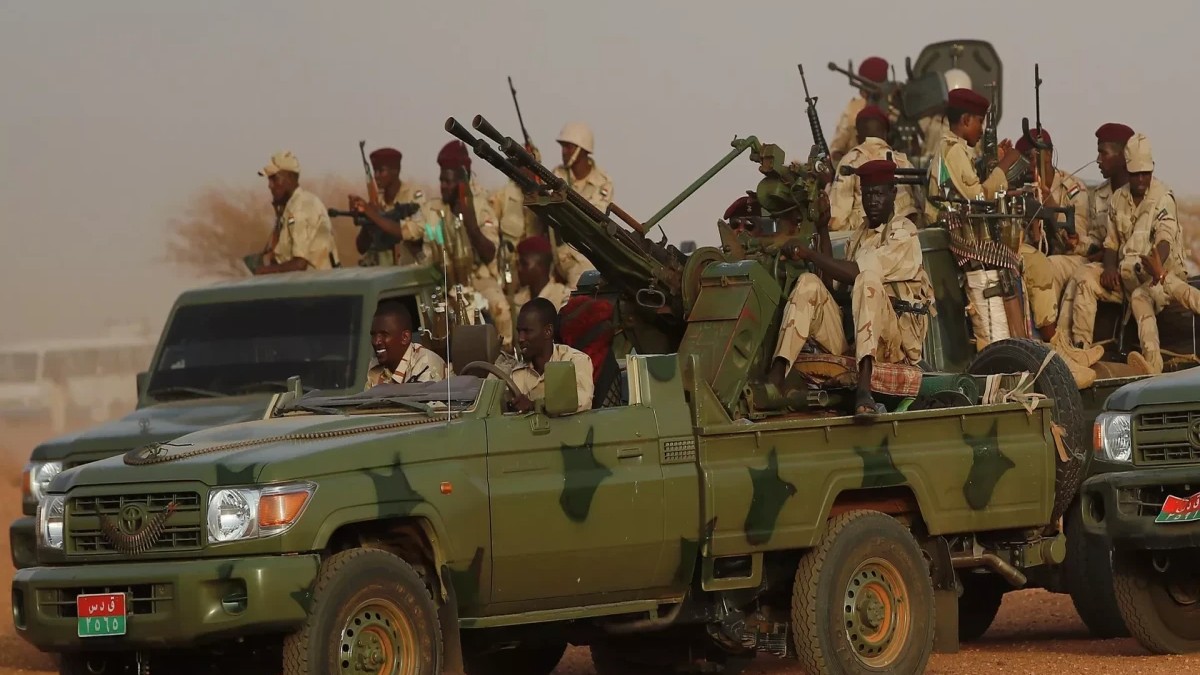
- External military support is very likely to sustain and improve the SAF and RSF's ability to conduct sophisticated operations over the next 1-3 months. The UN Independent International Fact-Finding Mission reported a transnational network involving individuals and entities in the UAE, Chad, Libya and Somalia supplying the RSF with weapons, military equipment, logistics, training and foreign personnel. It documented up to 2,000 former Colombian military contractors operating combat drones, artillery and advanced weapons alongside RSF units in Darfur and Kordofan, with some present around al-Fashir. The Mission also reported that foreign suppliers enhanced the drone capabilities of both sides and found reasonable grounds to believe that the SAF used foreign-supplied drones that harmed civilians and civilian infrastructure. (Confidence: high · ASSESSED)
- I&W: Confirm: within 0-14 days, public reporting or an official statement identifies another transfer of personnel, weapons, training or drone technology through Chad, southeastern Libya or Bosaso to RSF units. (0-14 days)
- I&W: Break: within 1-3 months, credible reporting documents interruption of the named supply routes and no further foreign personnel or foreign-supplied drone use by either force. (1-3 months)
- SAF and RSF combat is very likely to continue across Darfur and Kordofan over the next 30 days, and drone attacks are very likely to remain a principal source of civilian harm. The UN Mission reported more than 1,000 people killed in drone strikes during January-May 2026 and attributed serious violations in drone operations to both sides. Recent reporting identifies RSF strikes that killed 114 people in Kalogi, South Kordofan, and SAF strikes that killed at least 70 people and left Ad-Da'ein Teaching Hospital in East Darfur non-functional. The exact period of the repeated RSF drone campaign against El Obeid remains unresolved, with reporting spanning May-July and July-August 2026. (Confidence: high · ASSESSED)
- I&W: Confirm: within 0-14 days, credible reporting records a new SAF or RSF strike in El Obeid, Ad-Da'ein, Kalogi, Jafawa or Al Nahud, or records further attacks on civilian infrastructure. (0-14 days)
- I&W: Break: within 0-30 days, UN, official or independently corroborated reporting verifies a sustained cessation of SAF-RSF attacks across Darfur and Kordofan. (0-30 days)
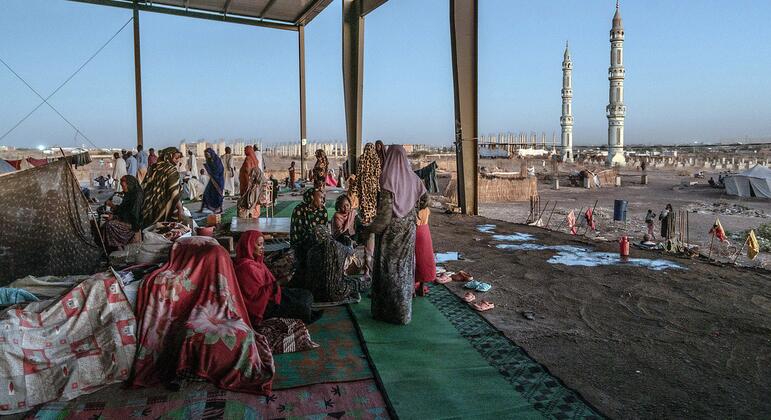
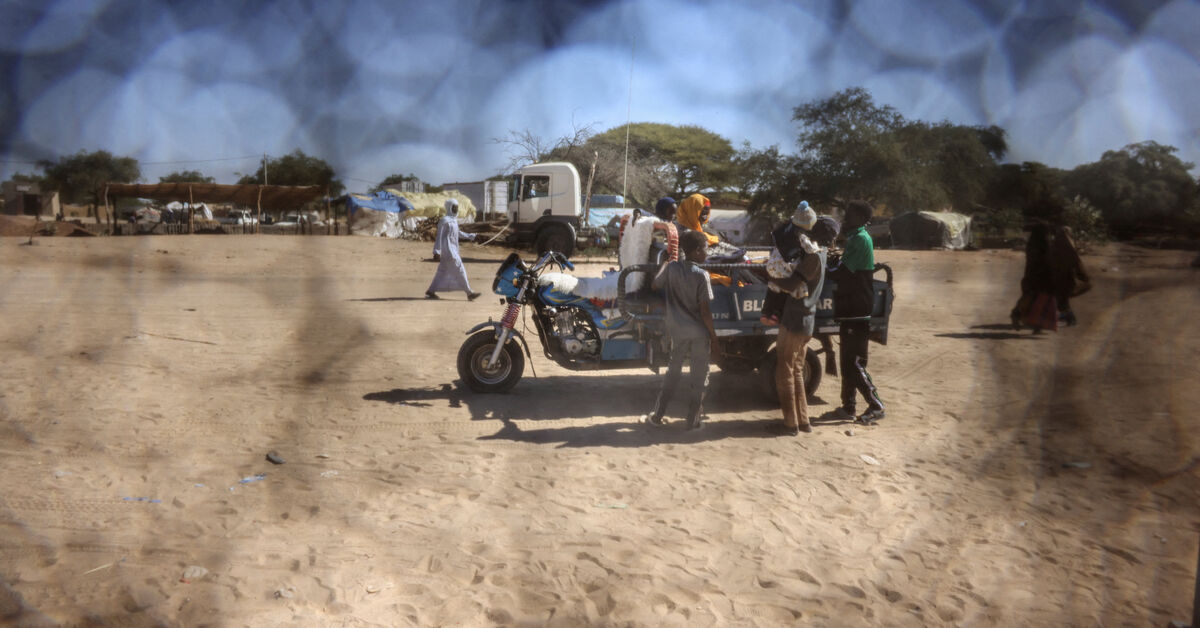
- Humanitarian displacement pressure is very likely to worsen over the next 30 days, especially in North Darfur, Kordofan and along the Chad border. International organisations report that more than 100,000 people in Darfur and Kordofan face displacement, while thousands have moved from El Fasher, Zamzam and Abu Shouk to Tawila. UNHCR data put the number of Sudanese refugees who crossed into Chad at about 942,954 as of 16 August 2026, and women and children account for 86% of new arrivals. The UN Fact-Finding Mission reports that more than 14 million people have been displaced by the war. (Confidence: high · ASSESSED)
- I&W: Confirm: within 0-14 days, UNHCR, international organisations or local reporting records new arrivals in Tawila or additional Sudanese refugees crossing into Chad. (0-14 days)
- I&W: Break: within 0-30 days, credible reporting records sustained returns from Tawila or Chad and no new displacement from El Fasher, Zamzam, Abu Shouk or Kordofan. (0-30 days)
- West Kordofan's public-health situation is likely to deteriorate over the next 30 days, but the reported cholera outbreak remains low-confidence. Al Nahud Central Emergency Room reported more than 61 cases and 9 deaths in Ad Dayah locality, while Babanusa emergency room reported 12 deaths in Hamair Umm Taqoula village within two days. This assessment rests on local emergency-room reporting and lacks corroboration from UN or other health authorities. (Confidence: low · ASSESSED)
- I&W: Confirm: within 0-14 days, an independent health authority or international organisation confirms additional cholera cases or deaths in Ad Dayah, Babanusa or nearby West Kordofan localities. (0-14 days)
- I&W: Break: within 0-30 days, official reporting records no new cases and confirms that transmission has not spread beyond the named localities. (0-30 days)
- International pressure to restrict external support is likely to intensify over the next 1-3 months, but a near-term halt to the alleged supply networks is unlikely. On 3 September 2026, the UN Mission urged enforcement of the Darfur arms embargo and its extension to all Sudan. The US is pushing for nationwide coverage that explicitly includes drones and related technology. The UAE denied providing military, logistical, financial or political support to the RSF, while Chad denied knowledge of weapons transfers through its territory and said it remained neutral. These denials leave responsibility for external support and the prospects for enforcement contested. (Confidence: medium · ASSESSED)
- I&W: Confirm: within 0-14 days, the US or UN publicly tables or endorses a measure covering all Sudan and drones, or announces enforcement action against a named supply-network entity. (0-14 days)
- I&W: Break: within 1-3 months, no formal embargo action follows and credible reporting confirms continued movement of personnel, weapons or drone technology through the named transit points. (1-3 months)
- Blue Nile is likely to see intensified SAF-led operations over the next 1-3 months, while control around Kurmuk, Qaysan and the Ethiopia border remains uncertain. The Sudanese army sent reinforcements to Blue Nile, Joint Forces arrived in Ed Damazin for operations against RSF-held areas, and army aircraft targeted an RSF supply convoy near the Ethiopian border. Separate reporting says the RSF announced control of Al Kurmuk, Qaysan and the Bakuri military base in August 2025, while the Blue Nile governor described conditions around Kurmuk as relatively calm on 31 August 2026. The conflicting accounts lower confidence in exact territorial control. (Confidence: medium · ASSESSED)
- I&W: Confirm: within 0-14 days, reporting identifies additional SAF or Joint Forces deployments to Ed Damazin or new army airstrikes against RSF positions or supply routes in Blue Nile. (0-14 days)
- I&W: Break: within 1-3 months, independent reporting confirms sustained calm around Kurmuk and no further SAF or Joint Forces deployments to Blue Nile. (1-3 months)
Outlook & scenarios
Protracted combat with wider drone reach (75%)
The SAF and RSF maintain active combat in Darfur, Kordofan and Blue Nile through the next 1-3 months. Foreign personnel and technology sustain drone operations, while attacks on civilian areas and infrastructure continue in places such as El Obeid, Kalogi and East Darfur. Displacement towards Tawila and Chad increases.
Diplomatic pressure with limited enforcement (55%)
The US and UN continue pressing for a nationwide arms embargo that covers drones, but UAE and Chadian denials constrain consensus over responsibility. Formal diplomatic pressure rises without a rapid interruption of the routes supplying personnel, weapons and logistics to the RSF.
SAF pressure in Blue Nile and Kordofan (35%)
The SAF and allied Joint Forces expand operations from Ed Damazin and along the Ethiopia border, while continuing pressure against RSF positions in Kordofan. Local gains do not remove the RSF's ability to contest positions or conduct drone attacks against SAF-held infrastructure.
Chad border escalation wildcard (15%)
A further reported Sudanese aircraft or drone incident inside Chad triggers additional Chadian deployments, border closures or direct exchanges with Sudanese forces. This is a low-probability, high-impact pathway that would widen the conflict's operational area and complicate aid access for Sudanese refugees in eastern Chad.
Recommendations
- Maintain a 0-14 day collection watch on personnel, weapons, training and drone movements through Chad, southeastern Libya and Bosaso. Separate confirmed transfers from allegations and record the stated role of any foreign personnel.
- Reconcile the conflicting May-July and July-August 2026 reporting windows for the RSF drone campaign against El Obeid. Track electricity, fuel, water, health and transport outages in the city as operational indicators.
- Prioritise monitoring of new attacks in Kalogi, Ad-Da'ein, Jafawa, Al Nahud and El Obeid. Record the reported actor, platform, target, casualties and damage to civilian infrastructure for each incident.
- Track displacement reporting from El Fasher, Zamzam, Abu Shouk and Tawila, alongside UNHCR reporting from Ouaddai, Wadi Fira, Sila and Ennedi East in Chad. Treat women and children as the primary protection indicator because they account for 86% of new arrivals.
- Seek independent confirmation of the West Kordofan cholera reports through health authorities, UN agencies or additional local emergency rooms before using the figures in high-confidence assessments.
- Monitor US and UN action on extending the arms embargo to all Sudan and explicitly covering drones. Flag any named enforcement action involving supply-network entities or transit points.
- Treat the four NASA FIRMS thermal detections recorded from 2 to 3 September 2026 as heat indicators only. Do not use them alone to attribute strikes, shelling or fires.
Confidence & uncertainty
Overall confidence is high because the central assessment is supported by a UN Fact-Finding Mission report, UN News, Reuters reporting and UNHCR data. These sources corroborate the presence of external support networks, the expansion of drone capabilities, serious civilian harm and large-scale displacement. The main uncertainties concern the exact number and operational role of former Colombian contractors, the precise timing of the El Obeid strike campaign, responsibility for support routes involving the UAE and Chad, and territorial control around Kurmuk and other Blue Nile locations.
Intelligence gaps
- [EEI 1.1 · UNCOVERED] Observed concentrations and movement of armed units (size estimates, unit identifiers if visible) within X km of named towns/roads/airfields (e.g., El Fasher, Geneina, Nyala, Khartoum neighborhoods) including timestamps and direction of movement. Recommended collection: imagery/satellite
- [EEI 1.3 · UNCOVERED] Reports or intercepts of orders, operational directives or public statements from RSF/SAF commanders indicating planned offensives, ceasefire acceptance/rejection, defensive postures or orders to withdraw from named locations. Recommended collection: signals/communications intercepts
- [EEI 1.4 · PARTIAL] Status of critical infrastructure and lines of communication: control or denial of named bridges, main highways (identify route numbers), airfields, fuel depots and telecommunication hubs and any reported sabotage/blockage incidents. Recommended collection: human intelligence/field reporting
- [EEI 2.1 · PARTIAL] Counts and locations of newly displaced persons arriving at formal sites, informal camps, border crossings or collective centers (daily/weekly arrivals, site coordinates), including demographics (women, children, elderly) where available. Recommended collection: humanitarian/UN OCHA reports
- [EEI 2.2 · UNCOVERED] Access impediments to humanitarian assistance: reported attacks on, blockages of, or denial of passage for named humanitarian convoys (dates, GPS locations, responsible actor if known) and closure status of specific routes. Recommended collection: human intelligence/field reporting
- [EEI 2.3 · PARTIAL] Functional status of medical infrastructure in named locations: number of operational hospitals/clinics, reported shortages of key medicines/blood, and hospital casualty/occupancy figures for the last 72 hours. Recommended collection: medical/health cluster reporting
- [EEI 3.1 · PARTIAL] Detection of flights, ships or overland convoys delivering military materiel or foreign personnel to named airfields, ports or border crossings (flight/IMO numbers, manifests if available, timestamps, route origin/destination). Recommended collection: air-traffic / maritime / border customs
- [EEI 3.2 · PARTIAL] Imagery or on-the-ground confirmation of foreign military personnel or private military contractor bases/forward operating elements at specified coordinates or compounds, including vehicle/weapon types observed. Recommended collection: imagery/satellite
- [EEI 3.3 · UNCOVERED] Financial and sanctions-relevant indicators: atypical large transfers, use of designated front companies, or shipments routed through third states linked to procurement of weapons or fuel for RSF or SAF (transaction dates, parties, amounts where obtainable). Recommended collection: financial intelligence
TLP:CLEAR