TLP:CLEAR · Disclosure is not limited.
Sudan Conflict: Kordofan Fighting and Darfur Humanitarian Strain
Time window: Last 7 days · Audience: General analyst · Type: Situation report · DTG: 2026-08-20 22:06Z · Overall confidence: HIGH
BLUF
Very likely the Sudanese Armed Forces and Rapid Support Forces remain in active conflict, with fighting intensifying across North, South and West Kordofan while the RSF remains entrenched across much of Darfur. Almost certainly severe humanitarian pressure will persist through October 2026 as new displacement, flooding, damaged shelters and restricted aid access reinforce one another. AU diplomatic engagement is unlikely to produce a verified ceasefire in the near term.
Executive summary
Current reporting indicates that the SAF and RSF are sustaining heavy fighting across Kordofan. RSF attacks on aid routes to el-Obeid and drone strikes on electricity infrastructure are worsening civilian conditions, while an RSF security operation in Nyala has involved additional troops, armoured vehicles and air support. IOM reports at least 200,000 new displacements since late 2025, including movements in West Darfur and Blue Nile, and heavy rainfall damaged nearly 1,350 shelters in North Darfur. The AU is conducting a field mission and engaging the conflict parties, but ongoing combat provides no indication of an imminent verified ceasefire. NASA thermal detections provide evidence of heat anomalies in Sudan, not attribution of attacks to either side.
Change from previous assessment
Since the 19 August 2026 prior brief, the current NASA product reports four thermal anomalies over the two days ending 20 August, compared with two reported in the earlier product. Current reporting adds the RSF security operation in Nyala, including additional troops, armoured vehicles and air support, and provides sharper detail on fighting in Kordofan, attacks on aid routes to el-Obeid and damage to El Obeid's electrical transformer. The assessment that the SAF and RSF remain in active conflict and that humanitarian pressure will persist is maintained. A new low-confidence judgement has been added on the Nyala operation, while the assessment that NASA detections cannot attribute attacks remains unchanged.
Key judgments
- Very likely the SAF and RSF are sustaining active conflict and intensifying operations in Kordofan as of 20 August 2026. Fighting is reported across North, South and West Kordofan. Hundreds of thousands of people are sheltering in el-Obeid while the RSF attacks aid trying to reach them, and heavy fighting and drone strikes on El Obeid's main electrical transformer have disrupted water pumping, health facilities and telecommunications. The SAF controls much of Khartoum, while the RSF remains entrenched across much of Darfur, indicating that neither side has ended the wider conflict. This is an assessed judgement based on current humanitarian and security reporting, with uncertainty over precise front-line control. (Confidence: medium · ASSESSED)
- I&W: CONFIRM: IOM or another multilateral source reports new displacement or further fighting in North, South or West Kordofan within the next reporting cycle. (0-14 days)
- I&W: BREAK: the SAF and RSF announce and observe a monitored cessation across Kordofan for at least 14 consecutive days, with no reported attacks on aid routes or electricity infrastructure. (0-14 days)
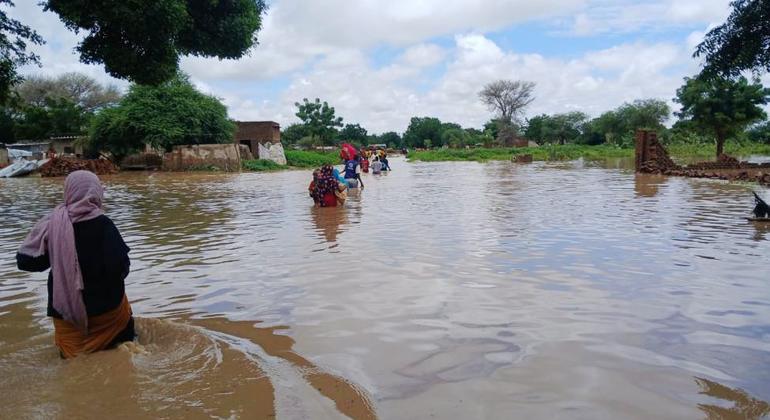
- Almost certainly severe humanitarian pressure will persist through 31 October 2026. IOM reports at least 200,000 new displacements across Sudan since late 2025, including nearly 18,000 people displaced in West Darfur and 7,800 displaced by clashes in Blue Nile. Heavy rainfall damaged nearly 1,350 shelters in North Darfur and displaced more than 1,000 families, while humanitarian agencies are struggling to reach communities affected by violence in Kordofan. Sudan's 2026 humanitarian appeal requires $2.9 billion, but only about $1.2 billion had been received. A separate estimate of more than 300,000 people displaced from South Darfur is not directly additive because the figures cover different areas and periods. Confidence is high for the broad trend, but lower for aggregate totals. (Confidence: high · ASSESSED)
- I&W: CONFIRM: IOM reports additional displacement from Darfur, Blue Nile or Kordofan, or further shelter damage from flooding. (0-14 days)
- I&W: BREAK: humanitarian agencies report sustained access to affected Kordofan and Darfur communities with no additional displacement recorded for at least one reporting period. (1-3 months)
- Likely the RSF's security operation in Nyala will further restrict humanitarian access during the next several weeks. The RSF reportedly deployed additional troops, armoured vehicles and air support, while local authorities described the operation as targeting armed groups attacking RSF convoys and disrupting supply lines. Aid agencies warned that the crackdown could further restrict access in Nyala, South Darfur. This is a low-confidence assessment because the reporting is thin, largely single-source and relies partly on local-authority statements. (Confidence: low · ASSESSED)
- I&W: CONFIRM: checkpoints, house-to-house searches or the curfew continue beyond the reported 48-hour period, and aid agencies suspend or reduce operations in Nyala. (0-14 days)
- I&W: BREAK: the RSF removes movement restrictions and aid agencies publicly report restored access to Nyala and surrounding communities. (0-14 days)
- Likely AU diplomatic engagement on Sudan will continue through October 2026, but an AU-mediated verified SAF-RSF ceasefire is unlikely in the next one to three months. An AU delegation has begun a two-day field visit, the AU Peace and Security Council is engaging Sudanese authorities and other conflict parties, and the AU continues to call for an inclusive Sudanese-led political process. Earlier AU and Jeddah commitments established precedents for ceasefire and humanitarian arrangements, but current fighting across Kordofan indicates that those commitments have not produced a durable cessation. This is an assessed judgement with medium confidence because reporting confirms AU activity but does not establish current SAF or RSF acceptance of a monitored ceasefire. (Confidence: medium · ASSESSED)
- I&W: CONFIRM: the AU publishes a follow-on communiqué naming SAF and RSF commitments and reports a monitored cessation in Darfur or Kordofan. (0-14 days)
- I&W: BREAK: AU engagement ends without a joint SAF-RSF commitment, while fighting and displacement continue in Kordofan. (1-3 months)
- Very likely NASA's four VIIRS thermal detections in Sudan over the two days ending 20 August 2026 will remain insufficient to attribute attacks to the SAF or RSF. NASA states that the detections record heat rather than cause, and that the signatures can correspond to strikes, shelling, industrial fires or wildfires. This is a reported judgement with high confidence because the limitation is explicit in NASA's explanation of its official detection product. (Confidence: high · REPORTED)
- I&W: CONFIRM: subsequent NASA products continue to label Sudan detections as thermal anomalies without identifying a cause or responsible actor. (0-14 days)
- I&W: BREAK: independent imagery or named-source reporting geographically matches a detection to a specific SAF or RSF strike. (0-14 days)
Outlook & scenarios
Likely: Continued Kordofan attrition and humanitarian deterioration (65%)
The SAF and RSF continue fighting across North, South and West Kordofan. Attacks on aid routes and electricity infrastructure around El Obeid sustain displacement and service disruption, while Darfur remains divided between SAF control around Khartoum-linked areas and RSF control across much of the west.
Likely: AU engagement without a verified ceasefire (45%)
The AU continues field engagement and political consultations, but the SAF and RSF do not accept or observe a monitored ceasefire. Humanitarian access improves in isolated locations without changing the wider conflict pattern.
Unlikely: Nyala crackdown produces wider access restrictions (30%)
The RSF maintains checkpoints, searches and movement restrictions in Nyala. Aid operations are suspended or reduced, increasing pressure on civilians in South Darfur and reinforcing wider access problems.
Very unlikely but high impact: Abrupt urban displacement around El Obeid (15%)
A concentrated SAF-RSF attack on routes, aid movements or electricity infrastructure around El Obeid produces a sharp increase in urban displacement and a prolonged interruption to water, health and telecommunications services.
Recommendations
- For the next 14 days, prioritise collection on North, South and West Kordofan. Record SAF and RSF clash locations, drone activity, damage to El Obeid's transformer, road access and the outcome of attempted aid movements.
- Maintain separate displacement ledgers for West Darfur, South Darfur, Blue Nile, Kordofan and Sudan-wide totals. Record the reporting period, geographic scope and source confidence before comparing figures. Do not add the 200,000 and 300,000 estimates without resolving their different coverage.
- Track Nyala at least daily for checkpoints, house-to-house searches, curfew enforcement, troop and armoured-vehicle deployments, air support and aid-agency access. Treat any suspension of humanitarian operations as an escalation trigger.
- Track AU outputs for named SAF and RSF commitments, monitored access arrangements and evidence of an observed cessation. Do not treat a field visit or political statement as evidence of a verified ceasefire.
- Use NASA VIIRS detections as cueing for further collection only. Require independent imagery or named-source confirmation before attributing any thermal anomaly to the SAF or RSF.
- Review the Sudan humanitarian funding gap and delivery figures alongside new displacement reports. Flag any deterioration in supply deliveries, shelter damage or access restrictions that coincides with fighting in Kordofan or flooding in Darfur.
Confidence & uncertainty
Overall confidence is high because the main judgements draw on corroborated reporting from IOM and other multilateral sources, NASA's official thermal-detection product, AU statements and major-media reporting. The broad pattern of active conflict, displacement and constrained humanitarian access is consistent across sources. The main uncertainties concern precise front-line control, the non-additive displacement estimates, attribution of thermal anomalies and the Nyala operation, which remains thin and largely single-source.
Intelligence gaps
- [EEI 1.3 · PARTIAL] Reports or intercepts of orders, operational directives or public statements from RSF/SAF commanders indicating planned offensives, ceasefire acceptance/rejection, defensive postures or orders to withdraw from named locations. Recommended collection: signals/communications intercepts
- [EEI 1.4 · PARTIAL] Status of critical infrastructure and lines of communication: control or denial of named bridges, main highways (identify route numbers), airfields, fuel depots and telecommunication hubs and any reported sabotage/blockage incidents. Recommended collection: human intelligence/field reporting
- [EEI 2.2 · PARTIAL] Access impediments to humanitarian assistance: reported attacks on, blockages of, or denial of passage for named humanitarian convoys (dates, GPS locations, responsible actor if known) and closure status of specific routes. Recommended collection: human intelligence/field reporting
- [EEI 2.3 · UNCOVERED] Functional status of medical infrastructure in named locations: number of operational hospitals/clinics, reported shortages of key medicines/blood, and hospital casualty/occupancy figures for the last 72 hours. Recommended collection: medical/health cluster reporting
- [EEI 3.1 · UNCOVERED] Detection of flights, ships or overland convoys delivering military materiel or foreign personnel to named airfields, ports or border crossings (flight/IMO numbers, manifests if available, timestamps, route origin/destination). Recommended collection: air-traffic / maritime / border customs
- [EEI 3.2 · UNCOVERED] Imagery or on-the-ground confirmation of foreign military personnel or private military contractor bases/forward operating elements at specified coordinates or compounds, including vehicle/weapon types observed. Recommended collection: imagery/satellite
- [EEI 3.3 · UNCOVERED] Financial and sanctions-relevant indicators: atypical large transfers, use of designated front companies, or shipments routed through third states linked to procurement of weapons or fuel for RSF or SAF (transaction dates, parties, amounts where obtainable). Recommended collection: financial intelligence
Cited sources
[1] outlookindia.com · 200,000 More Sudanese Flee Homes As Kordofan Becomes A New Killing Field (B) · sha256:4d8af1119b3e [2] Al Jazeera · The road to el-Obeid, Sudan’s besieged city sheltering thousands (A) · sha256:6276087bb566 [3] United Nations · Sudan war: 200,000 newly displaced as fighting and floods intensify (A) · sha256:fa1fd624cfd7 [4] The New Humanitarian · RSF drone attacks in Sudan, Somalia’s drought emergency, and WFP sticks with Palantir: The Cheat Sheet (B) · sha256:26ef456a2451 [5] Al Jazeera · Can the AU make its current Sudan mission count? (A) · sha256:af7bb195e3ad [6] The Dawn · Sudan fighting kills at least 12, displaces thousands – The Dawn (B) · sha256:f7e6e44c7b19 [7] thetaiwantimes.com · RSF launches massive security sweep in Nyala, imposing curfew and checkpoints. (B) · sha256:e45a66b4bf7a [8] NASA · NASA FIRMS thermal detections — Sudan (2d) (A) · sha256:d9c88ef7a304
Source content hashes were computed at collection time; the cited text is preserved unmodified for the life of this product.
TLP:CLEAR