TLP:CLEAR · Disclosure is not limited.
Sudan Conflict: Kordofan Fighting and Humanitarian Access Deteriorate
Time window: Last 7 days · Audience: General analyst · Type: Situation report · DTG: 2026-09-02 22:08Z · Overall confidence: HIGH
BLUF
The SAF and RSF are very likely to remain in active combat through 2 October 2026, with North Kordofan, South Kordofan, Blue Nile and Darfur the main pressure points. Recent attacks on WFP aid near Dilling, new displacement around Geissan and continued uncertainty over control of Bara indicate that military gains have not reduced civilian or humanitarian risks.
Executive summary
The SAF has reported gains in North Kordofan and Blue Nile, including the recapture of Bara and Kurmuk, while the RSF has separately been reported to have recaptured Bara and to have attacked SAF positions in Blue Nile with SPLM-N. The reported defection of around 200 RSF fighters led by Abubakr Hamouda Dahloub supports a local SAF advantage, but the RSF has not commented and the account lacks independent operational confirmation. Humanitarian conditions are deteriorating: 30.4 million people require assistance, nearly 22,000 people were reportedly displaced from Geissan in seven days, and an aerial attack destroyed two WFP trucks carrying food for 5,800 people. Activity at the ENDF base in Asosa and the SAF's reported strikes inside Chad raise regionalisation concerns, although the purpose of the Ethiopian buildup remains unresolved.
Change from previous assessment
Since the 1 September 2026 brief, the assessment of continued fighting and humanitarian deterioration is reinforced by the reported destruction of two WFP trucks outside Dilling, WFP's record of eight aerial attacks since January, nearly 22,000 people reportedly displaced from Geissan, and new displacement around Ar Rahad and Al Abbasiya. The regionalisation concern is more prominent because Yale HRL reported 100 newly arrived light technical vehicles at Asosa and warned of a possible attack on Damazin. Confidence in exact battlefield control remains unchanged because reporting still conflicts over Bara and Blue Nile. The reported RSF defection remains a medium-confidence judgment, while the ceasefire judgment remains low confidence because current reporting provides no direct evidence of negotiations.
Key judgments
- The SAF and RSF are very likely to remain in active combat through 2 October 2026, with North Kordofan, South Kordofan, Blue Nile and Darfur the main pressure points. The SAF has reported regaining Bara and Kurmuk and repelling an RSF and SPLM-N attack at Fazughli, while separate reporting says the RSF recaptured Bara. Fighting and reported detention of civilians continue in West Darfur and El Geneina. The contradiction over Bara and the conflicting accounts of local security conditions in Blue Nile lower confidence in exact territorial control, but not in the broader assessment that fighting will continue. (Confidence: high · ASSESSED)
- I&W: CONFIRM: OCHA, the SAF or the RSF reports new fighting, casualties or displacement at Bara, Fazughli, Geissan, El Geneina or Al Abbasiya and Ar Rashad. (0-14 days)
- I&W: BREAK: SAF and RSF statements, supported by geolocated imagery, show a sustained halt in combat across the named pressure points. (0-30 days)
- The SAF is likely to improve its operational position in North Kordofan over the next 1-3 months, but the RSF is unlikely to lose the ability to contest North Kordofan and Blue Nile. SAF control of the Exports Road and reported gains at Bara, Jabra al-Sheikh and Um Sayala support a local SAF advantage. The reported arrival of around 200 RSF defectors from Kordofan, led by Abubakr Hamouda Dahloub, would add personnel and intelligence value, but the account remains operationally unconfirmed and the RSF has not publicly commented. The RSF's reported recapture of Bara and its operations with SPLM-N in Blue Nile show that it retains means to challenge SAF positions. (Confidence: medium · ASSESSED)
- I&W: CONFIRM: The SAF identifies Dahloub and the defectors in operational communiques or imagery showing them participating in fighting around the Exports Road or Bara. (0-14 days)
- I&W: BREAK: The RSF retakes and holds Bara or interrupts SAF use of the Exports Road in reporting supported by imagery. (1-3 months)
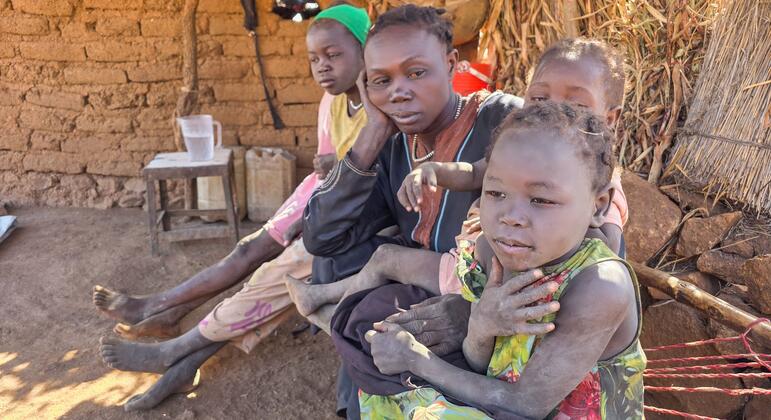
- Humanitarian conditions in Darfur and Kordofan are very likely to worsen over the next 30 days. OCHA and other international organisations report that more than 100,000 people face displacement in Darfur and Kordofan. Local authorities report nearly 22,000 people displaced from Geissan in seven days, while IOM reports around 450 displaced from Ar Rahad and OCHA reports at least 160 families displaced around Al Abbasiya and Ar Rashad. The UN and OCHA report 30.4 million people in need of assistance, while IPC data identify 19.5 million people in acute hunger and 135,000 facing catastrophic food insecurity. The separate estimate of 21 million people requiring food assistance uses a different metric, creating uncertainty over the headline total but not over the direction of humanitarian deterioration. (Confidence: high · ASSESSED)
- I&W: CONFIRM: OCHA or IOM reports fresh displacement from Geissan, Ar Rahad, Al Abbasiya, Ar Rashad, Darfur or Kordofan, or WFP reports another interruption to deliveries for Kadugli. (0-30 days)
- I&W: BREAK: WFP reports uninterrupted deliveries to Kadugli and OCHA reports no new displacement in Darfur or Kordofan during the period. (0-30 days)
- Aerial attacks are likely to continue disrupting humanitarian operations and harming civilians through 2 October 2026, but attribution for the attack near Dilling and the drone strikes around El Obeid remains unresolved. WFP has recorded eight aerial attacks on its premises and operations since January. An unidentified aerial attacker destroyed two WFP trucks outside Dilling carrying 50 metric tonnes of food intended to assist 5,800 people for one month, while unidentified drone operators reportedly caused casualties at a fuel market in Adekong and in eastern El Obeid. ACLED recorded more than 50 drone strikes across Kordofan in June. Reporting gives conflicting years for the Dilling attack, 2025 and 2026, so the event date and perpetrator require verification. (Confidence: high · ASSESSED)
- I&W: CONFIRM: WFP, OCHA or another reliable source records another aerial attack on aid assets, fuel infrastructure, power infrastructure or civilian sites in South Kordofan, North Kordofan or West Darfur. (0-14 days)
- I&W: BREAK: WFP reports no further attacks on its facilities or convoys and confirms uninterrupted operations in Sudan. (0-30 days)
- Cross-border military and political pressure involving Chad and Ethiopia is likely to persist over the next 1-3 months, while a broader regional war is unlikely. The SAF reportedly conducted aerial and drone strikes inside northeastern Chad on 20 August against a claimed RSF resupply convoy, and SAF officials said a roughly 200-vehicle convoy carried UAE-linked weapons from Al-Kufra through Chad. The African Union Commission Chairperson warned that the strikes risk widening the war. Separately, Yale HRL identified 100 newly arrived light technical vehicles at the ENDF base in Asosa, a sixfold increase, and warned of a possible imminent RSF attack on Damazin. Claims that Ethiopian authorities support the RSF and that Asosa activity is linked to Sudan are based on medium-confidence local-media reporting and remain uncorroborated. (Confidence: medium · ASSESSED)
- I&W: CONFIRM: Further SAF strikes occur inside Chad, or additional vehicles and weapons arrive at Asosa with movement towards Blue Nile or a reported RSF attack on Damazin. (0-14 days)
- I&W: BREAK: Asosa activity returns to its previous level, Ethiopia publicly denies operational support to the RSF, and no further cross-border strike is reported. (1-3 months)
- A nationwide SAF-RSF ceasefire is unlikely through 2 October 2026, although US diplomatic engagement is likely to continue. The conflict has continued since April 2023, OCHA reports that violence is still forcing civilians from their homes, and US Special Envoy Tom Perriello reiterated to Chadian President Mahamat Idriss Deby that there is no military solution. This is a low-confidence inference because the current reporting provides no direct evidence of SAF-RSF ceasefire negotiations or agreed monitoring arrangements. (Confidence: low · ASSESSED)
- I&W: CONFIRM: Fighting continues at any of the main pressure points without a jointly announced SAF-RSF truce or monitoring mechanism. (0-30 days)
- I&W: BREAK: The SAF and RSF announce agreed ceasefire terms, implement a monitored halt and maintain it for at least seven days. (0-30 days)
Outlook & scenarios
Protracted multi-front conflict (65%)
The SAF and RSF continue fighting around Bara, El Obeid, Fazughli, Geissan and Darfur through early October. Local control changes remain disputed, while drone and aerial attacks continue to damage civilian and humanitarian infrastructure. This is the most likely scenario.
SAF consolidation in Kordofan (35%)
The SAF converts its reported control of the Exports Road and recent North Kordofan gains into a stronger position around Bara and adjacent areas. The reported RSF defections reinforce SAF operations, while RSF units retain enough capacity to contest routes and launch attacks into Blue Nile or towards Darfur.
Blue Nile escalation with external backing (20%)
The RSF and SPLM-N intensify operations in Blue Nile, potentially including an attack on Damazin, while activity at Asosa supports continued Ethiopian involvement. The purpose of the Asosa buildup remains uncertain, so this scenario is less likely than continued localised fighting.
High-impact regional spillover (10%)
The SAF conducts further strikes inside Chad or Ethiopia openly supports the RSF, prompting additional border mobilisation and a broader regional crisis. This is unlikely but high impact because it would extend the conflict beyond Sudan and place greater pressure on aid routes through Chad.
Recommendations
- Maintain a 24-hour watchlist for Bara, the Exports Road, El Obeid, Fazughli, Kurmuk, Geissan, Damazin, Dilling, Adekong and El Geneina. Require two independent sources or geolocated imagery before assessing a change in territorial control.
- Verify the year, location and perpetrator of the reported 30 August attack on the WFP trucks near Dilling against the original WFP statement and available imagery. Until resolved, describe the date as 30 August without assigning a year or actor.
- Prioritise humanitarian access reporting for the Kadugli route and for displacement from Geissan, Ar Rahad, Al Abbasiya and Ar Rashad. Treat the reported loss of 50 metric tonnes of food and the displacement of nearly 22,000 people from Geissan as immediate collection priorities.
- Do not attribute the Dilling, Adekong or El Obeid aerial attacks to the SAF or RSF without additional evidence. Track WFP, OCHA and ACLED reporting for attack locations, damage patterns and operational interruptions.
- Monitor the reported 100-vehicle buildup at the ENDF base in Asosa with repeat imagery and movement indicators. Separate evidence of Ethiopian military activity from evidence of direct support to the RSF.
- Treat the reported defection of around 200 RSF fighters led by Abubakr Hamouda Dahloub as unconfirmed until the SAF provides names, locations or evidence of the group participating in operations.
- Prepare contingency analysis for further SAF strikes inside Chad and for an RSF attack on Damazin. Flag any new cross-border strike, verified movement from Asosa towards Sudan, or jointly announced SAF-RSF ceasefire as an immediate assessment trigger.
Confidence & uncertainty
Overall confidence is high for the broad assessment that Sudan remains in active conflict, that Kordofan and Blue Nile are principal pressure points, and that humanitarian conditions are deteriorating. The evidence includes corroborated reporting from the UN, OCHA, WFP, IOM, IPC, NASA FIRMS, ACLED and multiple major-media sources. Confidence is lower for exact territorial control around Bara and Blue Nile, attribution and dating of the Dilling attack, the operational significance of the reported RSF defections, and the purpose of the Asosa buildup.
Intelligence gaps
- [EEI 1.1 · PARTIAL] Observed concentrations and movement of armed units (size estimates, unit identifiers if visible) within X km of named towns/roads/airfields (e.g., El Fasher, Geneina, Nyala, Khartoum neighborhoods) including timestamps and direction of movement. Recommended collection: imagery/satellite
- [EEI 1.2 · PARTIAL] Changes in employment of heavy weapons and systems: documented use or emplacement of artillery, multiple-launch rocket systems, tanks, combat helicopters, and airstrikes at specific coordinates and times. Recommended collection: open-source/media
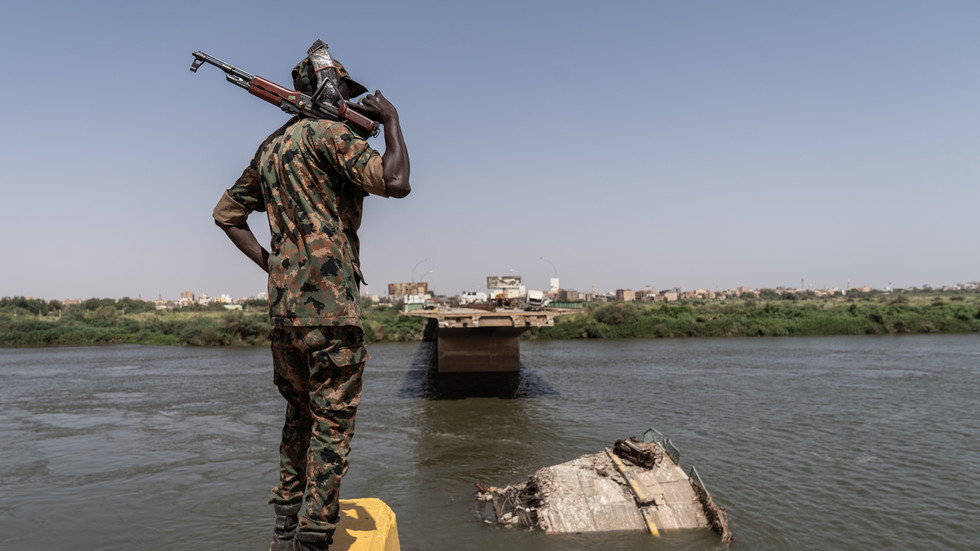
- [EEI 1.4 · PARTIAL] Status of critical infrastructure and lines of communication: control or denial of named bridges, main highways (identify route numbers), airfields, fuel depots and telecommunication hubs and any reported sabotage/blockage incidents. Recommended collection: human intelligence/field reporting
- [EEI 2.1 · PARTIAL] Counts and locations of newly displaced persons arriving at formal sites, informal camps, border crossings or collective centers (daily/weekly arrivals, site coordinates), including demographics (women, children, elderly) where available. Recommended collection: humanitarian/UN OCHA reports
- [EEI 2.3 · PARTIAL] Functional status of medical infrastructure in named locations: number of operational hospitals/clinics, reported shortages of key medicines/blood, and hospital casualty/occupancy figures for the last 72 hours. Recommended collection: medical/health cluster reporting
- [EEI 3.1 · PARTIAL] Detection of flights, ships or overland convoys delivering military materiel or foreign personnel to named airfields, ports or border crossings (flight/IMO numbers, manifests if available, timestamps, route origin/destination). Recommended collection: air-traffic / maritime / border customs
- [EEI 3.2 · PARTIAL] Imagery or on-the-ground confirmation of foreign military personnel or private military contractor bases/forward operating elements at specified coordinates or compounds, including vehicle/weapon types observed. Recommended collection: imagery/satellite
- [EEI 3.3 · PARTIAL] Financial and sanctions-relevant indicators: atypical large transfers, use of designated front companies, or shipments routed through third states linked to procurement of weapons or fuel for RSF or SAF (transaction dates, parties, amounts where obtainable). Recommended collection: financial intelligence
TLP:CLEAR