TLP:CLEAR · Disclosure is not limited.
Sudan Conflict: Multi-Front Offensive Pressure and Humanitarian Strain
Time window: Last 7 days · Audience: General analyst · Type: Situation report · DTG: 2026-09-17 22:04Z · Overall confidence: HIGH
BLUF
Sudan's war is very likely to remain active across Kordofan, Blue Nile and Darfur over the next 30 days. Recent Sudanese Armed Forces gains around Qa'a, Mamsuka, Farshaya and Sudri do not establish a decisive shift, as Rapid Support Forces activity persists in Ambro and Blue Nile. Humanitarian pressure is very likely to worsen, particularly in Blue Nile, North Kordofan, North Darfur and eastern Chad.
Executive summary
The Sudanese Armed Forces have reported simultaneous attacks and territorial gains in North and South Kordofan, including around Qa'a, Mamsuka, Farshaya and Sudri, while fighting and displacement continue in Blue Nile. The Rapid Support Forces retain offensive capacity, including an attack in Ambro, North Darfur, and reported operations with SPLM-N forces near the Ethiopian border. Displacement has reached almost 100,000 people in Blue Nile since January, more than 200,000 from North Kordofan over nine months, and more than 1.3 million Sudanese refugees are now in Chad. Accusations of Ethiopian and UAE support for the RSF have intensified, but Ethiopia and the UAE deny providing such support. Fighting in Abyei adds a separate localised security risk.
Change from previous assessment
Since the 16 September prior brief, the assessment adds confirmed reporting of SAF operations and claimed gains around Qa'a, Mamsuka, Farshaya and Sudri, a new RSF offensive in Ambro, and continued fighting and displacement in Blue Nile. The humanitarian judgement is unchanged but now places sharper emphasis on Blue Nile, North Kordofan, North Darfur and eastern Chad. The assessment adds Abyei as a localised flashpoint and gives greater weight to the risk of indirect regionalisation through alleged Ethiopian drone support. Confidence in battlefield control and external-support attribution remains medium because several claims are based on single-sided or contested reporting.
Key judgments
- The Sudanese Armed Forces are likely to sustain offensive operations in North and South Kordofan and southern Blue Nile over the next 30 days, while the Rapid Support Forces retain the ability to contest these advances. The SAF has reported attacks and gains around Qa'a, Mamsuka, Farshaya and Sudri, as well as efforts to halt an RSF advance in Blue Nile. The RSF and allied SPLM-N forces have also captured Bakori and Surkum army bases, according to RSF reporting. Confidence is medium because the latest territorial claims are concentrated in major-media and army-source reporting, with limited independent verification. (Confidence: medium · ASSESSED)
- I&W: Confirming indicator: SAF forces sustain operations towards Sudri or report control of additional positions along the Qa'a, Mamsuka and Dilling routes. (0-14 days)
- I&W: Breaking indicator: RSF and SPLM-N forces retake Qa'a, Mamsuka or Farshaya, or expand from their Blue Nile positions into additional SAF-held areas. (0-14 days)
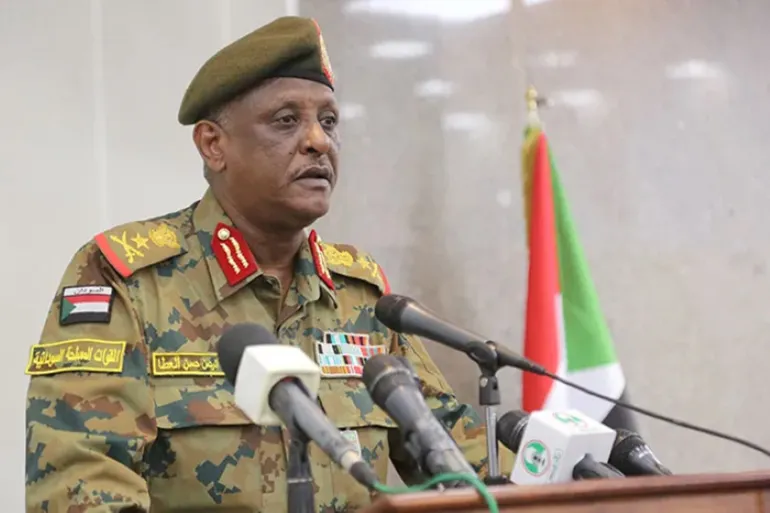
- The Sudanese Armed Forces are unlikely to establish control of all five named Darfur cities, El Fasher, Ed Daein, Nyala, El Geneina and Zalingei, within the next 30 days. Yasser Al-Atta has stated that the SAF will soon enter the cities, but current reporting also records an RSF offensive in Ambro, North Darfur, and the RSF capture of El Fasher in late 2025. This assessment rests partly on a single SAF interview and limited current reporting on control in Darfur, so confidence is medium. (Confidence: medium · ASSESSED)
- I&W: Confirming indicator: No independently corroborated SAF entry into the five named cities, alongside continued RSF activity in Ambro or other North Darfur locations. (0-30 days)
- I&W: Breaking indicator: Independently corroborated SAF entry and sustained control of at least two of the five cities, including El Fasher, Nyala or El Geneina. (0-30 days)
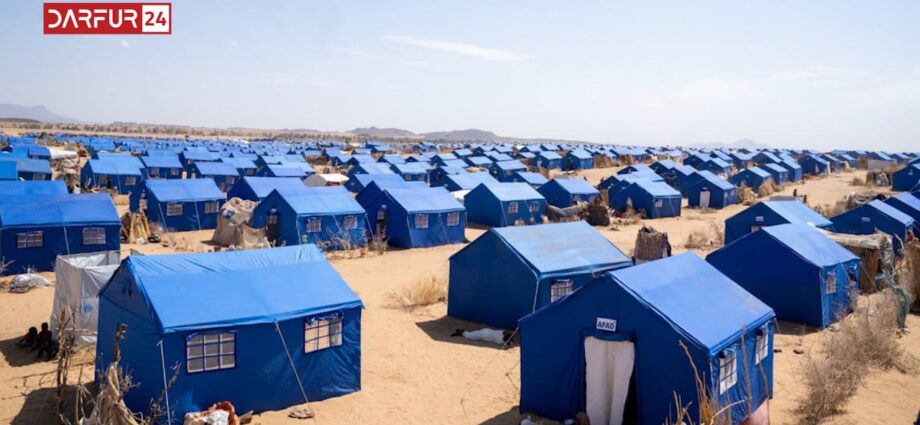
- Humanitarian pressure is very likely to worsen over the next one to three months, with the sharpest deterioration in Blue Nile, North Kordofan, North Darfur and the Chad border area. Blue Nile recorded 99,277 displaced people between January and August, including 45,740 received by Damazin and a child share of 47 per cent. More than 200,000 people have reportedly left North Kordofan over nine months, while UNICEF has reported that malnutrition famine thresholds were surpassed in Um Baru and Kernoi in North Darfur. Chad is managing more than 1.3 million Sudanese refugees and has moved more than 26,000 people from Adré to Arkoum. Confidence is high because the assessment draws on UN, UNICEF, IOM, DTM and major-media reporting across several locations. (Confidence: high · ASSESSED)
- I&W: Confirming indicator: IOM, UNHCR or other humanitarian reporting records new displacement from Blue Nile or North Kordofan, or additional arrivals and camp transfers in eastern Chad. (0-14 days)
- I&W: Breaking indicator: Humanitarian reporting shows no increase in displacement and no expansion of malnutrition or famine thresholds in Blue Nile, North Kordofan or North Darfur. (1-3 months)
- A direct Sudan-Ethiopia war is unlikely over the next 30 days, although the conflict is likely to remain entangled with alleged external support to the RSF. Sudanese officials have accused Ethiopia of allowing RSF drone launches and training activity from Ethiopian territory, while reporting has also alleged UAE support. Ethiopia and the UAE deny supporting the RSF, and Gen. Malik Agar has stated that Sudan does not want war with Ethiopia or a wider regional war. Confidence is medium because the support allegations include satellite-based and multi-source reporting, but direct responsibility for specific operations remains unproven and the principal current accusations come from Sudanese officials. (Confidence: medium · ASSESSED)
- I&W: Confirming indicator: New satellite imagery, government reporting or independent investigations identify repeated drone launches from Assosa or another Ethiopian airfield in support of RSF operations. (0-14 days)
- I&W: Breaking indicator: Sudan and Ethiopia exchange direct fire, acknowledge cross-border strikes or report ground incursions by their regular forces. (0-30 days)
- Abyei is likely to remain a localised but active flashpoint over the next 14 days. Intercommunal fighting has killed at least 26 people and injured 82, while UNISFA has reinforced its presence around Abyei town. Community leaders have reiterated a commitment to dialogue, which lowers but does not remove the risk of retaliation. Confidence is medium because the assessment is based on one reported episode and official statements rather than evidence of a sustained mobilisation. (Confidence: medium · ASSESSED)
- I&W: Confirming indicator: UNISFA reports additional killings, retaliatory attacks or armed mobilisation around Amiet Common Market and Abyei town. (0-14 days)
- I&W: Breaking indicator: Community leaders maintain dialogue and UNISFA reports no further armed incidents after the reinforcement around Abyei town. (0-14 days)
Outlook & scenarios
Continued SAF pressure with RSF counter-moves (75%)
The most likely course is sustained fighting across Kordofan and Blue Nile. The SAF continues operations around Sudri, Qa'a and Dilling, while the RSF and allied SPLM-N forces contest routes and army positions. Darfur remains contested, with the SAF unable to convert its stated plan to enter the major cities into confirmed control.
Humanitarian deterioration outpaces security gains (80%)
Displacement rises in Blue Nile and North Kordofan, pressure on Damazin and Omdurman increases, and food insecurity worsens in North Darfur. Chad continues transferring Sudanese refugees from temporary sites around Adré into formal camps. Humanitarian needs increase even where the SAF reports local territorial gains.
Regional tension remains below interstate war (60%)
Sudanese accusations against Ethiopia and allegations of UAE support continue, with further diplomatic denials and calls to restrict external military assistance. Sudan and Ethiopia avoid direct hostilities while the RSF, SPLM-N and SAF continue operations near the Ethiopian border.
Cross-border escalation involving Ethiopia (15%)
A low-probability, high-impact outcome is direct Sudan-Ethiopia confrontation following a verified drone launch, cross-border strike or ground incursion. Such an event would widen the conflict beyond indirect support allegations and increase pressure on Blue Nile and the Sudan-Ethiopia border.
Recommendations
- Prioritise daily collection on SAF and RSF control claims around Qa'a, Mamsuka, Farshaya, Dilling and Sudri. Require corroboration from imagery, local reporting and opposing-force statements before treating territorial changes as established.
- Track the five Darfur cities named by Yasser Al-Atta separately. Record reported entry, withdrawal, administrative activity and access changes for El Fasher, Ed Daein, Nyala, El Geneina and Zalingei rather than treating a general SAF advance claim as city control.
- Establish a displacement watchlist for Blue Nile, Damazin, North Kordofan, Um Baru, Kernoi and the Adré border area. Flag new population movements, camp transfers, food-distribution interruptions and changes in malnutrition reporting within 14 days.
- Prioritise collection on alleged RSF drone activity from Assosa and other Ethiopian airfields. Separate evidence of launch location, aircraft ownership, operator identity and Ethiopian government responsibility in reporting and assessment.
- Monitor Abyei for retaliation after the Amiet Common Market violence. Use UNISFA statements, incident reporting and evidence of community mobilisation to distinguish a contained episode from a sustained local security crisis.
- Treat NASA FIRMS detections as indicators of heat signatures only. Do not use the current low number of detections to infer a reduction in fighting without corroboration from incident reporting and imagery.
Confidence & uncertainty
Overall confidence is high because the current assessment is supported by multiple official, multilateral and major-media sources. UNISFA reporting corroborates the Abyei incident and response, NASA FIRMS provides a reliable but limited thermal baseline, and UN, UNICEF, IOM and DTM reporting supports the displacement and food-security assessment. The main uncertainties concern battlefield control claims, attribution of drone operations, alleged Ethiopian and UAE support to the RSF, and differing refugee-transfer details around Adré.
Intelligence gaps
- [EEI 1.1 · PARTIAL] Observed concentrations and movement of armed units (size estimates, unit identifiers if visible) within X km of named towns/roads/airfields (e.g., El Fasher, Geneina, Nyala, Khartoum neighborhoods) including timestamps and direction of movement. Recommended collection: imagery/satellite
- [EEI 1.2 · PARTIAL] Changes in employment of heavy weapons and systems: documented use or emplacement of artillery, multiple-launch rocket systems, tanks, combat helicopters, and airstrikes at specific coordinates and times. Recommended collection: open-source/media
- [EEI 1.4 · PARTIAL] Status of critical infrastructure and lines of communication: control or denial of named bridges, main highways (identify route numbers), airfields, fuel depots and telecommunication hubs and any reported sabotage/blockage incidents. Recommended collection: human intelligence/field reporting
- [EEI 2.2 · UNCOVERED] Access impediments to humanitarian assistance: reported attacks on, blockages of, or denial of passage for named humanitarian convoys (dates, GPS locations, responsible actor if known) and closure status of specific routes. Recommended collection: human intelligence/field reporting
- [EEI 2.3 · PARTIAL] Functional status of medical infrastructure in named locations: number of operational hospitals/clinics, reported shortages of key medicines/blood, and hospital casualty/occupancy figures for the last 72 hours. Recommended collection: medical/health cluster reporting
- [EEI 3.1 · PARTIAL] Detection of flights, ships or overland convoys delivering military materiel or foreign personnel to named airfields, ports or border crossings (flight/IMO numbers, manifests if available, timestamps, route origin/destination). Recommended collection: air-traffic / maritime / border customs
- [EEI 3.2 · PARTIAL] Imagery or on-the-ground confirmation of foreign military personnel or private military contractor bases/forward operating elements at specified coordinates or compounds, including vehicle/weapon types observed. Recommended collection: imagery/satellite
- [EEI 3.3 · PARTIAL] Financial and sanctions-relevant indicators: atypical large transfers, use of designated front companies, or shipments routed through third states linked to procurement of weapons or fuel for RSF or SAF (transaction dates, parties, amounts where obtainable). Recommended collection: financial intelligence
Cited sources
[1] Al Jazeera (aljazeera.net) · معارك كردفان. الجيش يغير قواعد الاشتباك ويضيق الخناق على الدعم السريع (A) · Thu Sep 17 2026 13:54:18 GMT+0000 (Coordinated Universal Time) · sha256:03acc9d85909 [2] News.az · Why is fighting in Sudan’s Blue Nile displacing nearly 100,000 people | News.az (B) · sha256:d855dae88d75 [3] Sudanhorizon · SAF Chief of Staff in an Interview with Al-Shorouk: No Future for the RSF in Sudan (D) · Mon Sep 14 2026 14:38:25 GMT+0000 (Coordinated Universal Time) · sha256:35189f37932c [4] Ayin network (3ayin.com) · Ayin network – شبكة عاين (D) · Wed Sep 16 2026 09:13:08 GMT+0000 (Coordinated Universal Time) · sha256:d703b08437b9 [5] Modern Tokyo Times · Sudan Crisis and War – Darfur to Kordofan – Modern Tokyo Times (B) · sha256:55bcb866a248 [6] Darfur24 · Chad Moves 26,000 Sudanese Refugees from Adré Camp - Darfur24 News Website (D) · Tue Sep 15 2026 09:40:05 GMT+0000 (Coordinated Universal Time) · sha256:e8040052ae77 [7] AllAfrica · Sudan Says It Does Not Want War With Ethiopia Amid Rising Tensions (B) · Thu Sep 17 2026 10:29:20 GMT+0000 (Coordinated Universal Time) · sha256:c8eaa2e4c59f [8] Al Jazeera · At least 26 killed in clashes along Sudan-South Sudan border region (A) · Thu Sep 17 2026 20:47:52 GMT+0000 (Coordinated Universal Time) · sha256:4ddeb8863898
Source content hashes were computed at collection time; the cited text is preserved unmodified for the life of this product.
Red cell review: CONCUR WITH COMMENT
TLP:CLEAR