TLP:CLEAR · Disclosure is not limited.
Sudan Conflict: Persistent Fighting, Displacement and Diplomatic Stasis
Time window: Last 7 days · Audience: General analyst · Type: Situation report · DTG: 2026-08-19 22:06Z · Overall confidence: HIGH
BLUF
Very likely the SAF and RSF remain in active conflict, with recent fighting and floods driving further displacement in Blue Nile and Darfur. Diplomatic activity is continuing, but the absence of reported RSF acceptance of a ceasefire and the SAF's stated aim of defeating the RSF make a verified truce unlikely in the near term.
Executive summary
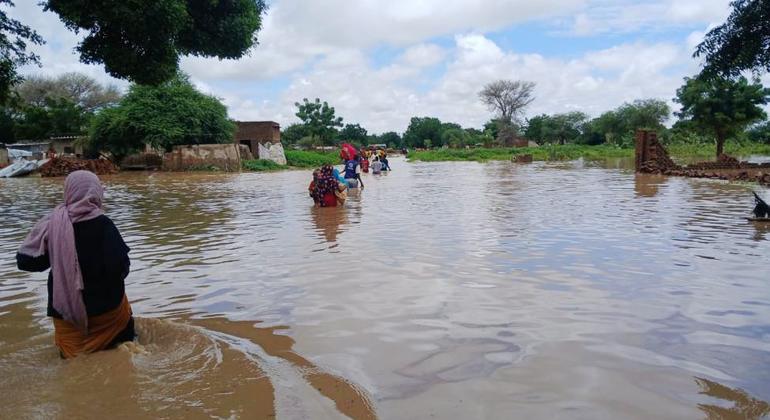
Reporting during 12 to 19 August indicates sustained conflict pressure across Sudan. IOM reported at least 200,000 new displacements since late 2025, including 7,800 people displaced by clashes near Geissan in Blue Nile and nearly 18,000 displaced in West Darfur during the first half of August. Flooding damaged nearly 1,350 shelters in North Darfur, adding to severe food insecurity and famine conditions. The US and AU are pursuing dialogue and engagement, while Sudanese authorities continue to signal military and political resistance to concessions. A separate TPS decision for Sudan remains pending before 19 October 2026.
Change from previous assessment
This brief adds current IOM reporting of at least 200,000 new displacements since late 2025, including specific displacement in West Darfur and Blue Nile, and documents nearly 1,350 shelters damaged by flooding in North Darfur. It adds a current AU field visit, continued AU engagement and a US commitment to support civilian-led dialogue. It also introduces NASA thermal detections, while lowering their evidential value for attribution because NASA states that they record heat rather than cause. The core assessment is unchanged: the SAF and RSF remain in conflict, humanitarian pressure is severe, diplomatic activity has not produced a verified ceasefire and the TPS position remains unresolved. The humanitarian judgment retains high confidence, the conflict and diplomatic judgments remain medium confidence, and the TPS judgement is lowered to low because the status reporting remains contradictory.
Key judgments
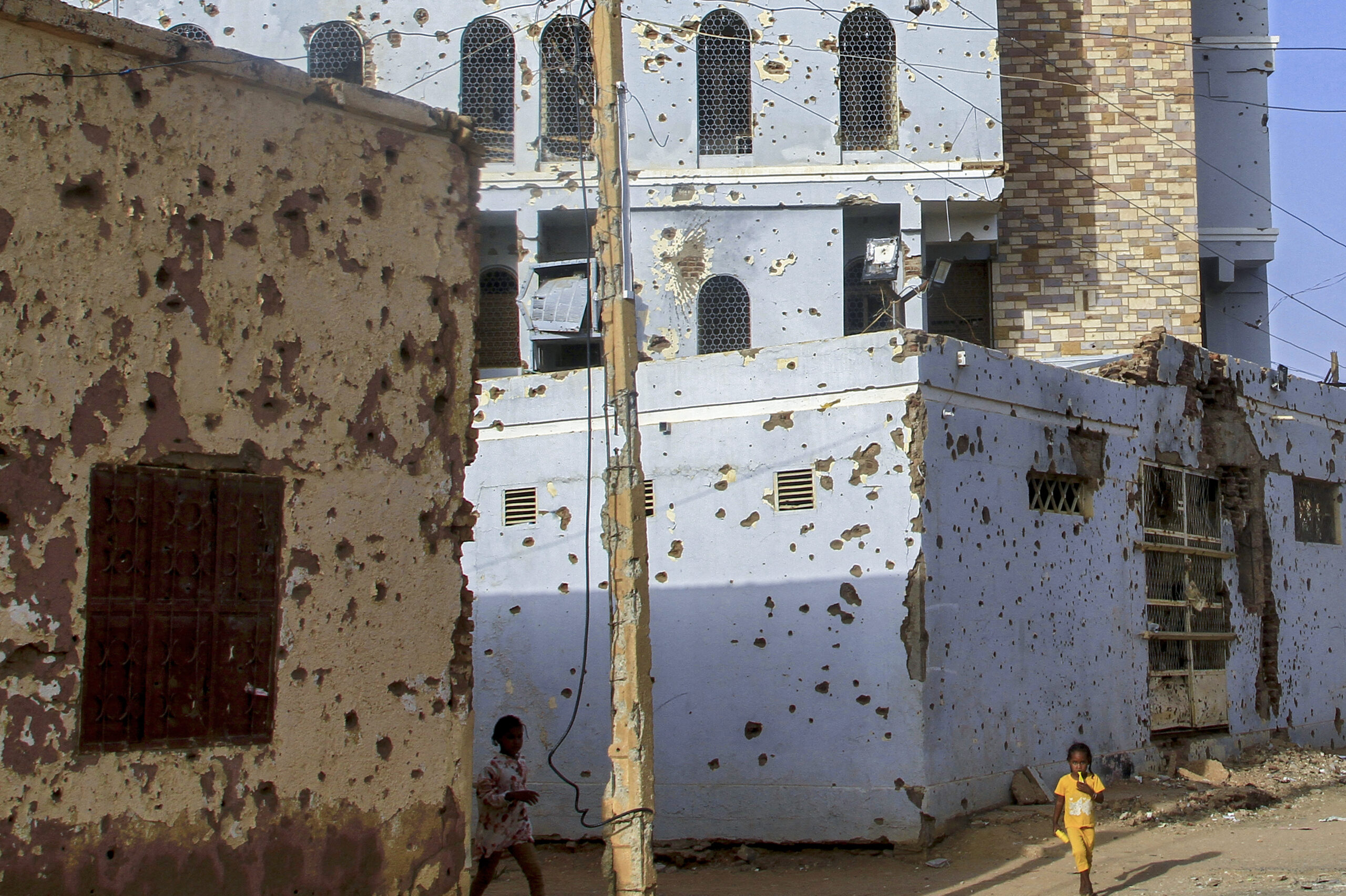
- Very likely the SAF and RSF remain in active armed conflict as of August 2026. IOM reporting links at least 200,000 new displacements since late 2025 to intensified fighting, including 7,800 people displaced by clashes in and near Geissan in Blue Nile and nearly 18,000 displaced in West Darfur during the first half of August. The SAF's declared intention to end the RSF before 31 December 2026 indicates that the military leadership is maintaining an offensive political posture. Confidence is medium because current reporting confirms conflict effects more clearly than front-line control or battlefield movement. (Confidence: medium · ASSESSED)
- I&W: Confirm: IOM or another multilateral source reports further conflict-related displacement in West Darfur, Blue Nile or Sheikan, or reports new clashes in those areas. (0-30 days)
- I&W: Break: SAF and RSF announce and observe a verified ceasefire across the named fronts for at least 14 consecutive days. (0-30 days)
- Almost certainly severe humanitarian pressure will persist through October 2026, with fighting and flooding reinforcing one another in Darfur and Blue Nile. More than 30 million people require humanitarian assistance, nearly 25 million face severe food insecurity, famine is confirmed or projected in parts of Sudan, and more than 10 million people are internally displaced. The reported displacement totals are not directly reconciled, with one estimate covering 8.6 million people who fled the war and another covering more than 14 million forcibly displaced people, but the discrepancy does not alter the assessment of sustained humanitarian severity. Confidence is high because UN IOM, humanitarian organisations and major media reporting corroborate the broad trend, despite uncertainty over definitions and totals. (Confidence: high · ASSESSED)
- I&W: Confirm: IOM reports additional displacement in West Darfur, Blue Nile or Sheikan, or further flood damage to shelters in Tawila camps. (0-30 days)
- I&W: Break: UN and humanitarian organisations report a sustained halt in new conflict displacement, restored access to affected areas and no further shelter losses in the named locations. (1-3 months)
- Likely diplomatic engagement will continue without producing a verified SAF-RSF ceasefire through November 2026. The US is prepared to support an inclusive civilian-led dialogue, an AU delegation has undertaken a field visit and the AU Peace and Security Council is engaging Sudanese authorities and other parties. Against this, Kamil Idris has outlined red lines concerning the RSF and called for greater AU support for the Sudanese government, while one assessment states that the AU lacks leverage to compel either side to stop fighting. Confidence is medium because official US and AU reporting confirms engagement, but the available reporting does not establish RSF acceptance or participation. (Confidence: medium · ASSESSED)
- I&W: Confirm: the AU or US publishes a follow-up statement identifying direct SAF and RSF participation in a dialogue and records agreement on humanitarian access or a ceasefire mechanism. (0-60 days)
- I&W: Break: the SAF and RSF sign a ceasefire that both sides accept publicly and that observers verify for at least 14 consecutive days. (0-60 days)
- Likely Sudan will retain a divided military and political order through November 2026 rather than either the SAF or RSF securing decisive national dominance. The SAF controls much of Sudan and retook Khartoum by March 2025, while the RSF has maintained most of Darfur, captured El Fasher in October 2025 and established the parallel Government of Peace and Unity in 2025. Think-tank reporting assesses that the RSF has narrowed the power gap and that the SAF has struggled to secure swift, decisive victories. Confidence is medium because the assessment combines historical control reporting with contested analytical reporting on current relative strength. (Confidence: medium · ASSESSED)
- I&W: Confirm: the SAF and RSF continue issuing separate political or administrative directives for their respective areas, while neither force reports sustained control over the other's principal urban base. (0-90 days)
- I&W: Break: the SAF establishes sustained control over Nyala or El Fasher, or the RSF retakes and holds Khartoum. (0-90 days)
- Likely the US TPS designation for Sudan will remain unresolved until close to the 19 October 2026 expiry date. Forty-four organisations have requested an 18-month extension and redesignation, while the available reporting also states that the current designation is due to expire on 19 October. Earlier reporting records a DHS extension and redesignation in 2023, leaving the current legal status unclear. Confidence is low because the evidence is largely NGO reporting and contains an unresolved status contradiction. (Confidence: low · ASSESSED)
- I&W: Confirm: DHS has not announced an extension or redesignation by 1 October, or issues a notice that leaves the expiry date unchanged. (1-2 months)
- I&W: Break: DHS publishes a formal extension or redesignation of Sudan TPS before 19 October 2026. (By 19 October 2026)
- Very likely the two NASA VIIRS thermal detections recorded in Sudan over the two days ending 19 August will remain insufficient on their own to attribute attacks to the SAF or RSF. NASA states that the detections record heat rather than cause and that the signatures can corroborate strikes, shelling, industrial fires or wildfires. Confidence is high because the limitation comes directly from NASA's explanation of its official detection product. (Confidence: high · REPORTED)
- I&W: Confirm: independent imagery, local reporting or official statements identify the cause and location of either detection as a strike or shelling event. (0-14 days)
- I&W: Break: NASA or corroborating reporting identifies the detections as industrial fires or wildfires rather than conflict-related activity. (0-14 days)
Outlook & scenarios
Continued war and humanitarian deterioration (70%)
Very likely the SAF and RSF continue fighting through November 2026, with local clashes in Blue Nile and Darfur, further displacement and additional pressure from flooding. The SAF's declared intention to defeat the RSF and the absence of a verified ceasefire support this outcome.
Limited diplomatic opening without a settlement (20%)
Likely the US and AU secure greater civilian and humanitarian engagement, including discussions on access or a localised pause, without obtaining a durable national ceasefire. The main constraint will remain the lack of reported RSF acceptance and the Sudanese government's stated red lines.
SAF offensive expands (10%)
Unlikely but plausible, the SAF converts its stated intention to end the RSF into a broader campaign towards Darfur. Sustained SAF control of Nyala or El Fasher would mark a material shift in the military balance and weaken the RSF's parallel political structure.
Hardening partition of Sudan (10%)
Very unlikely but high impact, the SAF and RSF entrench separate administrations and security systems, turning existing territorial division into a durable political partition. The RSF's parallel government and the AU warning about permanent partition provide the basis for monitoring this wildcard.
Recommendations
- Prioritise collection on current SAF and RSF positions in Blue Nile, West Darfur, North Darfur and the approaches to El Obeid. Treat historical control claims as background until current control is independently confirmed.
- Use the NASA VIIRS detections as cueing data only. Cross-check the bounding box from 12.08,26.99 to 17.08,31.99 against imagery, local reporting and official statements before attributing any heat signature to SAF or RSF activity.
- Track IOM displacement reporting by location and definition. Maintain separate measures for people who fled the war, internally displaced people, returnees and newly displaced people, rather than combining the reported totals.
- Monitor whether AU and US engagement produces direct participation by both the SAF and RSF, written commitments on humanitarian access, or a ceasefire with observable compliance. Treat statements from Kamil Idris and the Sudanese government as indicators of negotiating constraints.
- Prepare a decision note on Sudan TPS before 1 October 2026. Verify any DHS extension, redesignation or expiry notice and identify the operational implications of each outcome.
- Prioritise humanitarian monitoring in Tawila camps in North Darfur, West Darfur, Geissan in Blue Nile and Sheikan locality. Record shelter damage, new displacement and the reach of IOM deliveries in each location.
- Maintain the existing high-risk operating assumption for US personnel and nationals in Sudan until the travel advisory and the status of US Embassy operations in Khartoum are independently updated.
Confidence & uncertainty
Overall confidence is high because the principal judgments draw on corroborated reporting from UN IOM, other humanitarian organisations, official US and AU statements, NASA's official monitoring product and major media reporting. The strongest evidence concerns continued humanitarian pressure, displacement and the existence of diplomatic activity. Confidence is lower on current front-line control, the relative military balance, the prospects for RSF participation in dialogue and the current TPS status because those issues rely on thinner or contested reporting.
Intelligence gaps
- [EEI 1.1 · PARTIAL] Observed concentrations and movement of armed units (size estimates, unit identifiers if visible) within X km of named towns/roads/airfields (e.g., El Fasher, Geneina, Nyala, Khartoum neighborhoods) including timestamps and direction of movement. Recommended collection: imagery/satellite
- [EEI 1.2 · PARTIAL] Changes in employment of heavy weapons and systems: documented use or emplacement of artillery, multiple-launch rocket systems, tanks, combat helicopters, and airstrikes at specific coordinates and times. Recommended collection: open-source/media
- [EEI 1.3 · PARTIAL] Reports or intercepts of orders, operational directives or public statements from RSF/SAF commanders indicating planned offensives, ceasefire acceptance/rejection, defensive postures or orders to withdraw from named locations. Recommended collection: signals/communications intercepts
- [EEI 1.4 · PARTIAL] Status of critical infrastructure and lines of communication: control or denial of named bridges, main highways (identify route numbers), airfields, fuel depots and telecommunication hubs and any reported sabotage/blockage incidents. Recommended collection: human intelligence/field reporting
- [EEI 2.1 · PARTIAL] Counts and locations of newly displaced persons arriving at formal sites, informal camps, border crossings or collective centers (daily/weekly arrivals, site coordinates), including demographics (women, children, elderly) where available. Recommended collection: humanitarian/UN OCHA reports
- [EEI 2.2 · UNCOVERED] Access impediments to humanitarian assistance: reported attacks on, blockages of, or denial of passage for named humanitarian convoys (dates, GPS locations, responsible actor if known) and closure status of specific routes. Recommended collection: human intelligence/field reporting
- [EEI 2.3 · UNCOVERED] Functional status of medical infrastructure in named locations: number of operational hospitals/clinics, reported shortages of key medicines/blood, and hospital casualty/occupancy figures for the last 72 hours. Recommended collection: medical/health cluster reporting
- [EEI 3.1 · UNCOVERED] Detection of flights, ships or overland convoys delivering military materiel or foreign personnel to named airfields, ports or border crossings (flight/IMO numbers, manifests if available, timestamps, route origin/destination). Recommended collection: air-traffic / maritime / border customs
- [EEI 3.2 · UNCOVERED] Imagery or on-the-ground confirmation of foreign military personnel or private military contractor bases/forward operating elements at specified coordinates or compounds, including vehicle/weapon types observed. Recommended collection: imagery/satellite
- [EEI 3.3 · UNCOVERED] Financial and sanctions-relevant indicators: atypical large transfers, use of designated front companies, or shipments routed through third states linked to procurement of weapons or fuel for RSF or SAF (transaction dates, parties, amounts where obtainable). Recommended collection: financial intelligence
Cited sources
[1] Wikipedia · Sudanese Armed Forces (C) · sha256:915a4f946fef [2] UN International Organization for Migration (IOM) · Sudan war: 200,000 newly displaced as fighting and floods intensify (A) · sha256:fa1fd624cfd7 [3] Elwekala Press · إثيوبيا تتدخل لإنقاذ حميدتي وتفتح ممرًا على الحدود. والجيش السوداني يتوعد بإنهاء الدعم السريع (B) · sha256:c5a349c41ed0 [4] timep.org · Civil Society Organizations Request an 18-Month Extension and Redesignation of TPS for Sudan (C) · sha256:5e3e9aa23d84 [5] Wikipedia · Sudanese civil war (2023–present) (B) · sha256:599e626a01fe [6] arabnews.pk · US State Department: Washington ready to support civilian-led Sudanese dialogue (A) · sha256:c83eb17be7a5 [7] Al Jazeera · Can the AU make its current Sudan mission count? (A) · sha256:12b52f88128a [8] sundiatapost.com · Sudan: The Closing Military Gap Between SAF and RSF—and What Comes Next (C) · sha256:ca658c469d28 [9] Wikipedia · Rapid Support Forces (B) · sha256:e79da3961144 [10] NASA · NASA FIRMS thermal detections — Sudan (2d) (A) · sha256:c5f3b1ec6282
Source content hashes were computed at collection time; the cited text is preserved unmodified for the life of this product.
TLP:CLEAR