TLP:CLEAR · Disclosure is not limited.
Sudan conflict: SAF advances in West Kordofan as civilian risks mount
Time window: Last 7 days · Audience: General analyst · Type: Situation report · DTG: 2026-11-17 22:09Z · Overall confidence: HIGH
BLUF
SAF has likely made tactical gains around Al-Khuwai and Serif Ankoush and is advancing towards Al-Nuhud, but reporting does not establish durable control of West Kordofan. Drone attacks and fighting around Abu Zabad are adding to civilian harm and displacement amid severe humanitarian shortfalls.
Executive summary
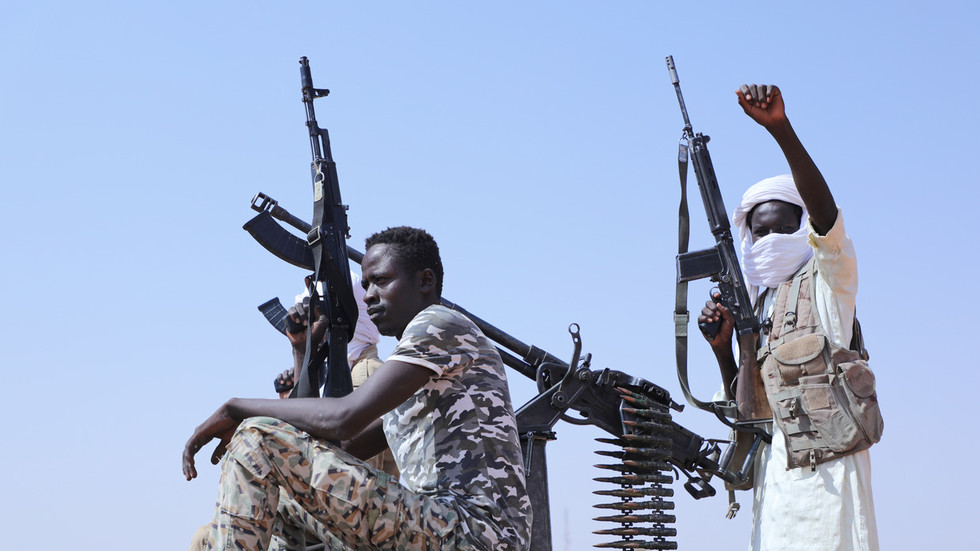
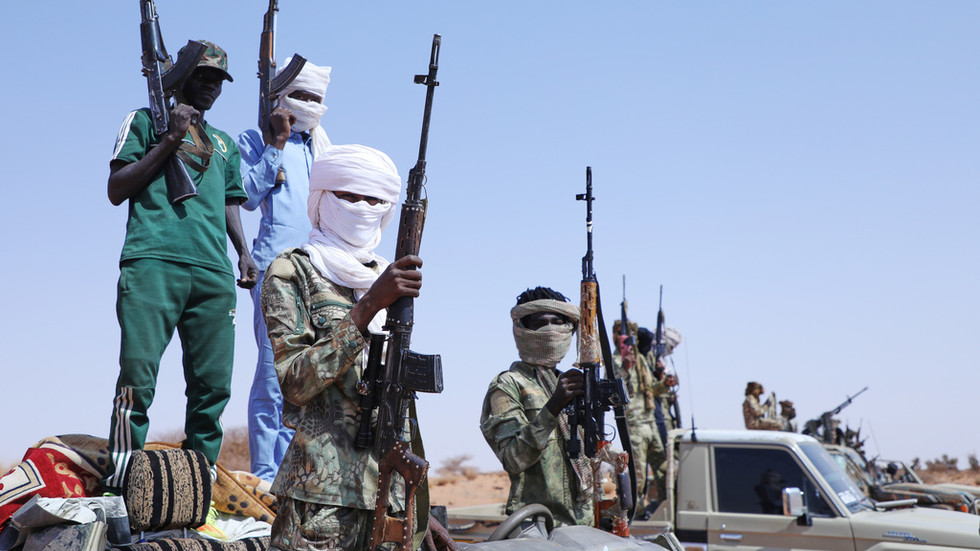
During the reporting period, SAF and allied forces were reported to have retaken Al-Khuwai and Serif Ankoush and to be advancing towards Al-Nuhud. RSF fighters were reported withdrawing west from Al-Nuhud, while the Joint Forces announced control of villages near Abu Zabad. Local rights groups reported 13 to 15 civilians killed in a strike in the Abu Qalb area; the Kordofan Human Rights Observatory attributed it to an army drone, but responsibility is not independently confirmed. UN reporting attributes at least 1,630 civilian deaths in Sudan from January through October to drones. WFP has cut emergency food assistance for around 900,000 people since September, and UN agencies report urgent shelter needs for 15.4 million people. Reports of RSF defections and alliance friction indicate internal strain, but do not establish broad fragmentation. Sudanese allegations of Ethiopian involvement in drone operations remain unverified.
Change from previous assessment
Since the prior brief, reporting adds SAF advances towards Al-Nuhud and the reported withdrawal of RSF fighters west from the city, but still does not establish durable SAF control. New reporting records the Abu Qalb-area civilian deaths and around 750 people fleeing Abu Zabad, and gives an updated UN account of drone deaths through October. The prior assessment of individual RSF defections remains, with added reporting on Tamazuj alliance friction; this still does not establish broad RSF fragmentation. The Ethiopia assessment remains low confidence because operational claims are unverified.
Key judgments
- SAF has likely made tactical gains in West Kordofan, but it has not established durable control of the state or Al-Nuhud. NGO and major-media reporting describes the recapture of Al-Khuwai and Serif Ankoush on 13 November, SAF advances towards Al-Nuhud, and RSF fighters withdrawing west from the city. That reporting corroborates recent movement, not sustained control; this supports medium confidence. (Confidence: medium · ASSESSED)
- I&W: Independent reporting confirms SAF forces are present in Al-Nuhud and remain there, rather than only advancing towards it. (0-14 days)
- I&W: Reporting confirms RSF forces have returned to Al-Khuwai or Serif Ankoush, breaking the assessment of continuing SAF tactical gains. (0-14 days)
- Local rights groups report that 13 to 15 civilians, including four children, were killed in a 15 November strike in the Abu Qalb area near Abu Zabad. The Kordofan Human Rights Observatory attributed the strike to an army drone; Emergency Lawyers gave a preliminary toll of 13, while other reports gave 15. The reports support the occurrence of a deadly strike, but the casualty count and responsibility remain unresolved, supporting medium confidence. (Confidence: medium · REPORTED)
- I&W: An independent investigation or additional reporting confirms the strike location, civilian toll and weapon used. (0-14 days)
- I&W: Follow-up reporting shows the 13 to 15 deaths were from separate incidents rather than one strike. (0-14 days)
- Drone attacks are very likely to remain a major civilian threat across Sudan over the next month. The UN Human Rights Office reported at least 1,630 drone-related civilian deaths among 2,230 documented civilian deaths from January through October, and documented strikes on markets and health facilities. The UN figures, reports of recent attacks and the Quintet's condemnation of strikes across multiple states support high confidence in the continuing threat, although responsibility for individual strikes remains uncertain. (Confidence: medium · ASSESSED)
- I&W: A new UN Human Rights Office update records further drone deaths or strikes on markets, health facilities or displaced people. (0-30 days)
- I&W: Independent monitoring records no drone strikes on civilian sites in Sudan during a sustained 30-day period. (0-30 days)
- Humanitarian pressure in Sudan is likely to remain acute over the next three months. WFP reports cuts to emergency food assistance for around 900,000 people since September, while UN agencies report that 15.4 million people urgently need shelter amid supply and funding shortages. The reported scale of these needs supports the assessment; differing displacement estimates and the absence of current access data limit confidence to medium. (Confidence: medium · ASSESSED)
- I&W: WFP reports further reductions to emergency food assistance, or UN agencies report growing unmet shelter needs. (1-3 months)
- I&W: WFP restores assistance for the affected caseload and UN agencies report improved shelter supply and access. (1-3 months)
- The RSF is likely to face continued internal strain, but current reporting does not establish broad organisational fragmentation. Ahmed Hasab Al-Rasoul, reported to have commanded the First Group in Saraf Omra, announced his defection; reporting also describes an October defection with around 300 fighters and 30 vehicles, criticism from Siddiq Ander, and a Tamazuj movement threat to leave its alliance with the RSF. The reports come from more than one outlet, but the size and operational effect of these breaks remain unclear, supporting medium confidence. (Confidence: medium · ASSESSED)
- I&W: A further named RSF commander announces a defection accompanied by independently verified fighters or vehicles. (0-30 days)
- I&W: The RSF or Tamazuj confirms that the alliance remains intact and that reported defectors did not bring personnel or equipment with them. (0-30 days)
- Sudan-Ethiopia tensions are likely to persist, but the available reporting does not verify Ethiopian involvement in drone operations. Sudanese authorities have alleged launches from Ethiopian areas and the SAF said it shot down a long-range drone over Dandro, Blue Nile, on 13 November. These allegations are relayed largely through a low-reliability blog and have no independent operational corroboration in the available reporting, supporting low confidence. (Confidence: low · ASSESSED)
- I&W: Independent technical evidence identifies an Ethiopian launch site for a drone strike in Sudan. (0-3 months)
- I&W: Sudan and Ethiopia restore consular operations in Asosa and Gedaref and issue no further formal complaints over drone activity. (1-3 months)
Outlook & scenarios
SAF takes Al-Nuhud after further advances (55%)
Over the next several weeks, SAF continues its advance from Al-Khuwai and Serif Ankoush towards Al-Nuhud, and RSF forces withdraw further west. A SAF entry into Al-Nuhud would mark a further tactical gain, but would not by itself establish durable control across West Kordofan.
Frontline remains contested around Al-Nuhud (30%)
SAF's advance stalls outside Al-Nuhud, while RSF forces regroup west of the city and retain or contest positions around it. Fighting and drone attacks continue to drive civilian harm and displacement in West Kordofan.
RSF defections spread beyond individual commanders (10%)
Further named commanders leave the RSF with verified personnel or equipment, and Tamazuj or other aligned groups reduce their support. This would deepen RSF command and alliance strain, although the current reports do not establish that this process is under way at scale.
Cross-border drone allegations trigger a sharper Sudan-Ethiopia crisis (5%)
A new drone incident is attributed to a launch site in Ethiopia and prompts a formal response from Sudan or Ethiopia. This is a low-probability, high-impact scenario: the current allegations have not been independently verified.
Recommendations
- Track SAF and RSF positions separately at Al-Khuwai, Serif Ankoush and Al-Nuhud. Do not describe West Kordofan as under SAF control without corroboration of sustained presence and administration.
- Treat the Abu Qalb casualty total as provisional at 13 to 15. Keep the Kordofan Human Rights Observatory's attribution to an SAF drone distinct from independently confirmed responsibility, and seek corroboration on the strike date, location and weapon.
- Prioritise reporting on civilian movement from Abu Zabad and access to Al-Sunut, Al-Salam and Lagawa. Keep destination estimates qualified because reports differ on where people fled.
- Assess RSF cohesion by verifying whether announced defections involved fighters, vehicles or command structures. Track any formal Tamazuj decision on its alliance with the RSF before inferring broader fragmentation.
- Separate Sudanese allegations about Ethiopian drone launches from verified operational facts. Seek independent technical corroboration before assessing Ethiopian involvement or changing the estimate of cross-border escalation risk.
Confidence & uncertainty
Overall confidence is high for the broad situation picture: UN reporting provides a substantial cumulative account of civilian deaths from drones, while WFP and UN agencies report acute food and shelter needs. Separate NGO and major-media reporting also supports recent SAF movement in West Kordofan. Confidence is lower on individual strike attribution, durable territorial control, the scale of RSF fragmentation and Sudan's allegations about Ethiopia; those points remain qualified in the judgments.
Alternative analysis (red cell)
The reported defections and public criticism may represent isolated, politically motivated episodes rather than broad organisational fragmentation within the RSF. The evidence in, and 4132fdae-339a-4180-8845-488620c404a7 does not establish the scale, durability, or operational effect of these disputes. On the available record, continued RSF internal strain is possible but should be assessed with low confidence.
Intelligence gaps
- [EEI 1.1 · PARTIAL] Observed concentrations and movement of armed units (size estimates, unit identifiers if visible) within X km of named towns/roads/airfields (e.g., El Fasher, Geneina, Nyala, Khartoum neighborhoods) including timestamps and direction of movement. Recommended collection: imagery/satellite
- [EEI 1.3 · PARTIAL] Reports or intercepts of orders, operational directives or public statements from RSF/SAF commanders indicating planned offensives, ceasefire acceptance/rejection, defensive postures or orders to withdraw from named locations. Recommended collection: signals/communications intercepts
- [EEI 1.4 · PARTIAL] Status of critical infrastructure and lines of communication: control or denial of named bridges, main highways (identify route numbers), airfields, fuel depots and telecommunication hubs and any reported sabotage/blockage incidents. Recommended collection: human intelligence/field reporting
- [EEI 2.1 · PARTIAL] Counts and locations of newly displaced persons arriving at formal sites, informal camps, border crossings or collective centers (daily/weekly arrivals, site coordinates), including demographics (women, children, elderly) where available. Recommended collection: humanitarian/UN OCHA reports
- [EEI 2.2 · PARTIAL] Access impediments to humanitarian assistance: reported attacks on, blockages of, or denial of passage for named humanitarian convoys (dates, GPS locations, responsible actor if known) and closure status of specific routes. Recommended collection: human intelligence/field reporting
- [EEI 2.3 · PARTIAL] Functional status of medical infrastructure in named locations: number of operational hospitals/clinics, reported shortages of key medicines/blood, and hospital casualty/occupancy figures for the last 72 hours. Recommended collection: medical/health cluster reporting
- [EEI 3.1 · UNCOVERED] Detection of flights, ships or overland convoys delivering military materiel or foreign personnel to named airfields, ports or border crossings (flight/IMO numbers, manifests if available, timestamps, route origin/destination). Recommended collection: air-traffic / maritime / border customs
- [EEI 3.2 · PARTIAL] Imagery or on-the-ground confirmation of foreign military personnel or private military contractor bases/forward operating elements at specified coordinates or compounds, including vehicle/weapon types observed. Recommended collection: imagery/satellite
- [EEI 3.3 · PARTIAL] Financial and sanctions-relevant indicators: atypical large transfers, use of designated front companies, or shipments routed through third states linked to procurement of weapons or fuel for RSF or SAF (transaction dates, parties, amounts where obtainable). Recommended collection: financial intelligence
Red cell review: PARTIAL DISSENT, KJ-3 downgraded HIGH→MEDIUM (estimative_mismatch)
TLP:CLEAR