TLP:CLEAR · Disclosure is not limited.
Sudan conflict SITREP, 10 to 17 June 2026: RSF village burnings in North Darfur, Blue Nile clash, drone‑related deaths, and deepening hunger
Time window: Last 7 days · Audience: General analyst · Type: Situation report · DTG: 2026-06-17 22:09Z · Overall confidence: MEDIUM
BLUF
RSF units looted and burned eight villages in Um Baru, North Darfur on 14 June, while SAF reports repelling a joint RSF and SPLM‑N attack in Blue Nile on 13 June. Drone strikes continue to kill civilians, and UN agencies still characterise Sudan as the world’s worst hunger crisis with dwindling aid resources.
Executive summary
Reporting this week points to continued RSF violence against civilians in Darfur, including the looting and burning of eight villages in Um Baru locality on 14 June with at least five residents killed. SAF states it repelled an RSF and SPLM‑N attack in Blue Nile on 13 June, indicating active fronts beyond Darfur. Drone warfare remains a lethal feature, with 35 people reportedly killed last week including 23 in El Obeid, and NASA logged seven thermal anomalies in Sudan on 16 to 17 June that could reflect strike or fire activity. The humanitarian emergency remains dire: FAO describes Sudan as the world’s worst hunger crisis with famine risks in parts of Darfur and South Kordofan, displacement is at extraordinary levels, and aid funding has fallen sharply.
Change from previous assessment
New since the prior brief: fresh reporting of RSF looting and burning of eight villages in Um Baru, North Darfur on 14 June, and an SAF account of repelling an RSF and SPLM‑N attack in Blue Nile on 13 June. We added a judgment on multi‑front activity and raised confidence that RSF continues violent actions against civilians based on the Um Baru incident and prior patterns. We retained the assessment on drone lethality, supported this cycle by reports of 35 killed last week and seven new NASA thermal detections on 16 to 17 June. The humanitarian baseline remains unchanged in direction, though displacement figures continue to vary across sources. Initial assessment of this topic was provided previously; this update refines judgments with the week’s events.
Key judgments
- RSF very likely continues to conduct violent attacks against civilians in Darfur, including arson and killings, as evidenced by the 14 June looting and burning of eight villages in Um Baru locality that killed at least five residents, within a wider pattern of mass violence around El Fasher and West Darfur since 2023. (Confidence: high · ASSESSED)
- I&W: Additional major‑media or UN reporting of RSF‑led arson or killings in North Darfur localities such as Um Baru, Kutum, or Mellit. (0-14 days)
- I&W: Verified re‑establishment of SAF or police security posts in Um Baru and adjacent areas with independent confirmation of RSF withdrawal. (1-3 months)
- Active hostilities on multiple fronts likely persist, with SAF repelling a joint RSF and SPLM‑N attack in Blue Nile on 13 June while RSF maintains pressure around El Fasher following earlier siege and large‑scale attacks. (Confidence: medium · ASSESSED)
- I&W: Further reported clashes involving SAF, RSF, or SPLM‑N in Blue Nile or South Kordofan acknowledged by at least two independent outlets. (0-14 days)
- I&W: A mutually acknowledged ceasefire or disengagement statement that explicitly covers Blue Nile fighting. (1-3 months)
- Drone warfare likely remains a regular and lethal feature of the conflict, with 35 people reportedly killed last week including 23 in El Obeid, and fresh satellite thermal detections recorded on 16 to 17 June that can correspond to strike or fire activity. (Confidence: medium · ASSESSED)
- I&W: New casualty‑producing drone strikes reported in El Obeid, Omdurman, or other urban centres by major media or UN agencies. (0-14 days)
- I&W: Sustained absence of drone‑strike casualty reports across major outlets and no associated clusters of new thermal anomalies near front‑line urban areas. (1-3 months)
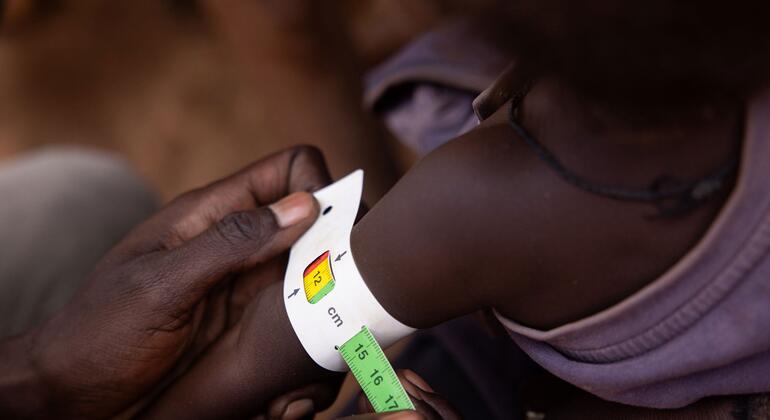
- Sudan almost certainly remains the world’s worst hunger crisis, with famine risks in parts of Darfur and South Kordofan, extreme displacement, and worsening access and funding shortfalls; reporting cites over 11 million people internally displaced and about 5 million refugees, while some sources report more than 14 million displaced in total and roughly 34 million in need of assistance. (Confidence: high · REPORTED)
- I&W: Updated FAO, WFP, or UNHCR reporting showing higher caseloads or IPC Phase 5 classifications in parts of Darfur or South Kordofan. (1-3 months)
- I&W: Documented establishment of secure humanitarian corridors into El Fasher and North Kordofan with delivery volumes meeting agency targets. (1-3 months)
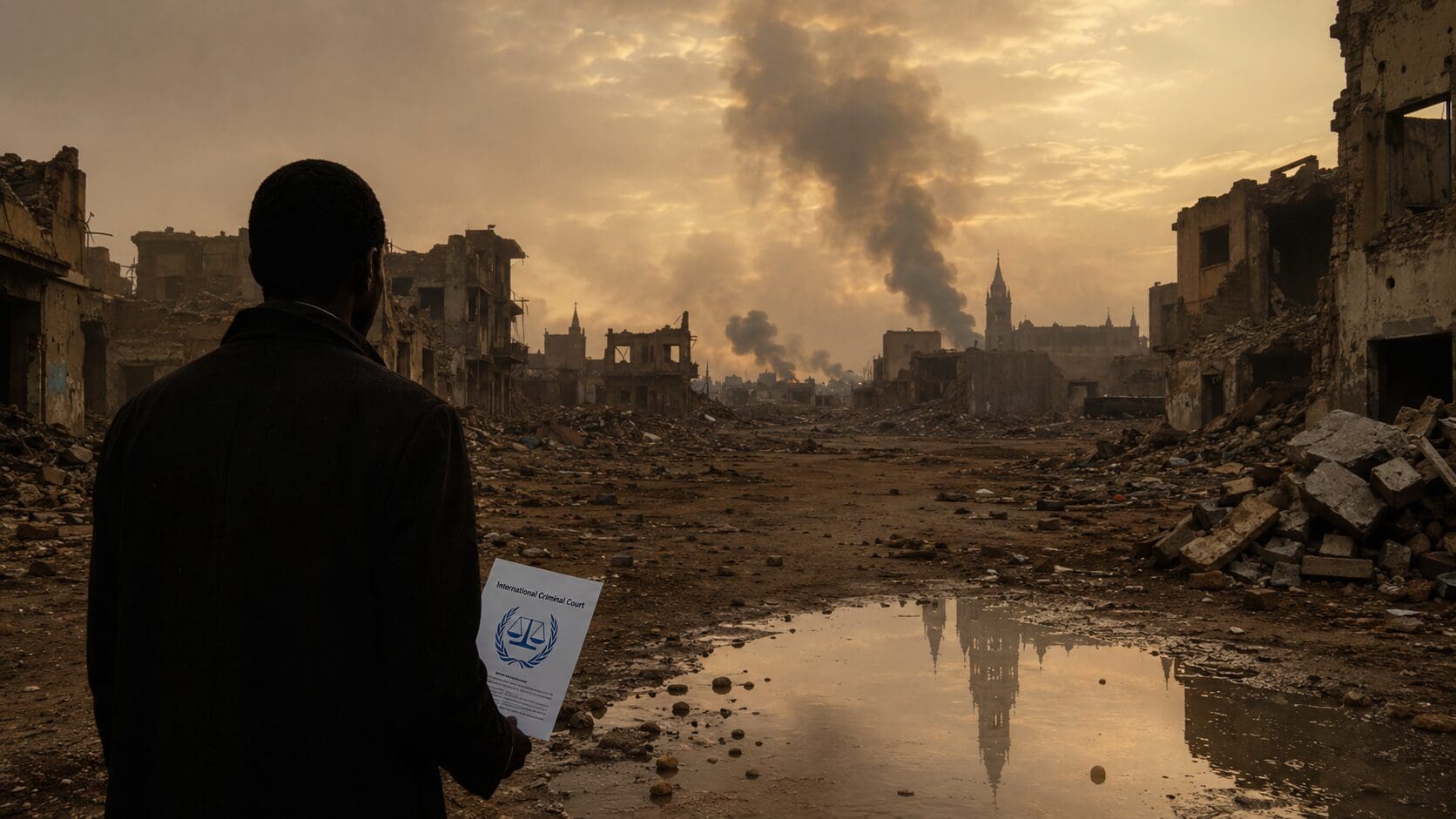
- Accountability efforts are progressing, with Sudanese victims petitioning the ICC Prosecutor over alleged RSF crimes in El Fasher including war crimes and sexual violence, while the ICJ rejected Sudan’s case against the UAE in May 2025 and Abu Dhabi publicly denies complicity. (Confidence: medium · REPORTED)
- I&W: Public acknowledgement by the ICC Office of the Prosecutor of a preliminary examination into the El Fasher submission. (1-3 months)
- I&W: Official ICC communication declining jurisdiction or action on the El Fasher communication. (1-3 months)
Outlook & scenarios
Protracted stalemate with multi‑front fighting and worsening humanitarian crisis (60%)
RSF remains entrenched across most of Darfur and continues periodic attacks on civilian areas, while SAF holds the east and Nile corridor and clashes with RSF and SPLM‑N flare in Blue Nile and South Kordofan. Drone strikes continue to kill civilians in urban centres such as El Obeid. Aid access stays constrained and funding gaps widen, pushing parts of Darfur and South Kordofan closer to famine classifications.
RSF gains ground in North Darfur, driving fresh displacement (35%)
Following renewed RSF village attacks, pressure intensifies around El Fasher and adjacent localities. New arson and looting incidents occur in North Darfur, spurring additional internal displacement and cross‑border flight. Security for aid convoys deteriorates, and casualty reports rise amid persistent drone activity.
Localised humanitarian de‑escalation (25%)
Short, local ceasefire arrangements emerge around El Fasher and selected corridors in Blue Nile under UN and humanitarian agency facilitation. This yields intermittent convoy access and a modest decline in reported drone‑related casualties, though nationwide hostilities persist and needs remain acute.
Recommendations
- Prioritise corroboration of the 14 June Um Baru attacks through multi‑source OSINT, including high‑resolution satellite imagery, survivor testimony, and geolocated visuals, to update atrocity tracking products.
- Maintain a live watch on Blue Nile: catalogue RSF and SPLM‑N order‑of‑battle mentions, propaganda channels, and local reporting to validate SAF’s 13 June account and identify shifts in alliances.
- Build a weekly drone‑strike ledger for Sudan with location‑level casualty data, linking incident reports to FIRMS thermal detections as cues only, and annotate confidence where heat sources may be non‑combat related.
- Reconcile displacement figures in internal dashboards by presenting sourced ranges: over 11 million IDPs, about 5 million refugees, and reports of more than 14 million displaced, with clear sourcing notes and update cadence.
- Integrate FAO, WFP and UNHCR feeds into a standing hunger and access brief for Darfur and South Kordofan, highlighting funding shortfalls relative to needs and likely pipeline breaks.
- Track the ICC El Fasher communication’s docket status and archive relevant open‑source material on alleged RSF crimes, including attacks on hospitals and medical staff, in case of evidentiary requests.
Confidence & uncertainty
Overall confidence is medium to high. Civilian harm in Darfur, including the 14 June Um Baru attacks and prior mass‑casualty episodes, is supported by multiple reliable sources. The humanitarian picture draws on FAO and UNHCR reporting, though displacement counts vary across credible sources, lowering precision on totals. The Blue Nile clash is single‑sourced to an SAF statement without independent confirmation, and NASA thermal anomalies confirm heat events but not causation. Drone‑related casualty reporting is consistent but often lacks forensic detail on perpetrators.
Alternative analysis (red cell)
The source set documents high‑profile incidents, legal filings, and technical indicators, but these items are often temporally scattered, variably sourced, or contradicted by other entries. Consequently, stronger continuity and causation claims (persistent RSF campaigns across Darfur, routine lethal drone warfare, demonstrable accountability progress) exceed what the current corroborated evidence supports; a more circumspect estimate is that recent violent incidents and legal actions have occurred, but sustained patterns and concrete accountability outcomes remain unproven without further corroboration.
Intelligence gaps
- [EEI 1.1 · PARTIAL] Observed concentrations and movement of armed units (size estimates, unit identifiers if visible) within X km of named towns/roads/airfields (e.g., El Fasher, Geneina, Nyala, Khartoum neighborhoods) including timestamps and direction of movement. Recommended collection: imagery/satellite
- [EEI 1.2 · PARTIAL] Changes in employment of heavy weapons and systems: documented use or emplacement of artillery, multiple-launch rocket systems, tanks, combat helicopters, and airstrikes at specific coordinates and times. Recommended collection: open-source/media
- [EEI 1.3 · UNCOVERED] Reports or intercepts of orders, operational directives or public statements from RSF/SAF commanders indicating planned offensives, ceasefire acceptance/rejection, defensive postures or orders to withdraw from named locations. Recommended collection: signals/communications intercepts
- [EEI 1.4 · PARTIAL] Status of critical infrastructure and lines of communication: control or denial of named bridges, main highways (identify route numbers), airfields, fuel depots and telecommunication hubs and any reported sabotage/blockage incidents. Recommended collection: human intelligence/field reporting
- [EEI 2.1 · PARTIAL] Counts and locations of newly displaced persons arriving at formal sites, informal camps, border crossings or collective centers (daily/weekly arrivals, site coordinates), including demographics (women, children, elderly) where available. Recommended collection: humanitarian/UN OCHA reports
- [EEI 2.2 · PARTIAL] Access impediments to humanitarian assistance: reported attacks on, blockages of, or denial of passage for named humanitarian convoys (dates, GPS locations, responsible actor if known) and closure status of specific routes. Recommended collection: human intelligence/field reporting
- [EEI 2.3 · PARTIAL] Functional status of medical infrastructure in named locations: number of operational hospitals/clinics, reported shortages of key medicines/blood, and hospital casualty/occupancy figures for the last 72 hours. Recommended collection: medical/health cluster reporting
- [EEI 3.1 · UNCOVERED] Detection of flights, ships or overland convoys delivering military materiel or foreign personnel to named airfields, ports or border crossings (flight/IMO numbers, manifests if available, timestamps, route origin/destination). Recommended collection: air-traffic / maritime / border customs
- [EEI 3.2 · UNCOVERED] Imagery or on-the-ground confirmation of foreign military personnel or private military contractor bases/forward operating elements at specified coordinates or compounds, including vehicle/weapon types observed. Recommended collection: imagery/satellite
- [EEI 3.3 · UNCOVERED] Financial and sanctions-relevant indicators: atypical large transfers, use of designated front companies, or shipments routed through third states linked to procurement of weapons or fuel for RSF or SAF (transaction dates, parties, amounts where obtainable). Recommended collection: financial intelligence
Cited sources
[1] indepthnews.net · EEPA reports on meditation efforts between TPLF and federal government resume (B) · sha256:78dc82fca133 [2] europeantimes.news · Request to the ICC Prosecutor to investigate international crimes committed against civilians in El Fasher (Darfur) and to examine the alleged responsibility of external actors within the RSF support chain (A) · sha256:878293688096 [3] Wikipedia · Darfur genocide (2023–present) (B) · sha256:da25d31cd28f [4] aljazeera.net · 14 مليون نازح وبلد مدمر. هل بإمكان السودانيين العودة إلى منازلهم؟ (A) · sha256:af723ac5dfbe [5] NASA · NASA FIRMS thermal detections — Sudan (2d) (A) · sha256:8b40c23b5da0 [6] UN Food and Agriculture Organization (FAO) and World Food Programme (WFP) · Worsening hunger could push millions closer to famine in 13 global hotspots (A) · sha256:69ceed483836 [7] jpost.com · Sudan’s war poses a challenge for Abraham Accords partners - opinion (B) · sha256:8ffa4223887c
Source content hashes were computed at collection time; the cited text is preserved unmodified for the life of this product.
Red cell review: PARTIAL DISSENT
TLP:CLEAR