TLP:CLEAR, Disclosure is not limited.
Sudan Conflict SITREP (5-12 June 2026): Fighting Persists from Blue Nile to Darfur as U.S. Sanctions Push Advances
Time window: Last 7 days · Audience: General analyst · Type: Situation report · DTG: 2026-06-12 22:11Z · Overall confidence: MEDIUM
BLUF
Active hostilities from Blue Nile and Khartoum to Kordofan and Darfur continued this week while UN reporting underscores a nationwide humanitarian catastrophe. A bipartisan U.S. sanctions bill is very likely to tighten pressure on both the SAF and RSF and their external backers.
Executive summary
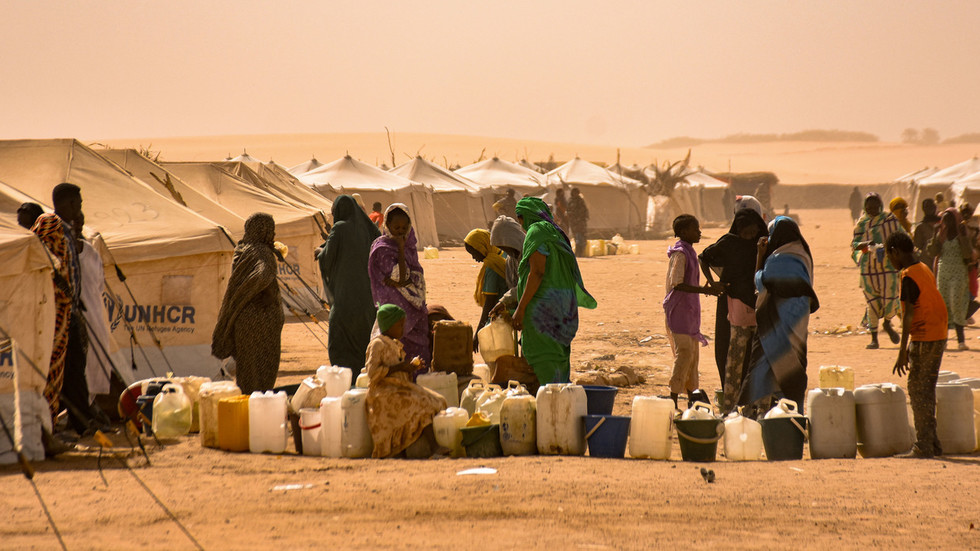
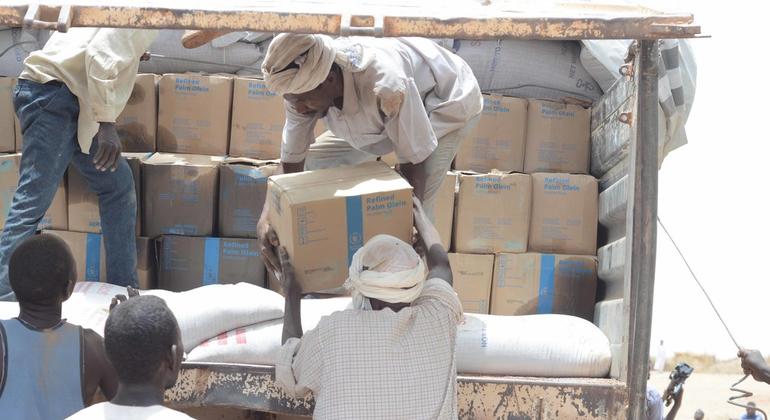
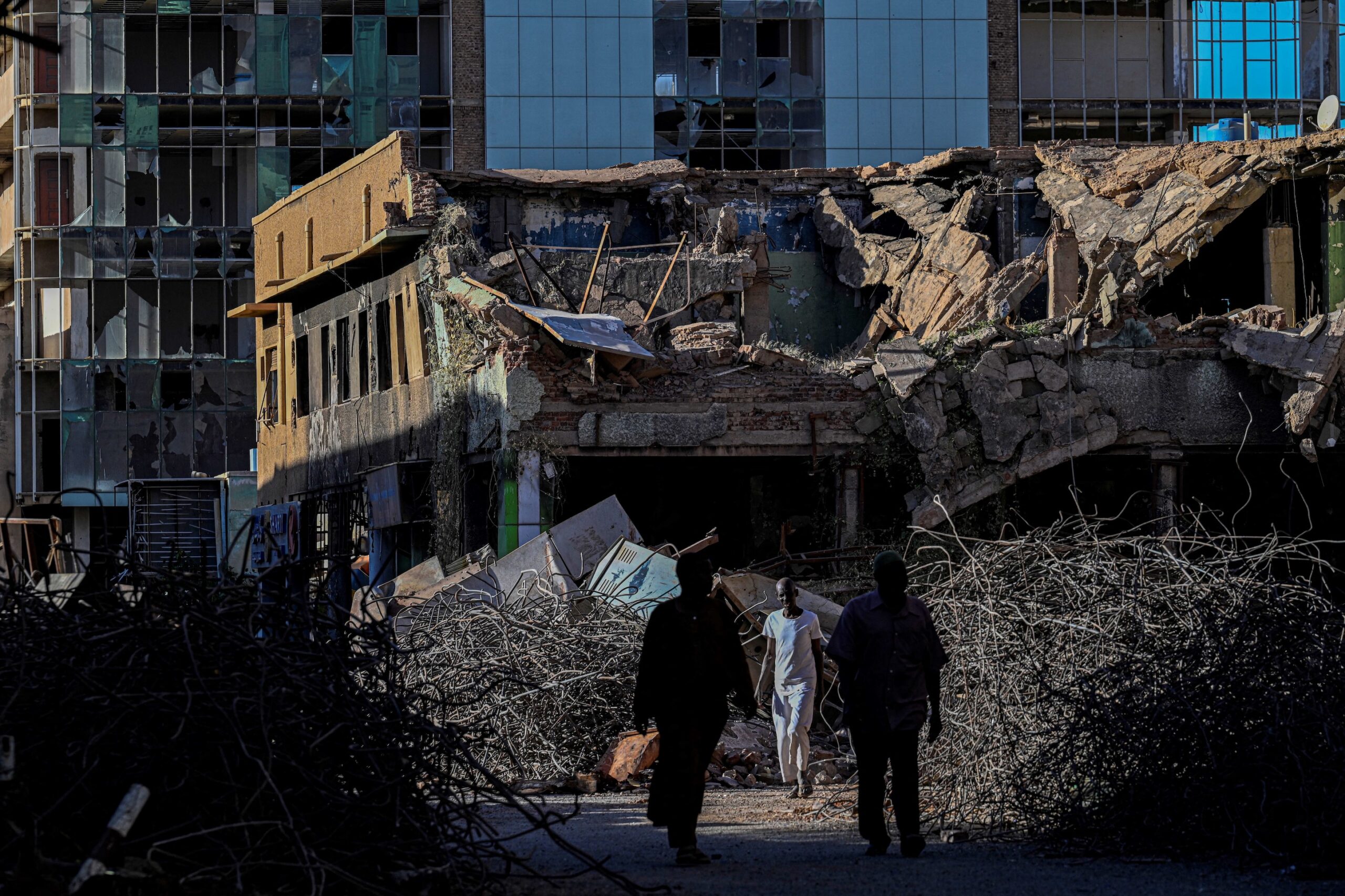
The Sudanese Armed Forces (SAF) conducted drone strikes on Kurmuk in Blue Nile State on 11 June and reported intercepting drones over Khartoum on 9 June. Concurrent reporting cites at least 16 killed and about 13,500 displaced by clashes in South Darfur, at least 15 civilians killed in Kordofan, and RSF shelling in Al-Obeid, while NASA detected 14 thermal anomalies across Sudan in the past two days, consistent with ongoing combat activity though not determinative of cause. UN agencies continued life-saving operations: cash assistance for roughly 340,000 people in White Nile State, food vouchers planned for 340,000 South Sudanese refugees, a UNICEF-backed nutrition campaign reaching nearly 340,000 in Sennar, and food aid to about 610,000 in Longa, North Darfur, as OCHA warns that 1.1 million people in South Darfur face heightened water, sanitation, and cholera risks. A bipartisan “PEACE in Sudan Act of 2026” would expand sanctions authorities, mandate reporting on external enablers, direct State to assess terrorist designation criteria for armed groups, and extend the U.S. special envoy’s mandate. Sudan’s economy remains in freefall, poverty near 71-73%, a currency at record lows, rising black-market food prices, and a UNDP assessment that the war set the economy back more than three decades, while import restrictions draw domestic criticism. RSF’s positions across Darfur established in 2023, and its siege tightening around El Fasher in May 2024, sustain high atrocity risk; casualty reporting from El Fasher is contested and remains insufficiently corroborated.
Change from previous assessment
New this run: SAF drone strikes on Kurmuk (11 June) and counter‑UAS activity over Khartoum (9 June) underscore ongoing air activity; UN detailed distributions in White Nile, Sennar, and Longa (North Darfur) and OCHA’s WASH alert for about 1.1 million people in South Darfur refine humanitarian baselines; NASA recorded 14 thermal anomalies over 11-12 June, consistent with continued hostilities. Additional granularity on the U.S. PEACE in Sudan Act clarifies expanded sanctions authorities, mandated external‑actor reporting, SDGT evaluations, and envoy mandate extension. Economic indicators, poverty near 71-73%, currency weakness, rising black‑market food costs, and UNDP’s multi‑decade setback finding, reinforce the assessed economic collapse. RSF’s siege posture around El Fasher (tightened May 2024) and prior atrocity determinations remain central to risk outlook; highly elevated casualty claims for El Fasher remain uncorroborated. Overall, confidence in humanitarian and legislative judgments increased; control‑of‑terrain assessments remain medium confidence due to limited 2026 corroboration.
Key judgments
- RSF likely retains control of key Darfur urban centers captured in 2023, including Nyala, Geneina, and Ed Daein, and maintains pressure around El Fasher under a siege tightened in May 2024. (Confidence: medium · ASSESSED)
- I&W: Independent, geolocated evidence of RSF administrative presence or checkpoints in Nyala, Geneina, Ed Daein, or Zalingei. (0-14 days)
- I&W: SAF or allied formations publish verifiable imagery of retaking any of these cities or establishing sustained corridors into El Fasher. (1-3 months)
- Fighting likely remains active across multiple fronts, with UAV operations and area fires involving SAF strikes in Blue Nile and counter‑UAS activity over Khartoum, RSF shelling in Al-Obeid, and lethal attacks reported in Kordofan and South Darfur. (Confidence: medium · ASSESSED)
- I&W: Verified reports of additional drone strikes or interceptions in Kurmuk or Khartoum with corroborated casualty or damage details. (0-14 days)
- I&W: Sustained two-week period with no geolocated strike reports and a notable reduction in NASA VIIRS thermal detections near contested towns. (0-14 days)
- Sudan almost certainly faces a nationwide humanitarian catastrophe: tens of thousands killed, nearly 13 million displaced, acute WASH risks affecting about 1.1 million in South Darfur, and heavy reliance on UN-led assistance in White Nile, Sennar, North Darfur, and refugee communities. (Confidence: high · REPORTED)
- I&W: Official alerts of cholera or other WASH‑related outbreaks rising in South Darfur health reporting. (1-3 months)
- I&W: Documented increases in monthly aid deliveries above current baselines in Longa (North Darfur) and White Nile camps. (1-3 months)
- Both sides likely continue to depend on external logistics, with RSF diversifying its airbridge via neighboring states (including routes through Ethiopia) and SAF relying on Turco‑Egyptian support to disrupt RSF supply lines via eastern Libya, while a Pakistan‑sourced $1.5B SAF weapons package remains on hold. (Confidence: medium · ASSESSED)
- I&W: OSINT or official disclosures on materiel movements to RSF via Ethiopia or to SAF via Egypt/Libya corridors. (1-3 months)
- I&W: Public confirmation that the Pakistan, SAF weapons contract has resumed or been cancelled. (1-3 months)
- A bipartisan U.S. sanctions bill, the PEACE in Sudan Act of 2026, very likely increases near‑term pressure on both SAF and RSF by expanding sanctions authorities, mandating reporting on external enablers, directing terrorist designation reviews for armed groups, and extending the U.S. special envoy’s mandate. (Confidence: high · REPORTED)
- I&W: Public committee action, floor scheduling, or release of mandated reporting guidance by the U.S. Congress or State Department. (1-3 months)
- I&W: Legislation stalls with no committee movement or agency preparations evident. (3-6 months)
- Sudan’s economy is almost certainly in severe crisis, poverty near 71-73%, currency at record lows, rising black‑market food costs, and a UNDP finding of multi‑decade economic setback, aggravating humanitarian needs and constraining household coping capacity. (Confidence: medium · ASSESSED)
- I&W: Further depreciation of the Sudanese pound and price surges for staple foods captured in local market reporting. (1-3 months)
- I&W: Policy reversals on import bans or evidence of currency stabilization measures taking hold. (1-3 months)
- Civilians in El Fasher likely face ongoing mass‑atrocity risk under RSF siege conditions, consistent with prior U.S. findings of RSF crimes against humanity and ethnic cleansing in Darfur and the large June 2023 Geneina death toll; claims of 60,000 deaths in El Fasher are single‑source and uncorroborated, lowering confidence in that figure. (Confidence: medium · ASSESSED)
- I&W: Multiple independent investigations corroborate mass‑casualty events or mass graves around El Fasher with geolocation and forensic detail. (1-3 months)
- I&W: Verified de‑escalation or humanitarian access arrangements enabling regular aid convoys into El Fasher. (0-14 days)
Outlook & scenarios
Entrenched stalemate with localized offensives and sieges, 60%
RSF retains hold over major Darfur cities taken in 2023 while sustaining siege pressure on El Fasher; SAF continues drone operations in Blue Nile and counter‑UAS activity over Khartoum. Kordofan and South Darfur see periodic lethal clashes. UN operations persist but remain constrained in WASH‑stressed areas. Economic deterioration continues to erode household resilience.
Sanctions squeeze narrows external lifelines, 45%
The PEACE in Sudan Act advances, expanding sanctions and exposing external enablers; SAF’s Pakistan‑linked arms package remains suspended and scrutiny increases on RSF’s diversified airbridge through neighboring states. Operational tempos slow at the margins, but both sides adapt to evasion pressures, limiting immediate battlefield effects.
El Fasher escalation and mass‑casualty event, 35%
RSF intensifies operations around El Fasher, triggering high civilian casualties under siege conditions and further displacement across North Darfur. Verification remains difficult amid intermittent communication blackouts, but multi‑source imagery and testimonies begin to emerge weeks later.
Regional diplomacy delivers localized de‑escalation, 25%
Egypt‑facilitated engagements among regional actors and Sudanese parties yield localized ceasefires enabling humanitarian corridors into select areas of Darfur and Kordofan. Gains are fragile and uneven, with core political disputes unresolved and armed groups retaining leverage.
Recommendations
- Prioritize GEOINT/OSINT fusion on Blue Nile, Khartoum, Kordofan, and Darfur: cross‑cue NASA VIIRS thermal detections with geolocated imagery and local reporting to distinguish combat from non‑combat fires; maintain a weekly hotspot-to-incident attribution log.
- Establish an El Fasher atrocity‑risk watch: compile standing requirements for multi‑source evidence (satellite, ground photography, morgue/burial data) and pre‑plan forensic partner tasking to quickly validate or refute extreme casualty claims.
- Map external support networks: maintain a dynamic watchlist of RSF airbridge routes via neighboring states and SAF interdiction activity linked to Egypt/Libya; track indicators of resumption or cancellation of the Pakistan‑SAF arms package.
- Exploit U.S. legislative momentum: prepare analytic inputs on candidate individuals, entities, and sectors (e.g., arms transfers, child soldier recruitment, gold/gum arabic smuggling, aid obstruction) to inform potential sanctions, reporting mandates, and SDGT evaluations.
- Integrate humanitarian operations data into risk models: use current distribution baselines in White Nile, Sennar, and North Darfur, and OCHA’s WASH alerts for South Darfur, to forecast displacement and disease outbreaks; flag districts where access gains or losses will most affect mortality.
- Monitor economic stress signals: track the Sudanese pound’s trajectory, staple‑food pricing from open‑source market monitors, and policy moves on import restrictions to anticipate protest risk, looting, and further displacement.
Confidence & uncertainty
Overall confidence is medium. Humanitarian conditions and displacement figures are strongly supported by UN reporting, raising confidence on those judgments. Assessments of current territorial control and active combat rely on a mix of dated but consistent reporting about RSF control in 2023-2024, near‑term incident reports, and remote sensing that records heat but not causation. External supply‑line assessments draw primarily on think‑tank analysis and are plausible but less independently corroborated. Casualty figures for El Fasher remain contested and single‑source; we explicitly treat those as uncertain and lower confidence accordingly.
Alternative analysis (red cell)
Historical RSF territorial gains and documented abuses justify elevated concern about protection and humanitarian risk in Darfur, but several key judgments rely on dated or single-source reporting and thin logistical inferences. A more cautious estimate is that significant humanitarian and security risks persist, while contemporary control of specific cities, precise casualty totals, economic magnitudes, and external logistics patterns remain insufficiently corroborated without recent imagery, biometric/registration data, flight/manifest traces, and independent mortality or market surveys.
Intelligence gaps
- [EEI 1.2 · PARTIAL] Changes in employment of heavy weapons and systems: documented use or emplacement of artillery, multiple-launch rocket systems, tanks, combat helicopters, and airstrikes at specific coordinates and times., recommended collection: open-source/media
- [EEI 1.3 · UNCOVERED] Reports or intercepts of orders, operational directives or public statements from RSF/SAF commanders indicating planned offensives, ceasefire acceptance/rejection, defensive postures or orders to withdraw from named locations., recommended collection: signals/communications intercepts
- [EEI 2.1 · PARTIAL] Counts and locations of newly displaced persons arriving at formal sites, informal camps, border crossings or collective centers (daily/weekly arrivals, site coordinates), including demographics (women, children, elderly) where available., recommended collection: humanitarian/UN OCHA reports
- [EEI 2.2 · PARTIAL] Access impediments to humanitarian assistance: reported attacks on, blockages of, or denial of passage for named humanitarian convoys (dates, GPS locations, responsible actor if known) and closure status of specific routes., recommended collection: human intelligence/field reporting
- [EEI 2.3 · UNCOVERED] Functional status of medical infrastructure in named locations: number of operational hospitals/clinics, reported shortages of key medicines/blood, and hospital casualty/occupancy figures for the last 72 hours., recommended collection: medical/health cluster reporting
- [EEI 3.1 · PARTIAL] Detection of flights, ships or overland convoys delivering military materiel or foreign personnel to named airfields, ports or border crossings (flight/IMO numbers, manifests if available, timestamps, route origin/destination)., recommended collection: air-traffic / maritime / border customs
- [EEI 3.2 · UNCOVERED] Imagery or on-the-ground confirmation of foreign military personnel or private military contractor bases/forward operating elements at specified coordinates or compounds, including vehicle/weapon types observed., recommended collection: imagery/satellite
- [EEI 3.3 · PARTIAL] Financial and sanctions-relevant indicators: atypical large transfers, use of designated front companies, or shipments routed through third states linked to procurement of weapons or fuel for RSF or SAF (transaction dates, parties, amounts where obtainable)., recommended collection: financial intelligence
Cited sources
[1] Wikipedia, Darfur campaign (2023, present) (B) · sha256:606a6c222276 [2] Wikipedia, Darfur genocide (2023, present) (B) · sha256:da25d31cd28f [3] indepthnews.net, EEPA reports on flights suspended from cities in Tigray (B) · sha256:2fc55d9e0e9b [4] AJA Sudan, قتلى ومصابون جراء قصف قوات الدعم السريع عددا من أحياء مدينة الأبيض عاصمة ولاية شمال كردفان في السودان #الأخبار | الجزيرة - السودان (E) · sha256:0585cc1b7000 [5] United Nations, رغم التحديات الأمنية، الأمم المتحدة تواصل إيصال المساعدات لمئات الآلاف في السودان (A) · sha256:2495a59fcd1a [6] NASA, NASA FIRMS thermal detections, Sudan (2d) (A) · sha256:59e3d7ffa1cb [7] rt.com, Sudan poverty rate reaches 73% (B) · sha256:64e66b939844 [8] menafn.com, US Senators Propose Bipartisan Sanctions Bill Targeting Actors in Sudan Conflict (B) · sha256:c2ff6367849c [9] The Tahrir Institute for Middle East Policy, Gulfs Apart: Can Sudan and the Red Sea Survive the Iran War? - The Tahrir Institute for Middle East Policy (C) · sha256:89945586805f [10] bundle.app, Sudan poverty rate reaches 73% (B) · sha256:8537006672b2
Source content hashes were computed at collection time; the cited text is preserved unmodified for the life of this product.
Red cell review: PARTIAL DISSENT
TLP:CLEAR