TLP:CLEAR, Disclosure is not limited.
Sudan Conflict SITREP: RSF Control in Darfur, Alleged El-Obeid Drone Strikes, and Rising External Pressure (4-11 June 2026)
Time window: Last 7 days · Audience: General analyst · Type: Situation report · DTG: 2026-06-11 17:26Z · Overall confidence: MEDIUM
BLUF
Rapid Support Forces very likely retain control of most of Darfur, including Nyala, Geneina, Kabkabiya, and El Fasher, while rights groups report likely RSF drone strikes killing civilians in el-Obeid this week. The humanitarian emergency is almost certainly catastrophic, and U.S. legislative momentum is likely to intensify sanctions and oversight on actors fueling the war, with limited near‑term impact on battlefield lines.
Executive summary
Reporting continues to depict RSF dominance across Darfur anchored by prior captures of Geneina (15 April 2023), Kabkabiya (23 April 2023), Nyala (26 October 2023), and El Fasher (26 October 2025). Rights groups say drones struck el-Obeid between 10-11 June, killing at least four at a funeral and possibly up to 23 across multiple strikes; attribution is to the RSF. NASA recorded 29 thermal anomalies in Sudan during 10-11 June, consistent with heat signatures but not determinative of cause. Local outlets describe RSF‑run Daqris Prison near Nyala as a major detention site with thousands held amid torture, extortion, and repeated deaths. U.S. senators introduced the PEACE in Sudan Act to expand sanctions and oversight and the U.S. House is considering an RSF terrorist designation. Displacement figures vary between more than 13 and more than 14 million, with acute food insecurity reported for 20-25 million and wide-ranging death‑toll estimates, underscoring severe uncertainty even as the crisis deepens.
Change from previous assessment
New this run: rights groups reported likely RSF drone strikes killing civilians in el-Obeid; NASA recorded 29 thermal anomalies in Sudan during 10-11 June; local reporting detailed RSF‑run Daqris Prison near Nyala with torture, extortion, and repeated deaths; and U.S. lawmakers advanced legislation to expand sanctions and oversight with a parallel House consideration of RSF terrorist designation. We maintain the assessment that RSF very likely dominates Darfur and lowered confidence around precise casualty and displacement figures due to divergent estimates. We added judgments on detention abuses and the el-Obeid strikes and introduced a scenario on near‑term sanctions intensification. Initial assessment of the Kurmuk air campaign remains low confidence given contested control claims.
Key judgments
- RSF very likely retains dominant control across most of Darfur, including Nyala (captured 26 Oct 2023), Geneina (15 Apr 2023), Kabkabiya (23 Apr 2023), and El Fasher (fell 26 Oct 2025), positioning RSF to interdict movement and shape governance across western Sudan over the next quarter. (Confidence: medium · ASSESSED)
- I&W: Independent reporting or imagery shows RSF administrative and security checkpoints operating in El Fasher and Nyala town centers without contest. (0-14 days)
- I&W: Credible visual evidence of SAF units re‑entering and holding central El Fasher or Nyala for >72 hours. (0-14 days)
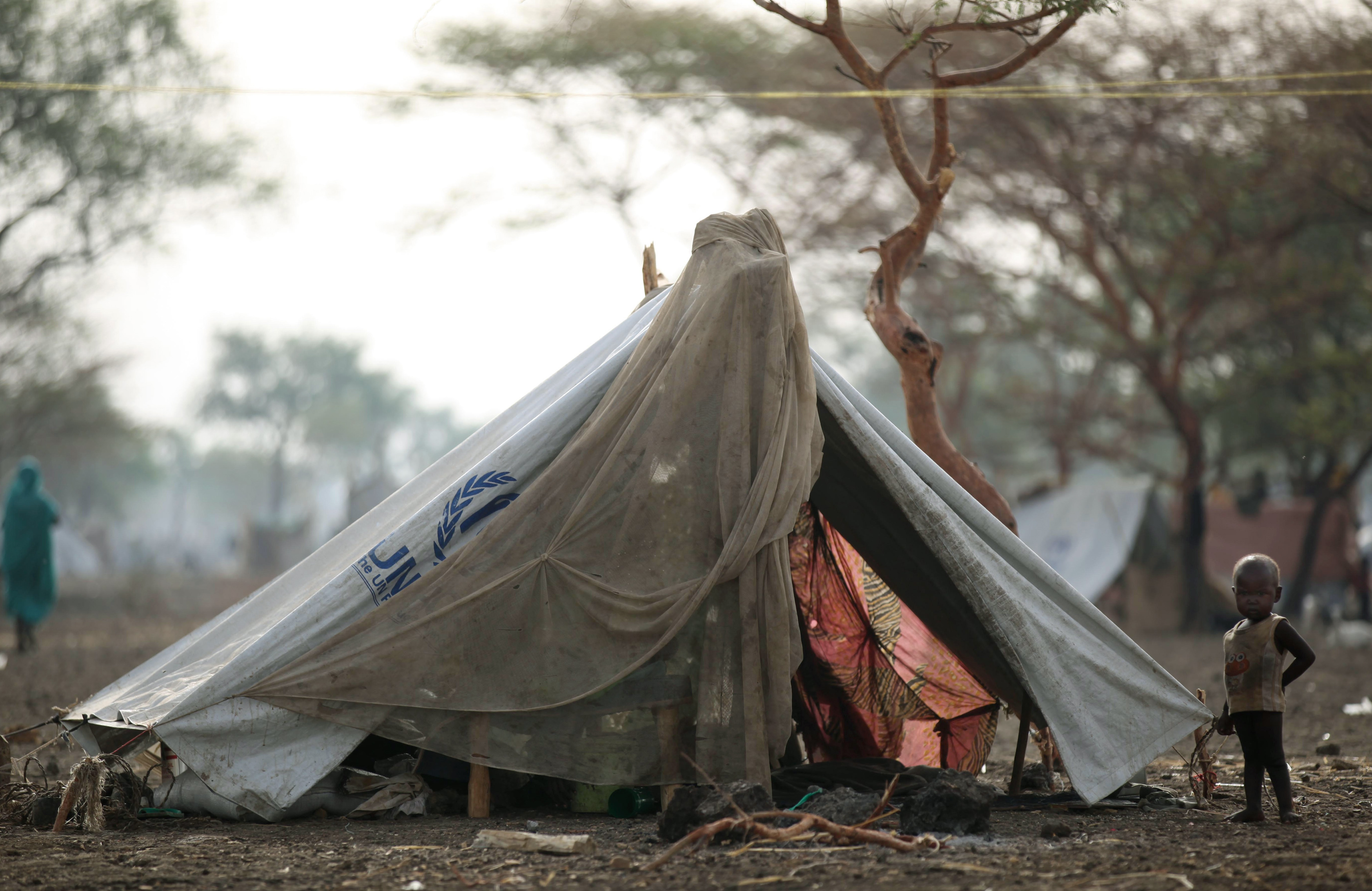
- Sudan almost certainly faces a catastrophic humanitarian emergency: displacement exceeds 13-14 million, acute food insecurity affects on the order of 20-25 million, and death‑toll estimates range from tens of thousands to well above 150,000, with large event‑level killings reported in Geneina and El Fasher. (Confidence: medium · ASSESSED)
- I&W: OCHA/partners publish updated displacement figures exceeding 15 million nationwide. (1-3 months)
- I&W: IPC or equivalent issues countrywide famine (IPC Phase 5) determinations for multiple Darfur states. (1-3 months)
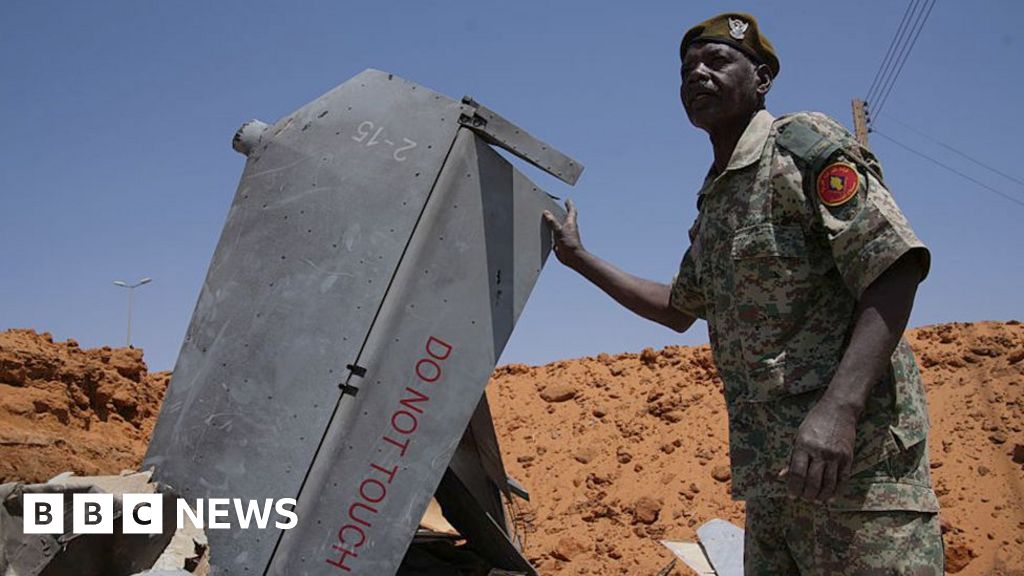
- It is likely that RSF‑conducted drones struck el-Obeid between 10-11 June, killing at least four at a funeral and possibly up to 23 across a series of strikes, with additional homes hit near the airport district; statewide thermal detections in the same period are consistent with intense heat sources but do not establish attribution. (Confidence: low · REPORTED)
- I&W: Verified imagery of RSF drone munitions remnants geolocated to el-Obeid strike sites. (0-14 days)
- I&W: Contradictory official attribution from credible independent investigators (e.g., UN) naming a non‑RSF actor for the el-Obeid strikes. (1-3 months)
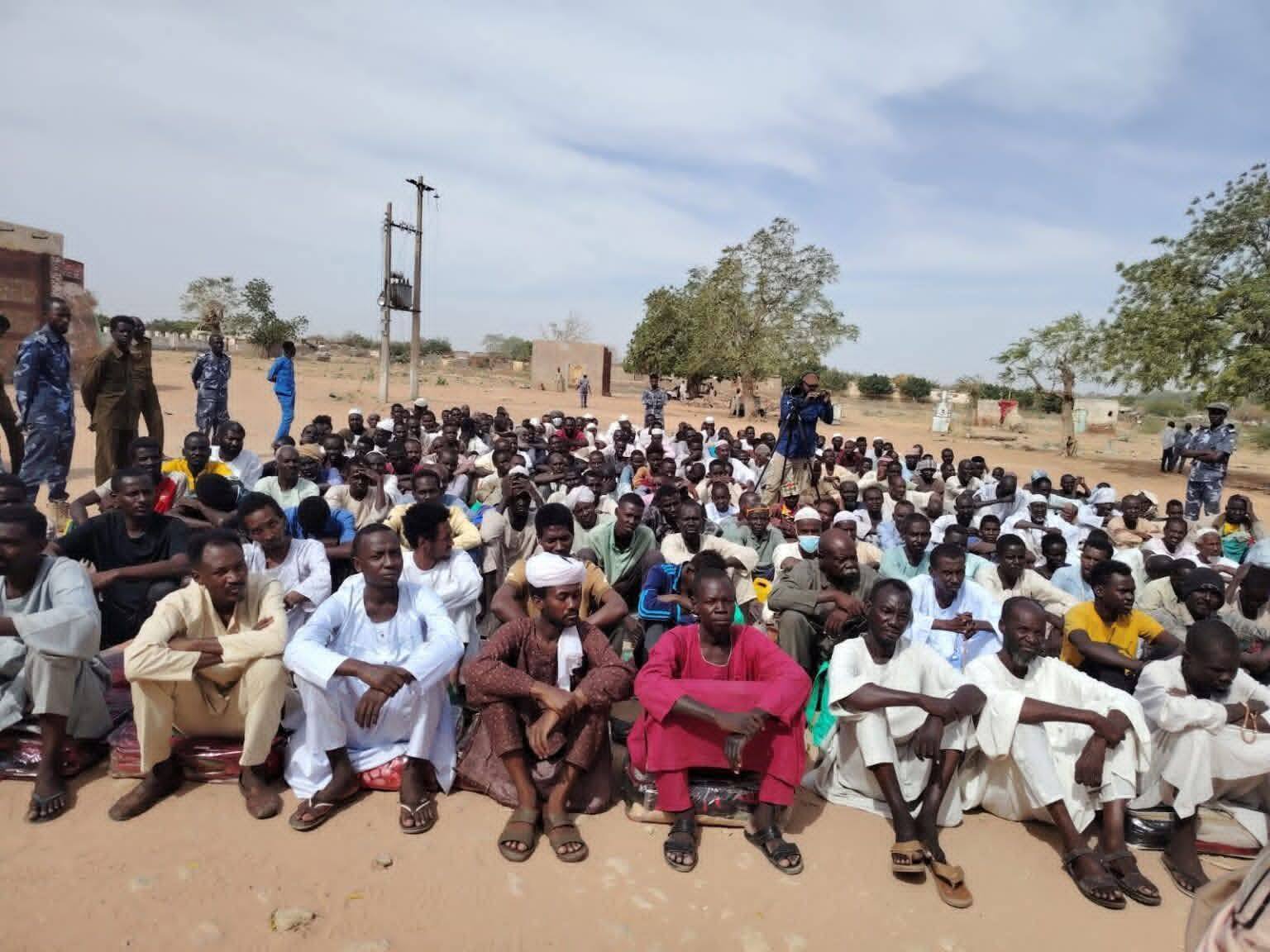
- RSF almost certainly operates Daqris Prison ~25 km from Nyala as a major detention center where civilians, including a family of seven detained since January 2026, face torture, extortion, severe overcrowding numbering in the thousands, and repeated deaths due to lack of medical care. (Confidence: medium · REPORTED)
- I&W: Independent NGO or ICRC access produces detainee lists and medical records corroborating overcrowding and deaths at Daqris Prison. (1-3 months)
- I&W: Commercial satellite imagery shows expansion of Daqris compound capacity or large-scale transfers to/from the site. (0-14 days)
- External pressure on conflict actors is likely to increase in the near term: U.S. senators introduced legislation to expand sanctions and oversight, and the U.S. House is considering designating the RSF as a terrorist organization; however, there is a roughly even chance these measures alter front‑line control within the next quarter. (Confidence: medium · ASSESSED)
- I&W: Senate Foreign Relations Committee publicly schedules mark‑up or passes the PEACE in Sudan Act; OFAC issues new designations tied to Sudan conflict supply networks. (0-14 days)
- I&W: Verified reports of RSF defections or funding disruptions immediately following new U.S. actions. (1-3 months)
- A nationwide, durable ceasefire between SAF and RSF is unlikely in the near term despite AU demands and a UN/AU/Arab League‑monitored proposal from Kamil Idris, given AU rejection of that proposal for lacking a civilian‑led transition and assessments that neither side is likely to secure a decisive military victory soon. (Confidence: medium · ASSESSED)
- I&W: Public acceptance by both SAF and RSF of an AU/UN/Arab League‑monitored ceasefire that includes a civilian‑led transition roadmap. (1-3 months)
- I&W: Verified local ceasefires lasting ≥14 days across El Fasher or Khartoum without major violations. (0-14 days)
- SAF likely escalated drone strikes against positions in and around Kurmuk in early June, but control of the town remains contested in available reporting. (Confidence: low · REPORTED)
- I&W: Official communiqués or geolocated imagery from SAF or local armed groups confirming strike locations and damage in Kurmuk. (0-14 days)
- I&W: On‑the‑ground reporting confirming which forces administratively control Kurmuk’s municipal center. (0-14 days)
Outlook & scenarios
RSF consolidates Darfur hold and expands strike activity into Kordofan/Blue Nile, 60%
RSF maintains firm control of Nyala, Geneina, Kabkabiya, and El Fasher while employing drones and artillery to pressure el-Obeid and rebel‑held or SAF‑contested areas, including around Kurmuk. Civilian harm rises and internal movement and aid face intermittent interdiction; displacement and acute food insecurity continue to climb.
Sanctions and scrutiny intensify with limited near‑term battlefield change, 50%
U.S. legislation advances, adding sanctions tools and oversight and increasing legal risk for foreign enablers of the conflict; the U.S. House advances an RSF terrorist designation. These measures constrain some financing and procurement but do not quickly alter RSF, SAF front lines over the next 1-3 months.
Monitored local truces enable limited humanitarian access, 30%
Under AU/UN/Arab League facilitation, RSF and SAF accept time‑bound, locality‑specific ceasefires enabling corridor access and aid delivery. Absent a credible civilian‑led transition pathway, a nationwide durable ceasefire remains out of reach, leaving the broader conflict unresolved.
Recommendations
- [object Object]
- [object Object]
- [object Object]
- [object Object]
- [object Object]
- [object Object]
Confidence & uncertainty
Overall confidence is medium. Several judgments rest on multiple, mutually reinforcing claims about RSF control and the scale of humanitarian impacts, but key figures for displacement and deaths vary widely across credible and semi‑credible sources. Reporting on el-Obeid strikes and on conditions at Daqris Prison relies heavily on single‑outlet or rights‑group accounts; we therefore lowered confidence for those judgments. NASA thermal detections corroborate heat signatures consistent with conflict but cannot attribute cause. Reporting on Kurmuk is contradictory and from limited sources, further constraining confidence.
Intelligence gaps
- [EEI 1.3 · UNCOVERED] Reports or intercepts of orders, operational directives or public statements from RSF/SAF commanders indicating planned offensives, ceasefire acceptance/rejection, defensive postures or orders to withdraw from named locations., recommended collection: signals/communications intercepts
- [EEI 1.4 · PARTIAL] Status of critical infrastructure and lines of communication: control or denial of named bridges, main highways (identify route numbers), airfields, fuel depots and telecommunication hubs and any reported sabotage/blockage incidents., recommended collection: human intelligence/field reporting
- [EEI 2.2 · PARTIAL] Access impediments to humanitarian assistance: reported attacks on, blockages of, or denial of passage for named humanitarian convoys (dates, GPS locations, responsible actor if known) and closure status of specific routes., recommended collection: human intelligence/field reporting
- [EEI 2.3 · PARTIAL] Functional status of medical infrastructure in named locations: number of operational hospitals/clinics, reported shortages of key medicines/blood, and hospital casualty/occupancy figures for the last 72 hours., recommended collection: medical/health cluster reporting
- [EEI 3.1 · PARTIAL] Detection of flights, ships or overland convoys delivering military materiel or foreign personnel to named airfields, ports or border crossings (flight/IMO numbers, manifests if available, timestamps, route origin/destination)., recommended collection: air-traffic / maritime / border customs
- [EEI 3.2 · PARTIAL] Imagery or on-the-ground confirmation of foreign military personnel or private military contractor bases/forward operating elements at specified coordinates or compounds, including vehicle/weapon types observed., recommended collection: imagery/satellite
Cited sources
[1] Wikipedia, Sudanese civil war (2023, present) (B) · sha256:e35171a6c714 [2] Wikipedia, Darfur campaign (2023, present) (B) · sha256:06fbabdd0213 [3] Wikipedia, Rapid Support Forces (B) · sha256:f4b01c3a68c8 [4] easternherald.com, Sudan Escalates Drone Campaign to Retake Kurmuk as Khartoum-Addis Ababa Rift Deepens (B) · sha256:41aef547a32b [5] panafricanvisions.com, U.S. Senators Introduce Bipartisan Bill to Increase Pressure on Sudan’s Warring Parties (B) · sha256:725cf316c939 [6] menafn.com, Bipartisan Senate Coalition Push Sudan Accountability Bill (B) · sha256:111c55ff5d68 [7] Wikipedia, Darfur genocide (2023, present) (B) · sha256:da25d31cd28f [8] bbc.com, Sudan war: Deadly drone strike targets funeral procession in el-Obeid, rights groups say (A) · sha256:c53e9b676b51 [9] NASA, NASA FIRMS thermal detections, Sudan (2d) (A) · sha256:f5d3cfd62c01 [10] Dabanga Radio TV Online, قوات الدعم السريع تواصل احتجاز 7 مدنيين منذ يناير الماضي - Dabanga Radio TV Online (D) · sha256:73618cf04d86 [11] قناة العربية Al Arabiya, في خطوة قد تغير مسار الحرب بالسودان. "النواب الأميركي" يدرس مشروع قانون لإدراج "الدعم السريع" على قوائم الإرهاب مع تصاعد الاتهامات الأممية لها | قناة العربية Al Arabiya (B) · sha256:4faefa5a77b6 [12] thisdaylive.com, AU’S STRATEGIC OPTIONS FOR SUDAN’S REINSTATEMENT, THISDAYLIVE (B) · sha256:61ba18e9b037
Source content hashes were computed at collection time; the cited text is preserved unmodified for the life of this product.
TLP:CLEAR