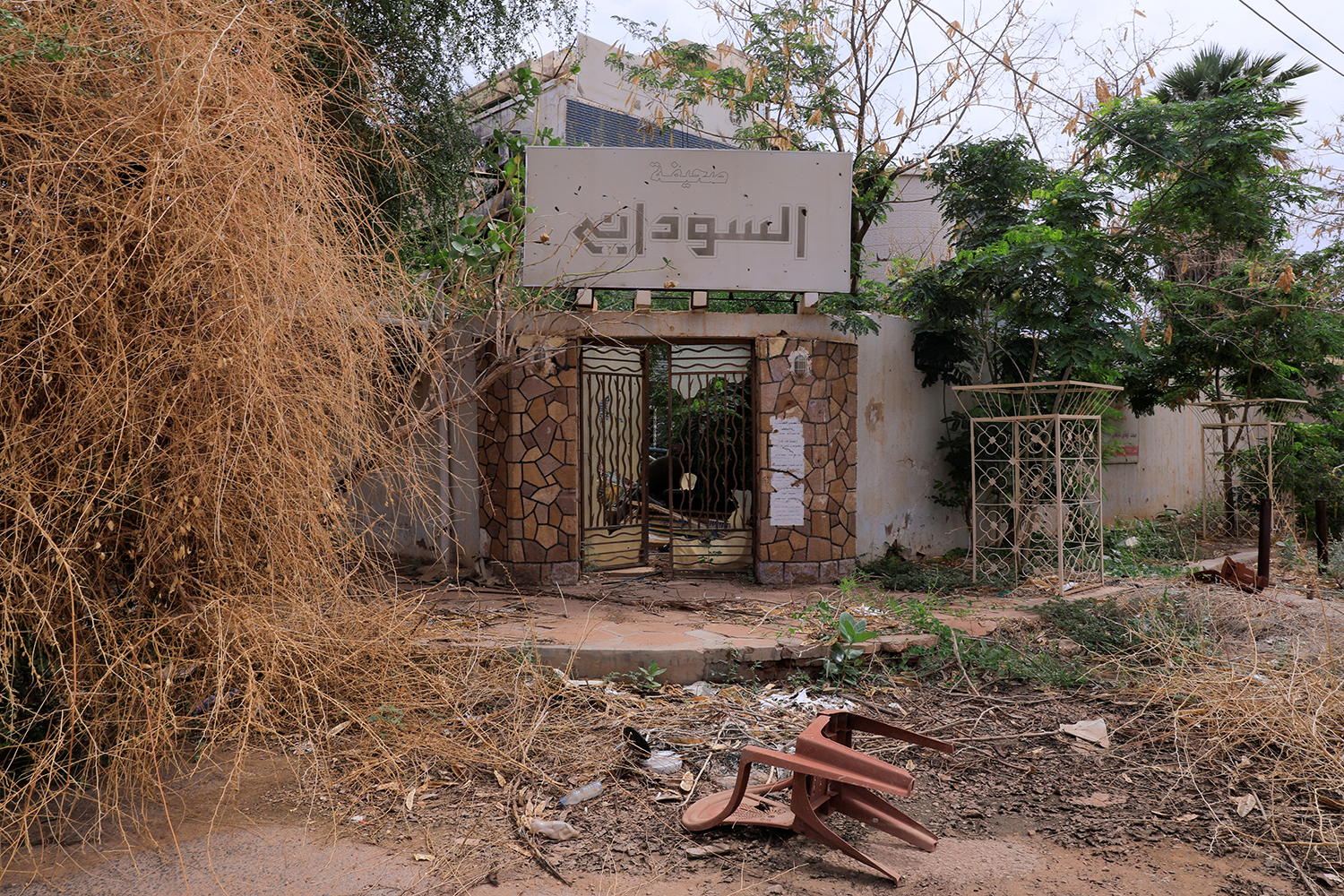
Sudan Conflict SITREP: RSF control in Darfur, mounting humanitarian toll, and near-term diplomatic/accountability push (2-9 Jun 2026)
Time window: Last 7 days · Audience: General analyst · Type: Situation report · DTG: 2026-06-09 10:21Z · Overall confidence: MEDIUM
BLUF
Very likely RSF maintains control across most of Darfur, including El Fasher since October 2025, amid a catastrophic humanitarian toll, while international actors move to launch a civilian-led dialogue and tighten accountability. U.S. legislative actions introduced 4 June 2026 and a 90‑day presidential reporting mandate on Darfur arms‑embargo violators signal increased pressure on RSF/SAF leadership in the near term.
Executive summary
Fighting between the Sudanese Armed Forces (SAF) and the Rapid Support Forces (RSF) has continued since 15 April 2023. Open-source reporting indicates RSF consolidated control over key Darfur nodes through 2023-2025, including Nyala (26 Oct 2023), Geneina (reports vary between 15 Apr and 2 May 2023), Ed Daein’s 20th Infantry Division base (21 Nov 2023), and ultimately El Fasher (Oct 2025), with a dire humanitarian picture: at least 60,000 deaths reported in El Fasher alone, 12 million displaced by 5 Feb 2025, and severe food insecurity affecting nearly 25 million people. Diplomatically, Belgium, France, Germany, Greece, Italy, Norway, the UK, the U.S., AU, EU, IGAD, LAS, and the UN reaffirm support to Sudan, and the Quintet announced a civilian-led dialogue process “in the coming weeks.” The U.S. House introduced the U.S. Engagement in Sudanese Peace Act on 4 June 2026, articulating support for justice/accountability, calling for sanctions on RSF/SAF leadership, and mandating two presidential reports within 90 days, one identifying foreign violators of the UN Darfur arms embargo and another on international crimes and aid obstruction. Concurrently, Khartoum authorities announced an emergency crackdown on artisanal gold mining, mandatory miner IDs and removal of gold-processing mills from residential/military areas, potentially disrupting an estimated 80% of national gold output.
Key judgments
- Very likely the Rapid Support Forces (RSF) currently hold most of Darfur, including El Fasher since October 2025, after sequential captures of Nyala (26 Oct 2023), Geneina (reported on 15 Apr and mostly by 2 May 2023), Ed Daein’s 20th Infantry Division base (21 Nov 2023), and the Adila and Shag Omar oilfields (11 Aug and 21 Nov 2023), with RSF tightening the El Fasher siege by May 2024 and controlling most of Darfur by late 2023. (Confidence: medium)
- Very likely the humanitarian toll is catastrophic and worsening, with at least 60,000 deaths reported in El Fasher and a total death toll possibly 150,000-400,000 nationwide, alongside 12 million people forcibly displaced by 5 Feb 2025 and severe food insecurity affecting nearly 25 million people; international actors have publicly flagged deep concern. (Confidence: medium)
- Likely RSF and allied militias have committed widespread atrocities in Darfur since 2023, including organized massacres, systematic sexual violence, and child soldier recruitment, and targeted political figures such as West Darfur Governor Khamis Abakar (abducted and killed after accusing RSF of genocide). (Confidence: medium)
- Likely international diplomatic and accountability pressure will intensify in the near term: the Quintet announced a comprehensive, inclusive Sudanese civilian-led dialogue process “in the coming weeks,” while the U.S. House introduced the U.S. Engagement in Sudanese Peace Act on 4 Jun 2026 articulating support for justice/accountability, potential sanctions on RSF/SAF leadership, and two 90‑day presidential reports on UN Darfur arms‑embargo violators and international crimes/aid obstruction; partners have reaffirmed commitment and signaled willingness to consider measures, underscoring the indispensability of an independent civilian‑led government. (Confidence: high)
- Likely the 90‑day U.S. presidential report on foreign violators of the UN Darfur arms embargo will heighten scrutiny of external enablers and position the U.S. to pursue additional designations and other measures against those undermining a civilian transition. (Confidence: medium)
- Likely Sudan’s emergency crackdown on artisanal gold mining, including mandatory miner ID cards and removal of gold‑processing mills from residential/military areas, will disrupt an estimated 80% of national gold output and create short‑term livelihood shocks and potential localized unrest in mining hubs. (Confidence: medium)
- Roughly even chance the front lines remain fragmented, SAF reportedly retook Khartoum by March 2025 while RSF consolidated control across Darfur through October 2025, complicating rapid acceptance of the proposed ceasefire framework that requires disengagement and adoption of defensive postures only. (Confidence: low)
- Unlikely that sanctions threats alone will prompt near‑term restraint by RSF or SAF absent a robust monitoring and verification architecture with credible enforcement and oversight. (Confidence: low)
Outlook & scenarios
Civilian-led dialogue opens; targeted sanctions expand; localized de-escalation, 35%
In the coming weeks, the Quintet’s announced civilian-led dialogue convenes with broad participation, while the U.S. advances sanctions packages and delivers the two mandated reports within 90 days. Outcomes include limited, area-specific de-escalations to facilitate aid, and a clearer pathway toward a civilian-led interim authority backed by partners’ commitment and readiness to consider measures against spoilers.
RSF consolidates Darfur; humanitarian collapse deepens, 45%
RSF retains/expands control over Darfur hubs (including El Fasher) and resource nodes, while alleged atrocities persist. Deaths and displacement climb above already high reported levels, and severe food insecurity worsens. Diplomatic efforts stall at launch or fracture over participation and sequencing; accountability measures raise costs but do not change battlefield dynamics in the short run.
Fragmented stalemate; political track stalls, 40%
SAF holds key urban cores in the northeast (including the reported retaking of Khartoum by Mar 2025) while RSF dominates much of Darfur. Neither side accepts the proposed ceasefire framework requiring disengagement and defensive postures, and the dialogue process delays amid disputes over representation and guarantees; humanitarian needs remain acute.
Wildcard: External embargo‑violators exposed; rapid diplomatic rupture, 15%
The U.S. 90‑day report publicly identifies foreign individuals violating the UN Darfur arms embargo, prompting an abrupt rupture with implicated capitals, fast‑tracked sanctions, and ad hoc interdiction efforts. Supply lines contract temporarily, but conflict actors adapt via alternative sourcing; diplomatic backchannels harden, complicating the civilian-led dialogue.
Recommendations
- Prepare a sanctions target package: compile and corroborate RSF/SAF leadership rosters (to include Muhammad Hamdan Dagalo “Hemedti” and SAF Commander-in-Chief Gen Abdel Fattah al-Burhan) with evidentiary summaries tied to alleged atrocities (organized massacres, systematic sexual violence, child soldier recruitment; the killing of West Darfur Governor Khamis Abakar) to support actions envisioned by the U.S. Act and partner measures.
- Align IC collection for the 90‑day deliverables: build an OSINT/SIGINT/FININT registry of foreign individuals plausibly violating the UN Darfur arms embargo for the presidential report; catalog incidents of international crimes and aid obstruction since April 2023 for the second mandated report.
- Stand up dialogue-track indicators: monitor Quintet planning milestones, venue/logistics, and inclusion of women/youth leaders; define leading indicators of traction (public participant lists, agenda convergence) vs stall (boycotts, precondition escalations).
- Baseline the conflict economy exposure from the mining crackdown: map gold-processing mill removals and miner ID issuance to known artisanal sites; flag areas where sudden compliance actions risk community protests or displacement; prepare humanitarian contingency triggers.
- Publish range-bound humanitarian estimates with sourcing tiers: present casualty and displacement ranges (e.g., El Fasher deaths, national death toll, displacement, food insecurity) with explicit source reliability and date coverage; avoid single-point figures in briefings and highlight uncertainty bands.
- Plan for verification: draft a monitoring/verification concept aligned to the proposed ceasefire framework (disengagement and defensive postures only), identifying potential chair/oversight roles, reporting channels, and escalation ladders to convert sanctions threats into credible enforcement.
Confidence & uncertainty
Overall confidence is medium. Diplomatic and U.S. policy/juridical developments rest on high-reliability official sources (gov.uk joint statement; U.S. House text), supporting high confidence in the near-term accountability/diplomacy track. Territorial control, atrocity allegations, and humanitarian figures rely heavily on major‑media/Wikipedia reporting and show internal inconsistencies (e.g., differing dates for Geneina’s fall; divergent claims of SAF retaking Khartoum vs RSF consolidating Darfur; wide casualty ranges), warranting lowered confidence and explicit uncertainty ranges. The mining‑sector crackdown is supported by medium‑reliability media and should be treated cautiously until corroborated by official decrees or field reporting.