TLP:CLEAR · Disclosure is not limited.
Sudan Conflict Situation Report, 11 November 2026
Time window: Last 7 days · Audience: General analyst · Type: Situation report · DTG: 2026-11-11 22:10Z · Overall confidence: HIGH
BLUF
SAF pressure in Kordofan towards Darfur and further civilian harm in Blue Nile State are likely to continue. Emergency shelter and household stocks for Sudan are running short, while current reporting does not establish durable SAF territorial gains or confirm RSF responsibility for the 10 November drone attack.
Executive summary
Reporting from 4 to 11 November points to continued SAF operations in Kordofan, including claims that the Joint Force regained Abu Qaqoul and Umm Samima, and an SAF announcement that it downed 29 hostile drones in Kordofan and Darfur. These reports do not establish durable control of the claimed areas. Two outlets reported that a drone attack in Blue Nile State on 10 November killed nine displaced people. Kurmuk Commissioner Abdel Ati Mohamed al-Faki attributed the attack to the RSF, but other reporting leaves the operator unknown and differs on whether the strike hit a travelling group or a village. IOM and UNHCR warn that emergency shelter and basic household stocks are running out. Humanitarian figures use different scopes: one report says 33.7 million people need aid, while the UN plan seeks funding to assist about 20.4 million.
Change from previous assessment
Since the 10 November brief, new reporting adds SAF and Joint Force claims of gains at Abu Qaqoul and Umm Samima and an SAF announcement that it downed 29 drones; durable control remains unverified. The Blue Nile assessment now includes reports of nine displaced people killed on 10 November, raising concern about immediate civilian exposure, while responsibility for the strike remains uncertain. IOM and UNHCR reporting that stocks are running out sharpens the prior concern about aid gaps. El Fasher is added as a control question, but the available accounts conflict and support only low confidence.
Key judgments
- SAF is likely to sustain pressure in Kordofan towards Darfur over the next 14 days. The army said it advanced in Kordofan, the Joint Force announced that it regained Abu Qaqoul and Umm Samima, and SAF announced that it downed 29 hostile drones in Kordofan and Darfur. These are reported claims, not independent confirmation of durable control. (Confidence: medium · ASSESSED)
- I&W: Confirm: independent geolocated imagery or field reporting places SAF or Joint Force units in Abu Qaqoul and Umm Samima on separate dates. (0-14 days)
- I&W: Break: credible geolocated reporting shows SAF or Joint Force units withdrawing from either area, or RSF forces retaking it. (0-14 days)
- Further civilian casualties and displacement in Blue Nile State are likely over the next 30 days. Xinhua and another outlet reported that a drone attack on 10 November killed nine displaced people near Bani Shako, although accounts differ on whether the strike hit people travelling towards Damazin or the village itself. Kurmuk Commissioner Abdel Ati Mohamed al-Faki blamed the RSF, but other reporting does not identify the operator. The estimate of 50,000 people fleeing attacks on Kurmuk, Geissan and Baw rests on a single report and remains weakly corroborated. (Confidence: medium · ASSESSED)
- I&W: Confirm: wire-service or UN reporting documents another drone attack in Kurmuk, Geissan or Baw, with new displacement towards Ad-Damazin. (0-30 days)
- I&W: Break: an independent investigation attributes the 10 November attack to another actor or establishes that it was not a drone strike. (0-30 days)
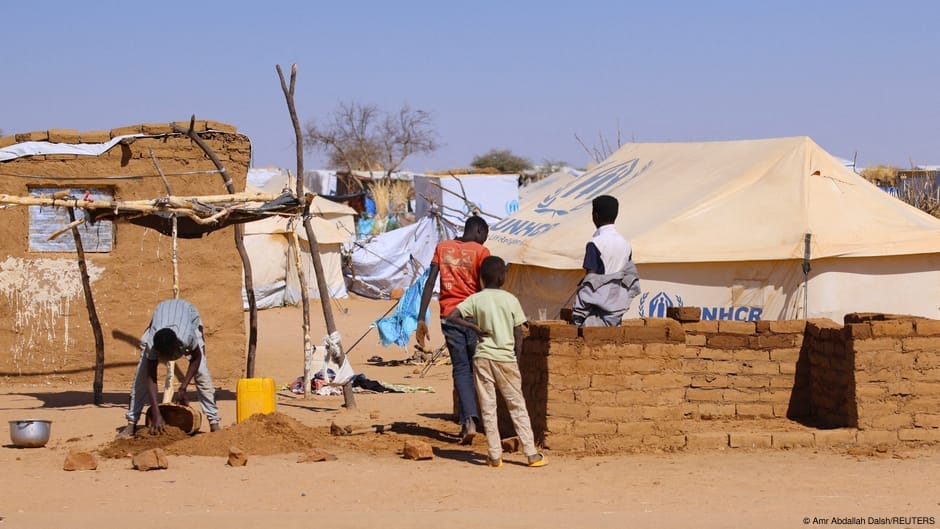
- Humanitarian shortfalls in Sudan are very likely to persist over the next 1-3 months. IOM and UNHCR warn that emergency shelter and basic household item stocks are running out. Reporting says 33.7 million people need humanitarian aid and that organisations have reached only 10 per cent of the 15.4 million people requiring emergency shelter and household items. The UN plan’s target of assisting about 20.4 million people uses a different scope, so these figures are not directly interchangeable. (Confidence: medium · ASSESSED)
- I&W: Confirm: IOM or UNHCR reports further stock exhaustion or continued coverage at or below the reported 10 per cent for the emergency shelter and household item target. (1-3 months)
- I&W: Break: agencies report funded replenishment and a measurable increase in distributions to people needing emergency shelter and household items. (1-3 months)
- Current control of El Fasher is unlikely to be established reliably from the available reporting. One account says the RSF captured the city about a year ago, and a reported Yale University study describes it as nearly empty; the El Fasher Resistance Committees Coordination says it played a role in defending the city. These accounts do not resolve who controls El Fasher now and are in tension. (Confidence: low · ASSESSED)
- I&W: Confirm RSF control: independent geolocated reporting shows RSF personnel administering or securing named sites in El Fasher. (0-30 days)
- I&W: Break RSF control: independent reporting verifies SAF or Joint Force entry into El Fasher or RSF withdrawal from named sites. (0-30 days)
Outlook & scenarios
Continued attritional fighting and worsening civilian exposure (65%)
This is the most likely course over the next 1-3 months. SAF pressure in Kordofan continues, drone attacks remain a threat in Blue Nile State, and civilian casualties and displacement rise. IOM and UNHCR stock constraints persist. The reported Kordofan gains do not become independently verified durable control.
SAF consolidates local gains and advances west (25%)
SAF or Joint Force presence in Abu Qaqoul and Umm Samima is independently confirmed and held, with pressure continuing towards Darfur. This would mark a local battlefield gain, but would not establish SAF control across Darfur or resolve the status of El Fasher.
Cross-border escalation (10%)
This is an unlikely, high-impact scenario. SAF strikes reported along the Chad and Ethiopia border zones widen into sustained exchanges involving Sudan and a neighbouring state. Reports of RSF logistical activity linked to Bahir Dar Air Base and Asosa Airport remain unverified, so current evidence does not establish that escalation path.
Recommendations
- Maintain a dated control ledger for Abu Qaqoul and Umm Samima. Record SAF and Joint Force statements as claims until independent geolocation or field reporting confirms continued presence.
- For the 10 November Blue Nile attack, report the nine deaths separately from responsibility for the strike. Keep RSF attribution unconfirmed and track the discrepancy between the reported travelling group and the village target description.
- Reconcile humanitarian denominators before briefing: distinguish the 33.7 million people reported to need aid, the 15.4 million needing emergency shelter and household items, and the UN plan target of about 20.4 million. Track stock reports alongside funding against the $2.9 billion plan.
- Request independent geospatial and field verification of El Fasher control. Describe current control as unresolved until reporting establishes which forces are present at named sites.
- Track verified SAF strikes on or inside Chad and near Ethiopia, alongside official diplomatic measures and independently confirmed RSF logistical activity. Do not present allegations about Bahir Dar Air Base or Asosa Airport as established fact.
Confidence & uncertainty
Overall confidence is high in the broad assessment that fighting, drone-related civilian harm and humanitarian shortfalls are continuing. The reporting draws on UN, IOM, UNHCR and UNICEF material, alongside major-media and wire-service accounts. Confidence is lower on specific battlefield control, responsibility for the 10 November Blue Nile strike, and the estimate of 50,000 displaced people, which is single-source. Humanitarian totals also use different scopes and should not be treated as directly comparable.
Intelligence gaps
- [EEI 1.1 · PARTIAL] Observed concentrations and movement of armed units (size estimates, unit identifiers if visible) within X km of named towns/roads/airfields (e.g., El Fasher, Geneina, Nyala, Khartoum neighborhoods) including timestamps and direction of movement. Recommended collection: imagery/satellite
- [EEI 1.3 · PARTIAL] Reports or intercepts of orders, operational directives or public statements from RSF/SAF commanders indicating planned offensives, ceasefire acceptance/rejection, defensive postures or orders to withdraw from named locations. Recommended collection: signals/communications intercepts
- [EEI 2.1 · PARTIAL] Counts and locations of newly displaced persons arriving at formal sites, informal camps, border crossings or collective centers (daily/weekly arrivals, site coordinates), including demographics (women, children, elderly) where available. Recommended collection: humanitarian/UN OCHA reports
- [EEI 2.2 · UNCOVERED] Access impediments to humanitarian assistance: reported attacks on, blockages of, or denial of passage for named humanitarian convoys (dates, GPS locations, responsible actor if known) and closure status of specific routes. Recommended collection: human intelligence/field reporting
- [EEI 2.3 · PARTIAL] Functional status of medical infrastructure in named locations: number of operational hospitals/clinics, reported shortages of key medicines/blood, and hospital casualty/occupancy figures for the last 72 hours. Recommended collection: medical/health cluster reporting
- [EEI 3.1 · PARTIAL] Detection of flights, ships or overland convoys delivering military materiel or foreign personnel to named airfields, ports or border crossings (flight/IMO numbers, manifests if available, timestamps, route origin/destination). Recommended collection: air-traffic / maritime / border customs
- [EEI 3.2 · PARTIAL] Imagery or on-the-ground confirmation of foreign military personnel or private military contractor bases/forward operating elements at specified coordinates or compounds, including vehicle/weapon types observed. Recommended collection: imagery/satellite
- [EEI 3.3 · PARTIAL] Financial and sanctions-relevant indicators: atypical large transfers, use of designated front companies, or shipments routed through third states linked to procurement of weapons or fuel for RSF or SAF (transaction dates, parties, amounts where obtainable). Recommended collection: financial intelligence
Red cell review: CONCUR WITH COMMENT
TLP:CLEAR