TLP:CLEAR · Disclosure is not limited.
Sudan Conflict Situation Report: Blue Nile, Darfur and Ethiopia Tensions, 5 November 2026
Time window: Last 7 days · Audience: General analyst · Type: Situation report · DTG: 2026-11-05 22:12Z · Overall confidence: HIGH
BLUF
The conflict remains active in Blue Nile and Darfur, with reported RSF advances, new UN findings on abuses in North Darfur and continued attacks on power infrastructure. Sudan and Ethiopia have moved from public accusations to reciprocal consulate closures and diplomat expulsions; claims of RSF drone launches from Ethiopian territory remain contested, and the reporting does not establish an imminent interstate conflict.
Executive summary
Reporting this week describes continued fighting and RSF-announced gains in Blue Nile State, alongside new displacement around Ed Damazin and Ar Rosiris. UN reporting describes killings and other abuses in Zamzam, Abu Shouk and El Fasher in North Darfur; the RSF has previously denied targeting civilians in Zamzam and El Fasher. Drone strikes have disrupted electricity, water and fuel supplies, with a reported outage halting dialysis for 25 patients at a hospital outside Khartoum. Sudan and Ethiopia have closed consulates and expelled diplomats amid Sudanese allegations of RSF drone launches from Ethiopian territory, which Ethiopia denies.
Change from previous assessment
Since the 4 November brief, reporting has added Sudan's closure of Ethiopia's consulate in Gedaref and describes reciprocal diplomatic expulsions and consulate closures, strengthening the assessment that relations are deteriorating. New reporting refers to satellite imagery and camps in Asosa, raising the evidentiary weight of the Sudanese launch-site allegation without resolving Ethiopia's denial or establishing state involvement. This brief adds RSF-announced gains and displacement in Blue Nile, new UN reporting on abuses in Zamzam, Abu Shouk and El Fasher, and further detail on drone-related power disruptions. The prior assessment of continued drone-related civilian risk remains in place.
Key judgments
- RSF and aligned forces are likely extending their hold in Blue Nile State, although the extent of control around Sali and Al-Kaili is not independently settled. The RSF and its allies announced control of Sali on 3 November, and the RSF announced control of Al-Kaili and Kilo 6 on 4 November. Accounts differ on whether the Sali claim refers to a military base or the wider area, and Kayli may be a variant spelling of Al-Kaili. Reporting also describes continued SAF-RSF fighting in the state. (Confidence: medium · ASSESSED)
- I&W: Confirm: independent geolocated imagery or reporting verifies RSF control of Sali and Al-Kaili beyond the initial announcements. (0-14 days)
- I&W: Break: independent reporting verifies that SAF forces have retaken Sali or Al-Kaili, or that RSF control was limited to the Sali base. (0-14 days)
- UN findings provide substantial support for the assessment that RSF fighters targeted civilians in North Darfur, including in El Fasher. The UN Human Rights Office reported at least 1,013 civilians killed in the Zamzam attack, including 319 summarily executed, and at least 40 displaced people killed and 19 injured in Abu Shouk. The UN also reported that RSF fighters targeted civilians, including members of non-Arab communities, and committed acts amounting to war crimes in El Fasher. The RSF has previously denied targeting civilians in Zamzam and El Fasher, while acknowledging abuses by some fighters. (Confidence: medium · REPORTED)
- I&W: Confirm: a further UN or independently verified investigation corroborates RSF responsibility for targeted civilian killings in El Fasher or the camps. (0-30 days)
- I&W: Break: a subsequent UN finding materially revises the reported casualty figures or attribution for the incidents cited. (0-30 days)
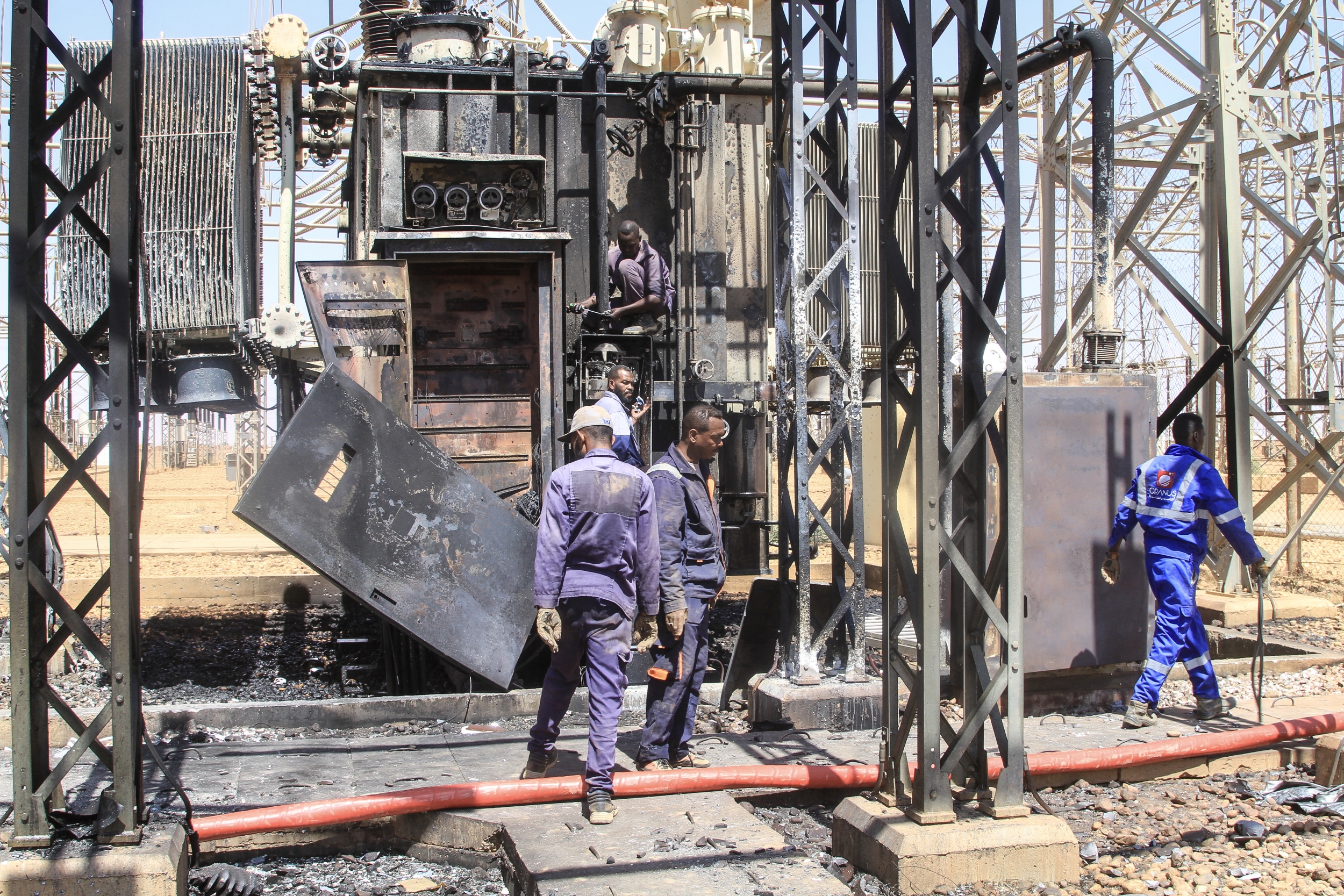
- Drone attacks on Sudanese infrastructure are likely to continue over the next 14 days, but attribution should be treated incident by incident. Reporting says strikes on 26 October hit six power stations and caused outages in four eastern states, followed by a strike on Al-Markhiyat power station north of Omdurman on 27 October. Strikes on substations in al-Dabba and Abu Hamad cut power on 1 November; Sudanese authorities and Emergency Lawyers blamed the RSF. UN humanitarian reporting describes disruption to electricity, water and fuel, including a power outage that halted dialysis for 25 patients outside Khartoum. (Confidence: medium · ASSESSED)
- I&W: Confirm: a new reported drone strike damages a named power station or substation, or causes a documented electricity outage, within Sudan. (0-14 days)
- I&W: Break: no further infrastructure strikes are reported for 14 days and reporting confirms restored service at the affected sites. (0-14 days)
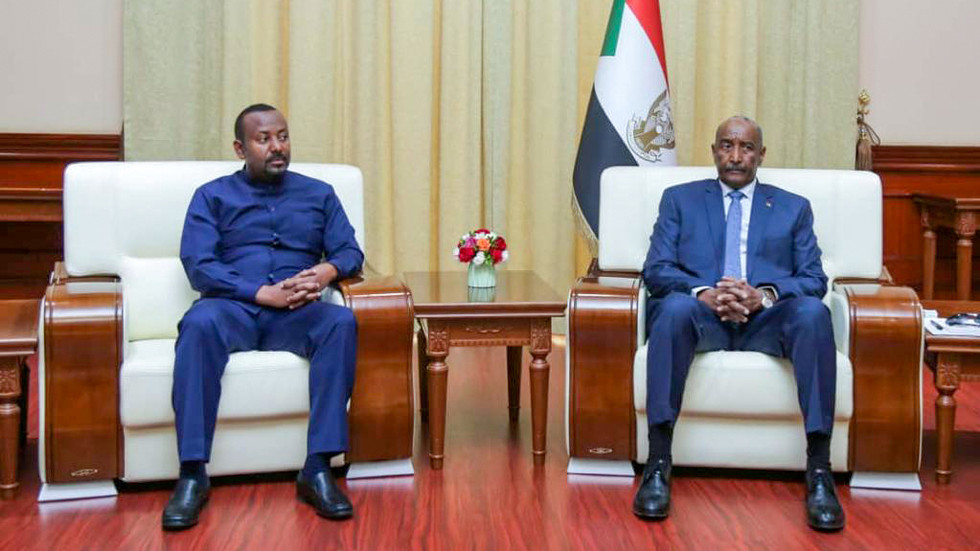
- Sudan-Ethiopia relations are likely to deteriorate further over the next 30 days. Ethiopia ordered six Sudanese diplomats to leave and Sudan closed Ethiopia's consulate in Gedaref; reporting describes reciprocal expulsions and consulate closures within 48 hours. Sudan has accused Ethiopia of allowing RSF drone launches from its territory, and reporting refers to satellite imagery and camps in Asosa, but Ethiopia denies supporting the RSF or allowing launches. The allegations and casualty figures remain disputed, so the reporting does not establish Ethiopian state involvement. (Confidence: medium · ASSESSED)
- I&W: Confirm: either government announces another diplomat expulsion, closes an additional consulate, or publicly restricts diplomatic contact. (0-30 days)
- I&W: Break: both governments restore consular operations or issue a joint statement establishing a diplomatic channel to address the allegations. (0-30 days)
- Humanitarian pressure in Blue Nile State is likely to increase over the next month as fighting displaces people towards Ed Damazin and Ar Rosiris. An Al Jazeera correspondent reported more than 5,000 families arriving in the two towns, satellite imagery showed new or expanded shelter sites, and a state official said Al-Azaza in Ar Rosiris hosts about 1,300 families. A separate IOM estimate records substantial displacement across Blue Nile through mid-October, but the available reporting does not provide a like-for-like update for arrivals in the two towns. (Confidence: medium · ASSESSED)
- I&W: Confirm: a new IOM update records rising arrivals in Ed Damazin or Ar Rosiris, or satellite imagery shows further shelter-site expansion. (2-6 weeks)
- I&W: Break: field reporting records sustained returns from the two towns and satellite imagery shows no further shelter-site expansion. (2-6 weeks)
Outlook & scenarios
Continued fighting without direct Sudan-Ethiopia confrontation (65%)
This is the most likely scenario over the next one to three months. Fighting continues in Blue Nile and elsewhere in Sudan, drone attacks keep pressure on infrastructure, and displacement grows. Sudan and Ethiopia remain in a diplomatic dispute, but the available reporting does not indicate direct military action between the two states.
Diplomatic dispute produces a localised border incident (25%)
An unlikely but plausible scenario is a localised clash along the Sudan-Ethiopia border as accusations and diplomatic restrictions persist. A Horn Institute analyst has warned of limited border conflict in the absence of dialogue. This remains a warning, not evidence of an imminent clash.
Cross-border escalation, high-impact wildcard (10%)
A low-probability, high-impact scenario is a cross-border military escalation following a new drone incident that either government attributes to the other. Further diplomatic expulsions, a publicly presented and geolocated account of launch sites, or a verified armed incident on the border would raise concern. The current reporting does not establish that this sequence is under way.
Recommendations
- Track the Sali, Al-Kaili and Kilo 6 claims separately from verified territorial control. Seek geolocated imagery or independent reporting before treating the RSF announcements as confirmed changes on the ground.
- Maintain a dated evidence log for the Sudan-Ethiopia drone allegations. Record the source and provenance of any imagery, the alleged launch location, the specific attack attributed to it, and each government’s response.
- Prioritise updates on displacement and shelter capacity in Ed Damazin, Ar Rosiris and Al-Azaza. Compare future IOM figures with local arrival reports only when their dates and geographic coverage match.
- Track power outages and service restoration at al-Dabba, Abu Hamad, Al-Markhiyat and the six reported eastern power stations. Record effects on water supply and health services, including dialysis provision.
- Keep UN findings on Zamzam, Abu Shouk and El Fasher distinct by location and legal characterisation. Do not present a war-crimes finding as a formal genocide determination.
Confidence & uncertainty
Confidence is high in the broad situation picture because the principal developments are supported by UN reporting, official statements, major-media reporting, IOM-linked information and satellite-based observations. Confidence is lower on disputed issues, particularly the extent of RSF control in Blue Nile, responsibility for individual drone attacks and claims of launches from Ethiopian territory. Reported casualty and displacement figures also vary in scope and should not be treated as directly comparable.
Alternative analysis (red cell)
The evidence does not yet demonstrate an RSF extension of durable territorial control in Blue Nile. Claims 4500465b-713d-4cc4-b8b7-f8039c458392 and ed21add3-75d1-4fff-8e75-0c402cfe0b4f may describe the same Sali operation at different scopes, while claims 1b279dd2-c8cf-43f4-b50a-18adef6c0744 and a352783d-31de-46c2-ad43-5c29aea5723c leave the identity and extent of Kayli/Al-Kaili uncertain. Given the continued fighting reported in claim 1b7c2d25-2616-466b-90b7-ef5920bf95db, the more defensible reading is that RSF and allied forces are contesting or claiming additional positions, rather than that they have clearly extended their hold.
Intelligence gaps
- [EEI 1.1 · PARTIAL] Observed concentrations and movement of armed units (size estimates, unit identifiers if visible) within X km of named towns/roads/airfields (e.g., El Fasher, Geneina, Nyala, Khartoum neighborhoods) including timestamps and direction of movement. Recommended collection: imagery/satellite
- [EEI 1.2 · PARTIAL] Changes in employment of heavy weapons and systems: documented use or emplacement of artillery, multiple-launch rocket systems, tanks, combat helicopters, and airstrikes at specific coordinates and times. Recommended collection: open-source/media
- [EEI 1.4 · PARTIAL] Status of critical infrastructure and lines of communication: control or denial of named bridges, main highways (identify route numbers), airfields, fuel depots and telecommunication hubs and any reported sabotage/blockage incidents. Recommended collection: human intelligence/field reporting
- [EEI 2.2 · PARTIAL] Access impediments to humanitarian assistance: reported attacks on, blockages of, or denial of passage for named humanitarian convoys (dates, GPS locations, responsible actor if known) and closure status of specific routes. Recommended collection: human intelligence/field reporting
- [EEI 2.3 · PARTIAL] Functional status of medical infrastructure in named locations: number of operational hospitals/clinics, reported shortages of key medicines/blood, and hospital casualty/occupancy figures for the last 72 hours. Recommended collection: medical/health cluster reporting
- [EEI 3.1 · PARTIAL] Detection of flights, ships or overland convoys delivering military materiel or foreign personnel to named airfields, ports or border crossings (flight/IMO numbers, manifests if available, timestamps, route origin/destination). Recommended collection: air-traffic / maritime / border customs
- [EEI 3.2 · UNCOVERED] Imagery or on-the-ground confirmation of foreign military personnel or private military contractor bases/forward operating elements at specified coordinates or compounds, including vehicle/weapon types observed. Recommended collection: imagery/satellite
- [EEI 3.3 · PARTIAL] Financial and sanctions-relevant indicators: atypical large transfers, use of designated front companies, or shipments routed through third states linked to procurement of weapons or fuel for RSF or SAF (transaction dates, parties, amounts where obtainable). Recommended collection: financial intelligence
Red cell review: PARTIAL DISSENT
TLP:CLEAR