TLP:CLEAR · Disclosure is not limited.
Sudan Conflict Situation Report: Tactical Gains, Drone Casualties and New Displacement
Time window: Last 7 days · Audience: General analyst · Type: Situation report · DTG: 2026-11-17 10:28Z · Overall confidence: HIGH
BLUF
SAF has likely made tactical gains in West Kordofan, but reporting does not establish lasting control or a decisive shift in the war. Drone attacks are very likely to remain a major civilian threat as fighting in Blue Nile and South Darfur drives new displacement amid severe aid constraints.
Executive summary
From 10 to 17 November, reports described SAF and allied forces taking Al-Khuwai and Serif Ankoush in West Kordofan and advancing towards En Nahud. Competing accounts leave control of areas around Jabal al-Tina, Qambarti and Maifol in Blue Nile unresolved; reports also record new displacement there and in South Darfur. UN and ACLED figures identify drones as a leading source of documented civilian deaths and bombardments in 2026. WFP assistance cuts and IOM supply constraints add pressure to an already severe humanitarian situation. Sudan’s allegations that Ethiopia enabled drone operations remain unverified.
Change from previous assessment
Compared with the 16 November 2026 brief, confidence in SAF’s recent tactical gains is somewhat stronger: this reporting adds the capture of Serif Ankoush and further reported advances towards En Nahud, but still does not establish durable control. The contested fighting and new displacement around Bau locality are added. New UN and ACLED figures sharpen the assessment of drone-related civilian harm, while WFP and IOM reporting adds detail on aid constraints. Ahmed Hasab Al-Rasoul’s announced defection is now reported by several outlets, raising confidence in the announcement but not in a broader RSF fracture. Sudan’s Ethiopia allegations remain low confidence; the reported Dandro incident and diplomatic complaints do not independently verify Ethiopian involvement.
Key judgments
- SAF has likely made tactical gains in West Kordofan, but the evidence does not establish durable control or a decisive shift in the war. Reports say SAF and allied forces recaptured Al-Khuwai and Serif Ankoush on 13 November and advanced through villages towards En Nahud. The reporting supports recent movement on the ground, not sustained control of the captured towns. (Confidence: medium · ASSESSED)
- I&W: Independent reporting or geolocated imagery confirms SAF checkpoints or administration in Al-Khuwai and Serif Ankoush over at least seven consecutive days, confirming more durable control. (0-14 days)
- I&W: Independent reporting or geolocated imagery shows RSF forces retaking either town, or SAF forces withdrawing from the named towns, breaking the assessment of retained gains. (0-14 days)
- The outcome of the fighting around Jabal al-Tina, Qambarti and Maifol in Bau locality remains unresolved. The Bau local administration said the army repelled an RSF attack, while the RSF claimed that Tasees forces took the areas; the RSF account was not independently verified. Reports of families fleeing and arriving at sites in Blue Nile establish displacement, but do not resolve territorial control. (Confidence: medium · ASSESSED)
- I&W: Independent reporting or geolocated imagery identifies which forces hold Jabal al-Tina, Qambarti and Maifol, confirming one account and breaking the assessment that control is unresolved. (0-14 days)
- I&W: IOM or local authorities report further arrivals from Bau locality, including counts and origin villages, confirming continued displacement from the fighting. (0-14 days)
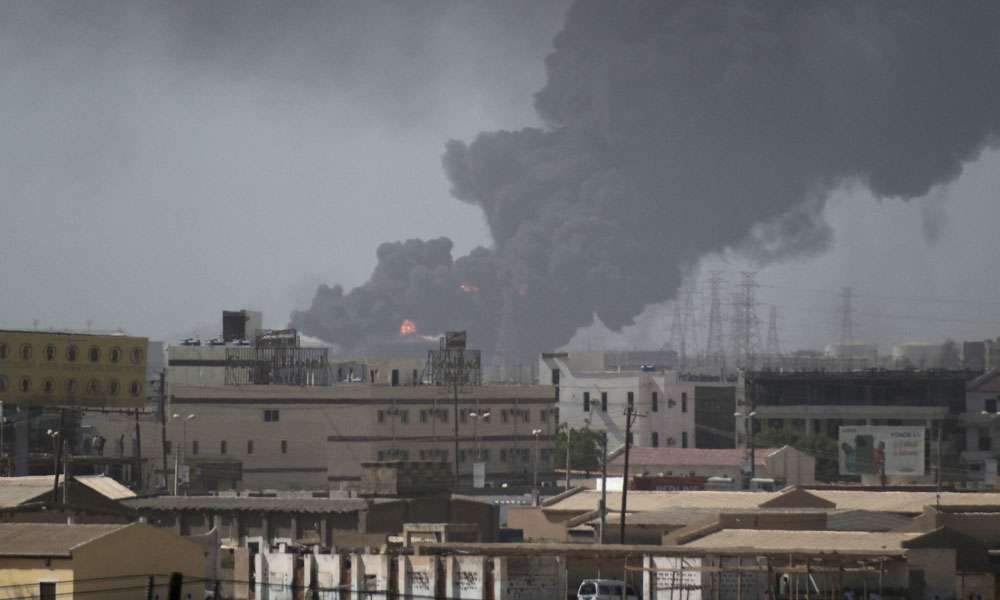
- Drone attacks are very likely to remain a major civilian threat in Sudan over the next month. OHCHR recorded more than 1,630 drone-related deaths among 2,230 documented civilian deaths between January and the end of October; ACLED recorded 877 drone attacks among 1,027 bombardments through late October. ACLED attributes 551 drone attacks to the Sudanese army and 326 to the RSF. Those aggregate figures do not establish responsibility for each strike. A local media report attributed the deaths of 15 people, including four children, in Abu Qalb, West Kordofan, on 15 November to a SAF drone strike. (Confidence: high · ASSESSED)
- I&W: A new OHCHR or ACLED tally reports that drones caused more than half of newly documented civilian deaths, confirming the continuing scale of the threat; a share below half would break this assessment. (0-3 months)
- I&W: Independent reporting confirms further drone-caused civilian deaths in named locations in Kordofan, Darfur or Blue Nile, confirming continued civilian exposure. (0-30 days)
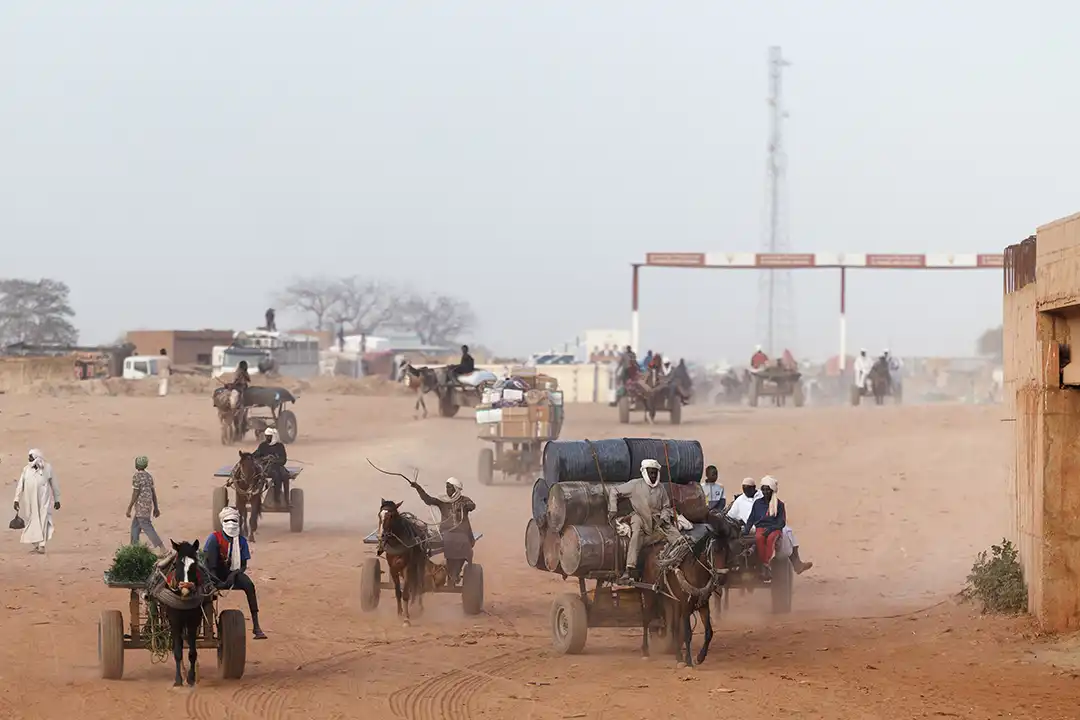
- Humanitarian pressure is very likely to remain acute over the next three months. WFP has cut emergency food assistance for around 900,000 people since September, IOM reported that its Sudan warehouses were empty before its last available supplies were sent to Darfur in a 16-truck convoy, and a UN briefing put emergency shelter needs at 13.4 to 15.4 million people while the response was about 35 per cent funded. IOM reporting also records about 7,065 people displaced by tribal clashes in As-Sunta locality, South Darfur, while around 750 people fled Abu Zabad and local sources reported 320 families arriving at sites in Bau locality. A separate estimate of 50,000 people fleeing RSF attacks around Kurmuk, Geissan and Baw covers a broader area and is not directly comparable with the reported arrivals in Bau. (Confidence: medium · ASSESSED)
- I&W: WFP reports further assistance cuts beyond the roughly 900,000 people already affected, or IOM confirms that relief supplies have not reached Darfur, confirming continued deterioration in aid access. (1-3 months)
- I&W: WFP reports restoring assistance to the affected caseload and IOM confirms delivery of relief supplies to Darfur, breaking the assessment of continued worsening constraints. (1-3 months)
- The reported defection announcement by Ahmed Hasab Al-Rasoul on 15 November is evidence of an individual break with the RSF, but it does not establish broad fragmentation. Several reports attribute to him criticism of RSF leadership over favoritism, tribal discrimination and command unity; the reporting does not establish that his fighters or a larger unit transferred with him. (Confidence: medium · ASSESSED)
- I&W: Independent reporting identifies additional named RSF commanders defecting with identifiable units or fighters, confirming a broader cohesion problem. (1-3 months)
- I&W: Independent reporting shows that Ahmed Hasab Al-Rasoul’s group remains under RSF command or that his defection announcement was retracted, weakening the assessment of an individual break. (0-3 months)
- Sudan-Ethiopia tensions are likely to persist, but the available reporting does not verify Ethiopia’s role in drone operations. Sudan accused Ethiopia of allowing its territory to be used for drone launches and logistical support to the RSF; the SAF separately said it shot down a long-range drone over Dandro, Blue Nile, on 13 November that was allegedly launched from Ethiopia. Both assertions come from Sudanese authorities or the SAF, and no independent verification is reported here. (Confidence: low · ASSESSED)
- I&W: Independent forensic analysis of the recovered drone or verified flight data links its launch to Ethiopian territory, confirming the allegation. (0-30 days)
- I&W: An independent investigation establishes a non-Ethiopian launch origin or that the drone did not cross from Ethiopia, breaking the allegation’s current evidentiary basis. (0-30 days)
Outlook & scenarios
Continued attrition and humanitarian strain (55%)
The most likely course is continued fighting without a decisive change in control. SAF maintains pressure towards En Nahud, while fighting around Bau remains contested. Drone attacks and new displacement continue, and aid constraints persist.
SAF consolidates its West Kordofan gains (25%)
SAF holds Al-Khuwai and Serif Ankoush and advances further towards En Nahud. If it sustains those gains, pressure on RSF positions in West Kordofan increases; current reporting does not establish that this outcome is imminent.
RSF and Tasees secure gains in Bau locality (15%)
The RSF account of Tasees control around Jabal al-Tina, Qambarti and Maifol proves accurate, despite the Bau administration’s account that the army repelled the attack. Further fighting displaces families from Bau locality and raises pressure on nearby reception sites.
Cross-border drone incident escalates Sudan-Ethiopia tensions (5%)
Low probability, high impact. Independent evidence links a drone operation to Ethiopian territory, prompting further Sudanese diplomatic action or additional cross-border incidents. The current allegations alone do not establish this scenario.
Recommendations
- Track Al-Khuwai, Serif Ankoush and the approaches to En Nahud using separate fields for reported capture, independently verified presence and sustained control. Do not treat statements by either belligerent as proof of territorial control.
- Keep competing accounts of the Bau locality fighting separate until independent reporting or geolocated imagery identifies who holds Jabal al-Tina, Qambarti and Maifol.
- Reconcile Blue Nile displacement estimates by location and reporting period, particularly the estimate of 50,000 people fleeing across Kurmuk, Geissan and Baw versus reports of arrivals in Bau locality. Do not combine these counts without confirming their scope.
- Verify whether IOM’s 16-truck convoy reached Darfur and where the supplies were distributed. Track WFP assistance changes for the roughly 900,000 people affected by cuts since September.
- Use the OHCHR and ACLED drone figures to assess civilian risk, but attribute individual strikes only when reporting supports the attribution. Treat the Abu Qalb incident and other single-event reports separately from aggregate figures.
- Describe the Ethiopia link as an allegation unless independent forensic evidence or verified flight data establishes the drone’s origin. Track Sudan’s complaints to the UN Security Council and the AU Peace and Security Council for follow-up.
Confidence & uncertainty
Overall confidence is high for the broad picture because the main findings draw on UN and OHCHR reporting, ACLED data, IOM and WFP reporting, and multiple media and NGO accounts of West Kordofan operations and new displacement. Individual issues are less certain: the Bau accounts conflict, displacement estimates cover different geographic scopes, and attribution of specific strikes is less secure than the aggregate drone statistics. Sudan’s allegation of Ethiopian involvement is based on Sudanese government and SAF statements and lacks independent verification in the available reporting.
Intelligence gaps
- [EEI 1.1 · PARTIAL] Observed concentrations and movement of armed units (size estimates, unit identifiers if visible) within X km of named towns/roads/airfields (e.g., El Fasher, Geneina, Nyala, Khartoum neighborhoods) including timestamps and direction of movement. Recommended collection: imagery/satellite
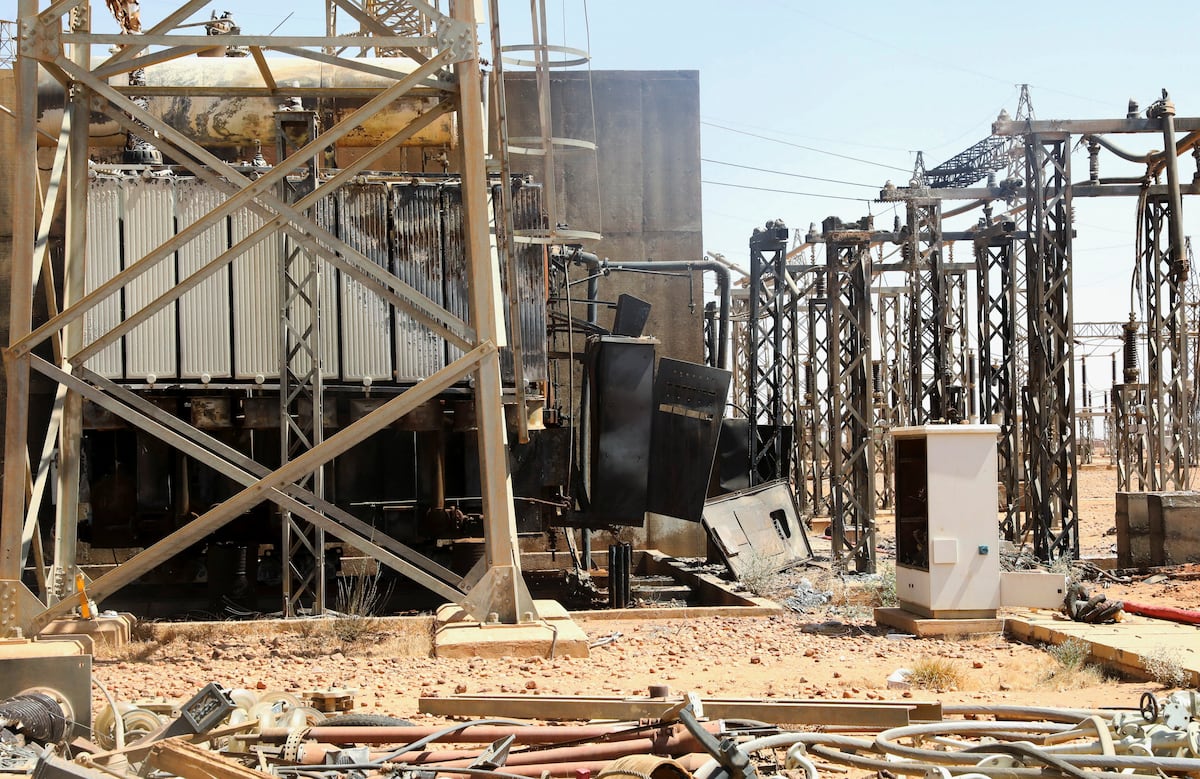
- [EEI 1.4 · PARTIAL] Status of critical infrastructure and lines of communication: control or denial of named bridges, main highways (identify route numbers), airfields, fuel depots and telecommunication hubs and any reported sabotage/blockage incidents. Recommended collection: human intelligence/field reporting
- [EEI 2.2 · PARTIAL] Access impediments to humanitarian assistance: reported attacks on, blockages of, or denial of passage for named humanitarian convoys (dates, GPS locations, responsible actor if known) and closure status of specific routes. Recommended collection: human intelligence/field reporting
- [EEI 2.3 · PARTIAL] Functional status of medical infrastructure in named locations: number of operational hospitals/clinics, reported shortages of key medicines/blood, and hospital casualty/occupancy figures for the last 72 hours. Recommended collection: medical/health cluster reporting
- [EEI 3.1 · UNCOVERED] Detection of flights, ships or overland convoys delivering military materiel or foreign personnel to named airfields, ports or border crossings (flight/IMO numbers, manifests if available, timestamps, route origin/destination). Recommended collection: air-traffic / maritime / border customs
- [EEI 3.2 · UNCOVERED] Imagery or on-the-ground confirmation of foreign military personnel or private military contractor bases/forward operating elements at specified coordinates or compounds, including vehicle/weapon types observed. Recommended collection: imagery/satellite
- [EEI 3.3 · PARTIAL] Financial and sanctions-relevant indicators: atypical large transfers, use of designated front companies, or shipments routed through third states linked to procurement of weapons or fuel for RSF or SAF (transaction dates, parties, amounts where obtainable). Recommended collection: financial intelligence
Red cell review: CONCUR WITH COMMENT
TLP:CLEAR