TLP:CLEAR · Disclosure is not limited.
Sudan: Drone Warfare and External Support Sustain Conflict
Time window: Last 7 days · Audience: General analyst · Type: Situation report · DTG: 2026-09-09 22:04Z · Overall confidence: HIGH
BLUF
Sudan's conflict is very likely to remain active over the next 30 days, with SAF and RSF long-range drone operations continuing to threaten civilian sites in South Kordofan, North Kordofan, East Darfur and Blue Nile. Foreign support networks are likely to preserve both sides' strike capacity, while humanitarian conditions and international pressure over arms flows are likely to worsen.
Executive summary
Reporting from 7 and 8 September 2026 records severe civilian harm from RSF strikes in Kalogi and SAF strikes in Ad-Da'ein, alongside damage to hospitals and essential infrastructure in El Obeid and Khartoum. The UN Fact-Finding Mission has tied foreign weapons, fighters and logistics networks to the capabilities of both SAF and RSF, while documenting alleged support routes to the RSF through Chad, southeastern Libya, Ethiopia-linked locations and Bosaso. Displacement and hunger remain at crisis levels, although UN-derived totals vary by reporting period and methodology. International pressure is rising through the US proposal to extend the Darfur arms embargo nationwide and the UN mission's parallel call for wider restrictions. Reporting on an alleged SAF chemical weapons programme remains thin and contested.
Change from previous assessment
Since the 8 September 2026 prior brief, the assessment adds the UN Fact-Finding Mission's presentation of its latest report, its criticism of the SAF-aligned government's refusal to grant access, and the government's claim that its national investigation is sufficient. It also sharpens the assessment of SAF foreign-supplied strike capabilities by incorporating reported attacks on Yabus Market in Blue Nile and retains the judgement that nationwide embargo adoption is unlikely despite rising pressure. The chemical-weapons judgement is narrowed: the prior brief addressed possible chlorine-munitions development in 2024, whereas this brief assesses only the current, contested allegation of use and concealed stockpiling. Initial confidence in the broader conflict and humanitarian judgements remains high, while attribution and chemical-weapons assessments remain lower.
Key judgments
- SAF and RSF long-range drone attacks on civilian locations are very likely to continue over the next 30 days, extending risk beyond traditional front lines. The RSF has been reported to have killed 114 people, including about 60 children, at a kindergarten and hospital in Kalogi, South Kordofan, and damaged water and energy infrastructure in El Obeid, North Kordofan. SAF strikes on Ad-Da'ein Teaching Hospital in East Darfur killed at least 70 people, while foreign-supplied SAF systems were reportedly used in attacks on civilian sites including Yabus Market in Blue Nile. (Confidence: high · ASSESSED)
- I&W: A new independently corroborated report attributes a drone strike on a hospital, school, market, water facility or energy site to the RSF or SAF in Kalogi, El Obeid, Ad-Da'ein, Blue Nile or West Darfur. (0-14 days)
- I&W: No independently corroborated SAF or RSF long-range drone attack is reported during the next 30 days, breaking the assessment of continuing civilian-site strikes. (0-30 days)
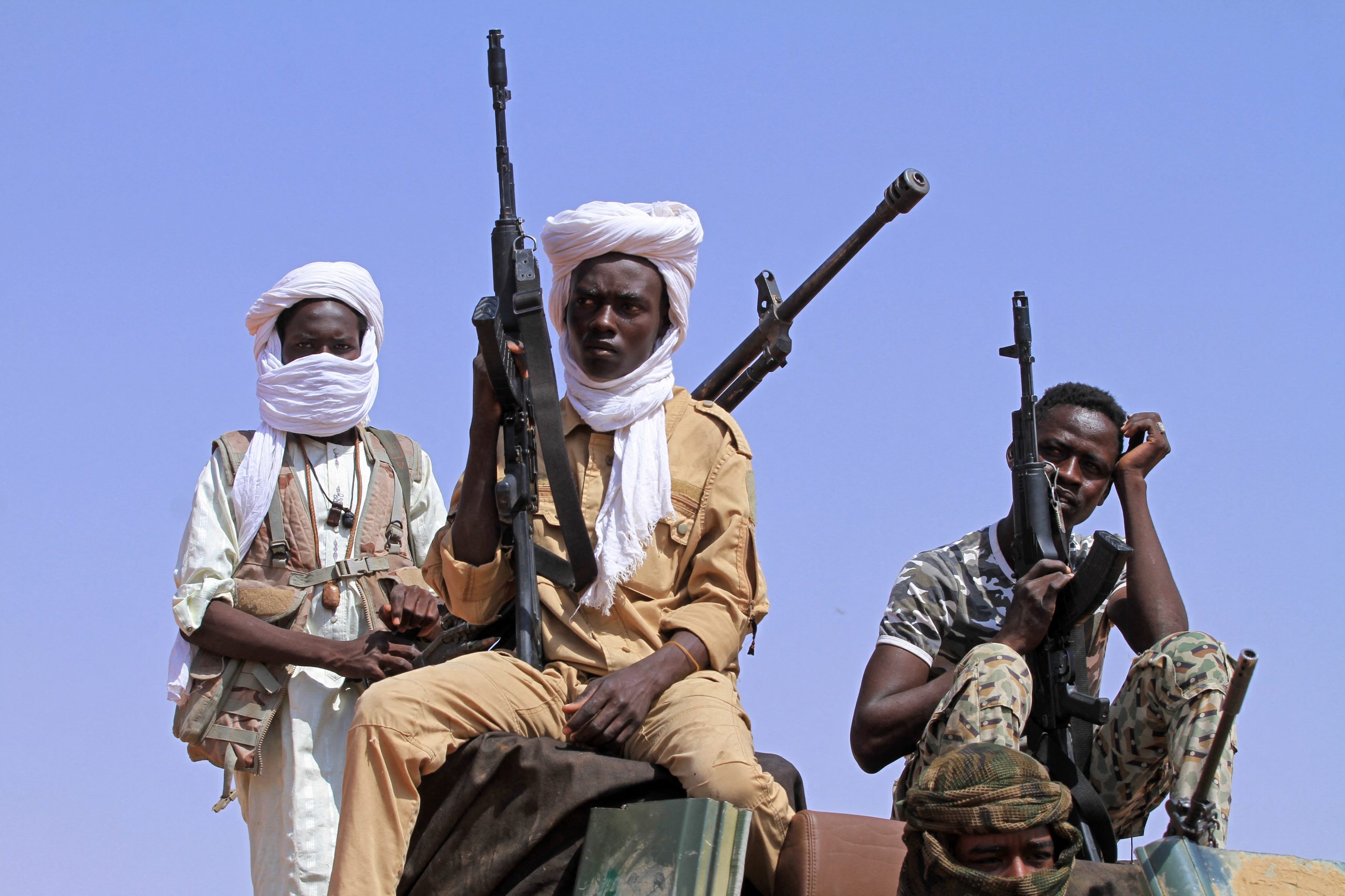
- Foreign support networks are very likely to remain available to the RSF over the next 1-3 months, and foreign-supplied systems are likely to preserve SAF long-range strike capacity. UN reporting documents routes through Chad and Libya, transit points in southeastern Libya and Bosaso, Somalia, up to 2,000 former Colombian military contractors operating with RSF units in Darfur and Kordofan, and Boeing 727 aircraft carrying weapons, drones and mercenaries. The RSF and SAF have also been reported to possess Chinese CH-95 and Turkish Bayraktar Akıncı drones and YIHA-III loitering munitions respectively. The reporting concerns alleged networks involving individuals and entities, and does not establish UAE government direction; the UAE denies providing support to the RSF. (Confidence: medium · ASSESSED)
- I&W: UN, multilateral or major-media reporting documents new movement of weapons, fuel, fighters or drones through Chad, southeastern Libya, Bosaso, Asosa or another named transit point, or records fresh use of the CH-95, Bayraktar Akıncı or YIHA-III systems. (0-90 days)
- I&W: A high-reliability investigation formally retracts the reported foreign-support routes or establishes that the documented networks have ceased operating and that both forces have lost access to the cited systems. (1-3 months)
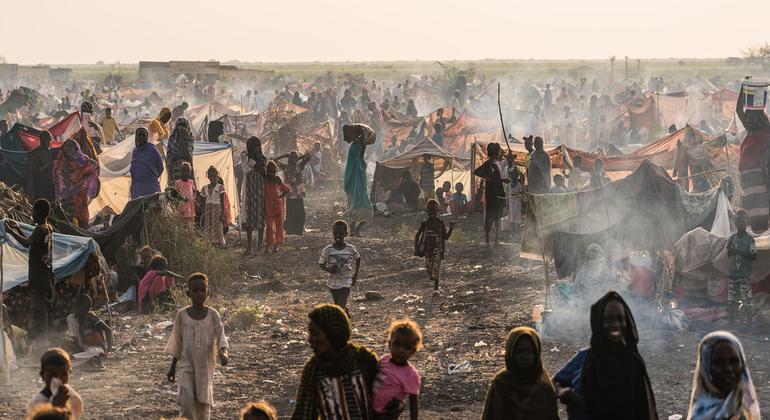
- Humanitarian conditions in Sudan are very likely to worsen over the next 30 days. Reporting places displacement above 11 million overall, with separate UN figures recording more than six million internally displaced and 4.5 million people across Sudan's borders, while another UN-derived estimate records more than 12 million displaced and at least three million refugees. Around 20 million people face hunger, and damage to Khartoum Teaching Hospital, the Ophthalmology Hospital, the Dental Hospital, Ad-Da'ein Teaching Hospital and El Obeid's water and energy infrastructure will further reduce civilian access to essential services. The displacement totals are inconsistent across reporting periods and methodologies, but all sources indicate severe and continuing deterioration. (Confidence: high · ASSESSED)
- I&W: WHO or UN reporting records further damage, closure or loss of medical services at hospitals in Khartoum, Ad-Da'ein or other conflict-affected locations. (0-30 days)
- I&W: A new UN displacement or food-security update records a rise above the current reported totals, or identifies fresh mass displacement from Blue Nile, Darfur or Kordofan. (0-30 days)
- International diplomatic and accountability pressure on SAF and RSF is very likely to intensify over the next 1-3 months, but adoption of a nationwide UN arms embargo is unlikely during that period. The UN Fact-Finding Mission has urged states to enforce the Darfur embargo and extend it to all Sudan, while the US proposed a nationwide Security Council resolution in August that Sudan condemned and Russia rejected. The mission's presentation of its latest report and its criticism of the SAF-aligned government's refusal to grant access will add to scrutiny. The UN recommendation and the US proposal are related but distinct actions, so the available reporting does not establish a single diplomatic initiative or a settled path to adoption. (Confidence: medium · ASSESSED)
- I&W: The US or additional Security Council members publicly sponsor, revise or schedule action on a resolution extending the arms embargo to all Sudan, or announce new enforcement measures. (0-90 days)
- I&W: The Security Council adopts a nationwide embargo, or the US withdraws the proposal and no additional state publicly supports wider restrictions during the next three months. (1-3 months)
- There is a roughly even chance that the SAF has used chemical weapons and maintained a concealed stockpile, but current reporting is insufficient for a definitive finding. The assessment rests on a low-confidence report from The New York Times and The Washington Post asserting use and stockpiling, contrasted with Mohamed Chande Othman's statement on 8 September 2026 that the Fact-Finding Mission was ready to investigate an alleged SAF chemical weapons programme. This is a thin, contested and single-source-supported assessment. (Confidence: low · ASSESSED)
- I&W: The UN Fact-Finding Mission publishes corroborated findings that identify chemical agents, delivery systems, stockpiles or specific SAF incidents. (1-3 months)
- I&W: The mission reports that its investigation found no evidence supporting chemical weapons use or a concealed SAF stockpile. (1-3 months)
Outlook & scenarios
Prolonged drone-enabled conflict (52%)
SAF and RSF continue long-range drone operations across South Kordofan, North Kordofan, Darfur and Blue Nile. Foreign-supplied systems and external logistics sustain strike capacity, while civilian deaths, infrastructure damage and displacement rise.
Diplomatic pressure without nationwide embargo (28%)
The US, the UN Fact-Finding Mission and other states increase pressure over arms flows and accountability, but Sudanese opposition and Russian rejection prevent adoption of a nationwide UN arms embargo. The Darfur embargo remains the main formal restriction.
More overt cross-border support and regional escalation (12%)
Reports of drone activity across the Ethiopia-Sudan border and alleged supply flights through Asosa generate a sharper dispute between the SAF-aligned government and Ethiopia. Additional cross-border support reporting raises the risk of conflict activity spreading beyond Sudan's established fronts.
Chemical-weapons allegation becomes substantiated, low-probability high-impact wildcard (8%)
The UN Fact-Finding Mission corroborates the allegation that the SAF used chemical weapons or maintained a concealed stockpile. This would sharply increase accountability pressure and complicate diplomatic efforts focused on arms flows.
Recommendations
- Maintain a 14-day incident matrix covering Kalogi, El Obeid, Ad-Da'ein, Yabus Market, West Darfur and Khartoum. Record the claimed actor, weapon type, civilian location, casualty figure, infrastructure damage and source reliability separately.
- Separate confirmed foreign materiel from allegations of state direction. Track reported movements through Chad, southeastern Libya, Bososo, Asosa and other named transit points, while keeping the UAE denial distinct from the UN reporting on individuals and entities.
- Monitor the UN Security Council process for new sponsors, draft language, votes and statements on extending the Darfur arms embargo to all Sudan. Treat the UN mission's recommendation and the US proposal as separate diplomatic tracks.
- Use time-stamped ranges for displacement and hunger estimates rather than presenting a single reconciled total. Reassess the figures when new UN reporting identifies the underlying reporting period and methodology.
- Keep the chemical-weapons issue in a low-confidence warning file. Do not treat reported use or stockpiling as established until the Fact-Finding Mission publishes corroborated findings or the allegation is otherwise independently verified.
Confidence & uncertainty
Overall confidence is high because the core judgments draw on multiple UN and other multilateral reports, major-media accounts and repeated reporting of the same civilian strikes, foreign-support networks, infrastructure damage and humanitarian effects. The main uncertainties concern attribution of some El Obeid attacks, inconsistent displacement totals, the relationship between the UN embargo recommendation and the US proposal, UAE government direction of alleged RSF support, and the uncorroborated chemical-weapons allegation.
Intelligence gaps
- [EEI 1.1 · PARTIAL] Observed concentrations and movement of armed units (size estimates, unit identifiers if visible) within X km of named towns/roads/airfields (e.g., El Fasher, Geneina, Nyala, Khartoum neighborhoods) including timestamps and direction of movement. Recommended collection: imagery/satellite
- [EEI 1.3 · PARTIAL] Reports or intercepts of orders, operational directives or public statements from RSF/SAF commanders indicating planned offensives, ceasefire acceptance/rejection, defensive postures or orders to withdraw from named locations. Recommended collection: signals/communications intercepts
- [EEI 1.4 · PARTIAL] Status of critical infrastructure and lines of communication: control or denial of named bridges, main highways (identify route numbers), airfields, fuel depots and telecommunication hubs and any reported sabotage/blockage incidents. Recommended collection: human intelligence/field reporting
- [EEI 2.1 · PARTIAL] Counts and locations of newly displaced persons arriving at formal sites, informal camps, border crossings or collective centers (daily/weekly arrivals, site coordinates), including demographics (women, children, elderly) where available. Recommended collection: humanitarian/UN OCHA reports
- [EEI 2.2 · PARTIAL] Access impediments to humanitarian assistance: reported attacks on, blockages of, or denial of passage for named humanitarian convoys (dates, GPS locations, responsible actor if known) and closure status of specific routes. Recommended collection: human intelligence/field reporting
- [EEI 2.3 · PARTIAL] Functional status of medical infrastructure in named locations: number of operational hospitals/clinics, reported shortages of key medicines/blood, and hospital casualty/occupancy figures for the last 72 hours. Recommended collection: medical/health cluster reporting
- [EEI 3.1 · PARTIAL] Detection of flights, ships or overland convoys delivering military materiel or foreign personnel to named airfields, ports or border crossings (flight/IMO numbers, manifests if available, timestamps, route origin/destination). Recommended collection: air-traffic / maritime / border customs
- [EEI 3.2 · PARTIAL] Imagery or on-the-ground confirmation of foreign military personnel or private military contractor bases/forward operating elements at specified coordinates or compounds, including vehicle/weapon types observed. Recommended collection: imagery/satellite
- [EEI 3.3 · PARTIAL] Financial and sanctions-relevant indicators: atypical large transfers, use of designated front companies, or shipments routed through third states linked to procurement of weapons or fuel for RSF or SAF (transaction dates, parties, amounts where obtainable). Recommended collection: financial intelligence
TLP:CLEAR