TLP:CLEAR · Disclosure is not limited.
Sudan: Escalating violence in El Obeid, limited relief via Adre, and fresh corroboration of RSF atrocities in El Fasher
Time window: Last 7 days · Audience: General analyst · Type: Situation report · DTG: 2026-07-01 11:27Z · Overall confidence: HIGH
BLUF
El Obeid is very likely facing escalating drone strikes amid a siege, while the extension of the Adre crossing offers only partial humanitarian relief into Darfur and Kordofan. A new Amnesty report almost certainly corroborates that the RSF committed crimes against humanity and ethnic cleansing in El Fasher.
Executive summary
Reporting indicates continued and intensifying drone attacks in El Obeid, including injuries to schoolchildren on 27 June, as UN bodies warn of rising violence and an imminent threat to the city. Khartoum’s decision to keep the Adre crossing with Chad open through 30 September should ease some aid movement into Darfur and Kordofan, but widespread insecurity and clashes near the border will likely cap throughput. The humanitarian picture remains severe: hundreds of thousands killed in the wider war, over 14 million displaced, acute child malnutrition deaths, and a cholera outbreak in West Kordofan, with violence impeding aid and prompting some partners to suspend operations. Separately, multiple rights reports almost certainly attribute crimes against humanity and ethnic cleansing in El Fasher to the RSF during its 2024-2025 campaign, including targeting children and an attack on the Saudi Maternity Hospital. Concurrent media reporting continues to link the RSF’s external enablers, particularly the UAE, with logistics routed through eastern Chad and training support in Libya.
Change from previous assessment
New developments since the prior brief: UN welcomed Sudan’s decision to keep the Adre crossing open through 30 September; a 27 June drone strike near a girls’ school in El Obeid injured at least eight students, and drone attacks continued into a third consecutive week; Amnesty issued a major new report concluding the RSF committed crimes against humanity and ethnic cleansing in El Fasher and identified commanders; West Kordofan’s cholera outbreak was detailed with caseload figures; and some humanitarian partners reported suspending operations amid insecurity. This brief integrates those updates and adds an assessed judgment on external enabling networks. Overall confidence remains high, with medium confidence applied where reporting is less corroborated.
Key judgments
- Drone strikes are very likely ongoing and escalating against El Obeid, with civilians injured including at least eight students on 27 June, while the city remains besieged and under increasing UN concern. (Confidence: high · REPORTED)
- I&W: Additional UN or NGO reports of drone strikes in El Obeid causing civilian casualties or damage in the next reporting cycle. (0-14 days)
- I&W: Verified cessation of drone strikes in El Obeid for at least two weeks, or official implementation of safe humanitarian corridors without incidents. (0-1 month)
- Sudan’s humanitarian crisis is almost certainly deepening: the war has killed hundreds of thousands and displaced over 14 million, more than 45,000 infants have died from malnutrition, and West Kordofan faces a cholera outbreak, while escalating violence impedes aid and some partners have suspended operations. (Confidence: high · REPORTED)
- I&W: WHO or OCHA reporting of rising cholera caseloads in West Kordofan or spread to adjacent localities. (0-1 month)
- I&W: Formal announcements by aid partners of resuming previously suspended operations in Darfur or Kordofan. (1-3 months)
- Keeping the Adre crossing with Chad open through 30 September is likely to marginally increase aid flow into Darfur and Kordofan, but persistent fighting near the Chadian frontier and general insecurity will probably limit throughput. (Confidence: medium · ASSESSED)
- I&W: OCHA or WFP reporting an increase in convoy numbers or tonnage via Adre into North Darfur and Kordofan. (0-1 month)
- I&W: Reports of convoy attacks along the Adre route or an official reversal on the crossing’s opening. (0-1 month)
- The RSF almost certainly committed crimes against humanity and ethnic cleansing during its 2024-2025 El Fasher campaign, including deliberate attacks on children and the Saudi Maternity Hospital, with thousands of deaths reported. (Confidence: high · REPORTED)
- I&W: Public legal or quasi-legal action referencing named RSF commanders identified by rights groups for El Fasher atrocities. (1-3 months)
- I&W: Credible independent investigations challenging RSF culpability for crimes against humanity in El Fasher. (3-6 months)
- External enabling networks are likely sustaining the RSF, with the UAE supporting RSF-linked logistics and training through eastern Chad and Libya, and the RSF sourcing fighters and arms from Chad. (Confidence: medium · ASSESSED)
- I&W: Observable cargo flights or logistics movements linking UAE-associated hubs to Amdjarass or RSF-held airstrips. (1-3 months)
- I&W: Chadian announcements curtailing or shutting logistics nodes at Amdjarass, or interdictions of flights linked to RSF supply. (1-3 months)
Outlook & scenarios
Protracted siege and drone bombardment of El Obeid (60%)
Drone attacks persist for weeks, periodic strikes hit civilian areas including schools, and movement remains restricted in and out of El Obeid. Aid actors limit or pause operations due to insecurity, driving further deterioration in food security and health outcomes in North Kordofan.
Adre corridor scales up, but insecurity caps relief impact (40%)
Aid volumes entering Darfur and Kordofan via Adre increase through September, improving coverage for some communities. However, clashes near the Chadian border and access constraints inside Sudan prevent sustained, broad-based relief, leaving critical gaps.
External enablers prolong RSF operational tempo (35%)
RSF logistics and training continue via routes through eastern Chad and Libya, enabling the group to consolidate in Darfur and sustain pressure on contested areas. Cross-border frictions complicate any diplomatic or humanitarian de-escalation.
Recommendations
- Stand up an indicators-and-warnings watchboard for El Obeid tracking: frequency and location of drone strikes, reported civilian casualties, and any official steps to implement or police safe corridors.
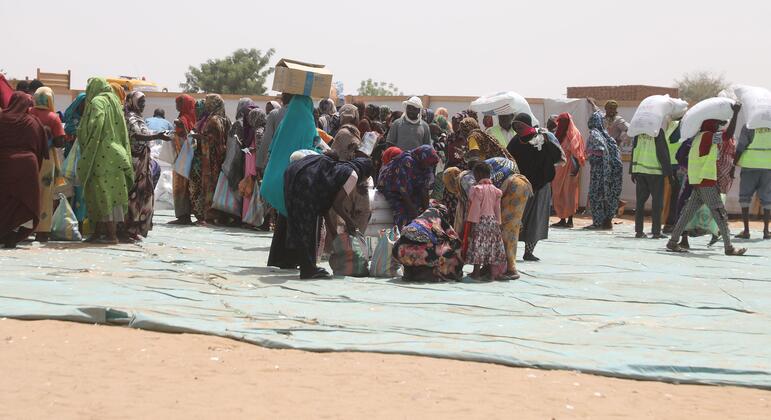
- Task open-source monitoring of the Adre corridor: log convoy counts, destinations in Darfur and Kordofan, and any incident reporting along the route to judge whether the September extension is translating into material access gains.
- Exploit recent rights reporting to map RSF chains of command around El Fasher, cross-referencing named units and locations with alleged incident timelines to support accountability, designation, or evidentiary requirements.
- Build an open-source collection plan for external enabling networks: monitor air movements into Amdjarass, reported construction or operations at the airport, and media reports of training links in Libya tied to the RSF.
- Integrate public-health and conflict data for West Kordofan: track WHO-reported cholera caseloads against access constraints to anticipate surges and to flag areas where violence is most likely to disrupt treatment and WASH interventions.
- Leverage NASA FIRMS thermal detections as a corroborative layer to flag potential conflict-related fires in Darfur and Kordofan for rapid geolocation and cross-cueing with incident reporting.
- Maintain a running baseline of displacement, child malnutrition, and aid suspension notices to quantify deterioration and brief decision-makers on where limited access gains could yield the greatest humanitarian effect.
Confidence & uncertainty
High overall confidence rests on multiple, mutually reinforcing sources: UN reporting on El Obeid’s deteriorating security and on the Adre corridor; Amnesty’s detailed findings on El Fasher corroborated by major media; and multilateral and media reporting on displacement, infant malnutrition deaths, and cholera in West Kordofan. Some judgments, particularly on external enabling networks and projected aid throughput, contain assessed elements based on generally reliable but partly contested media reporting, so those carry medium confidence. Attribution of individual drone strikes in El Obeid remains less explicit, though the pattern and UN warnings underpin high confidence in the escalation judgment.
Alternative analysis (red cell)
Multiple judgments depend heavily on a narrow set of sources, lower-admiralty human reporting, and some single‑cluster reporting; several key inferences therefore outpace the verifiable evidence. Alternative, more cautious interpretations are defensible: reported strikes in El Obeid may be episodic rather than steadily escalating; catastrophic mortality figures need independent survey validation; and external support to RSF may be more circumstantial and multi‑actor than a single-state enabling network. Additional multi-source, verifiable collection is required before sustaining the highest confidence levels on these points.
Intelligence gaps
- [EEI 1.1 · UNCOVERED] Observed concentrations and movement of armed units (size estimates, unit identifiers if visible) within X km of named towns/roads/airfields (e.g., El Fasher, Geneina, Nyala, Khartoum neighborhoods) including timestamps and direction of movement. Recommended collection: imagery/satellite
- [EEI 1.2 · UNCOVERED] Changes in employment of heavy weapons and systems: documented use or emplacement of artillery, multiple-launch rocket systems, tanks, combat helicopters, and airstrikes at specific coordinates and times. Recommended collection: open-source/media
- [EEI 1.3 · UNCOVERED] Reports or intercepts of orders, operational directives or public statements from RSF/SAF commanders indicating planned offensives, ceasefire acceptance/rejection, defensive postures or orders to withdraw from named locations. Recommended collection: signals/communications intercepts
- [EEI 1.4 · UNCOVERED] Status of critical infrastructure and lines of communication: control or denial of named bridges, main highways (identify route numbers), airfields, fuel depots and telecommunication hubs and any reported sabotage/blockage incidents. Recommended collection: human intelligence/field reporting
- [EEI 2.1 · PARTIAL] Counts and locations of newly displaced persons arriving at formal sites, informal camps, border crossings or collective centers (daily/weekly arrivals, site coordinates), including demographics (women, children, elderly) where available. Recommended collection: humanitarian/UN OCHA reports
- [EEI 3.1 · PARTIAL] Detection of flights, ships or overland convoys delivering military materiel or foreign personnel to named airfields, ports or border crossings (flight/IMO numbers, manifests if available, timestamps, route origin/destination). Recommended collection: air-traffic / maritime / border customs
- [EEI 3.2 · UNCOVERED] Imagery or on-the-ground confirmation of foreign military personnel or private military contractor bases/forward operating elements at specified coordinates or compounds, including vehicle/weapon types observed. Recommended collection: imagery/satellite
- [EEI 3.3 · PARTIAL] Financial and sanctions-relevant indicators: atypical large transfers, use of designated front companies, or shipments routed through third states linked to procurement of weapons or fuel for RSF or SAF (transaction dates, parties, amounts where obtainable). Recommended collection: financial intelligence
Cited sources
[1] United Nations · Sudan: UN welcomes extension of vital aid corridor amid rising insecurity (A) · sha256:4b36ea49b6fb [2] jurist.org · UN commends extension of aid corridor in Sudan amid esclalting violence (A) · sha256:00c53f1f3302 [3] panafricanvisions.com · Sudan: Another Genocide Unfolds (C) · sha256:1aa1fb888466 [4] APT · Sudan's Peace Government Urges Safe Corridors As Fighting Intensifies In El Obeid | APT (B) · sha256:0bd07734570e [5] Amnesty International · Sudan war: RSF committed crimes against humanity in el-Fasher, Amnesty says (B) · sha256:c411a8706f79 [6] BBC · Sudan war: RSF committed crimes against humanity in el-Fasher, Amnesty says (A) · sha256:880c9ca7322c [7] Wikipedia · Darfur genocide (2023–present) (B) · sha256:da25d31cd28f [8] Amnesty International · Sudan: RSF atrocities in El Fasher ‘a stain on the conscience of humanity’ – new report (B) · sha256:d0ca873cd96b [9] Amnesty International · Sudan: RSF atrocities in El Fasher ‘a stain on the conscience of humanity’ – new report (B) · sha256:c5128fe52af6 [10] Middle East Eye · How the UAE continued supporting Sudan's RSF through Haftar and Libya (B) · sha256:f913018148cf [11] Wikipedia · Rapid Support Forces (B) · sha256:3964e1b72db8
Source content hashes were computed at collection time; the cited text is preserved unmodified for the life of this product.
Red cell review: PARTIAL DISSENT
TLP:CLEAR