TLP:CLEAR · Disclosure is not limited.
Sudan: RSF poised for El Obeid assault as drone warfare expands and atrocity risk escalates
Time window: Last 7 days · Audience: General analyst · Type: Situation report · DTG: 2026-06-23 22:15Z · Overall confidence: HIGH
BLUF
The Rapid Support Forces are very likely preparing a ground assault on El Obeid, with massed forces and intensified drone strikes as multiple governments and the UN warn of imminent mass atrocities against roughly 500,000 civilians. Drone attacks are hitting civilian infrastructure across North Kordofan, White Nile and Darfur, killing civilians, degrading basic services and impeding aid operations.
Executive summary
Since mid-June, reporting indicates the RSF has massed around El Obeid while stepping up drone strikes, including a 19 June attack on the city’s main power transformer, amid credible signs of an imminent offensive and international warnings of mass atrocities should a ground assault proceed. Repeated drone strikes in El Obeid have killed civilians and triggered acute shortages of fuel, food and water, with at least 50 civilians reported killed by drone attacks across El Obeid and North Kordofan in a 10‑day span. The RSF’s drone campaign has widened, including a 21 June strike on a fuel station in Kosti that killed one and injured 14, and strikes in North Darfur that killed nine on 19 June, while an air strike also hit RSF facilities near Nyala on 18‑19 June and the SAF launched drones against RSF positions in North Kordofan on 20 June. UN agencies report Sudan remains the world’s worst humanitarian crisis, with more than 11 to 13 million displaced and 19 to 19.5 million facing food insecurity, while aid workers and UN convoys have been targeted. UN human rights reporting documents widespread conflict‑related sexual violence, predominantly by RSF elements, with hundreds of verified incidents and indications that some acts in Darfur may amount to crimes against humanity. Officials also assess external support is sustaining the conflict, including military support to the RSF linked to the United Arab Emirates and reported deployment of Colombian contractors via a UAE‑based company.
Change from previous assessment
New reporting since the prior brief details specific RSF and SAF drone strikes dated 18-21 June in El Obeid, Kosti, North Darfur and near Nyala, alongside accounts of at least 50 civilians killed by drone attacks across El Obeid and North Kordofan over 10 days. International warnings have intensified, including a Security Council warning of imminent mass atrocities and a 29‑nation statement, while UK‑led partners issued joint calls to halt the assault and ensure access. Additional claims indicate UN convoys were struck by drones in four incidents since the start of 2026 and that RSF attacks in Orshi on 15 June burned villages and a market. The external support assessment has been updated to reflect reporting of RSF backing linked to the United Arab Emirates and the reported deployment of Colombian contractors via a UAE‑based company; the earlier Ethiopia‑related judgment has been retired for lack of current corroboration in the present evidence set.
Key judgments
- The RSF is very likely preparing a ground assault to seize El Obeid in North Kordofan within days. (Confidence: high · ASSESSED)
- I&W: Visible RSF ground elements with armour and technicals entering El Obeid’s urban perimeter or seizing key junctions on the city’s approaches. (0-14 days)
- I&W: A verified pause in RSF drone sorties around El Obeid for at least 72 hours following a public halt order. (0-14 days)
- If the RSF assaults El Obeid, mass atrocities against roughly 500,000 civilians are very likely. (Confidence: high · REPORTED)
- I&W: Documented RSF ground entry and close‑range fires against civilian sites or shelters inside El Obeid. (0-14 days)
- I&W: Activation of monitored evacuation corridors and sustained humanitarian access into and out of El Obeid. (0-14 days)
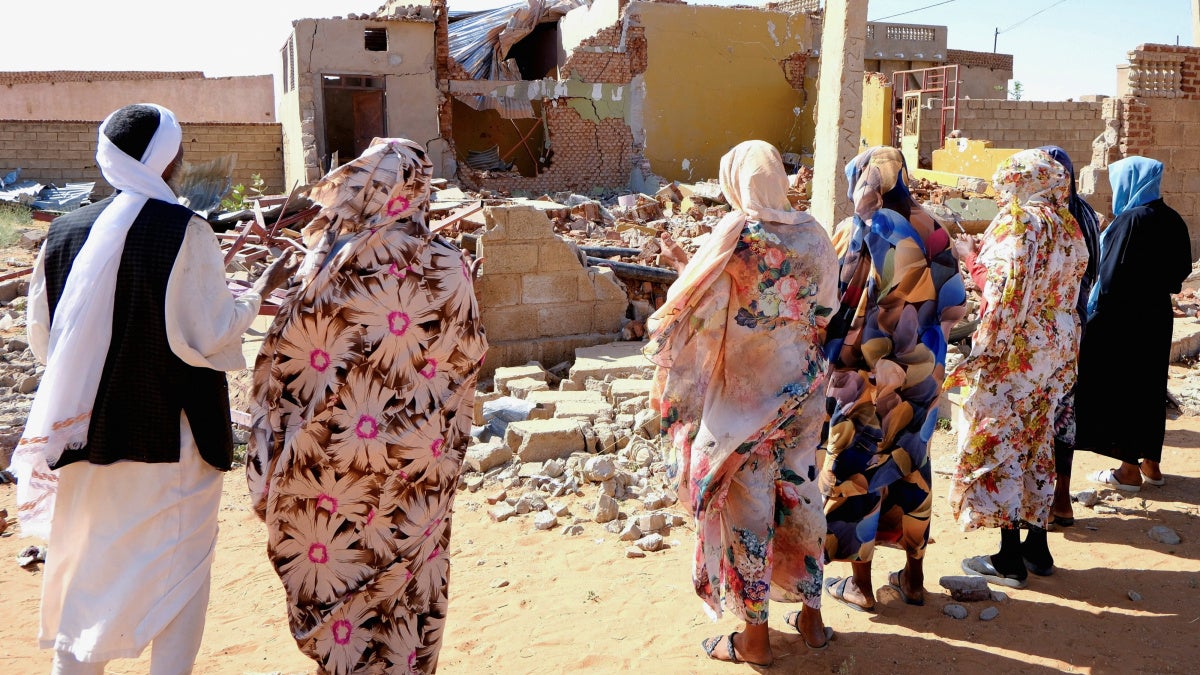
- The RSF is almost certainly employing drones to strike civilian infrastructure across North Kordofan, White Nile and Darfur, causing substantial civilian casualties and acute shortages. (Confidence: high · REPORTED)
- I&W: Further verified RSF drone strikes on power, fuel and water infrastructure or markets in El Obeid, Kosti, or Darfur localities. (0-1 month)
- I&W: Sustained reduction in reported RSF drone activity in these areas consistent with loss of platforms or a declared halt. (0-1 month)
- The SAF is likely to sustain drone strikes against RSF positions in North Kordofan, constraining RSF manoeuvre but increasing risks to civilians in contested urban areas. (Confidence: medium · ASSESSED)
- I&W: Open‑source imagery or official statements confirming additional SAF drone strikes within 20 km of El Obeid. (0-1 month)
- I&W: Observable pause or pullback in SAF air operations around North Kordofan. (0-1 month)
- Conflict‑related sexual violence is widespread, predominantly perpetrated by RSF elements, and in Darfur very likely includes crimes against humanity. (Confidence: high · REPORTED)
- I&W: Further OHCHR‑verified cases with perpetrator attribution to RSF or affiliated militias. (1-3 months)
- I&W: Documented RSF command orders, prosecutions and measurable declines in verified incidents. (1-3 months)
- Sudan almost certainly remains the world’s largest humanitarian crisis, with at least 11 to 13 million displaced and 19 to 19.5 million facing food insecurity, alongside deliberate targeting of aid workers and convoys. (Confidence: high · REPORTED)
- I&W: Updated UN figures showing further rises in displacement or food insecurity or continued reports of aid worker targeting. (1-3 months)
- I&W: Verified opening of sustained humanitarian corridors into El Obeid and other hotspots with reduced incidents against convoys. (1-3 months)
- External backing is very likely sustaining RSF operations, including military support linked to the United Arab Emirates and the reported deployment of Colombian contractors via a UAE‑based company. (Confidence: medium · ASSESSED)
- I&W: Credible interdictions or documentation of UAE‑linked logistics or personnel pipelines to RSF‑held areas. (1-3 months)
- I&W: Public and verifiable steps by implicated actors to end support, followed by observable RSF logistical shortfalls. (1-3 months)
Outlook & scenarios
RSF launches a ground assault and attempts to capture El Obeid (60%)
Building on massed forces, escalating drone strikes and credible signs of an imminent offensive, the RSF moves into El Obeid’s urban core, targeting key facilities after prior strikes on power infrastructure. UN and partner warnings of atrocity risk materialise as civilians trapped by cut‑off services face acute harm, while the SAF counters with further drone strikes from North Kordofan. Humanitarian access deteriorates further.
Protracted siege and drone war around El Obeid without a full assault (45%)
The RSF maintains encirclement and high‑tempo drone strikes on civilian and dual‑use infrastructure, while the SAF sustains counter‑strikes. Civilian casualties rise, shortages worsen and aid convoys face continued risk of drone attack. International calls at the UN persist but fail to produce immediate compliance on the ground.
UNSC‑brokered pause with monitored humanitarian corridors (20%)
Following joint statements and Security Council engagement, parties implement a time‑bound halt around El Obeid with corridors for safe civilian movement and aid delivery. Drone activity decreases, but the pause remains fragile and contingent on sustained diplomatic pressure and monitoring.
Wider geographic spillover as violence intensifies beyond North Kordofan (25%)
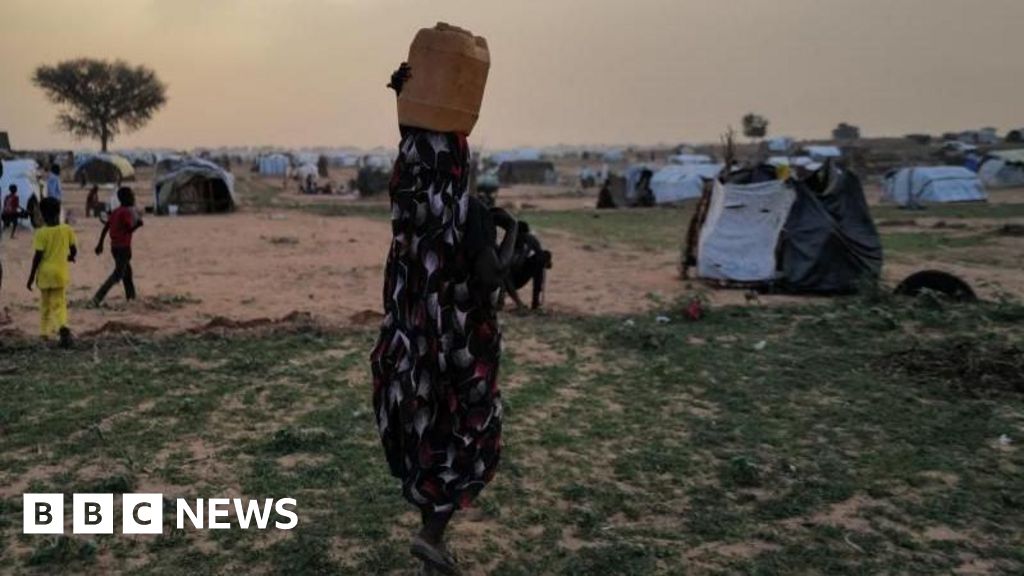
RSF operations continue alongside drone strikes in Darfur and White Nile, with additional displacement flows to eastern Chad and heightened fragility in border areas. Cross‑border insecurity risks grow as civilians flee and armed activity near frontiers persists.
Recommendations
- Prioritise ISR coverage on El Obeid’s western and southern approaches to detect RSF ground movements, drone launch points and logistics nodes, focusing on corridors previously struck and power infrastructure.
- Develop and pre‑clear monitored evacuation and aid corridors with UN and partner states, aligning with calls for safe, unhindered access, and position contingency lift and supplies to exploit any pause.
- Use the UN Security Council track to press for an immediate halt to RSF offensive actions around El Obeid and to table concrete deterrents tied to documented strikes on civilian infrastructure.
- Intensify diplomatic engagement with the United Arab Emirates regarding reporting of RSF support, and prepare targeted exposure and measures against facilitators implicated in personnel and materiel pipelines.
- Harden humanitarian operations against drone threats by adjusting movement windows, dispersing convoys, and enforcing route deconfliction protocols in El Obeid, White Nile and Darfur.
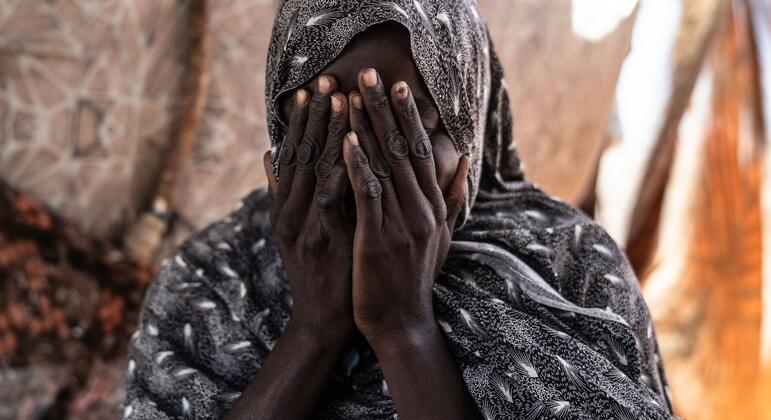
- Resource survivor‑centred documentation of conflict‑related sexual violence in Darfur and other affected states, maintaining evidentiary standards to support future accountability and tailored protection programming.
- Plan for rapid WASH and fuel support in El Obeid and neighbouring localities given repeated strikes on power and fuel supply, and pre‑position assistance along routes from North Kordofan to safer reception areas.
Confidence & uncertainty
The assessment draws on multiple mutually reinforcing sources: UN Security Council and government warnings of imminent atrocity risk around El Obeid, UN human rights reporting on widespread sexual violence with quantified incidents and attribution, and consistent multi‑source accounts of RSF and SAF drone activity across specific dates and locations. Humanitarian impact figures from UN entities and major media corroborate displacement and food insecurity at national scale, while aid worker targeting is attested by UN and official reporting. Uncertainties remain around the precise timing and scope of any RSF ground assault and the full extent of external support, which relies in part on NGO reporting, but these do not materially weaken the core judgments.
Alternative analysis (red cell)
While reporting shows heightened risk around El Obeid — massing forces, drone strikes, and grave humanitarian warnings — the current evidence base mixes political warnings, episodic strike reports, and some lower‑admiralty sourcing without definitive operational indicators (orders, sustained logistics, or corroborated force movements) that would support near‑term certainty of a city‑wide assault or inevitable mass atrocities. A cautious estimate emphasizing high risk and the need for targeted collection to confirm intent, scale, and attribution is therefore warranted.
Intelligence gaps
- [EEI 1.2 · PARTIAL] Changes in employment of heavy weapons and systems: documented use or emplacement of artillery, multiple-launch rocket systems, tanks, combat helicopters, and airstrikes at specific coordinates and times. Recommended collection: open-source/media
- [EEI 1.3 · PARTIAL] Reports or intercepts of orders, operational directives or public statements from RSF/SAF commanders indicating planned offensives, ceasefire acceptance/rejection, defensive postures or orders to withdraw from named locations. Recommended collection: signals/communications intercepts
- [EEI 1.4 · PARTIAL] Status of critical infrastructure and lines of communication: control or denial of named bridges, main highways (identify route numbers), airfields, fuel depots and telecommunication hubs and any reported sabotage/blockage incidents. Recommended collection: human intelligence/field reporting
- [EEI 2.3 · PARTIAL] Functional status of medical infrastructure in named locations: number of operational hospitals/clinics, reported shortages of key medicines/blood, and hospital casualty/occupancy figures for the last 72 hours. Recommended collection: medical/health cluster reporting
- [EEI 3.1 · PARTIAL] Detection of flights, ships or overland convoys delivering military materiel or foreign personnel to named airfields, ports or border crossings (flight/IMO numbers, manifests if available, timestamps, route origin/destination). Recommended collection: air-traffic / maritime / border customs
- [EEI 3.2 · PARTIAL] Imagery or on-the-ground confirmation of foreign military personnel or private military contractor bases/forward operating elements at specified coordinates or compounds, including vehicle/weapon types observed. Recommended collection: imagery/satellite
- [EEI 3.3 · PARTIAL] Financial and sanctions-relevant indicators: atypical large transfers, use of designated front companies, or shipments routed through third states linked to procurement of weapons or fuel for RSF or SAF (transaction dates, parties, amounts where obtainable). Recommended collection: financial intelligence
Cited sources
[1] aljazeera.com · US raises concern as RSF forces encircle Sudanese city of el-Obeid (A) · sha256:6ae344288134 [2] BBC · Sudan civil war: Sexual violence increasingly used as 'weapon of war', UN says (A) · sha256:459efcdcf8ce [3] UK Government · UK and allies demand Rapid Support Forces halt imminent assault in Sudan's El Obeid (A) · sha256:2cc87c920490 [4] UK Government · UK and allies Joint Statement on the situation in El Obeid (A) · sha256:f5194816a8c5 [5] Human Rights Watch · Robust Global Action Is Key to Curbing Sudan Atrocities (B) · sha256:0616896b7677 [6] indepthnews.net · EEPA reports on mobilisation around El Obeid sparks concern (C) · sha256:0f418a558f89 [7] jowhar.com · Drones and Desperation: Sudan’s Overlooked Crisis Deepens Amid Global Neglect (B) · sha256:195f6c50d36c [8] aljazeera.net · هربا من الموت إلى الجوع. أسبوع قاس يحاصر نازحي دارفور في تشاد (A) · sha256:8e91f1485b25 [9] United Nations Human Rights Office (OHCHR) · Report details widespread use of sexual violence in Sudan war (A) · sha256:78086689bce7
Source content hashes were computed at collection time; the cited text is preserved unmodified for the life of this product.
Red cell review: PARTIAL DISSENT
TLP:CLEAR