TLP:CLEAR · Disclosure is not limited.
Sudan: RSF pressure and drone strikes intensify around el-Obeid as civilian risk escalates
Time window: Last 7 days · Audience: General analyst · Type: Situation report · DTG: 2026-07-08 12:26Z · Overall confidence: MEDIUM
BLUF
El-Obeid remains under SAF control but is under intensifying RSF pressure and drone strikes that are creating siege-like conditions. UN warnings point to up to 500,000 civilians at risk and more than 11,000 people displaced in two weeks; an El Fasher-style trajectory is likely without near-term de-escalation.
Executive summary
The RSF has been gathering force around el-Obeid for months and has expanded pressure on the city, while the SAF retains control inside el-Obeid. UN and rights reporting warn the city could follow El Fasher’s pattern. Drone warfare is causing the majority of casualties nationally and has struck civilian infrastructure in el-Obeid, including a crowded fuel station, with hospitals struggling to cope. Civilians face worsening hardship: food prices have surged up to 300 percent, electricity and water services have been disrupted, and more than 11,000 people, over half of them children, have fled in two weeks. The UN has called for protection of civilians and warned that as many as 500,000 people are at risk if violence intensifies. Separately, the UN Human Rights Council has condemned RSF escalation around El Obeid.
Change from previous assessment
Since the prior brief, evidence has expanded on both humanitarian and operational dynamics. New or reiterated high-confidence reporting confirms SAF control inside el-Obeid and RSF force build-up and pressure around the city. Reporting details a drone strike on a crowded fuel station and hospitals overwhelmed by drone casualties, while UN and aid sources cite disruptions to electricity and water. The UN warns up to 500,000 people are at risk in el-Obeid and Save the Children reports more than 11,000 people, including over 5,500 children, fled in two weeks. Diplomatically, the UN has called to prevent another catastrophe and to protect civilians, and the UN Human Rights Council has condemned RSF escalation around El Obeid. These developments strengthen our confidence on the drone-driven casualty picture and acute civilian risk, and add a forward-looking judgment on a likely El Fasher-style siege trajectory. Initial assessment of this topic.
Key judgments
- The RSF has very likely tightened the military noose around el-Obeid while the SAF retains control inside the city, producing siege-like conditions and a rising tempo of drone strikes on infrastructure civilians rely on. (Confidence: high · ASSESSED)
- I&W: Confirming: New RSF checkpoints and firing positions documented on multiple approaches to el-Obeid, alongside additional verified UAV impacts on fuel or power assets. (0-14 days)
- I&W: Breaking: Verified SAF reinforcement convoys re-open key access roads into el-Obeid and a measurable drop in RSF presence around the city. (0-14 days)
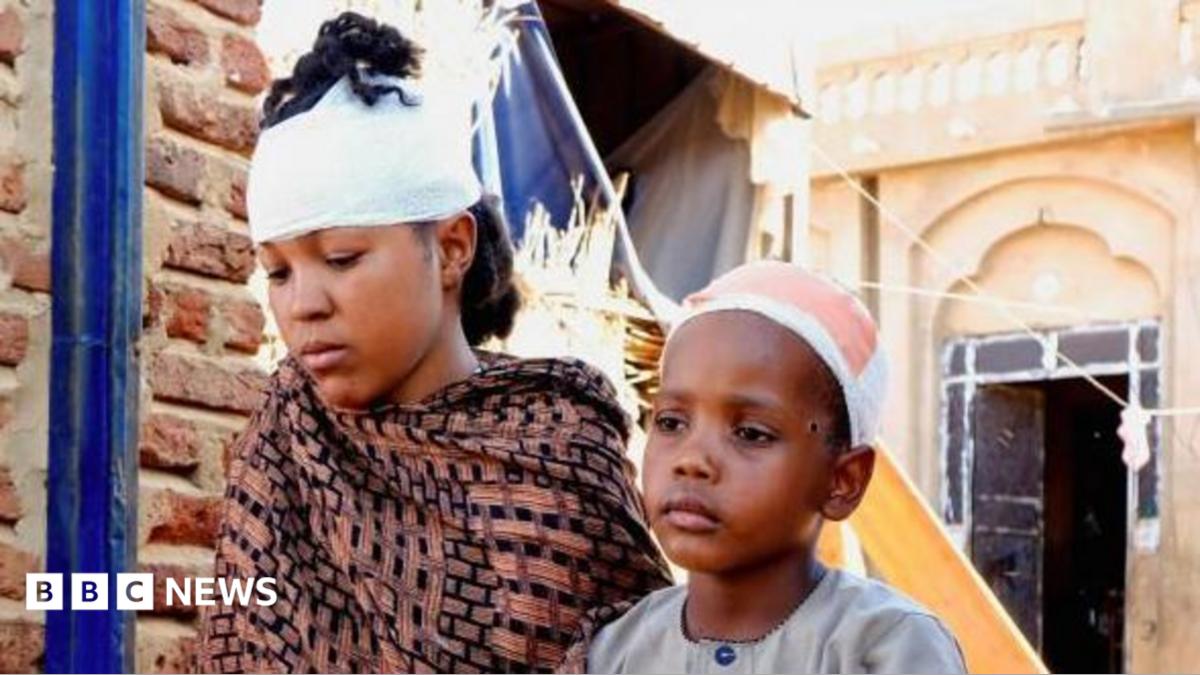
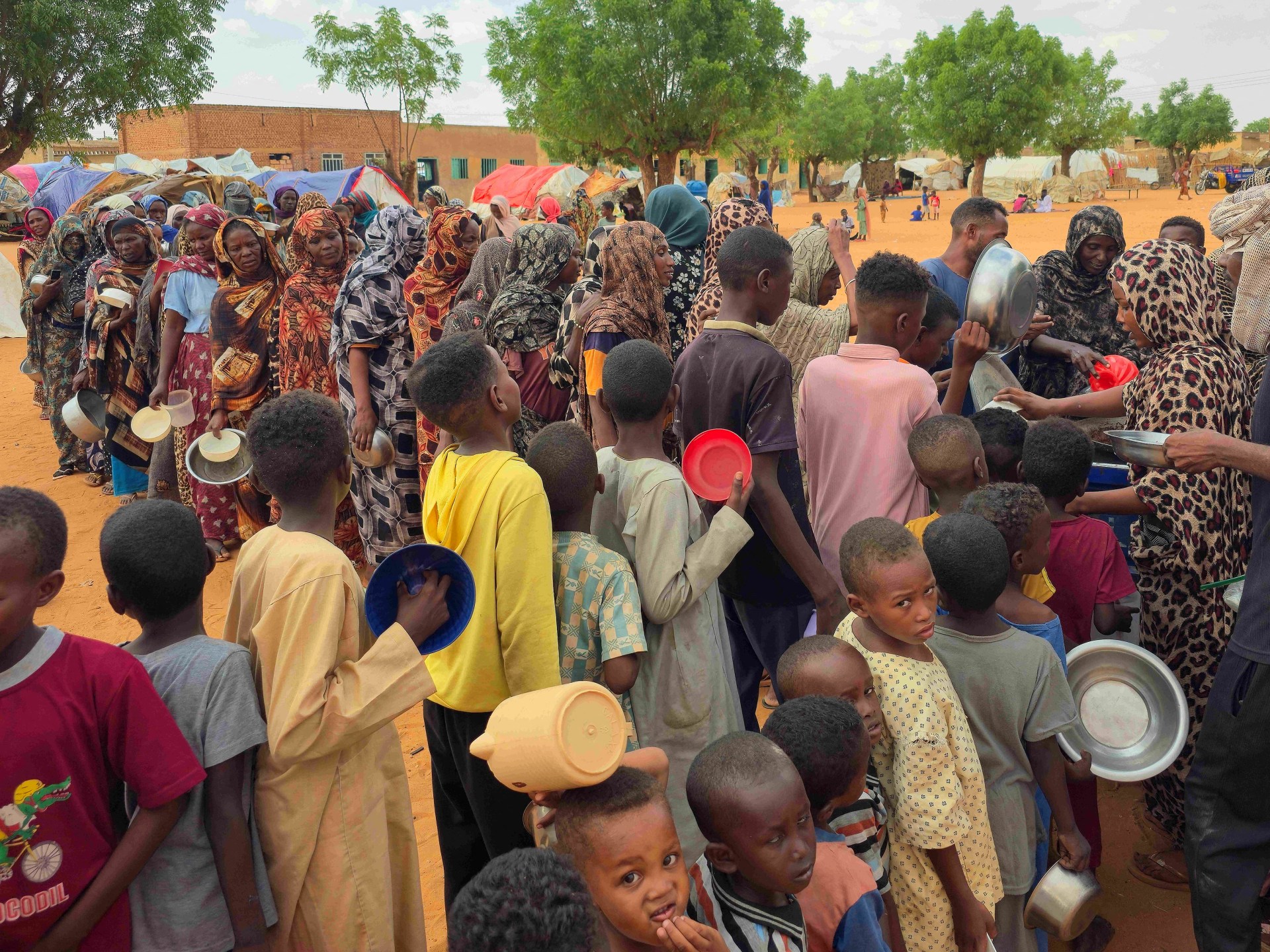
- Civilian risk in el-Obeid is very likely acute: the UN warns up to 500,000 civilians are at risk if violence intensifies, more than 11,000 people including over 5,500 children fled in two weeks, hospitals report being overwhelmed by drone casualties, and basic goods have seen price spikes up to 300 percent amid utility disruptions. (Confidence: high · REPORTED)
- I&W: Confirming: Aid agencies or local health facilities report fresh spikes in casualty intake and a new displacement surge from el-Obeid exceeding several thousand people. (0-14 days)
- I&W: Breaking: Verified cross-line humanitarian convoys enter el-Obeid at scale and restore regular deliveries of food, water and medical supplies. (0-14 days)
- Drone warfare is very likely the primary driver of conflict casualties nationally and is striking civilians in el-Obeid, including a documented hit on a crowded fuel station and dozens killed in a series of June strikes. (Confidence: high · REPORTED)
- I&W: Confirming: Continued verified reports of daily or near-daily UAV impacts in el-Obeid with geolocated imagery and hospital logs, including further damage to fuel stations or power nodes. (0-14 days)
- I&W: Breaking: A sustained reduction in reported UAV strikes and related casualties in el-Obeid documented by hospitals and international monitors. (0-14 days)
- Humanitarian access into North Kordofan is likely to deteriorate further if hostilities persist around el-Obeid, compounding already reported disruptions to electricity and water. (Confidence: medium · ASSESSED)
- I&W: Confirming: Additional NGO and UN convoy suspensions or reroutes reported for North Kordofan due to insecurity around el-Obeid. (0-14 days)
- I&W: Breaking: Publicly announced and implemented deconflicted corridors enabling routine aid deliveries into el-Obeid. (1-3 months)
- El-Obeid is likely to follow an El Fasher-style trajectory of protracted encirclement and an eventual RSF assault absent de-escalation, given UN and Amnesty warnings and the RSF’s prior siege pattern in Darfur. (Confidence: medium · ASSESSED)
- I&W: Confirming: RSF visibly cuts remaining road access to and from el-Obeid and escalates ground assaults after extended encirclement. (1-3 months)
- I&W: Breaking: A verified ceasefire around el-Obeid or a demonstrable SAF counteraction that pushes RSF lines back from the city. (1-3 months)
Outlook & scenarios
Encirclement and RSF assault on el-Obeid (50%)
The RSF completes isolation of el-Obeid, sustains drone and indirect fire on critical infrastructure, then attempts a ground assault. The SAF holds inside the city but struggles to contest the perimeter. Civilian harm rises and displacement accelerates as supplies dwindle. This aligns with UN and Amnesty warnings that el-Obeid could mirror El Fasher and with reporting of RSF force build-up and expanded pressure.
Protracted stalemate and humanitarian collapse (40%)
The SAF retains control inside el-Obeid while the RSF maintains pressure without decisive gains. Drone attacks continue to drive casualties and degrade services. Humanitarian access into North Kordofan tightens, prices remain elevated, and hospitals are overwhelmed. Displacement continues in waves, with high protection risks for children.
Short humanitarian pause under international pressure (20%)
Following UN calls and political pressure, local actors agree to a time-bound deconfliction window near el-Obeid. Limited aid convoys enter and some civilians depart. RSF pressure resumes after the pause, but the window reduces immediate mortality and allows replenishment of medical supplies.
Recommendations
- Prioritise collection on RSF force posture around el-Obeid: map new checkpoints, firing positions and likely UAV launch areas; fuse this with patterns of recent strikes on fuel and power assets to anticipate next targets.
- Task commercial satellite imagery to re-image el-Obeid’s fuel depots, filling stations and grid nodes on a rapid refresh cycle to validate additional damage beyond the eight fuel stations already reported.
- Establish a daily feed from el-Obeid hospitals and clinics on triage volumes and injury types to quantify drone-related casualties and surge needs, and cross-check with geolocated incident media.
- Coordinate with UNICEF and Save the Children to update near-real-time figures on child casualties and displacement outflows from el-Obeid, and integrate them into IC humanitarian risk dashboards.
- Build an access-monitoring matrix for North Kordofan: track announced convoy cancellations, active checkpoints and corridor openings, and flag any opportunities for cross-line deliveries.
- Stand up a market-monitoring cell for el-Obeid price data on staple foods, water and fuel, using local reporting networks to detect further spikes linked to strike activity.
- Use UN and rights reporting on El Fasher as a reference model to develop specific siege indicators for el-Obeid and pre-approve contingency responses if two or more indicators trigger.
Confidence & uncertainty
Overall confidence is medium. Core elements rest on multiple, independent and reliable sources: UN and major media report RSF pressure around el-Obeid, continued SAF control, UN warnings of up to 500,000 civilians at risk, displacement exceeding 11,000 in two weeks, hospitals overwhelmed, and 60 percent of casualties driven by drones. Specific casualty tallies from drone strikes vary by source and timeframe, and projections about an El Fasher-style trajectory are inferential, which temper confidence. Access constraints and the use of some single-source medium-confidence reporting on utilities and local strike counts add residual uncertainty.
Alternative analysis (red cell)
Available reporting indicates rising RSF pressure around el-Obeid and concerning drone activity causing civilian harm, but much of the evidence is concentrated in a single reporting cluster and includes internal inconsistencies. Thus, while humanitarian risk is substantial and may worsen, the record does not yet support high-confidence judgments that el-Obeid is under a full El Fasher‑style siege or that drones are conclusively the primary national casualty driver.
Intelligence gaps
- [EEI 1.1 · UNCOVERED] Observed concentrations and movement of armed units (size estimates, unit identifiers if visible) within X km of named towns/roads/airfields (e.g., El Fasher, Geneina, Nyala, Khartoum neighborhoods) including timestamps and direction of movement. Recommended collection: imagery/satellite
- [EEI 1.2 · UNCOVERED] Changes in employment of heavy weapons and systems: documented use or emplacement of artillery, multiple-launch rocket systems, tanks, combat helicopters, and airstrikes at specific coordinates and times. Recommended collection: open-source/media
- [EEI 1.3 · UNCOVERED] Reports or intercepts of orders, operational directives or public statements from RSF/SAF commanders indicating planned offensives, ceasefire acceptance/rejection, defensive postures or orders to withdraw from named locations. Recommended collection: signals/communications intercepts
- [EEI 1.4 · UNCOVERED] Status of critical infrastructure and lines of communication: control or denial of named bridges, main highways (identify route numbers), airfields, fuel depots and telecommunication hubs and any reported sabotage/blockage incidents. Recommended collection: human intelligence/field reporting
- [EEI 2.1 · UNCOVERED] Counts and locations of newly displaced persons arriving at formal sites, informal camps, border crossings or collective centers (daily/weekly arrivals, site coordinates), including demographics (women, children, elderly) where available. Recommended collection: humanitarian/UN OCHA reports
- [EEI 2.2 · UNCOVERED] Access impediments to humanitarian assistance: reported attacks on, blockages of, or denial of passage for named humanitarian convoys (dates, GPS locations, responsible actor if known) and closure status of specific routes. Recommended collection: human intelligence/field reporting
- [EEI 2.3 · UNCOVERED] Functional status of medical infrastructure in named locations: number of operational hospitals/clinics, reported shortages of key medicines/blood, and hospital casualty/occupancy figures for the last 72 hours. Recommended collection: medical/health cluster reporting
- [EEI 3.1 · UNCOVERED] Detection of flights, ships or overland convoys delivering military materiel or foreign personnel to named airfields, ports or border crossings (flight/IMO numbers, manifests if available, timestamps, route origin/destination). Recommended collection: air-traffic / maritime / border customs
- [EEI 3.2 · UNCOVERED] Imagery or on-the-ground confirmation of foreign military personnel or private military contractor bases/forward operating elements at specified coordinates or compounds, including vehicle/weapon types observed. Recommended collection: imagery/satellite
- [EEI 3.3 · UNCOVERED] Financial and sanctions-relevant indicators: atypical large transfers, use of designated front companies, or shipments routed through third states linked to procurement of weapons or fuel for RSF or SAF (transaction dates, parties, amounts where obtainable). Recommended collection: financial intelligence
Cited sources
[1] aljazeera.com · Why el-Obeid matters as Sudan’s war enters a new phase (A) · sha256:863a6c8344bf [2] Al Jazeera · El-Obeid under siege by RSF: Could this be Sudan’s next el-Fasher? (A) · sha256:371316dbb690 [3] Jamaica Inquirer · Why el-Obeid matters as Sudan’s war enters a new phase - Jamaica Inquirer – Daily Jamaica News (B) · sha256:b52437d624bc [4] BBC · Sudan conflict: El-Obeid under constant drone strikes blamed on RSF (A) · sha256:3d5fda79db99 [5] Los Angeles Times · More than 300 children killed or injured in Sudan war in 6 months, UNICEF says - Los Angeles Times (A) · sha256:6c2686ad2cfd [6] Wikipedia · Sudanese civil war (2023–present) (B) · sha256:7e559e788057 [7] Wikipedia · Darfur genocide (2023–present) (B) · sha256:3107b6dc93e9
Source content hashes were computed at collection time; the cited text is preserved unmodified for the life of this product.
Red cell review: PARTIAL DISSENT
TLP:CLEAR