TLP:CLEAR · Disclosure is not limited.
Sudan SITREP: RSF atrocities around El Fasher, worsening humanitarian crisis, and expanding air-drone strikes in Blue Nile and Kordofan
Time window: Last 7 days · Audience: General analyst · Type: Situation report · DTG: 2026-07-04 00:13Z · Overall confidence: MEDIUM
BLUF
RSF abuses around El Fasher are very likely crimes against humanity, while the conflict’s humanitarian toll remains extreme. SAF airstrikes near Kurmuk and RSF drone attacks on Al-Obeid point to continued escalation against critical infrastructure, and a negotiated ceasefire in the next 1-3 months is unlikely despite UN Human Rights Council activity.
Executive summary
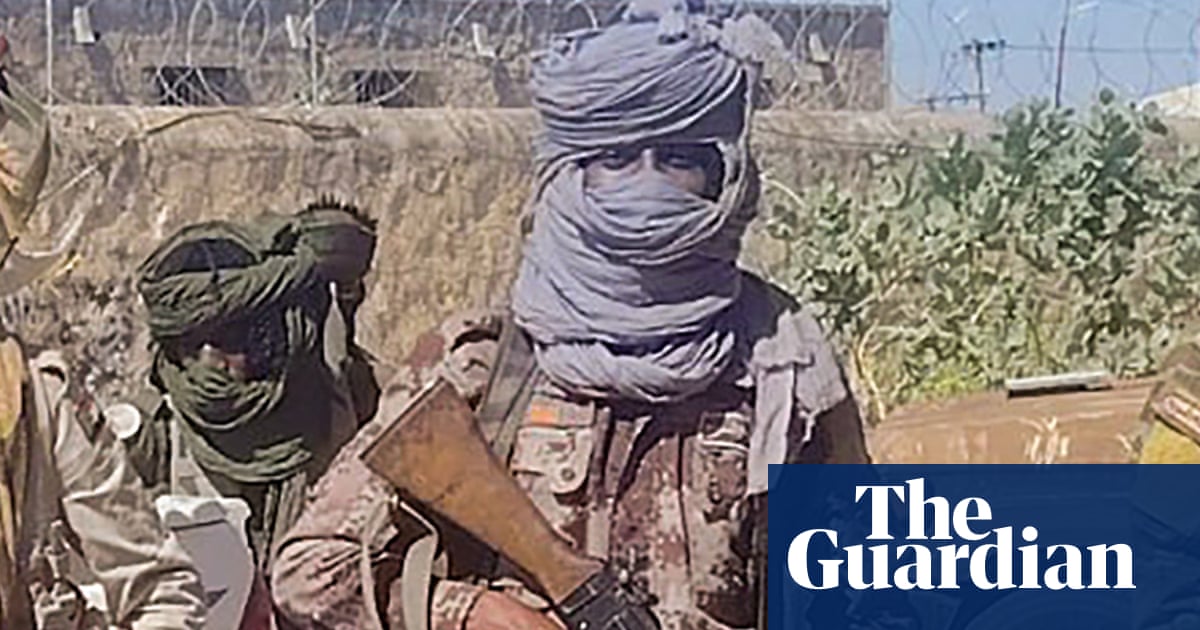
Fighting between the RSF and SAF, which began in April 2023, has intensified across several theatres. Amnesty International’s new reporting concludes the RSF committed crimes against humanity and ethnic cleansing during its campaign to seize El Fasher, including deliberate targeting of children and an attack on the Saudi Maternity Hospital. Aid agencies describe Sudan as facing the world’s worst humanitarian crisis, with more than 14 million people displaced and 28 million facing acute hunger, while separate reporting cites over 6,000 killed in El Fasher last year and mass killings in Geneina in 2023. Current combat dynamics include SAF airstrikes aimed at weakening RSF positions in and around Kurmuk in Blue Nile, and RSF drone attacks on Al-Obeid’s main electricity station and fuel depots in Kordofan. Diplomatically, the UN Human Rights Council is considering a draft resolution on Al-Obeid and Kordofan, Amnesty has called for a ceasefire and an international protection force, and Sudan’s foreign minister has pushed back against European sponsors, suggesting limited near-term traction.
Key judgments
- RSF forces very likely committed crimes against humanity and ethnic cleansing during their campaign to seize El Fasher, including deliberate attacks on children and an assault on the Saudi Maternity Hospital that constitutes a war crime; reporting diverges on the siege timeline and capture date, but multiple independent accounts align on the pattern and severity of abuses. (Confidence: high · REPORTED)
- I&W: UN Human Rights Council issues a report or resolution referencing crimes against humanity in El Fasher and North Darfur. (1-3 months)
- I&W: Credible independent investigations publicly refute the core allegations against RSF regarding El Fasher. (1-3 months)
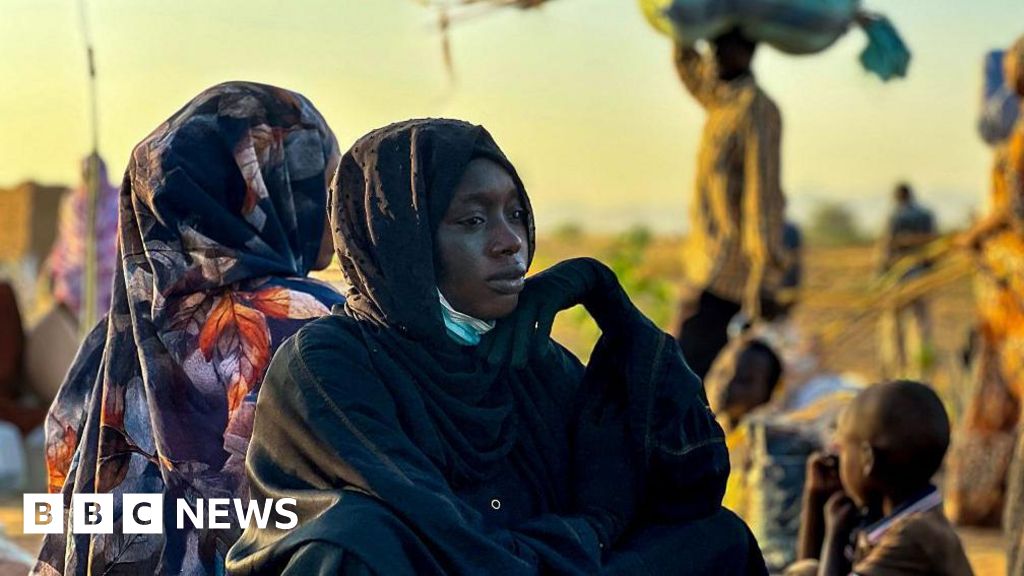
- Sudan’s humanitarian crisis is severe and worsening: fighting has displaced more than 14 million people and left 28 million facing acute hunger, with famine conditions reported and heavy civilian casualties in Darfur, including over 6,000 killed in El Fasher last year and mass killings in Geneina in 2023. (Confidence: medium · REPORTED)
- I&W: New UN or NGO appeals cite rising displacement or hunger figures for Sudan. (1-3 months)
- I&W: Announced and verified ceasefire enabling sustained humanitarian access into El Fasher and displacement camps around Damazin. (0-14 days)
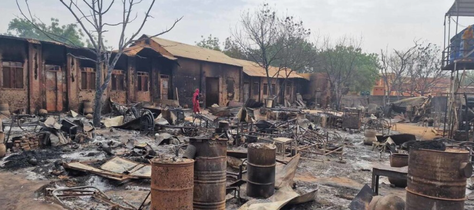
- It is likely the conflict will continue to feature SAF airstrikes around Kurmuk in Blue Nile and RSF drone attacks on Al-Obeid’s electricity and fuel infrastructure in Kordofan, elevating risks to critical services and civilians. (Confidence: medium · ASSESSED)
- I&W: SAF announces additional strikes or ground advances near Kurmuk, or RSF claims further drone attacks on Al-Obeid utilities with visual evidence. (0-14 days)
- I&W: Local authorities report sustained restoration of power and fuel in Al-Obeid with no new strike activity. (0-14 days)
- A negotiated ceasefire or deployment of an international protection force in the next 1-3 months is unlikely, despite advocacy by Amnesty International and UN Human Rights Council deliberations, given Khartoum’s pushback against external initiatives. (Confidence: medium · ASSESSED)
- I&W: UN Human Rights Council session concludes without a mandate for a protection force or monitoring mechanism and no joint RSF, SAF ceasefire statement. (1-3 months)
- I&W: Public, reciprocal ceasefire declaration by RSF and SAF or a UN-mandated protection mission announcement. (0-14 days)
- Further mass violence is likely if RSF advances into new population centres, given the 2023 pattern in West Darfur that included thousands of Masalit civilians killed in Geneina and over 1,000 people massacred in Ardamata and Geneina after the garrison fell. (Confidence: medium · ASSESSED)
- I&W: Credible reporting of new mass killings or mass detentions following RSF advances in Kordofan or Blue Nile. (1-3 months)
- I&W: Documented RSF withdrawal from contested urban areas with verified safe passage arrangements for civilians. (0-14 days)
Outlook & scenarios
RSF consolidates in North Darfur and entrenches control around El Fasher (60%)
RSF retains or consolidates control in and around El Fasher following previously reported siege and offensive activity. Allegations of crimes persist, civilian movement remains constrained, and aid access is sporadic. The humanitarian burden in North Darfur continues to rise.
Air and drone escalation in Blue Nile and Kordofan (50%)
SAF sustains airstrikes near Kurmuk while RSF repeats drone attacks on Al-Obeid’s electricity and fuel infrastructure. Intermittent outages and heightened civilian risk drive additional displacement. UN Human Rights Council deliberations continue without enforcement provisions.
Diplomacy yields a short humanitarian pause, not a durable ceasefire (25%)
UN Human Rights Council debate and advocacy, including NGO pressure, secure localised, time-bound pauses or corridors. The parties use pauses tactically and fighting resumes, leaving overall conflict dynamics unchanged.
Wildcard: SAF retakes Kurmuk and briefly shifts momentum (15%)
A successful SAF operation recaptures Kurmuk quickly, improving government leverage in Blue Nile. RSF leans on stand-off attacks and infrastructure disruption elsewhere to offset battlefield losses.
Recommendations
- Prioritise collection on Blue Nile and Kordofan: track official communiqués, geolocated imagery, and local outage reports to verify SAF strikes near Kurmuk and RSF drone attacks on Al-Obeid utilities.
- Maintain a structured incident log for El Fasher and North Darfur that links alleged RSF abuses to specific locations, dates, units or tactics, to support accountability assessments and pattern analysis.
- Exploit thermal anomaly products and other remote sensing to corroborate reports of strikes and fires near Kurmuk and Al-Obeid, and fuse with open-source video for rapid verification.
- Prepare decision points keyed to UN Human Rights Council outcomes on Al-Obeid and Kordofan, including triggers for revising risk to civilians and aid operations if a monitoring or protection mechanism is mandated.
- Expand humanitarian impact monitoring: integrate reporting from displacement camps in Damazin with conflict incident data to project access constraints and likely needs over the next quarter.
- Task monitoring of RSF and SAF public statements for any reference to investigations, ceasefire offers or rules-of-engagement changes, and evaluate against observed behaviour on the ground.
Confidence & uncertainty
Overall confidence is medium. Multiple, mutually reinforcing NGO and major-media reports detail RSF abuses in and around El Fasher, including consistent accounts of child targeting and a hospital attack, which strengthens those judgments. The humanitarian picture draws on aid-agency figures cited in reliable outlets and additional reporting of mass killings, but casualty and displacement numbers vary in scope and timeframe. Current-operation reporting on SAF airstrikes near Kurmuk and RSF drone attacks in Al-Obeid is credible but not deeply corroborated. Timelines for the El Fasher siege and capture diverge across sources, adding uncertainty that we reflect in the confidence levels.
Alternative analysis (red cell)
Although multiple reports allege grave abuses and a catastrophic humanitarian situation, the available claims rely heavily on a limited set of NGO reports and medium/low-admiralty items, contain internal contradictions on timing and casualty figures, and lack the documentary, forensic, and multi-source corroboration required to sustain high-confidence legal determinations or deterministic short-term operational forecasts. A more circumspect estimate is that severe abuses and a deepening humanitarian crisis are occurring, but key legal thresholds (crimes against humanity, ethnic cleansing) and precise numeric scales remain unsettled pending more robust forensic, documentary, and multi-source field collection.
Cited sources
[1] Amnesty International · Sudan: RSF atrocities in El Fasher ‘a stain on the conscience of humanity’ – new report (B) · sha256:4c61c1489c7a [2] منظمة العفو الدولية · السودان: فظائع قوات الدعم السريع في الفاشر 'وصمة عار على ضمير الإنسانية‘ - تقرير جديد (B) · sha256:75a2fb78b62b [3] Amnesty International · Sudan’s RSF committed crimes against humanity in El Fasher, Amnesty says (B) · sha256:29a1d8dedc95 [4] BBC · Sudan war: RSF committed crimes against humanity in el-Fasher, Amnesty says (A) · sha256:880c9ca7322c [5] Wikipedia · Battle of Geneina (B) · sha256:d73ad8d83e32 [6] Al Jazeera · زحف بري وغارات على "الكرمك". الجيش السوداني يكثف عملياته وقرار أممي مرتقب في جنيف (A) · sha256:3d6dc001c8e4
Source content hashes were computed at collection time; the cited text is preserved unmodified for the life of this product.
Red cell review: PARTIAL DISSENT
TLP:CLEAR