TLP:CLEAR · Disclosure is not limited.
Sudan situation report: drone casualties and worsening food insecurity, 24 October 2026
Time window: Last 7 days · Audience: General analyst · Type: Situation report · DTG: 2026-10-24 22:10Z · Overall confidence: HIGH
BLUF
Drone strikes are causing a severe civilian toll across Sudan: the UN Human Rights Office documented at least 306 deaths in the first three weeks of October. The reported toll and perpetrator of the 18 October Dibab strike and 19 October Amiet Market attack remain disputed. Food insecurity is likely to worsen, with 19.5 million people facing acute food insecurity and famine risk reported for the coming months.
Executive summary
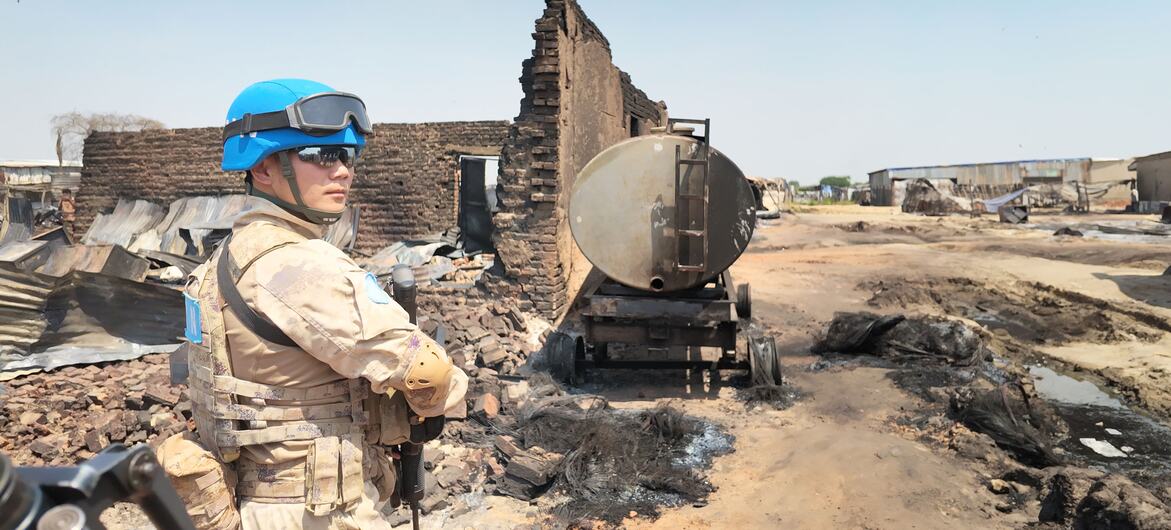
The SAF and RSF continue to use drones across Sudan, including in Kordofan, Darfur, Blue Nile and Khartoum. Recent reports describe attacks on civilian sites and infrastructure, but casualty counts and responsibility for individual strikes are not consistently established. In Dibab, West Kordofan, at least 139 people were reported killed in a strike on a transport truck; accounts differ on the final toll and operator. In Abyei, reports of the 19 October Amiet Market attack range from more than 80 to 153 deaths, with responsibility unresolved. Humanitarian pressure remains acute: joint ministerial signatories reported 19.5 million people facing acute food insecurity, with famine risk, drought and a response plan funded at just over 43 per cent.
Change from previous assessment
Since the 23 October prior brief, the main change is added reporting on the 18 October Dibab transport-truck strike, with a reported minimum of 139 deaths and conflicting higher or lower counts and attribution. The Amiet Market toll remains unresolved, with current accounts giving both 153 and more than 80 deaths. The broad judgments on drone danger and worsening food conditions remain unchanged; event-level confidence remains lower where attribution or casualty counts conflict.
Key judgments
- Drone strikes are very likely to remain a direct civilian hazard across Sudan over the next 1 to 3 months. The UN Human Rights Office documented at least 306 deaths and hundreds of injuries in the first three weeks of October, and attributed strikes to both the SAF and RSF across Kordofan, Darfur, Blue Nile and Khartoum. The broad casualty trend is well reported, but operator attribution for individual strikes remains uneven. (Confidence: medium · ASSESSED)
- I&W: OHCHR publishes another 14-day update documenting civilian deaths from SAF or RSF drone strikes in Kordofan, Darfur or Blue Nile, confirming continued civilian exposure. (0-14 days)
- I&W: The SAF and RSF announce and observe a drone-strike pause, while OHCHR reports no new civilian drone fatalities, breaking the assessment of continuing direct harm. (0-30 days)
- At least 139 people were reported killed in the 18 October repeated strike on a transport truck in Dibab, West Kordofan, but the final toll and operator remain unresolved. Other accounts report about 80 deaths at a transport hub or 145 deaths on the truck plus five at a funeral tent; the RSF administration and Emergency Lawyers accused the SAF, while other reporting leaves the operator unattributed. These accounts do not support a single confirmed total or attribution. (Confidence: medium · REPORTED)
- I&W: A neutral investigation or verified casualty register reconciles the Dibab toll and identifies the strike operator, breaking the assessment that both remain unresolved. (0-30 days)
- I&W: New reports continue to give incompatible Dibab casualty totals, with no independent attribution of the strike, confirming that the event remains unresolved. (0-30 days)
- The 19 October drone attack on Amiet Market and the Todach area in Abyei almost certainly caused mass civilian casualties, but the death toll and operator remain unverified. Abyei authorities reported 153 deaths, while an NGO account reported more than 80; UNISFA transported more than 27 injured people to its hospital in Todach. Abyei authorities and a military source attributed the attack to the Sudanese army, but other reporting does not identify the perpetrator. (Confidence: medium · REPORTED)
- I&W: UNISFA publishes a consolidated casualty figure or an independent investigation identifies the strike operator, breaking the current uncertainty over the toll or attribution. (0-30 days)
- I&W: New independent reporting continues to give conflicting fatality counts and no verified operator, confirming that the event remains unresolved. (0-30 days)
- Food conditions in Sudan are likely to worsen over the next 1 to 3 months. Joint ministerial signatories reported 19.5 million people facing acute food insecurity, including 5 million at emergency levels, and said the 14 food-insecure areas are expected to double. The IPC warned of famine risk in the coming months. Reduced rainfall and drought across more than half of Sudan add pressure, while the humanitarian response plan is just over 43 per cent funded. This forecast rests on official warnings and reported conditions, not a new outcome assessment. (Confidence: medium · ASSESSED)
- I&W: An IPC update reports more than 14 food-insecure areas or a higher number of people at emergency levels, confirming deterioration. (1-3 months)
- I&W: An IPC update reports fewer than 14 food-insecure areas and withdraws the warning of famine risk in the coming months, breaking the worsening outlook. (1-3 months)
- The BBC's finding that RSF fighters systematically destroyed El Fasher's healthcare system during the siege and takeover is likely accurate, although Dr Alaa Eldin Nugud, a health minister in the RSF-affiliated civilian administration, dismissed the allegations as propaganda. The BBC investigation and comments from two doctors provide support, while the denial comes from an administration affiliated with the group accused. (Confidence: medium · ASSESSED)
- I&W: An independent investigation publishes dated evidence identifying El Fasher health facilities attacked during the RSF siege and takeover, confirming the reported finding. (1-3 months)
- I&W: An independent investigation publishes evidence that named El Fasher facilities remained operational through the siege and takeover, breaking the reported finding of systematic destruction. (1-3 months)
Outlook & scenarios
Continued drone-intensive attrition (60%)
The SAF and RSF continue fighting across Kordofan, Darfur and Blue Nile. Drone strikes remain a direct threat to civilians and infrastructure, while food insecurity worsens under conflict pressure, drought and limited response funding.
Limited humanitarian access without a broad ceasefire (23%)
The SAF and RSF accept local arrangements for humanitarian movements, including routes into Darfur, but fighting continues elsewhere. Aid access improves in some locations without reversing food insecurity or reducing the risk of further drone casualties.
Further intensification of civilian harm (12%)
Drone attacks continue to hit markets, displacement sites and essential services. A sequence of high-casualty incidents in Kordofan or Darfur deepens displacement and further disrupts access to food and healthcare.
Wildcard: sudden SAF-RSF ceasefire (5%)
A sudden ceasefire or humanitarian truce produces a rapid reduction in fighting and opens access for aid. This would be a high-impact shift from the current pattern, but the reporting in this brief documents calls for a ceasefire rather than a commitment by either party.
Recommendations
- Maintain a daily incident log that records date, precise location, reported casualty floor, source, and attribution separately. Do not combine the competing Dibab tolls into a single confirmed figure.
- Prioritise follow-up on UNISFA casualty verification for the Amiet Market attack and on any independent investigation into responsibility for the strike.
- Track IPC updates against the current 14 food-insecure areas, the 5 million people reported at emergency levels and the reported 43 per cent funding level. Flag changes in each measure separately.
- Monitor whether the SAF or RSF publicly accepts the calls for humanitarian access into Darfur, then seek confirmation that routes are operating before assessing access as improved.
- Keep reporting on the El Fasher healthcare system attributed to the BBC investigation and distinguish its findings from the denial by the RSF-affiliated administration.
Confidence & uncertainty
Overall confidence is high for the broad assessment of sustained civilian harm from drone strikes and acute food insecurity. OHCHR and other UN reporting, joint ministerial statements and major-media reporting support these trends. Repeated publication of the same UN figures is not independent corroboration, and confidence in specific casualty totals and strike attribution in Dibab and Abyei is lower because accounts conflict.
Alternative analysis (red cell)
The available reporting indicates that RSF forces may have inflicted extensive damage on healthcare facilities in El Fasher, but the record presently establishes allegations and selected testimony more clearly than a systematically verified city-wide pattern. A broader assessment should remain contingent on corroboration from independent medical and humanitarian sources and on separating intentional attacks from other conflict-related causes of healthcare collapse.
Intelligence gaps
- [EEI 1.1 · PARTIAL] Observed concentrations and movement of armed units (size estimates, unit identifiers if visible) within X km of named towns/roads/airfields (e.g., El Fasher, Geneina, Nyala, Khartoum neighborhoods) including timestamps and direction of movement. Recommended collection: imagery/satellite
- [EEI 1.3 · PARTIAL] Reports or intercepts of orders, operational directives or public statements from RSF/SAF commanders indicating planned offensives, ceasefire acceptance/rejection, defensive postures or orders to withdraw from named locations. Recommended collection: signals/communications intercepts
- [EEI 1.4 · PARTIAL] Status of critical infrastructure and lines of communication: control or denial of named bridges, main highways (identify route numbers), airfields, fuel depots and telecommunication hubs and any reported sabotage/blockage incidents. Recommended collection: human intelligence/field reporting
- [EEI 2.1 · PARTIAL] Counts and locations of newly displaced persons arriving at formal sites, informal camps, border crossings or collective centers (daily/weekly arrivals, site coordinates), including demographics (women, children, elderly) where available. Recommended collection: humanitarian/UN OCHA reports
- [EEI 2.2 · PARTIAL] Access impediments to humanitarian assistance: reported attacks on, blockages of, or denial of passage for named humanitarian convoys (dates, GPS locations, responsible actor if known) and closure status of specific routes. Recommended collection: human intelligence/field reporting
- [EEI 2.3 · PARTIAL] Functional status of medical infrastructure in named locations: number of operational hospitals/clinics, reported shortages of key medicines/blood, and hospital casualty/occupancy figures for the last 72 hours. Recommended collection: medical/health cluster reporting
- [EEI 3.1 · PARTIAL] Detection of flights, ships or overland convoys delivering military materiel or foreign personnel to named airfields, ports or border crossings (flight/IMO numbers, manifests if available, timestamps, route origin/destination). Recommended collection: air-traffic / maritime / border customs
- [EEI 3.2 · UNCOVERED] Imagery or on-the-ground confirmation of foreign military personnel or private military contractor bases/forward operating elements at specified coordinates or compounds, including vehicle/weapon types observed. Recommended collection: imagery/satellite
- [EEI 3.3 · UNCOVERED] Financial and sanctions-relevant indicators: atypical large transfers, use of designated front companies, or shipments routed through third states linked to procurement of weapons or fuel for RSF or SAF (transaction dates, parties, amounts where obtainable). Recommended collection: financial intelligence
Red cell review: PARTIAL DISSENT
TLP:CLEAR