TLP:CLEAR · Disclosure is not limited.
Sudan Situation Report: Drone Strikes, Ethiopia Allegations and RSF Defections
Time window: Last 7 days · Audience: General analyst · Type: Situation report · DTG: 2026-10-31 22:09Z · Overall confidence: HIGH
BLUF
Reports of attacks on Sudanese electricity infrastructure continued during the week, while responsibility for some strikes remains disputed. Sudan’s 31 October accusations that Ethiopia and Assosa airport supported drone operations are unverified; Khartoum says it is pursuing de-escalation through diplomacy.
Executive summary
Reporting from 24 to 31 October describes attacks on more than 13 electricity distribution stations across Gedaref, Khartoum, Gezira, Red Sea, Sennar, White Nile and North Kordofan. Separate reporting attributes six coordinated drone strikes to the RSF, but the reported counts may cover overlapping events and attribution is not settled. In Nyala, the best-supported hospital count for the 26 October market strike is 36 dead and more than 150 injured; other reported totals differ sharply, and responsibility remains disputed. Sudan accused Ethiopia of facilitating drone operations and identified Assosa airport, while also stating that it seeks diplomatic de-escalation. RSF commander Siddiq Ander announced his defection to the SAF. The UK announced sanctions on 15 senior RSF and SAF commanders and £15 million in humanitarian and survivor support. El Fasher’s displacement and missing-person burdens, and food insecurity across Sudan, remain severe.
Change from previous assessment
Since the 30 October brief, the assessment now includes Sudan’s 31 October allegations that Ethiopia and Assosa airport supported drone operations, alongside Sudanese statements that it is pursuing diplomatic de-escalation. Reports of attacks on more than 13 electricity distribution stations reinforce the prior concern about infrastructure strikes, but do not resolve attribution or establish whether the reported station counts overlap. New reporting on Nyala adds an Emergency Lawyers estimate above 100 deaths, widening the gap with hospital-based figures; the best-supported reported minimum remains 36 dead. Siddiq Ander’s announced defection is a new development, but the reporting does not show that the RSF is undergoing a broader unit-level collapse. Initial assessment of the Ethiopia-related escalation risk remains low confidence because the allegations lack independent verification.
Key judgments
- Further attacks on electricity infrastructure in Sudan are likely over the next 0-14 days. Reports describe attacks on more than 13 distribution stations across Gedaref, Khartoum, Gezira, Red Sea, Sennar, White Nile and North Kordofan, alongside reported RSF drone strikes on six power stations and the al-Markhiyat transformer station. The reports do not establish that all attacks had the same perpetrator or were separate events. (Confidence: medium · ASSESSED)
- I&W: A new, independently corroborated attack on a named electricity station in one of the reported affected states, with a matching local outage report. (0-14 days)
- I&W: No independently corroborated new strike is reported, and authorities report restored service at the named affected stations. (0-14 days)
- The best-supported reported toll for the 26 October Nyala market strike is at least 36 dead and more than 150 injured, but the final toll and responsibility remain unsettled. Nyala Teaching Hospital received 36 bodies; the RSF’s claim of 188 dead and 356 injured is unverified, while Emergency Lawyers reported more than 100 deaths, possibly across both market and residential-area strikes. MSF attributed the market strike to the SAF, but other reporting says responsibility is disputed. (Confidence: medium · REPORTED)
- I&W: A facility-by-facility casualty reconciliation confirms at least 36 deaths and more than 150 injuries from the 26 October market strike. (0-30 days)
- I&W: Hospital or investigation records establish that the higher reported totals include a separate incident or duplicate counts, or identify a different death toll for the market strike. (0-30 days)
- Sudanese officials are likely to sustain public diplomatic pressure on Ethiopia over alleged support for drone operations while continuing to state that they seek de-escalation. Sudan accused Ethiopia of using its territory and Assosa airport to support RSF supply or drone activity, but the supplied reporting does not independently verify those allegations. This judgment rests on Sudanese official statements relayed by local media, not independent evidence of Ethiopian involvement. (Confidence: low · ASSESSED)
- I&W: Sudan issues another formal accusation or diplomatic démarche naming Ethiopia or Assosa airport, and Ethiopia makes a public response. (0-30 days)
- I&W: Sudanese and Ethiopian officials announce a bilateral meeting or a specific de-escalation measure. (0-30 days)
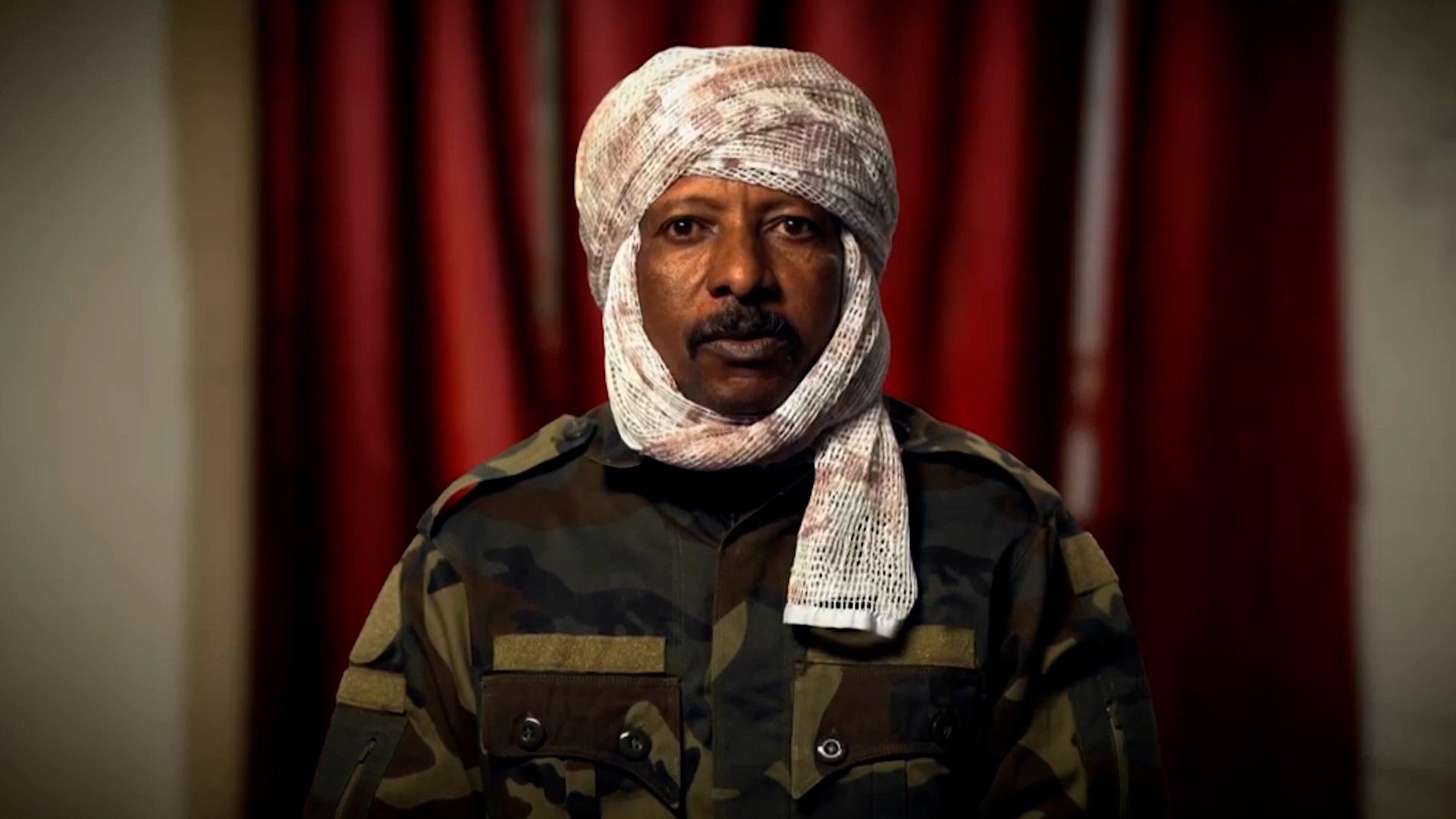
- Further senior RSF defections to the SAF are likely over the next 1-3 months. Recent reports describe Siddiq Ander’s announced defection, Mohammed Azraq al-Fanjari’s departure with about 300 officers and soldiers and 30 vehicles, and Al-Tayeb al-Wahidu’s move with 50 fighters. The reporting indicates pressure on RSF cohesion, but does not establish a wider unit-level collapse; some reports also differ on the timing or details of defections. (Confidence: medium · ASSESSED)
- I&W: Another named RSF commander announces a move to the SAF with a stated number of personnel or vehicles, and the transfer is corroborated by a second source. (1-3 months)
- I&W: No additional named commander announces a defection, and independent reporting does not confirm the personnel or vehicle transfers described in recent accounts. (1-3 months)
- Displacement and searches for missing relatives in El Fasher are very likely to persist over the next 1-3 months. The UN Fact-Finding Mission reported that a wide segment of El Fasher’s population and surrounding areas remained displaced one year after the RSF takeover, while families continued searching for relatives who disappeared during the violence. A humanitarian assessment recorded about 138,200 people displaced from El Fasher and nearby settlements between 26 October 2025 and 1 March 2026. The reported death toll is not a final independently verified count. (Confidence: medium · ASSESSED)
- I&W: New UN or humanitarian reporting records continued displacement from El Fasher or unresolved missing-person cases. (1-3 months)
- I&W: Humanitarian reporting documents sustained returns to El Fasher and a falling number of unresolved missing-person cases. (1-3 months)
- Severe food insecurity and famine risk across Sudan are likely to persist over the next 0-3 months. Reporting describes acute food insecurity in displacement areas, aid shortages and supply-chain disruption; estimates of total displacement differ, at about 13 million and 14 million people. (Confidence: medium · ASSESSED)
- I&W: A new humanitarian assessment reports worsening food access, expanded famine risk or continuing aid shortages in named Sudanese displacement areas. (0-3 months)
- I&W: Humanitarian reporting documents sustained aid access and improved food-security conditions in areas currently reported at risk. (0-3 months)
Outlook & scenarios
Recurring strikes and diplomatic pressure (60%)
This is the most likely course over the next 1-3 months. Attacks on electricity or other civilian infrastructure recur, with attribution disputed in some cases. Sudan continues to press its allegations against Ethiopia through diplomatic channels, while RSF defections add pressure on the group without producing a confirmed collapse of its forces.
Diplomatic restraint and a pause in infrastructure strikes (28%)
This is an unlikely but plausible course. Sudan and Ethiopia continue diplomatic engagement, and reporting confirms no new cross-border incident. A pause in attacks allows electricity services to recover in some affected areas, while the wider conflict and humanitarian crisis continue.
Cross-border incident triggers escalation (12%)
This is a very unlikely, high-impact wildcard. If independent evidence establishes that Ethiopian territory or Assosa airport supported drone operations, and Sudan responds militarily, the current diplomatic dispute would become a direct interstate security crisis. The supplied reporting does not establish Ethiopian involvement or an impending interstate clash.
Recommendations
- Maintain a dated incident ledger for electricity and other infrastructure attacks. Record the named station, state, reported outage, casualty figures and attribution separately; do not merge reports unless location and timing establish they concern the same event.
- For Nyala, keep the hospital count, Emergency Lawyers’ higher estimate and the RSF’s unverified claim distinct. Seek reconciliation of whether the reported deaths and injuries cover the market strike alone or also the residential-area strike.
- Treat the allegations concerning Ethiopia and Assosa airport as unverified. Seek independent corroboration before assessing Ethiopian state involvement, and track Sudanese and Ethiopian official statements for signs of either a formal diplomatic démarche or de-escalation.
- Track each reported RSF defection by commander, personnel, vehicles, date and confirmed destination. Distinguish an announced departure from a verified transfer of an operational unit to the SAF.
- Prioritise monitoring of humanitarian access, displacement and missing-person reporting for El Fasher, alongside food-security assessments in Sudanese displacement areas. Track the UK’s announced £10 million humanitarian package and £5 million survivor-support allocation against subsequent delivery reporting.
Confidence & uncertainty
Overall confidence is high for the core reported developments because major media, multilateral reporting, hospital and humanitarian reporting, and official statements corroborate important elements of the week’s events. Confidence is lower on the final Nyala toll, attribution of particular infrastructure strikes, the allegations about Ethiopia and Assosa airport, and the military effect of RSF defections. Those points remain contested, based on official allegations, or not independently verified.
Alternative analysis (red cell)
The available evidence supports continued severe food insecurity and famine risk in several Sudanese areas, especially displacement settings, but not necessarily a uniform nationwide condition. Claims fd67e21e-a1c8-4d20-84d5-92956af594f6 and 2d99750c-96f7-4a76-b9af-6a5207eb8bd0 establish serious conditions, while aea3ad96-766b-46de-96d3-79a651f4e7ac provides a broad warning rather than area-specific confirmation. The displacement discrepancy between d25612c7-1efb-4a9d-98ae-fd597d575cb5 and ef7df09c-4aa9-4a91-9a71-14b8f3ac5268 further limits confidence in the scale of the national picture.
Intelligence gaps
- [EEI 1.1 · PARTIAL] Observed concentrations and movement of armed units (size estimates, unit identifiers if visible) within X km of named towns/roads/airfields (e.g., El Fasher, Geneina, Nyala, Khartoum neighborhoods) including timestamps and direction of movement. Recommended collection: imagery/satellite
- [EEI 1.2 · PARTIAL] Changes in employment of heavy weapons and systems: documented use or emplacement of artillery, multiple-launch rocket systems, tanks, combat helicopters, and airstrikes at specific coordinates and times. Recommended collection: open-source/media
- [EEI 1.3 · PARTIAL] Reports or intercepts of orders, operational directives or public statements from RSF/SAF commanders indicating planned offensives, ceasefire acceptance/rejection, defensive postures or orders to withdraw from named locations. Recommended collection: signals/communications intercepts
- [EEI 2.1 · PARTIAL] Counts and locations of newly displaced persons arriving at formal sites, informal camps, border crossings or collective centers (daily/weekly arrivals, site coordinates), including demographics (women, children, elderly) where available. Recommended collection: humanitarian/UN OCHA reports
- [EEI 2.2 · PARTIAL] Access impediments to humanitarian assistance: reported attacks on, blockages of, or denial of passage for named humanitarian convoys (dates, GPS locations, responsible actor if known) and closure status of specific routes. Recommended collection: human intelligence/field reporting
- [EEI 2.3 · PARTIAL] Functional status of medical infrastructure in named locations: number of operational hospitals/clinics, reported shortages of key medicines/blood, and hospital casualty/occupancy figures for the last 72 hours. Recommended collection: medical/health cluster reporting
- [EEI 3.1 · UNCOVERED] Detection of flights, ships or overland convoys delivering military materiel or foreign personnel to named airfields, ports or border crossings (flight/IMO numbers, manifests if available, timestamps, route origin/destination). Recommended collection: air-traffic / maritime / border customs
- [EEI 3.2 · UNCOVERED] Imagery or on-the-ground confirmation of foreign military personnel or private military contractor bases/forward operating elements at specified coordinates or compounds, including vehicle/weapon types observed. Recommended collection: imagery/satellite
- [EEI 3.3 · PARTIAL] Financial and sanctions-relevant indicators: atypical large transfers, use of designated front companies, or shipments routed through third states linked to procurement of weapons or fuel for RSF or SAF (transaction dates, parties, amounts where obtainable). Recommended collection: financial intelligence
Red cell review: PARTIAL DISSENT
TLP:CLEAR