TLP:CLEAR · Disclosure is not limited.
Sudan Situation Report: Drone Strikes, Infrastructure Damage and Civilian Risk
Time window: Last 7 days · Audience: General analyst · Type: Situation report · DTG: 2026-10-26 12:28Z · Overall confidence: HIGH
BLUF
Sudan’s immediate risk picture has worsened: drone attacks attributed to both the SAF and RSF continue to threaten civilians, while the RSF’s reported 26 October strikes on five power stations have added an essential-services risk in eastern and central Sudan. Casualty figures and responsibility for the Dibab and Abyei strikes remain unresolved; famine warnings and protection concerns in El Fasher remain acute.
Executive summary
Between 19 and 26 October, reporting described continued drone attacks on civilian areas and infrastructure, including the RSF-attributed attack on five power stations and SAF air operations across Kordofan and Darfur. The power-station attack caused outages, but the reported breakdown by state differs between accounts. Separate reporting places mass-casualty strikes in Dibab and at Amiet Market in Abyei, although tolls, dates and responsibility require further verification. Food-security warnings remain severe: 19.5 million people are reported to face acute food insecurity, while El Niño-related drought affects more than half of Sudan. New reports of RSF defections around Nyala add a possible source of command strain, but do not establish a wider breakdown.
Change from previous assessment
Since the 25 October brief, the main new development is the reported RSF drone attack on five power stations on 26 October, which raises concern about disruption to electricity, water and health services. New reporting also describes RSF officer defections linked to Nyala, while the UN Fact-Finding Mission’s El Fasher findings and the UK’s sanctions and assistance announcements add detail to the accountability and response picture. The assessment of civilian exposure to drone strikes and deteriorating food security remains unchanged. Dibab and Abyei casualty totals and responsibility remain unresolved.
Key judgments
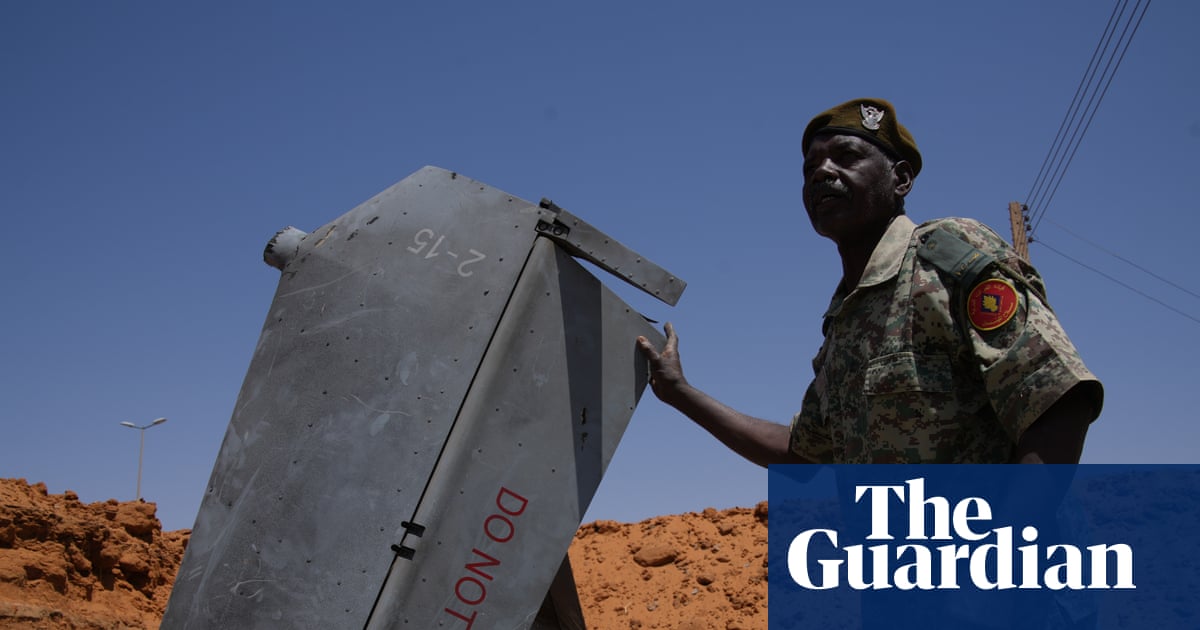
- Drone attacks are likely to remain a direct civilian hazard in Sudan over the next 1 to 3 months. OHCHR reported at least 306 deaths in three weeks and attributed strikes to both the SAF and RSF, including attacks on homes, markets, hospitals, displacement sites, power stations and water sources. SAF air operations reported across Kordofan, West Darfur and South Darfur add to the evidence of continued aerial activity. This is an assessment based on a strong recent pattern, not a forecast of any specific next attack. (Confidence: medium · ASSESSED)
- I&W: An OHCHR or UN update records another fatal drone strike on civilians or civilian infrastructure in Darfur, Kordofan, Blue Nile or Khartoum. (0 to 14 days)
- I&W: A subsequent OHCHR tally records no new drone deaths in Sudan and reports a sustained halt in attacks on civilian sites. (0 to 14 days)
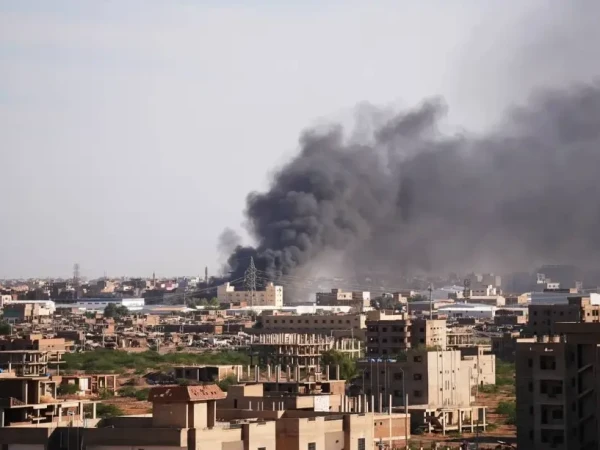
- The RSF-attributed attack on five power stations on 26 October is likely to prolong outages and disrupt essential services in eastern and central Sudan. Reports place stations in Al-Jazira, Gedaref and White Nile, but differ on the state-by-state count. The UN has warned that damage to electricity infrastructure threatens water and health services; the duration and geographic reach of the outages remain uncertain. (Confidence: medium · ASSESSED)
- I&W: Sudanese authorities or utility operators report continuing electricity outages or water-service disruption in Al-Jazira, Gedaref or White Nile. (0 to 14 days)
- I&W: Authorities confirm repair of all five reported stations and restored electricity service across the affected areas. (0 to 14 days)
- The 18 October strike in Dibab almost certainly caused mass civilian casualties, but reported deaths range from 80 to at least 139 or 145; one account separately reports five people killed at a funeral tent. The 19 October Amiet Market strike in Abyei also almost certainly caused mass casualties: UN reporting gives more than 80 deaths, while the Abyei region’s information minister reported 153, and UNISFA transported more than 27 injured people. Responsibility remains disputed. Tasis accused the SAF in Dibab; Abyei authorities and a military source attributed the Abyei strike to the Sudanese army, while an eyewitness reported seeing no uniformed fighters in the market. UN reporting dates the Abyei strike to 19 October 2026, but one media claim carries a 2025 event date, which requires verification. (Confidence: medium · REPORTED)
- I&W: UN or local authorities publish a reconciled casualty count for either strike, resolving the competing figures. (0 to 14 days)
- I&W: A transparent investigation verifies the Abyei strike date and identifies the operator or the target’s military status. (1 to 3 months)
- Civilians attempting to leave El Fasher are likely to face detention by the RSF over the next 1 to 3 months. The UN Fact-Finding Mission has documented violations in and around the city, and an Amnesty International researcher reported RSF detention of people trying to leave. Evidence of current detention rests on limited reporting, and the UN findings do not provide a fresh incident tally; confidence is therefore low. (Confidence: low · ASSESSED)
- I&W: A further UN or independently documented account identifies civilians detained by the RSF while attempting to leave El Fasher. (0 to 14 days)
- I&W: Independent reporting verifies civilian departures from El Fasher without detention or reports the release of people held for attempting to leave. (1 to 3 months)
- Food insecurity in Sudan is likely to worsen over the next 1 to 3 months. The IPC estimate cited by signatory governments puts 19.5 million people in acute food insecurity, including 5 million at emergency levels; the 14 food-insecure areas are expected to double. The IPC has warned of famine risk, and signatory governments warn that the projected 825,000 children with severe acute malnutrition may be exceeded without action. Conflict-related disruption and El Niño-related drought are both reported drivers. These are risk projections, not a new outcome assessment. (Confidence: medium · ASSESSED)
- I&W: An IPC update reports expansion beyond 14 food-insecure areas or a rise above the projected 825,000 children with severe acute malnutrition. (1 to 3 months)
- I&W: A revised IPC assessment reports no expansion in food-insecure areas and lowers the famine-risk outlook. (1 to 3 months)
- RSF defections are likely to add command strain around Nyala, but RSF collapse is unlikely within the next 1 to 3 months on current evidence. Reports name Jaddo Mohammed Adamo Hama, commander of Group 135 and the southern Nyala sector, and describe six or seven other officer defections. The reported totals may overlap, and there are no official statistics for the broader claim of several thousand defections. The assessment that continued defections could cause the RSF to unravel is expert opinion, not verified evidence of imminent collapse. (Confidence: low · ASSESSED)
- I&W: Another named RSF sector commander publicly announces a defection, particularly from a unit operating in or around Nyala. (0 to 14 days)
- I&W: Independent reporting establishes that the six and seven officer counts describe the same event and identifies no additional senior defections. (0 to 14 days)
Outlook & scenarios
Drone attacks and attrition continue (62%)
Drone attacks by the SAF and RSF continue to threaten civilians and infrastructure, while fighting in Darfur and Kordofan remains active. Outages and food insecurity add to civilian pressure. The Dibab and Abyei casualty totals and operator attributions remain disputed.
Infrastructure attacks deepen service disruption (25%)
Further attacks on power stations or other essential infrastructure prolong outages in eastern and central Sudan and disrupt water and health services. This outcome is unlikely, but the reported 26 October attack and the UN warning about service impacts make it a material risk.
RSF defections widen into a command crisis (8%)
Further named defections, including from senior field commanders, amplify the RSF’s reported organizational strain and impair command cohesion. This is very unlikely on current evidence, but would have high impact if defections spread beyond the reported Nyala-linked officers.
Recommendations
- Maintain separate incident records for the Dibab and Amiet Market strikes. Keep each reported death toll, date, location description and attribution attached to its source rather than merging figures.
- Prioritise verification of the Abyei strike’s year, the Dibab casualty total and the operator of each strike. Track the UN Security Council’s call for a full, transparent and prompt investigation.
- Monitor outages and water-service disruption in Al-Jazira, Gedaref and White Nile. Keep the differing state-by-state counts of power stations visible in reporting until authorities reconcile them.
- Track IPC updates, food-insecure area counts and child malnutrition projections alongside humanitarian access and funding. Distinguish projected risks from measured outcomes.
- Verify RSF defections by named officer, unit and location before assessing force-wide cohesion. Do not treat the reported several-thousand figure as an established count.
- Monitor the delivery and geographic reach of the UK’s announced humanitarian support, including assistance for clean water and sanitation around Tawila, services in El Obeid and support for survivors of conflict-related sexual violence.
Confidence & uncertainty
Overall confidence is high in the broad picture of continuing drone attacks, civilian exposure and worsening humanitarian pressure. That assessment rests on UN and OHCHR reporting alongside separate major-media and official reporting. Confidence is lower for specific casualty totals, the Abyei strike date, individual operators, the state-by-state power-station count and the scale of RSF defections; forecasts are less certain than the reported events.
Alternative analysis (red cell)
The Dibab and Abyei reporting may establish that serious drone incidents occurred, but it does not securely establish two distinct mass-casualty events with the stated confidence. The one-year date discrepancy in d583b79e-5f55-4257-a91e-cb7774dc455d and a8abd7df-9ae5-4b6b-8aa5-be3a0e4a203f, together with sharply divergent casualty figures and disputed attribution, supports treating the incidents as reported high-casualty attacks pending verification rather than almost-certain mass-casualty events.
Intelligence gaps
- [EEI 1.1 · PARTIAL] Observed concentrations and movement of armed units (size estimates, unit identifiers if visible) within X km of named towns/roads/airfields (e.g., El Fasher, Geneina, Nyala, Khartoum neighborhoods) including timestamps and direction of movement. Recommended collection: imagery/satellite
- [EEI 1.3 · UNCOVERED] Reports or intercepts of orders, operational directives or public statements from RSF/SAF commanders indicating planned offensives, ceasefire acceptance/rejection, defensive postures or orders to withdraw from named locations. Recommended collection: signals/communications intercepts
- [EEI 1.4 · PARTIAL] Status of critical infrastructure and lines of communication: control or denial of named bridges, main highways (identify route numbers), airfields, fuel depots and telecommunication hubs and any reported sabotage/blockage incidents. Recommended collection: human intelligence/field reporting
- [EEI 2.1 · PARTIAL] Counts and locations of newly displaced persons arriving at formal sites, informal camps, border crossings or collective centers (daily/weekly arrivals, site coordinates), including demographics (women, children, elderly) where available. Recommended collection: humanitarian/UN OCHA reports
- [EEI 2.2 · PARTIAL] Access impediments to humanitarian assistance: reported attacks on, blockages of, or denial of passage for named humanitarian convoys (dates, GPS locations, responsible actor if known) and closure status of specific routes. Recommended collection: human intelligence/field reporting
- [EEI 2.3 · PARTIAL] Functional status of medical infrastructure in named locations: number of operational hospitals/clinics, reported shortages of key medicines/blood, and hospital casualty/occupancy figures for the last 72 hours. Recommended collection: medical/health cluster reporting
- [EEI 3.1 · UNCOVERED] Detection of flights, ships or overland convoys delivering military materiel or foreign personnel to named airfields, ports or border crossings (flight/IMO numbers, manifests if available, timestamps, route origin/destination). Recommended collection: air-traffic / maritime / border customs
- [EEI 3.2 · UNCOVERED] Imagery or on-the-ground confirmation of foreign military personnel or private military contractor bases/forward operating elements at specified coordinates or compounds, including vehicle/weapon types observed. Recommended collection: imagery/satellite
- [EEI 3.3 · UNCOVERED] Financial and sanctions-relevant indicators: atypical large transfers, use of designated front companies, or shipments routed through third states linked to procurement of weapons or fuel for RSF or SAF (transaction dates, parties, amounts where obtainable). Recommended collection: financial intelligence
Red cell review: PARTIAL DISSENT
TLP:CLEAR