TLP:CLEAR · Disclosure is not limited.
Sudan Situation Report: Drone Threats, Power Disruption and Truce Obstacles
Time window: Last 7 days · Audience: General analyst · Type: Situation report · DTG: 2026-10-27 22:12Z · Overall confidence: HIGH
BLUF
Drone attacks continue to kill civilians and disrupt essential services, while humanitarian reporting points to severe and worsening food insecurity. The US one-month truce proposal faces public criticism from the Sudanese government, and responsibility for the 27 October attack on Merkhiyat power station remains disputed.
Executive summary
During the reporting period, the UN reported at least 306 deaths from drone strikes in Sudan over three weeks. Attacks also hit five electricity stations in Gedaref, Gezira, Sennar and White Nile states on 26 October; a separate attack on Merkhiyat station northwest of Omdurman was reported on 27 October. The Sudan Electricity Holding Company attributed the earlier attacks to the RSF, while reporting on Merkhiyat included both an RSF attribution and an allegation that drones had been launched from Ethiopia. A joint statement estimated that 19.5 million people face acute food insecurity, including five million at emergency levels, while the Sudanese government denied that famine is occurring. Sudanese diplomatic sources reported a US proposal for a one-month humanitarian truce, which the Sudanese government criticised. Reporting marking one year since the RSF took El Fasher also revisited mass killing and abuse there; estimates of the death toll remain inconsistent.
Change from previous assessment
Since the prior brief on 27 October 2026, reporting has named the five electricity stations hit on 26 October and added a separate Merkhiyat attack report with a competing allegation that drones launched from Ethiopia. The new reporting also records the Sudanese government's denial of famine, details the US one-month truce proposal and its public criticism by the Sudanese government, and reports UK sanctions on 15 conflict figures. The drone, power-infrastructure and food-security judgments remain; the truce judgment is added, and confidence in Merkhiyat attribution remains limited because reporting conflicts.
Key judgments
- Civilian exposure to drone strikes is very likely to remain high across Sudan over the next 1-3 months. OHCHR reported at least 306 people killed in three weeks and attacks on civilian sites across Kordofan, Darfur, Blue Nile and Khartoum. Separate reporting put deaths at at least 139 in Dibab, West Kordofan, on 18 October and more than 80 at Amiet Market and Todach in Abyei on 19 October. Attribution and some incident-level casualty figures remain uncertain. (Confidence: medium · ASSESSED)
- I&W: Confirm: OHCHR or the UN reports another drone strike causing civilian deaths at a market, hospital, displacement site or utility facility in Darfur, Kordofan, Blue Nile or Khartoum. (0-14 days)
- I&W: Break: OHCHR records no civilian deaths from drone strikes in Sudan during a rolling 30-day period. (0-30 days)
- Further attacks on Sudan's electricity infrastructure are likely over the next 1-3 months. Drone attacks hit five named stations on 26 October: Al-Hawata and Faw in Gedaref, Al-Junayd in Gezira, Sinjah in Sennar, and Mashkoor in White Nile. A separate 27 October attack shut down Merkhiyat station northwest of Omdurman. Responsibility for the Merkhiyat attack is contested: one report attributes it to the RSF, while a military source alleges drones from a regional actor launched from Ethiopia. The reported extent of outages also differs. (Confidence: medium · ASSESSED)
- I&W: Confirm: Sudan Electricity Holding Company or a named state utility reports a new drone strike that damages a named station and causes an outage. (0-30 days)
- I&W: Break: Sudanese electricity authorities report no further attacks on generation or transmission facilities and restore the named stations without new damage. (1-3 months)
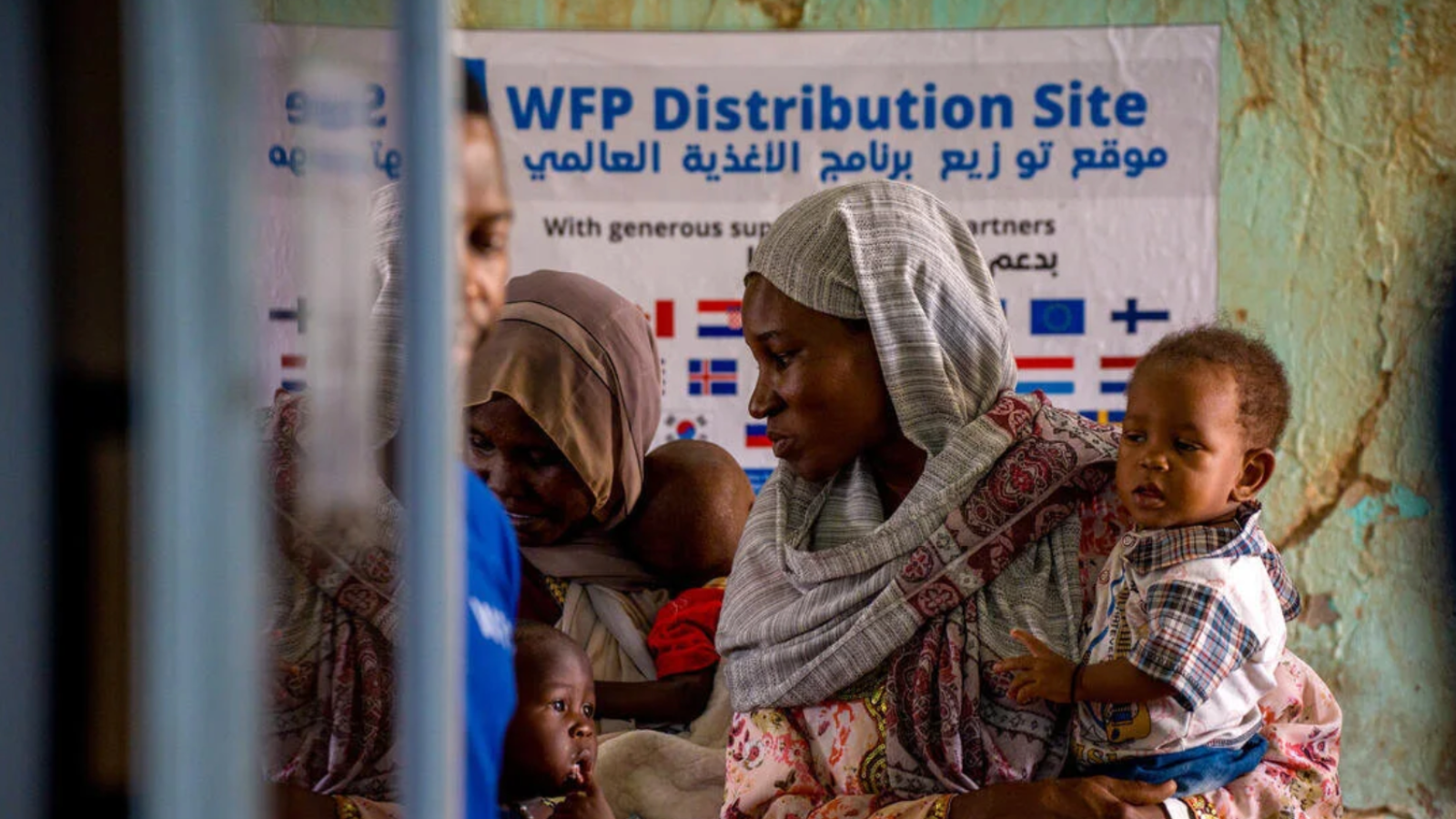
- Food insecurity is likely to worsen in Darfur and Kordofan over the next 1-3 months. A joint statement estimated that 19.5 million people, or 41 per cent of Sudan's population, face acute food insecurity, including five million at emergency levels; signatories warned that severe acute malnutrition among children could exceed 825,000 without immediate action. The IPC warned of rising famine risk in parts of Darfur and Kordofan. The Sudanese government disputes the severity, denying that famine is occurring and describing the food situation as reassuring. (Confidence: medium · ASSESSED)
- I&W: Confirm: A new IPC or WFP update reports more people in emergency food insecurity categories or rising famine risk in Darfur or Kordofan. (1-3 months)
- I&W: Break: A new IPC assessment reports fewer people in emergency categories and reduced famine risk in Darfur and Kordofan. (1-3 months)
- A one-month humanitarian truce is unlikely to take effect in the next 1-3 months. Sudanese diplomatic sources reported that US envoy Massad Boulos presented a proposal, but the same reporting said it lacked clear arrangements for troop positions and monitoring. The Sudanese government criticised the initiative as favouring the RSF and giving it an opportunity to rearm. This judgment rests on a single local-media reporting stream; it does not establish the RSF's position or confirm the final US terms. (Confidence: low · ASSESSED)
- I&W: Confirm: The US publishes written truce terms and both the Sudanese government and RSF publicly accept them, including a monitoring arrangement. (0-30 days)
- I&W: Break: The Sudanese government or RSF formally rejects the proposal, or the parties continue attacks after a stated truce start date. (0-30 days)
- The RSF's capture of El Fasher on 26 October 2025 almost certainly involved mass killing and severe civilian abuse, but the reported death toll remains unresolved. Monitoring groups counted at least 6,000 deaths in the first 72 hours using satellite imagery; separate accounts estimate up to 10,000 over two days or claim tens of thousands. Amnesty International's interviews also reported RSF detention and abuse of residents. These differing casualty estimates lower confidence in any single total. (Confidence: medium · REPORTED)
- I&W: Confirm: A UN body or independent monitoring group publishes a method-described casualty assessment that still records thousands killed during the capture. (1-3 months)
- I&W: Break: A method-described forensic or UN review substantially revises the reported minimum downward or finds that the satellite imagery was misinterpreted. (1-3 months)
- The UK almost certainly imposed sanctions on 15 Sudan conflict figures on 26 October 2026, although accounts differ on the scope and stated grounds. One report describes travel bans and asset freezes on RSF and SAF commanders suspected of sexual violence during the siege of El Fasher; other reporting describes sanctions on people from the RSF, SAF and allied groups over suspected atrocities more broadly. (Confidence: medium · REPORTED)
- I&W: Confirm: The UK Foreign Office publishes or updates a sanctions notice naming the 15 individuals and their designation grounds. (0-14 days)
- I&W: Break: The UK Foreign Office clarifies that the reported totals or designation grounds refer to different actions. (0-14 days)
Outlook & scenarios
Continued attacks and worsening civilian conditions (65%)
The SAF and RSF continue drone attacks, with further civilian casualties and damage to electricity infrastructure. Food insecurity remains severe as fighting, access restrictions and inadequate funding constrain relief. No truce takes effect.
A limited humanitarian pause (25%)
The US proposal is revised to include clear monitoring and troop-position arrangements, and both the Sudanese government and RSF accept a temporary pause. Humanitarian access improves during the pause, but the arrangement does not resolve the conflict.
Cross-border escalation wildcard (5%)
Independent evidence confirms the allegation that drones attacking Sudanese electricity infrastructure launched from Ethiopia. The allegation becomes a cross-border security issue and raises the risk of further incidents; the current reporting does not independently verify it.
Recommendations
- Maintain an incident-level drone strike tracker that records date, named location, reported casualties, source and attribution separately. Do not combine reports from different sites or periods until reporting confirms they describe the same incident.
- Keep responsibility for the Merkhiyat attack open. Seek independent confirmation of damage, outage extent, station restoration and the alleged Ethiopia launch origin before treating either the RSF attribution or the cross-border allegation as established.
- Use IPC and WFP reporting to track food insecurity in Darfur and Kordofan. Compare future estimates with the Sudanese government's public denial and record changes in humanitarian plan funding and access.
- Track whether the US publishes written truce terms, including troop positions and monitoring, and whether the Sudanese government and RSF publicly accept them. Do not treat the reported proposal as an agreed ceasefire.
- Verify the UK Foreign Office's published sanctions notice against media accounts, especially the total number of designated people, their affiliations and the stated grounds.
Confidence & uncertainty
Overall confidence is high for the broad situation picture because UN reporting, BBC investigations, Amnesty International testimony, IPC warnings and WFP and FAO reporting corroborate major conflict and humanitarian trends. Confidence is lower on the attribution of the Merkhiyat attack, the death toll in El Fasher, the scope of UK sanctions and the reported truce proposal, which relies on a single local-media reporting stream.
Intelligence gaps
- [EEI 1.1 · UNCOVERED] Observed concentrations and movement of armed units (size estimates, unit identifiers if visible) within X km of named towns/roads/airfields (e.g., El Fasher, Geneina, Nyala, Khartoum neighborhoods) including timestamps and direction of movement. Recommended collection: imagery/satellite
- [EEI 1.3 · PARTIAL] Reports or intercepts of orders, operational directives or public statements from RSF/SAF commanders indicating planned offensives, ceasefire acceptance/rejection, defensive postures or orders to withdraw from named locations. Recommended collection: signals/communications intercepts
- [EEI 1.4 · PARTIAL] Status of critical infrastructure and lines of communication: control or denial of named bridges, main highways (identify route numbers), airfields, fuel depots and telecommunication hubs and any reported sabotage/blockage incidents. Recommended collection: human intelligence/field reporting
- [EEI 2.1 · PARTIAL] Counts and locations of newly displaced persons arriving at formal sites, informal camps, border crossings or collective centers (daily/weekly arrivals, site coordinates), including demographics (women, children, elderly) where available. Recommended collection: humanitarian/UN OCHA reports
- [EEI 2.2 · PARTIAL] Access impediments to humanitarian assistance: reported attacks on, blockages of, or denial of passage for named humanitarian convoys (dates, GPS locations, responsible actor if known) and closure status of specific routes. Recommended collection: human intelligence/field reporting
- [EEI 2.3 · PARTIAL] Functional status of medical infrastructure in named locations: number of operational hospitals/clinics, reported shortages of key medicines/blood, and hospital casualty/occupancy figures for the last 72 hours. Recommended collection: medical/health cluster reporting
- [EEI 3.1 · UNCOVERED] Detection of flights, ships or overland convoys delivering military materiel or foreign personnel to named airfields, ports or border crossings (flight/IMO numbers, manifests if available, timestamps, route origin/destination). Recommended collection: air-traffic / maritime / border customs
- [EEI 3.2 · UNCOVERED] Imagery or on-the-ground confirmation of foreign military personnel or private military contractor bases/forward operating elements at specified coordinates or compounds, including vehicle/weapon types observed. Recommended collection: imagery/satellite
- [EEI 3.3 · UNCOVERED] Financial and sanctions-relevant indicators: atypical large transfers, use of designated front companies, or shipments routed through third states linked to procurement of weapons or fuel for RSF or SAF (transaction dates, parties, amounts where obtainable). Recommended collection: financial intelligence
Red cell review: CONCUR WITH COMMENT
TLP:CLEAR