TLP:CLEAR · Disclosure is not limited.
Sudan situation report: infrastructure strikes, Darfur and humanitarian pressure, 2 November 2026
Time window: Last 7 days · Audience: General analyst · Type: Situation report · DTG: 2026-11-02 10:28Z · Overall confidence: HIGH
BLUF
Reporting describes a 12-day run of RSF drone attacks on electricity and energy sites, with 15 stations reportedly targeted, although campaign totals and time windows do not align. Verify individual attacker attribution, especially for strikes in Kassala and northern Sudan, while tracking new aid gaps among displaced people in Blue Nile.
Executive summary
From 26 October to 2 November, reporting described continued drone attacks on Sudanese power and energy infrastructure. The RSF was attributed attacks on sites in Hayya, while reports left the attackers at Aroma, New Halfa, Abu Hamad and Al-Dabbah unidentified. In Blue Nile, reporting described SAF-RSF fighting around Geissan, Kurmuk and Wad Al-Mahi, with displaced people sheltering in forests and shortages at named centres. The World Food Programme reports that more than 14 million people have been displaced and nearly 20 million face hunger. Sudan has accused Ethiopia of involvement in attacks, but the supplied reporting does not independently substantiate the allegation. The UN plans talks with the RSF before Christmas 2026; SAF chief Abdel Fattah Al Burhan has repeatedly rejected ceasefire proposals.
Change from previous assessment
Since the 1 November brief, reporting describes the infrastructure campaign as having continued for 12 consecutive days and gives a 15-station total, although the stated time windows and geographic lists remain inconsistent. The current brief adds reports of strikes on Aroma and New Halfa in Kassala, detailed displacement and aid shortages in Blue Nile, formal Sudanese complaints against Ethiopia, and planned UN talks with the RSF before Christmas. The Nyala casualty and attribution dispute remains unresolved.
Key judgments
- RSF drone attacks on Sudanese electricity and energy infrastructure are likely to continue over the next 14 days. Reporting as of 2 November describes a 12-day run of attacks and 15 electricity stations targeted, but the reported totals cover different time windows. The RSF was attributed attacks on Hayya sites; reports left the attackers at Aroma and New Halfa in Kassala, and at Abu Hamad and Al-Dabbah, unidentified. (Confidence: medium · ASSESSED)
- I&W: Confirm: an independently reported new RSF-attributed strike hits a named electricity or fuel site and is followed by an outage or repair notice. (0-14 days)
- I&W: Break: no additional strike is reported through 16 November and reports confirm service has returned at the recently targeted named sites. (0-14 days)
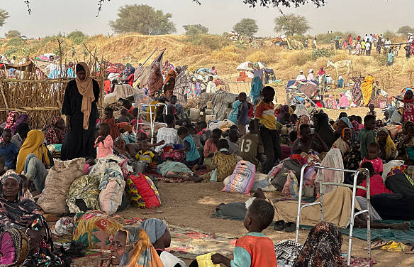
- Humanitarian conditions for displaced people around Shaira, Dandan, Al-Madina 10 and Abu Qumai in Blue Nile are likely to worsen over the next month if fighting and aid shortages persist. Reporting describes thousands displaced from Geissan and nearby areas, nearly 8,000 people at Shaira, 314 families at Dandan without aid, and disease at Abu Qumai where healthcare is absent. This forecast rests on one local-media account and activist testimony, without supplied independent corroboration, so confidence is low. (Confidence: low · ASSESSED)
- I&W: Confirm: follow-up reporting still finds no aid at Dandan, the Al-Madina 10 communal kitchen closed, or illness without healthcare at Abu Qumai. (0-14 days)
- I&W: Break: independent reporting confirms aid deliveries and restored food or health services at the named centres. (0-30 days)
- The UN Human Rights Office estimate of more than 6,000 people killed in three days around the RSF capture of El Fasher is the most specific sourced toll in the supplied reporting. A separate claim of tens of thousands killed covers a broader period and is not reconciled with that estimate, so the larger figure should not be presented as a confirmed total. (Confidence: medium · ASSESSED)
- I&W: Confirm: the UN Human Rights Office issues an updated estimate or breakdown that retains a toll above 6,000 for the three-day period. (1-3 months)
- I&W: Break: a UN Human Rights Office methodological update materially revises the estimate downward or identifies substantial double counting. (1-3 months)
- At least 36 deaths is the best-documented reported toll for the Nyala market strike: Nyala Teaching Hospital received 36 bodies and treated more than 150 injured people. This is not a final death toll, and responsibility remains contested: MSF attributed the strike to SAF, while other reporting left the attacker unknown and the RSF claimed 188 deaths. (Confidence: medium · REPORTED)
- I&W: Confirm: MSF or Nyala Teaching Hospital publishes an update that maintains at least 36 deaths linked to the strike. (0-30 days)
- I&W: Break: hospital reconciliation revises the number of deaths below 36, or an independent incident review rejects the reported SAF attribution. (0-30 days)
- It is unlikely that the supplied reporting alone establishes Ethiopian state involvement in RSF drone attacks. Sudan's Deputy Foreign Minister alleges the drones targeting electricity and fuel sites launched from Ethiopia, and Sudan has reported complaints to the UN Security Council and African Union; Ethiopia previously denied involvement, while another report says it had not immediately commented on the latest allegations. The timing of the UN complaint is also reported inconsistently. (Confidence: low · ASSESSED)
- I&W: Confirm: independently corroborated, geolocated evidence links a specific RSF drone attack to a launch site in Ethiopia. (1-3 months)
- I&W: Break: a verifiable inquiry places the relevant launches inside Sudan and finds no Ethiopian operational role. (1-3 months)
- UN talks with the RSF on Sudan's transition to civilian rule are likely to proceed before Christmas 2026, but a near-term ceasefire is unlikely while SAF chief Abdel Fattah Al Burhan continues to reject ceasefire proposals. UN envoy Pekka Haavisto's description of diplomatic momentum as strong is a competing signal; confidence is medium because the supplied reporting does not establish SAF agreement to the talks or a ceasefire. (Confidence: medium · ASSESSED)
- I&W: Confirm: the UN announces dates and participants for talks with the RSF on the civilian transition. (0-2 months)
- I&W: Break: the UN postpones the talks beyond Christmas 2026, or Al Burhan publicly endorses a ceasefire framework. (0-2 months)
Outlook & scenarios
Infrastructure pressure and humanitarian strain persist (65%)
The RSF continues drone attacks on electricity and energy sites, while repairs and outages vary across affected states. SAF-RSF fighting and limited assistance sustain displacement and shortages around Geissan and the named Blue Nile centres.
UN talks open a channel without a ceasefire (55%)
The UN holds its planned talks with the RSF before Christmas 2026. The discussions establish contact on civilian transition, but Al Burhan's rejection of ceasefire proposals continues to obstruct an immediate halt to fighting.
Ethiopia allegations escalate into a regional crisis (10%)
Low probability, high impact wildcard: independent evidence substantiates Sudan's allegation that RSF drones launched from Ethiopian territory. The dispute then hardens beyond diplomatic complaints and becomes a direct source of regional tension.
Recommendations
- Maintain a dated incident ledger for power and energy attacks. Record the named site, state, reported attacker, outage, repair status and source, and keep the one-week, two-week and 12-day campaign descriptions separate until their counting windows are reconciled.
- Prioritise independent verification of the Aroma and New Halfa strikes in Kassala and the Abu Hamad and Al-Dabbah strikes. Compare site-level reporting and outage or repair notices with available imagery; do not treat thermal detections alone as proof of an attack or its cause.
- Track conditions at Shaira, Dandan, Al-Madina 10 and Abu Qumai separately, including aid arrivals, food provision, medicine access and healthcare availability. Flag whether reports are independently corroborated, given the current reliance on one local-media account.
- Use the Nyala Teaching Hospital figure of 36 bodies received as the strongest available reported count, not as a final toll. Keep the RSF figure and the SAF attribution reported by MSF clearly identified as contested claims.
- Treat Ethiopian involvement as an allegation unless independent evidence emerges. Track any verifiable response from Ethiopia and reconcile the reported timing of Sudan's complaints to the UN Security Council and African Union.
- Monitor whether the UN sets dates and confirms participants for talks with the RSF, and whether Al Burhan changes his stated position on ceasefire proposals. Do not equate planned talks with a ceasefire agreement.
Confidence & uncertainty
Overall confidence is high for the broad picture of sustained attacks on infrastructure and severe humanitarian need. Multiple reporting streams describe the power campaign, while hospital-based reporting and UN-linked estimates provide specific evidence on civilian harm. Confidence is lower for individual attacker attribution, the final Nyala death toll, the total number and time window of power sites hit, and the allegation of Ethiopian involvement. The Blue Nile details rely on one local-media account and activist testimony.
Intelligence gaps
- [EEI 1.1 · PARTIAL] Observed concentrations and movement of armed units (size estimates, unit identifiers if visible) within X km of named towns/roads/airfields (e.g., El Fasher, Geneina, Nyala, Khartoum neighborhoods) including timestamps and direction of movement. Recommended collection: imagery/satellite
- [EEI 1.2 · PARTIAL] Changes in employment of heavy weapons and systems: documented use or emplacement of artillery, multiple-launch rocket systems, tanks, combat helicopters, and airstrikes at specific coordinates and times. Recommended collection: open-source/media
- [EEI 1.3 · PARTIAL] Reports or intercepts of orders, operational directives or public statements from RSF/SAF commanders indicating planned offensives, ceasefire acceptance/rejection, defensive postures or orders to withdraw from named locations. Recommended collection: signals/communications intercepts
- [EEI 1.4 · PARTIAL] Status of critical infrastructure and lines of communication: control or denial of named bridges, main highways (identify route numbers), airfields, fuel depots and telecommunication hubs and any reported sabotage/blockage incidents. Recommended collection: human intelligence/field reporting
- [EEI 2.2 · PARTIAL] Access impediments to humanitarian assistance: reported attacks on, blockages of, or denial of passage for named humanitarian convoys (dates, GPS locations, responsible actor if known) and closure status of specific routes. Recommended collection: human intelligence/field reporting
- [EEI 2.3 · PARTIAL] Functional status of medical infrastructure in named locations: number of operational hospitals/clinics, reported shortages of key medicines/blood, and hospital casualty/occupancy figures for the last 72 hours. Recommended collection: medical/health cluster reporting
- [EEI 3.1 · UNCOVERED] Detection of flights, ships or overland convoys delivering military materiel or foreign personnel to named airfields, ports or border crossings (flight/IMO numbers, manifests if available, timestamps, route origin/destination). Recommended collection: air-traffic / maritime / border customs
- [EEI 3.2 · PARTIAL] Imagery or on-the-ground confirmation of foreign military personnel or private military contractor bases/forward operating elements at specified coordinates or compounds, including vehicle/weapon types observed. Recommended collection: imagery/satellite
- [EEI 3.3 · PARTIAL] Financial and sanctions-relevant indicators: atypical large transfers, use of designated front companies, or shipments routed through third states linked to procurement of weapons or fuel for RSF or SAF (transaction dates, parties, amounts where obtainable). Recommended collection: financial intelligence
Red cell review: CONCUR WITH COMMENT
TLP:CLEAR