TLP:CLEAR · Disclosure is not limited.
Taiwan Strait: Coast Guard pressure and energy-quarantine risk
Time window: Last 7 days · Audience: General analyst · Type: Situation report · DTG: 2026-11-02 19:06Z · Overall confidence: MEDIUM
BLUF
Chinese Coast Guard patrols east of Taiwan and near Pratas are likely to continue challenging Taiwan’s maritime control, but this week’s reporting does not establish actual energy interdictions, coordinated blockade preparation or PLA attack mobilisation. Treat an energy quarantine as a longer-term planning risk, not an imminent operation; the supplied 2028-29 risk timeline comes from a single think-tank assessment.
Executive summary
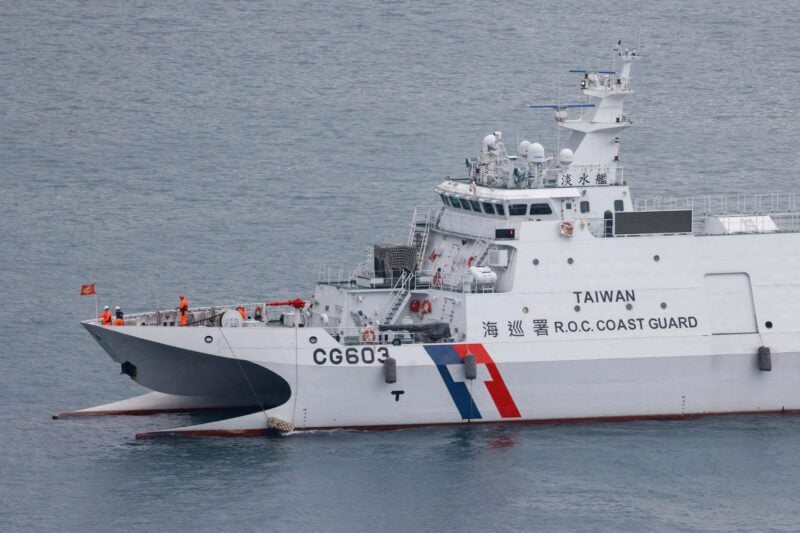
On 31 October, Taiwan’s Coast Guard reported two Chinese ships off Taiwan’s east coast and a separate Chinese Coast Guard ship near Pratas. Taiwan said it had expelled Chinese Coast Guard vessels from Pratas waters 13 times in 2026. Chinese state media presented a ship’s radio broadcast as law enforcement and an offer of help; Taiwan characterised Chinese radio communications as harassment. A 2 November Atlantic Council assessment says Beijing is laying groundwork for an energy quarantine and forecasts the risk to peak in 2028 and 2029. Taiwan’s near-total reliance on seaborne hydrocarbon imports and its view of east-coast waters as critical wartime supply routes establish the exposure, but the supplied reporting does not independently confirm preparations for a quarantine.
Change from previous assessment
Since the 1 November brief, a 2 November Atlantic Council assessment has added a longer-term energy-quarantine concern, forecasting the risk to peak in 2028 and 2029. The same assessment describes Chinese Coast Guard presence east of Taiwan as continuous and aimed at normalising interdictions of commercial traffic. This raises the priority of monitoring energy routes, but does not raise confidence that a blockade is being rehearsed or that a PLA attack is imminent. The prior judgments on sustained Coast Guard pressure and low-confidence near-term attack risk remain.
Key judgments
- China is likely using recurring Chinese Coast Guard patrols east of Taiwan and near Pratas to contest Taipei’s maritime control and normalise a law-enforcement role; the supplied reporting does not verify that Chinese vessels have actually interdicted commercial traffic. On 31 October, Taiwan’s Coast Guard reported two Chinese ships east of Taiwan and another close to Pratas, and said it had expelled Chinese Coast Guard vessels from Pratas waters 13 times in 2026. Chinese state media showed a radio broadcast framed as law enforcement, while Taiwan described the communications as harassment. Confidence is medium: Reuters reporting and Chinese state-media footage support the occurrence of patrols and broadcasts, but the claims about continuous presence and efforts to normalise interdictions rely on a single think-tank assessment, while the characterisation of the broadcasts is disputed. (Confidence: medium · ASSESSED)
- I&W: Confirm: Taiwan’s Coast Guard or Chinese state media identifies another dated Chinese Coast Guard patrol east of Taiwan or near Pratas, with a reported vessel count or position. (0-14 days)
- I&W: Break: Taiwan’s Coast Guard reports no Chinese Coast Guard patrol east of Taiwan or encounter near Pratas for 30 consecutive days. (1-3 months)
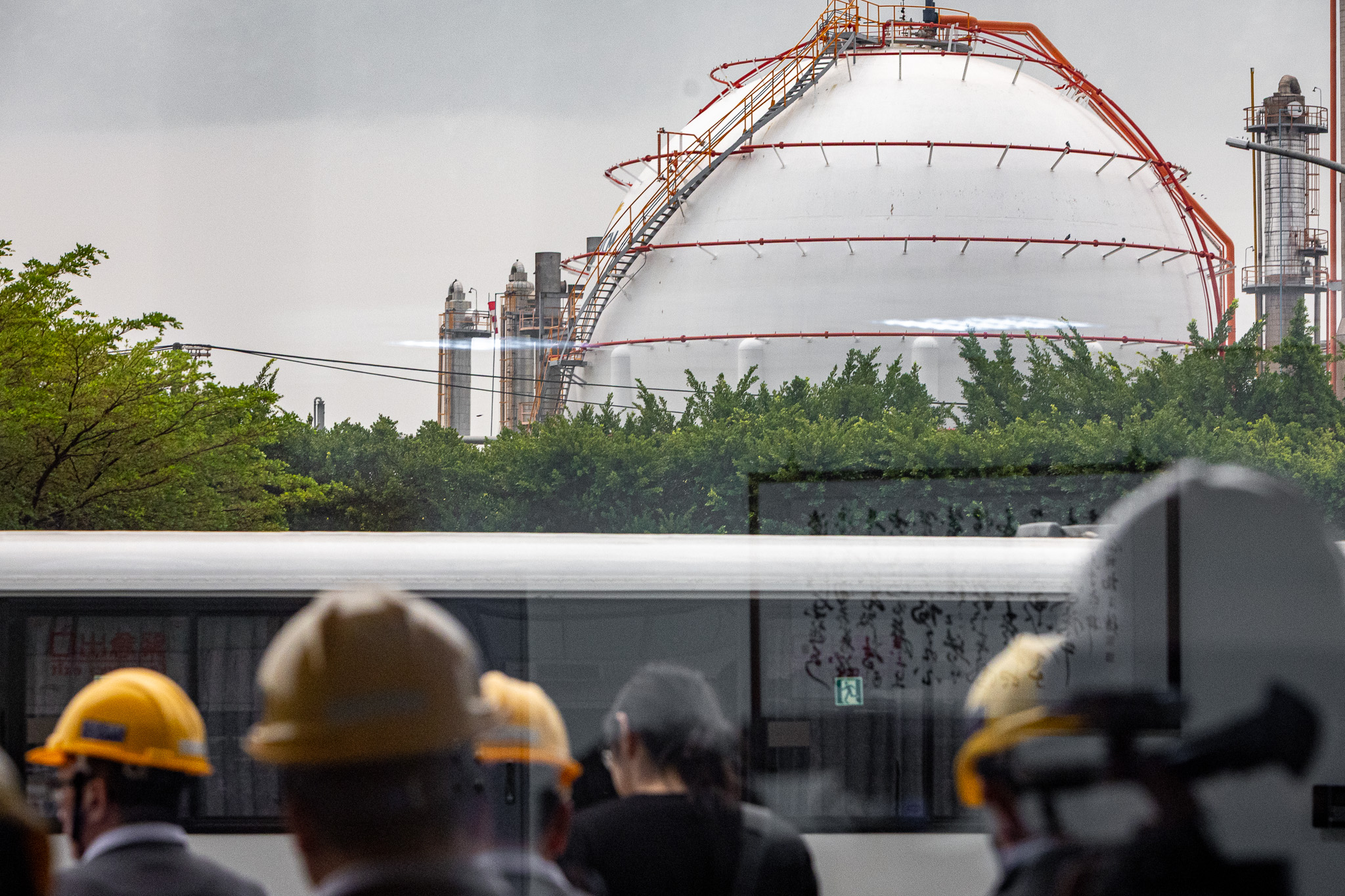
- A Chinese energy quarantine in the next 1-3 months is unlikely on the supplied evidence, although Taiwan’s dependence on seaborne oil, natural gas and coal makes the longer-term risk a planning concern. The Atlantic Council assesses that Beijing is laying groundwork for a quarantine and forecasts risk to peak in 2028 and 2029; Taiwan also regards waters off its east coast as critical to wartime supply routes. Neither the think-tank assessment nor the reporting on patrols independently demonstrates operational preparations to stop energy shipments. Confidence is low because the intent and timeline rest chiefly on one think-tank assessment, with no supplied report confirming an energy-vessel inspection, boarding or diversion. (Confidence: low · ASSESSED)
- I&W: Break: Taiwan’s Coast Guard or a named carrier reports a Chinese Coast Guard boarding, compulsory inspection or diversion of an oil, LNG or coal vessel on a route east of Taiwan. (0-3 months)
- I&W: Confirm: Taiwan Coast Guard releases and carrier notices record no such boarding, inspection or diversion through 2 February 2027, with activity remaining limited to patrols and radio messages. (0-3 months)
- A PLA attack on Taiwan in the next 1-3 months is unlikely on the supplied reporting, which identifies Chinese Coast Guard patrols but does not document PLA attack mobilisation. A low-reliability social-media claim refers to PLA drills around Taiwan but provides no date or operational detail. Confidence is low because the reporting is limited and does not establish the PLA’s force-wide posture or intentions. (Confidence: low · ASSESSED)
- I&W: Break: Taiwan’s Ministry of National Defense reports a PLA live-fire exercise with declared exclusion zones encircling Taiwan or covering its east-coast approaches, alongside mobilisation beyond routine patrols. (0-14 days)
- I&W: Confirm: Taiwan’s Ministry of National Defense reports no PLA attack mobilisation or live-fire exclusion zones around Taiwan through 2 February 2027. (1-3 months)
Outlook & scenarios
Continued Coast Guard pressure without a verified blockade (65%)
Over the next 1-3 months, Chinese Coast Guard patrols continue east of Taiwan and near Pratas. Taiwan’s Coast Guard monitors the ships and disputes Chinese radio messages, while public reporting records no forced diversion or boarding of commercial vessels.
Limited interference with commercial traffic (25%)
Chinese Coast Guard activity escalates from patrols and radio messages to a verifiable inspection, boarding or diversion of commercial traffic, including an energy carrier. The action disrupts a specific voyage but does not become a sustained closure of Taiwan’s maritime approaches.
Wildcard: a maritime incident triggers a wider crisis (10%)
A collision or forced boarding near Taiwan’s east coast or Pratas prompts a rapid response by Taiwan and China. PLA activity follows, turning a Coast Guard encounter into a high-impact cross-strait crisis.
Recommendations
- Maintain a daily incident log for Chinese Coast Guard vessels east of Taiwan and near Pratas. Record date, reported vessel count and position, Taiwan Coast Guard response, radio messages, source and any independently reported effect on commercial traffic.
- Separate Taiwanese and Chinese accounts of radio messages in reporting. Do not treat a radio hail as an interdiction unless a Coast Guard statement, carrier notice or other reporting confirms a boarding, inspection or diversion.
- Track specific evidence of interference with oil, LNG and coal shipments on routes east of Taiwan. Treat a confirmed boarding, compulsory inspection or diversion as a change in the near-term quarantine assessment.
- Keep the 2028-29 energy-quarantine forecast separate from evidence of current Chinese operational preparations. Update the assessment if reporting identifies coordinated Chinese Coast Guard, military, paramilitary or civilian activity involving commercial shipping.
Confidence & uncertainty
Overall confidence is medium because the reported patrols are described in Reuters reporting based on Taiwan Coast Guard statements, while Chinese state-media footage provides a competing account of the radio broadcasts. The occurrence of patrols and Taiwan’s reliance on seaborne hydrocarbons are better supported than Chinese intent, actual commercial interdictions or PLA attack preparations. The energy-quarantine timeline rests chiefly on a single think-tank assessment, and the opposing interpretations of the radio messages remain unresolved.
Alternative analysis (red cell)
The supplied reporting supports a conclusion of insufficient warning evidence, not a directional estimate that a PLA attack is unlikely. Coast Guard patrols and disputed radio messaging in claims, and 9901036d-5dd0-4a4e-8e75-15bb83be1f30 may reflect coercion or signalling, but they do not reveal PLA intent or readiness. On this record, the near-term attack probability is indeterminate at low confidence rather than demonstrably unlikely.
Intelligence gaps
- [EEI 1.1 · UNCOVERED] Concentration of PLA amphibious warfare vessels exceeding 15 ships in Fujian Province naval ports. Recommended collection: imagery/satellite
- [EEI 1.2 · UNCOVERED] Unplanned surge in encrypted communications traffic from PLA Eastern Theater Command headquarters. Recommended collection: SIGINT
- [EEI 1.3 · UNCOVERED] Movement of PLA airborne unit heavy equipment to airbases within 200km of Taiwan Strait. Recommended collection: imagery/satellite
- [EEI 2.1 · UNCOVERED] Daily aggregate count of PLA Air Force sorties within 30km of the median line. Recommended collection: radar
- [EEI 2.2 · UNCOVERED] Number of active PLA naval live-fire exercise zones in Taiwan Strait international waters. Recommended collection: SIGINT
- [EEI 2.3 · UNCOVERED] Positioning of PLA Type 055 destroyers west of 122°E longitude. Recommended collection: maritime/AIS
- [EEI 3.1 · UNCOVERED] Operational activation of Taiwan's Hsiung Feng III coastal defense missile systems. Recommended collection: SIGINT
- [EEI 3.2 · UNCOVERED] Increased cargo aircraft movements to Penghu Islands military installations. Recommended collection: air/ADS-B
Red cell review: PARTIAL DISSENT
TLP:CLEAR