TLP:CLEAR · Disclosure is not limited.
Taiwan Strait: Drone-led defence build-up and regional hardening amid PRC pressure
Time window: Last 1 day · Audience: General analyst · Type: Situation report · DTG: 2026-07-02 10:13Z · Overall confidence: MEDIUM
BLUF
Taiwan is accelerating a drone-centric asymmetric defence push with explicit US backing while Japan hardens its posture, as Beijing expands legal reach and signals naval presence. The near-term risk of miscalculation around Taiwan remains elevated, with uncrewed systems set to feature more prominently in any contingency.
Executive summary
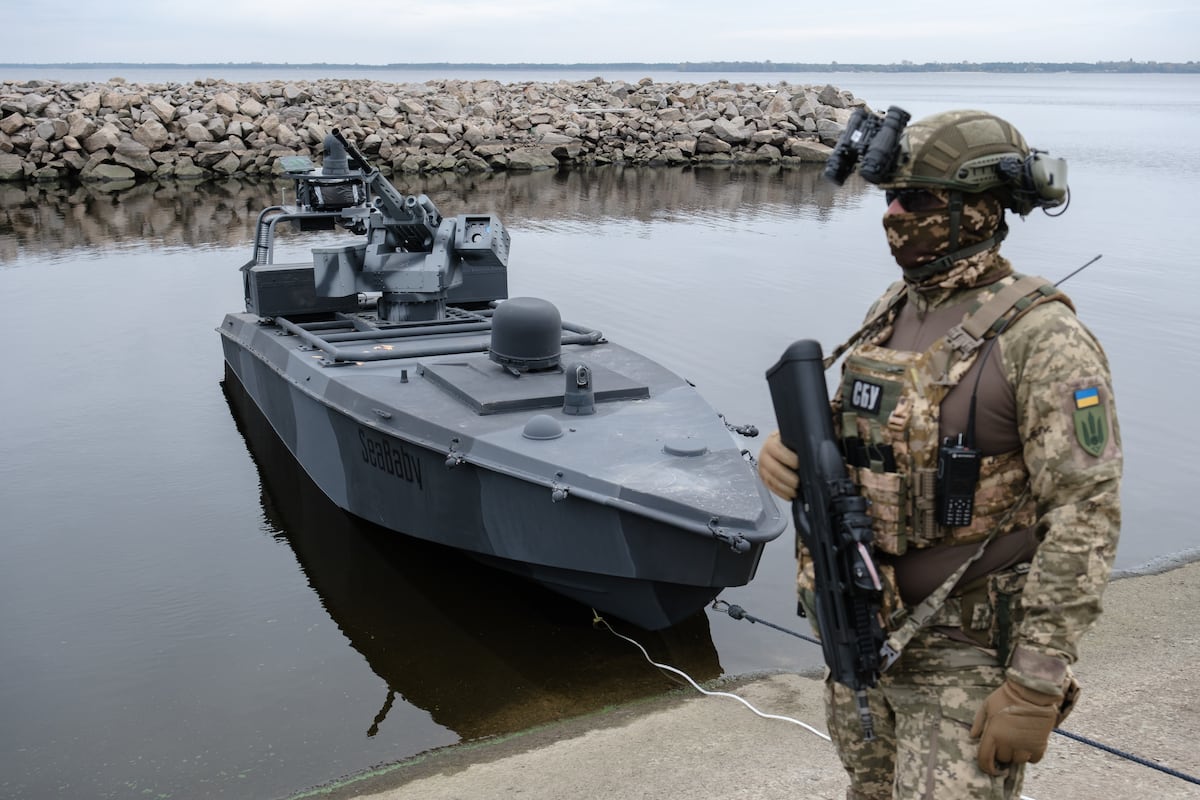
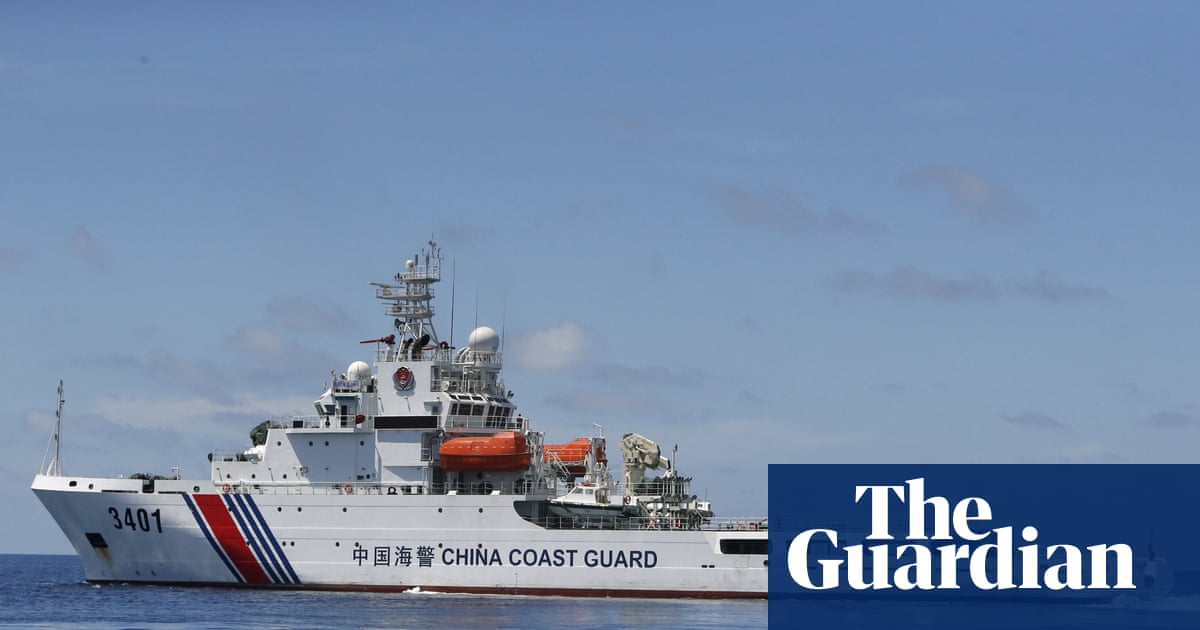
Washington’s top envoy in Taichung urged Taiwan to become a “hornet’s nest” of drones, aligning with President Lai Ching-te’s race-against-time drive for asymmetric capabilities and the Kuomintang’s proposal for a multi-year drone funding bill. The United States continues to back Taiwan’s military modernisation. Japan protested joint Chinese-Russian bomber activity near its airspace, announced new missile launchers on its easternmost island, and loosened defence export rules while exploring transfers to Manila, signalling firmer regional deterrence. Beijing’s Law on the Promotion of Ethnic Unity and Progress took effect, drawing warnings of extraterritorial use and a travel caution from Lai. China’s navy sent the destroyers Nanning and Hengyang to Hong Kong for a public port call, and US forces demonstrated maritime drones at Balikatan as the US Navy plans thousands of small uncrewed surface vessels in the Indo-Pacific by 2030. Foreign investors sold a net 29.6 billion dollars of Taiwan equities in the first half, suggesting risk caution around the island alongside broader regional outflows.
Change from previous assessment
Since the prior brief, the US envoy publicly urged Taiwan to become a “hornet’s nest” of drones, the Kuomintang tabled a six-year drone funding bill, and President Lai reiterated the urgency of asymmetric capabilities. Japan protested joint Chinese-Russian bomber activity, announced new missile launchers on its easternmost island, and advanced defence export reforms while considering transfers to the Philippines. Beijing’s ethnic unity law took effect, drawing warnings about extraterritorial use and a caution from Lai for citizens in China. The PLAN’s Nanning and Hengyang visited Hong Kong, and US forces trialled a Magura maritime drone in Balikatan as the US Navy outlined plans to field thousands of small USVs in the Indo-Pacific by 2030. Foreign investor outflows from Taiwan equities in the first half added a market risk signal. Initial assessment of this topic for this run.
Key judgments
- Taiwan is very likely to accelerate a drone-centric asymmetric defence build-up over the next year, backed by strong US advocacy, an opposition funding bill, and presidential emphasis on speed. (Confidence: high · ASSESSED)
- I&W: Legislative Yuan advances a drone procurement bill to floor vote or passes a multi-year unmanned systems package. (1-3 months)
- I&W: Taiwan’s Ministry of National Defence announces new contract awards for indigenous or allied-made aerial and maritime drones. (1-3 months)
- Japan is likely to intensify deterrent signalling and defence export activism in response to Chinese and Russian military activity, complicating PLA planning around Taiwan’s approaches. (Confidence: medium · ASSESSED)
- I&W: Tokyo announces an actual transfer or approved export pathway for maritime platforms to the Philippines under revised rules. (1-3 months)
- I&W: Deployment milestones for new missile launchers on Japan’s outer islands are published by the Ministry of Defence. (1-3 months)
- Cross-Strait tensions will likely remain elevated in the near term as Beijing couples expanded legal reach with visible signalling and Taipei urges caution for its citizens. (Confidence: medium · ASSESSED)
- I&W: PRC authorities publicly invoke Article 63 against overseas activists or Taiwanese nationals in a named case. (0-14 days)
- I&W: Taiwan’s Mainland Affairs Council reports any formal engagement channel or risk-reduction dialogue with Beijing. (1-3 months)
- Uncrewed maritime systems are very likely to become central to Indo-Pacific naval operations by 2030, shaping any Taiwan contingency and allied training. (Confidence: medium · ASSESSED)
- I&W: US Navy or allies publish procurement or basing updates for large numbers of small uncrewed surface vessels in the Indo-Pacific. (3-6 months)
- I&W: Next Balikatan or regional exercises include live-fire or sinking exercises using USVs or USV-enabled strike packages. (3-6 months)
- Investor risk appetite towards Taiwan is likely cautious, reflected in first-half foreign equity outflows from the island within a broader regional sell-off. (Confidence: medium · ASSESSED)
- I&W: Monthly Taiwan Stock Exchange disclosures show continued net foreign selling against the regional trend. (1-3 months)
- I&W: A shift to net foreign buying in Taiwan alongside high-profile defence procurement announcements. (1-3 months)
Outlook & scenarios
Persistent grey-zone pressure with rapid asymmetric build-up (60%)
Beijing maintains legal and information pressure while keeping naval-air activity below clear red lines. Taipei fast-tracks drone swarms and related asymmetric systems, buoyed by US advocacy and legislative progress, and Washington continues to resource Taiwan’s modernisation. Japan’s export reforms and missile deployments proceed, strengthening coalition deterrence without a major kinetic incident.
Show-of-force surge around Taiwan without direct conflict (35%)
The PLA conducts a conspicuous multi-axis show of force that heightens risk but avoids strikes. Tokyo responds with sharper signalling and accelerated deployments. Taipei leans further into drones and asymmetric tools, and markets register another bout of risk-off towards Taiwan. The episode subsides without escalation to armed conflict but leaves a higher baseline for future crises.
Legal-coercion first, muted at-sea signalling (25%)
Beijing prioritises extraterritorial legal tools and information operations, using the new ethnic unity law to pressure dissidents and Taiwanese communities abroad, while toning down visible naval signalling. Taipei doubles down on citizen cautions and legal countermeasures, but defence procurement timelines proceed, and allies continue uncrewed-systems training and planning.
Recommendations
- Prioritise tracking Taiwan’s drone procurement pipeline: monitor Legislative Yuan calendars and committee readouts for the KMT bill, plus Ministry of National Defence contract notices for aerial and maritime unmanned systems.
- Task an OSINT watch on PRC legal enforcement narratives: collect and translate PRC prosecutorial, state media and police postings referencing Article 63 cases, and flag any mentions of Taiwanese nationals or civic groups.
- Establish a daily maritime-aviation picture: fuse Taiwan defence ministry bulletins, AIS, and public port-call data to follow PLAN surface movements, including follow-on activity after the Nanning and Hengyang Hong Kong visit.
- Track allied posture adjustments: monitor Japan’s Ministry of Defence releases for missile deployment milestones and defence export decisions, and follow Manila’s announcements on naval acquisitions linked to Japanese reforms.
- Map Indo-Pacific uncrewed systems activity: catalogue exercises like Balikatan that trial USVs, and maintain a forward calendar of US Navy small-USV fielding plans that would affect deterrence dynamics around Taiwan.
- Integrate market signals into risk updates: incorporate monthly Taiwan foreign flow data and corporate disclosures into the Taiwan risk dashboard to correlate investor sentiment with defence signalling milestones.
- Coordinate legal-risk guidance with stakeholders: brief travelling analysts and liaison personnel on Taiwan’s caution advisory regarding mainland China, and maintain a repository of PRC legal texts and case exemplars for rapid reference.
Confidence & uncertainty
Overall confidence is medium. Several judgments rest on multiple high-reliability, mutually reinforcing reports: US advocacy for Taiwan’s drone build-up, Lai’s asymmetric push, the KMT’s drone funding proposal, US backing for Taiwan’s modernisation, and Japan’s posture shifts are well documented. Forward-looking elements such as the pace of Taiwan’s procurement, the depth of Japan’s export activism, and the centrality of uncrewed systems by 2030 extend beyond direct reporting and depend on policy execution and budgeting. Reporting does not directly document an increased PLAN presence specifically around Taiwan during this window, which tempers confidence on the intensity of near-term maritime signalling.
Alternative analysis (red cell)
An alternate, more cautious reading of the evidence is defensible across multiple judgments. The reporting mainly shows policy proposals, symbolic actions, and isolated demonstrations (e.g., f42aa82d; Japan export changes be86ff9f/38f3190a; China law f42909be) but lacks the transactional, operational, or contract-level indicators needed to conclude rapid, sustained escalation within near-term windows. Plausible outcomes thus range from targeted, incremental changes to deeper shifts, and priority collection should focus on procurement, contractual, and operational indicators to discriminate among them.
Intelligence gaps
- [EEI 1.1 · UNCOVERED] Number, type, and precise locations (latitude/longitude or named sea areas) of PLAN surface combatants, amphibious ships, and auxiliaries operating within 200 nautical miles of Taiwan or transiting the Taiwan Strait over the past 72 hours. Recommended collection: maritime/AIS
- [EEI 1.2 · UNCOVERED] NOTAMs, maritime safety warnings, or official PRC civil/maritime notices that close or restrict airspace/sea lanes around Taiwan, and any concurrent cancellation of commercial ferry or airline services to/from Taiwanese ports/airports. Recommended collection: open-source/diplomatic
- [EEI 1.3 · PARTIAL] Number and sortie patterns of PLA air assets (fighters, bombers, airborne early warning, aerial refuellers) crossing the median line or entering Taiwan ADIZ, including time-on-station and armament indications (e.g., weapons pylons loaded). Recommended collection: air/flight-radar
- [EEI 2.1 · UNCOVERED] Location and composition of any PLAN carrier strike groups or task forces within the Western Pacific (carrier identity, escort ships, embarked air wing size and aircraft types) and recent underway replenishment events. Recommended collection: satellite/imagery
- [EEI 2.2 · UNCOVERED] Presence, numbers, and readiness indicators of amphibious assault ships, large landing craft, and pre-positioned amphibious equipment at eastern PRC ports (Fujian, Zhejiang, Guangdong), including evidence of loading, embarkation or training ramps/vehicles staged for embarkation. Recommended collection: maritime/AIS
- [EEI 2.3 · UNCOVERED] Submarine activity: detections or reported transits of PLAN attack or ballistic submarines on routes between mainland bases and patrol areas around Taiwan, and indications of increased sonar/contact reports or anti-submarine warfare activity by regional navies. Recommended collection: undersea/acoustic
- [EEI 3.1 · UNCOVERED] Movements and positions of US and allied naval and air forces (carrier strike groups, amphibious ready groups, maritime patrol aircraft) toward the Taiwan region, including orders to sortie, transit times, and change in deployment status. Recommended collection: maritime/AIS
- [EEI 3.3 · UNCOVERED] Commercial indicators of regional escalation: rapid increases in war-risk insurance premiums for Taiwan-related sea lanes, suspension of shipping lines or insurance-backed rerouting, and major port/terminal closures affecting logistic lifelines. Recommended collection: financial/insurance
Cited sources
[1] jpost.com · A hornet's nest of drones is needed to save Taiwan from conflict, says US diplomat (B) · sha256:cecf118b7e64 [2] aljazeera.com · Taiwan needs to become a ‘hornet’s nest’ of drones, US diplomat says (A) · sha256:2d55ec60cd12 [3] theguardian.com · China has accused Japan of ‘reckless militarism’. What’s behind the latest tensions? (A) · sha256:fa8928d2c20a [4] janes.com · Feature: Japan's export reforms reshape defence strategy (C) · sha256:bf7a44ce9478 [5] aljazeera.com · China’s new ethnic unity law extends its legal reach overseas (A) · sha256:4cbc97666d7c [6] China Xinhua News · 2日上午,中国海军南宁舰、衡阳舰抵达香港,开启为期5天的系列开放参观和文化交流活动。赴香港海军舰艇编队有哪些“硬核看点”?提前带你登舰参观。 | China Xinhua News (E) · sha256:67ce9a0cd76f [7] Defense News · Ukraine is launching strike-drones from everything – including Black Sea robo-boats (A) · sha256:d8aaf0ecfa70 [8] kitco.com · Foreigners dump Asia stocks at record pace as AI winners get crowded (B) · sha256:c894ae06dc3f
Source content hashes were computed at collection time; the cited text is preserved unmodified for the life of this product.
Red cell review: PARTIAL DISSENT
TLP:CLEAR