TLP:CLEAR · Disclosure is not limited.
Taiwan Strait: Early-November Naval Activity and Near-Term Risks
Time window: Last 7 days · Audience: General analyst · Type: Situation report · DTG: 2026-11-23 19:06Z · Overall confidence: HIGH
BLUF
A broad PLA and China Coast Guard deployment across the Western Pacific in late October and early November very likely occurred, but the reported peak of more than 100 vessels is not an independently verified current force near Taiwan. Prioritise renewed activity and quarantine indicators over an amphibious invasion warning, which remains unlikely on the supplied evidence.
Executive summary
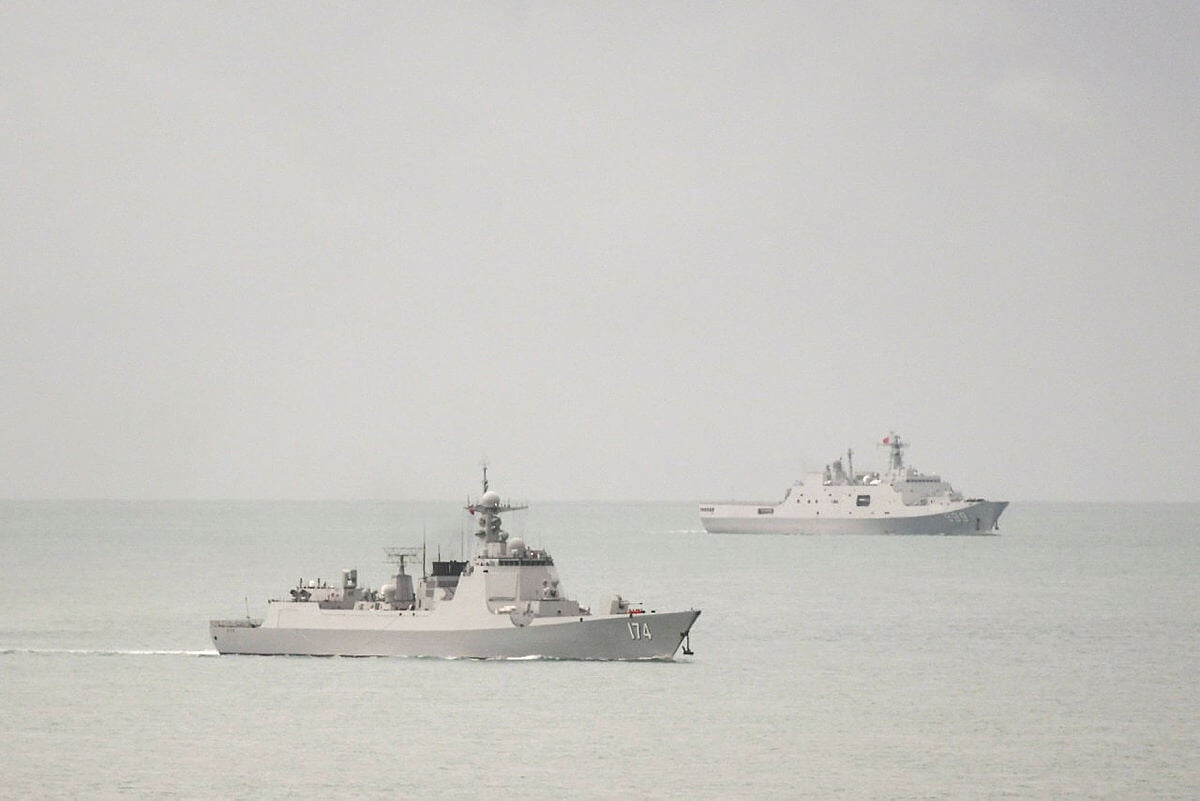
Taiwan security authorities reported 53 Chinese naval and government vessels, including 34 warships, along a line from southern Japan to Taiwan and the Philippines on 28 October. Taiwan officials later reported a peak above 100 PLA Navy and China Coast Guard vessels in the Western Pacific around 3 November; a subsequent report put the count at about 70 on 13 November. Taiwan also reported 49 PLA aircraft sorties in the 24 hours to 06:00 on 4 November, with 31 entering its air defence identification zone. These figures cover different dates and areas; a separate tally of 12 ships and six aircraft has no stated reporting window. Taiwan officials described the activity as area-denial or a silent exercise, while the supplied reporting says China had not announced a unified exercise involving the multiple formations. On 19 November, Xi Jinping and Donald Trump made public statements on Taiwan, but the supplied reporting describes no agreement. Separate reporting assesses that China’s Type 004 carrier in Dalian could launch as early as 2027, while one analyst estimates deployment would take five to ten years. The reporting does not establish a current blockade or imminent invasion. A US-China Economic and Security Review Commission assessment identifies quarantine or blockade as a risk through 2028.
Change from previous assessment
Since the 22 November brief, the vessel picture is more specific: the supplied reporting describes a peak above 100 vessels around 3 November and a later count of about 70 on 13 November. This refines the earlier caveat that the 100-plus figure was unverified ship by ship, but does not resolve the count’s scope or provide independent vessel-by-vessel confirmation. This brief adds the 19 November Xi-Trump Taiwan statements and reporting on the Type 004 carrier. It retains the prior assessment that the supplied reporting does not establish a current blockade and that a full-scale invasion is unlikely, while adding explicit amphibious-capacity constraints and elevating quarantine or blockade as the principal high-impact coercive risk through 2028. No settled prior forecast outcomes were provided for calibration.
Key judgments
- A broad PLA and China Coast Guard deployment across the Western Pacific in late October and early November very likely occurred, but the evidence does not establish a 100-plus-ship force in or near the Taiwan Strait or a present-day concentration. Taiwan security authorities reported 53 Chinese naval and government vessels, including 34 warships, on 28 October. Taiwan officials reported a peak above 100 vessels around 3 November, followed by a reported count of about 70 on 13 November. Taiwan also reported 49 PLA aircraft sorties in the 24 hours to 06:00 on 4 November, with 31 entering air defence identification zone sectors. The figures have different scopes and reporting windows. A separate item listing 12 ships and six aircraft gives no date or window, so it cannot be reconciled with the other counts. Taiwan officials characterised the activity as area-denial or a silent exercise; the supplied reporting says China had not announced a unified multi-formation exercise. (Confidence: medium · ASSESSED)
- I&W: Confirm a renewed surge if Taiwan or Japanese official releases record more than 50 Chinese naval or coast guard vessels across the first island chain on at least three consecutive days. (0-14 days)
- I&W: Weaken the surge assessment if Taiwan reports fewer than 20 Chinese vessels in its daily releases for seven consecutive days and Japan reports no associated deployments. (0-14 days)
- A full-scale contested amphibious invasion of Taiwan in the next 1-3 months is unlikely on the supplied evidence. A military assessment says the PLAN has fewer than 100 dedicated amphibious transport ships and insufficient capacity for such an invasion; another assessment says genuine joint integration remains nascent. These assessments address capability constraints, not current mobilisation, and the supplied reporting does not provide a current force-generation picture. Confidence is low for that reason. (Confidence: low · ASSESSED)
- I&W: Raise the invasion warning if official Taiwan or Japanese reporting identifies PLAN amphibious transports and civilian roll-on/roll-off ships concentrating at embarkation ports alongside sustained troop mobilisation. (0-3 months)
- I&W: Weaken the warning if no such concentration or mobilisation is reported and observed activity remains limited to naval and carrier exercises. (0-3 months)
- A quarantine or blockade is likely to be the principal high-impact coercive risk through 2028, rather than a full-scale amphibious invasion; this is a risk prioritisation, not a forecast that an operation is imminent. The US-China Economic and Security Review Commission assesses that the risk of quarantine or blockade may rise as Beijing evaluates whether coercion can advance unification. The supplied reporting also describes Taiwan’s dependence on imported energy and China’s broader effort to build coercive capabilities. (Confidence: medium · ASSESSED)
- I&W: Confirm rising quarantine risk if Chinese authorities announce inspection or exclusion zones around Taiwan, or the China Coast Guard begins boarding or diverting commercial vessels. (0-14 days)
- I&W: Weaken the near-term risk assessment if no inspection measures or route restrictions appear and commercial shipping continues without reported diversions. (1-3 months)
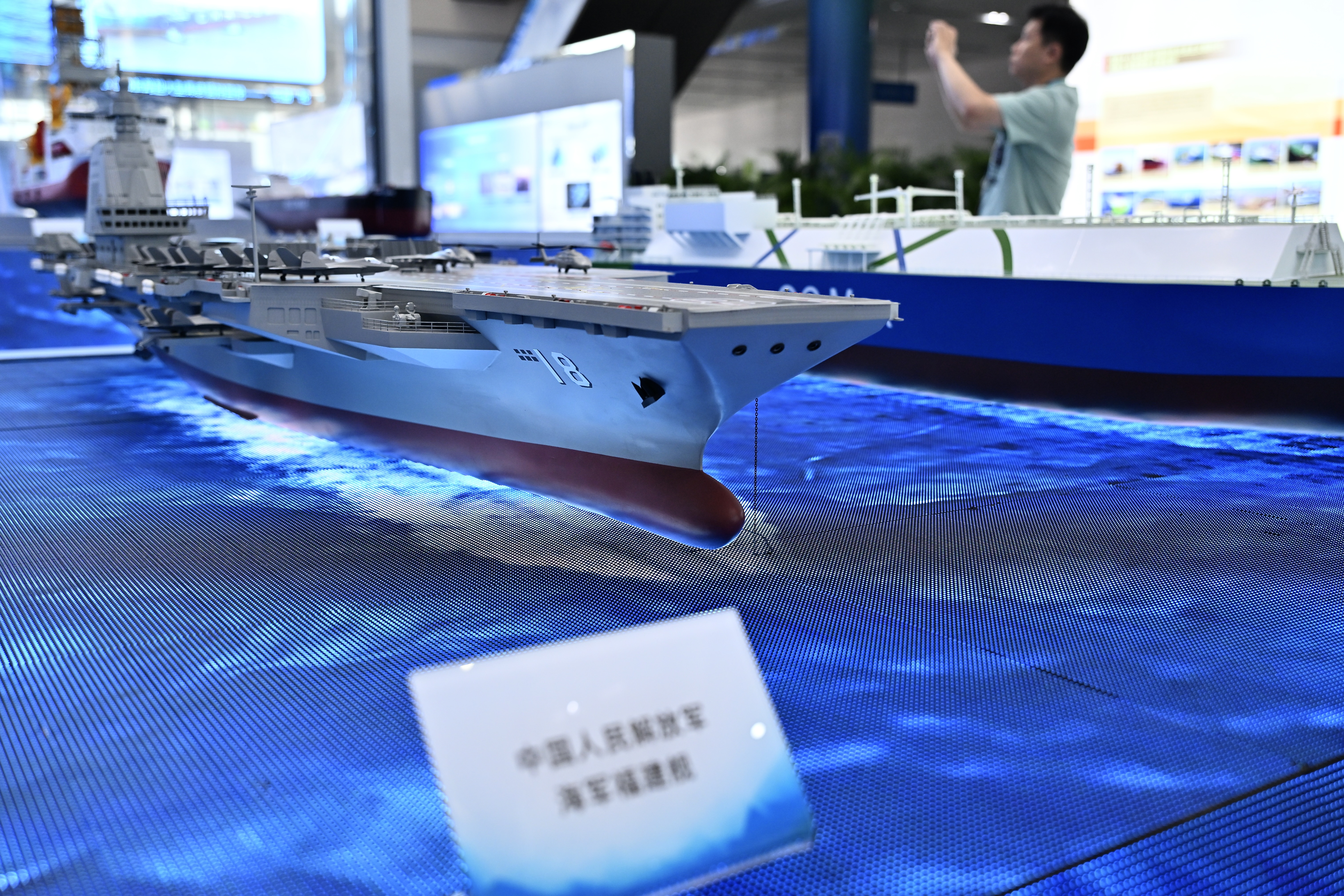
- The Type 004 carrier under construction in Dalian is reported to be nearing a possible 2027 launch, but it is unlikely to become an operational factor in the near term. CSIS and media reporting describe the hull’s construction and a possible launch as early as 2027; one analyst estimates deployment would take five to ten years. The operational timeline rests on a single analyst’s estimate. (Confidence: medium · ASSESSED)
- I&W: Confirm the projected launch timetable if commercial satellite imagery shows the hull launched or moved into fitting-out activity during 2027; reassess if imagery shows no launch by the end of that year. (1-14 months)
- I&W: Break the long deployment estimate if the PLAN commissions the carrier or conducts operational carrier-air-wing deployments within three years of launch. (1-5 years)
- The 19 November Xi-Trump meeting did not produce a reported Taiwan settlement. Xi urged the US side to handle the Taiwan question carefully, while Trump said the US does not support Taiwan independence. The supplied account documents public positions but reports no Taiwan-related agreement or change in military posture. (Confidence: medium · REPORTED)
- I&W: Reassess if subsequent official Chinese or US readouts specify a new Taiwan-related commitment or understanding from the meeting. (0-14 days)
Outlook & scenarios
Activity remains below the early-November peak (55%)
Over the next 1-3 months, PLA and China Coast Guard patrols and training continue, but publicly reported vessel counts remain below the early-November peak. No announced inspection zones or sustained commercial shipping disruption emerge.
Renewed multi-formation exercise (25%)
PLA naval activity rises again across the Western Pacific. Taiwan or Japan reports a sustained increase in vessel numbers, and Taiwan officials describe the activity as area-denial training or an exercise involving multiple formations.
Coercive quarantine operation (17%)
Beijing announces maritime inspection or exclusion measures around Taiwan, followed by China Coast Guard enforcement or commercial vessel diversions. Taiwan’s dependence on imported energy would make sustained route disruption a central indicator of impact.
Full-scale invasion mobilisation (3%)
The PLA begins visible amphibious force generation, including transport concentration and troop mobilisation. This is a low-probability, high-impact scenario; the supplied reporting describes capability constraints and does not report such mobilisation.
Recommendations
- Maintain a dated vessel and aircraft ledger using Taiwan and Japanese official releases. Record the reporting window, geographic scope, vessel category and aircraft sortie count separately; do not combine Western Pacific totals with Taiwan Strait counts.
- Treat the more-than-100-vessel figure as a reported peak, not a ship-by-ship verified count or a current deployment. Seek independent confirmation before using it as an indication of force posture.
- Prioritise observable quarantine indicators: published inspection rules, declared exclusion zones, China Coast Guard boardings or diversions, commercial route changes and reported delays to energy shipments.
- Track amphibious transport concentration and mobilisation separately from carrier or surface-ship training. Escalate the invasion assessment only if reporting identifies concrete force-generation activity.
- Follow commercial satellite imagery of the Type 004 construction site in Dalian, but keep its projected launch and eventual operational deployment separate in near-term assessments.
- Review official readouts and public statements following the Xi-Trump meeting for specific Taiwan-related commitments. Do not infer a policy change from the reported statements alone.
Confidence & uncertainty
Overall confidence is high for the broad event picture and policy context because the reporting set includes official Taiwan accounts, reporting attributed to Reuters, major-media coverage of the Xi-Trump meeting, and CSIS and Defense News reporting on the Type 004. Confidence is lower on exact ship counts and operational intent: the reported tallies cover different areas and time windows, one Taiwan tracking item gives no window, and interpretations of the early-November activity rely partly on official Taiwanese characterisations and social-media summaries.
Alternative analysis (red cell)
The evidence does not justify a directional estimate that a full-scale invasion is unlikely in the next 1-3 months. Claims, and d4d545e1-3644-487f-938e-e269b0947e51 identify structural limitations, but provide no current mobilisation or force-generation data. A more defensible reading is that invasion risk cannot be reliably distinguished from low probability on the supplied evidence.
Intelligence gaps
- [EEI 1.1 · UNCOVERED] Concentration of PLA amphibious warfare vessels exceeding 15 ships in Fujian Province naval ports. Recommended collection: imagery/satellite
- [EEI 1.2 · UNCOVERED] Unplanned surge in encrypted communications traffic from PLA Eastern Theater Command headquarters. Recommended collection: SIGINT
- [EEI 1.3 · UNCOVERED] Movement of PLA airborne unit heavy equipment to airbases within 200km of Taiwan Strait. Recommended collection: imagery/satellite
- [EEI 2.1 · PARTIAL] Daily aggregate count of PLA Air Force sorties within 30km of the median line. Recommended collection: radar
- [EEI 2.2 · PARTIAL] Number of active PLA naval live-fire exercise zones in Taiwan Strait international waters. Recommended collection: SIGINT
- [EEI 2.3 · UNCOVERED] Positioning of PLA Type 055 destroyers west of 122°E longitude. Recommended collection: maritime/AIS
- [EEI 3.1 · PARTIAL] Operational activation of Taiwan's Hsiung Feng III coastal defense missile systems. Recommended collection: SIGINT
- [EEI 3.2 · UNCOVERED] Increased cargo aircraft movements to Penghu Islands military installations. Recommended collection: air/ADS-B
Red cell review: PARTIAL DISSENT
TLP:CLEAR