Taiwan Strait: Gray-Zone Pressure Intensifies as Taiwan Accelerates Littoral Denial
Time window: Last 7 days · Audience: General analyst · Type: Situation report · DTG: 2026-06-09 11:20Z · Overall confidence: MEDIUM
BLUF
PRC maritime ‘law-enforcement’ activity and PLA tracking of third-country warships near Taiwan have intensified, heightening the likelihood of gray‑zone encounters and miscalculation. Taiwan is simultaneously expanding a dense anti‑ship and littoral defense posture and building civilian resilience, signaling a sustained, competitive security trajectory.
Executive summary
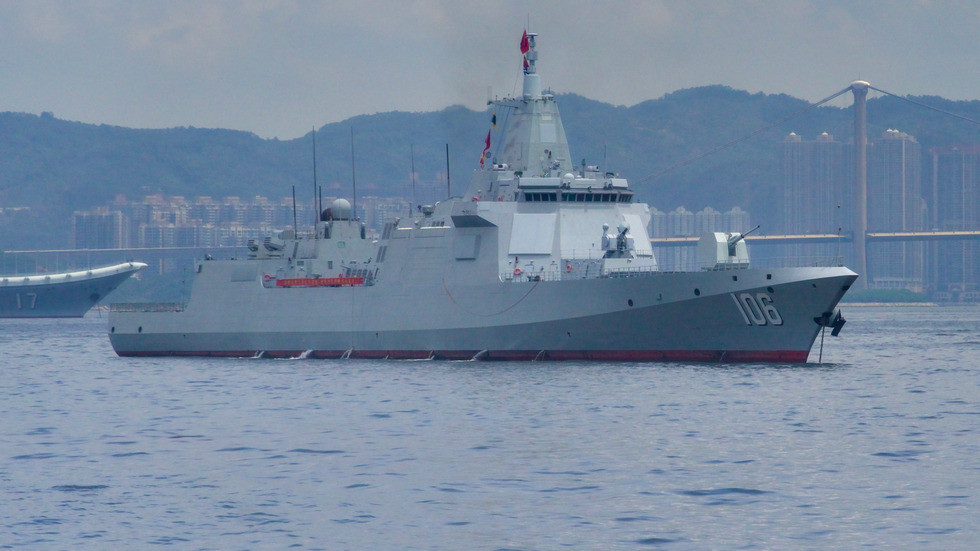
During the 2-9 June 2026 window, the Chinese military reported tracking the Dutch frigate HNLMS De Ruyter near Taiwan amid conflicting location claims, while Beijing’s ‘special maritime law-enforcement’ posture east and south of the island has included Chinese government vessels monitored from Xiamen and multiple Taiwan Coast Guard deployments to expel and warn off intrusions. Beijing publicly denounced Japan, Philippines maritime delimitation talks and continues to frame Taiwan as a non‑negotiable core interest and external support for ‘Taiwan independence’ as destabilizing. Taiwan is advancing toward a robust littoral denial posture, adding large numbers of Harpoon and Hsiung Feng anti‑ship missiles and organizing a Littoral Combat Command, while pursuing whole‑of‑society resilience and counter‑disinformation.
Key judgments
- Likely PRC is using Coast Guard and ‘special maritime law-enforcement’ operations east and south of Taiwan to contest jurisdiction and test Taiwan’s responses, with Taiwan’s Coast Guard expelling four Chinese government ships from restricted southern waters, deploying seven, and at least five, vessels to warn away and respond, and monitoring four Chinese government vessels departing Xiamen; Taiwan reports a recent rise in Chinese Coast Guard activity. (Confidence: medium)
- Likely the PLA Eastern Theater Command will continue to track and publicize foreign naval transits near Taiwan, as indicated by the 5 June 2026 tracking of Dutch frigate HNLMS De Ruyter and an ETC vigilance statement; however, conflicting reporting on whether the frigate was in the Taiwan Strait or the South China Sea lowers confidence on precise thresholds. (Confidence: medium)
- Very likely Taiwan is executing a dense anti‑ship and littoral denial strategy toward early 2029, with 450 Harpoons already received, U.S.-approved sales of 195 additional Harpoon‑series missiles ($1.36B), targets of 850 Harpoons and 1,000 domestic Hsiung Feng II/III (total up to 1,850 anti‑ship missiles), creation of a Littoral Combat Command, and an extra $25B appropriation for U.S. munitions. (Confidence: medium)
- Almost certainly Beijing will resist third‑party involvement on Taiwan issues, treating Taiwan as a non‑negotiable ‘core interest,’ blaming ‘external forces’ for destabilization, and anchoring its position in UNGA Resolution 2758 and PRC sovereignty, signaling sustained diplomatic and paramilitary pressure against moves such as Japan, Philippines maritime delimitation talks. (Confidence: high)
- Likely risk of tactical miscalculation is elevated during close Taiwan, PRC Coast Guard interactions and PLA tracking of third‑party warships, given repeated expulsions in restricted waters, multi‑ship Taiwan deployments, and publicized monitoring of HNLMS De Ruyter. (Confidence: medium)
- Likely Taiwan is building whole‑of‑society resilience against PRC pressure, combining civil defense training of over 100,000 citizens, identification of 45,000 official Chinese accounts spreading three million false posts, a pivot to unmanned systems production, and a declared posture of preparing to defend without seeking confrontation. (Confidence: medium)
- Roughly even chance the current intensity of PRC ‘special maritime’ activity east of Taiwan is partly calibrated signaling linked to the 28 May Tokyo announcement by Japanese PM Sanae Takaichi and Philippine President Ferdinand Marcos Jr. on maritime delimitation, denounced by Beijing as infringing waters east of Taiwan, though the causal link rests on single‑source reporting and is thus uncertain. (Confidence: low)
Outlook & scenarios
Sustained gray-zone campaign around Taiwan’s south and east, 60%
PRC Coast Guard and ‘special maritime law‑enforcement’ operations persist in waters east and south of Taiwan, with periodic entries into restricted zones and Taiwan Coast Guard expulsions and multi‑ship responses (including monitoring of departures from Xiamen). PLA publicly highlights foreign warship transits, reinforcing pressure without major kinetic escalation.
Escalatory demonstration replicates 2022 patterns, 30%
A political trigger (e.g., allied maritime talks or a high‑profile transit) prompts the PLA Eastern Theater Command to stage theater‑level drills akin to August 2022, including large live‑fire events and missile launches into surrounding waters (Japan previously reported five landing in its EEZ during 2022), while avoiding direct strikes on Taiwan.
Tactical incident cascades into limited coercive quarantine, 10%
A collision or near‑miss during a Coast Guard encounter in restricted waters triggers rapid PRC escalation, using ‘special maritime law‑enforcement’ to interdict shipping in selected approaches. Taiwan surges littoral assets to contest access as PLA amplifies monitoring and messaging; crisis management channels are strained.
Partial de‑escalation through signaling and diplomacy, 20%
Beijing modestly reduces operational tempo after securing messaging wins (e.g., Japan’s assertion that any JP, PH delimitation agreement is not legally binding on third parties) and amid broader emphasis on stable U.S., China relations, but retains regular gray‑zone pressure and rapid surge capacity.
Recommendations
- Establish persistent OSINT maritime domain awareness focused on the eastern and southern approaches to Taiwan and the Port of Xiamen to map Chinese government vessel patterns, cueing on reported departures and recent rises in Coast Guard activity.
- Produce an order‑of‑battle and delivery timeline for Taiwan’s anti‑ship missile buildup, Harpoon and Hsiung Feng variants, integrating open reporting on received stocks, approved sales, projected totals by early 2029, and the Littoral Combat Command’s role in employment.
- Track PLA Eastern Theater Command communications and publicized intercept/tracking events (e.g., HNLMS De Ruyter) to map thresholds and messaging patterns; explicitly log location discrepancies to inform warnings on potential misperception.
- Develop a coded dataset of PRC ‘special maritime law‑enforcement’ operations (dates, units, locations, declared legal pretexts) and correlate with allied diplomatic triggers such as Japan, Philippines maritime delimitation actions to assess signaling linkages.
- Expand monitoring of Taiwan’s counter‑disinformation posture and civil defense training outputs (e.g., identified official Chinese accounts and citizen training throughput) to assess resilience gains and likely impact on PRC information operations.
- Coordinate with partner analysts tracking Dutch, Japanese, and Philippine activities to reconcile contested location reporting and ensure common operating pictures ahead of third‑country transits or talks that may prompt PRC responses.
- Run incident‑response red‑teaming on Coast Guard engagements in restricted waters to refine indicators and warnings for miscalculation, tied to observable Taiwan deployments (e.g., multi‑ship sorties) and PRC incursion patterns.
Confidence & uncertainty
Overall confidence is medium. Several judgments rely on multiple, mutually reinforcing reports (official PRC statements; MarineLink reporting on Taiwan Coast Guard actions; Taiwanese reporting of increased Chinese Coast Guard activity), but some key items involve medium‑reliability sources and single‑source causal attributions (e.g., PRC operations ‘in response’ to Japan, Philippines talks). There are explicit contradictions over the exact location of HNLMS De Ruyter (Taiwan Strait versus South China Sea), lowering confidence on precise thresholds even as PLA tracking is credibly reported. Uncertainties include the scale and duration of PRC ‘special maritime’ operations, the immediate triggers for operational surges, and the delivery cadence of Taiwan’s missile acquisitions.