TLP:CLEAR · Disclosure is not limited.
Taiwan Strait: Large Chinese deployments reported, exercise intent unconfirmed
Time window: Last 7 days · Audience: General analyst · Type: Situation report · DTG: 2026-11-09 19:08Z · Overall confidence: HIGH
BLUF
Taiwan-side reporting points to a broad Chinese maritime and air presence around Taiwan and across the Western Pacific in early November. A blockade-focused exercise is a roughly even chance explanation, but the reporting does not establish an exercise order or an imminent attack.
Executive summary
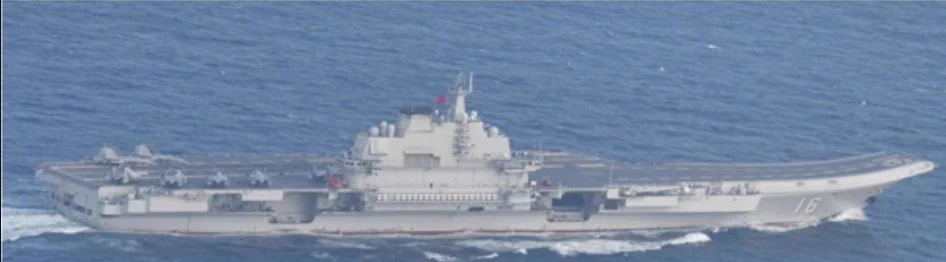
Taiwan National Security Council Secretary-General Joseph Wu said on 3 November that more than 100 Chinese navy and coast guard vessels were active across the Western Pacific, from waters around Taiwan to the Philippine Sea. The Institute for the Study of War identified four naval formations between Taiwan and Guam involving the Eastern, Northern and Southern Theater Commands, using positions published by Taiwan. Taiwan's Ministry of National Defense also reported 49 Chinese aircraft sorties in the 24 hours to 06:00 on 3 November, including 36 towards southern Taiwan. A separate report described 21 aircraft, eight naval vessels and eight official ships near Taiwan, but the supplied record does not give its event date. The blockade-exercise interpretation is analytic, not a reported PLA announcement. The scale of activity is better supported than its purpose; most operational figures reach the record through social-media posts.
Change from previous assessment
Since the 8 November brief, new reporting adds Joseph Wu's 3 November account of more than 100 Chinese navy and coast guard vessels across the Western Pacific, the Institute for the Study of War's identification of four formations between Taiwan and Guam, and Taiwan's report of 49 aircraft sorties in 24 hours, including 36 towards southern Taiwan. Confidence in a broad early-November deployment rises from low to medium. The blockade-exercise interpretation remains unconfirmed and low confidence; the attack estimate remains unlikely with low confidence.
Key judgments
- A broad Chinese naval and coast guard presence across the Western Pacific was likely present in early November. Joseph Wu reported more than 100 vessels operating from around Taiwan to the Philippine Sea on 3 November; the Institute for the Study of War identified four formations between Taiwan and Guam involving the PLA Eastern, Northern and Southern Theater Commands. The reporting converges on dispersed activity, but the vessel figures are relayed through social-media posts and the formation analysis draws on Taiwan-released positions, limiting independent corroboration. (Confidence: medium · REPORTED)
- I&W: Taiwan's National Security Council or Ministry of National Defense publishes follow-up vessel positions that again place large numbers of Chinese navy and coast guard vessels around Taiwan and towards the Philippine Sea. (0-14 days)
- I&W: Taiwanese reporting corrects the vessel count or shows that the reported formations were not separate groups between Taiwan and Guam. (0-14 days)
- There is a roughly even chance that a coordinated blockade rehearsal explains the deployments. On 6 November, the Institute for the Study of War described an undeclared exercise simulating a blockade of Taiwan and preventing outside military intervention as an interpretation of the deployments; the supplied reporting does not establish a PLA exercise order or announcement. This judgement rests on one analytical interpretation of positions published by Taiwan, so confidence is low. (Confidence: low · ASSESSED)
- I&W: PLA or Taiwan authorities publish exercise dates, operating areas or tasks explicitly involving blockade operations around Taiwan. (0-14 days)
- I&W: Taiwan's follow-up position reports show the four formations dispersing, with no continued coordinated presence between Taiwan and Guam. (0-14 days)
- A PLA attack on Taiwan in the next 1-3 months is unlikely on the supplied reporting, but confidence is low. The claims report Chinese deployments and Taiwan's account of 49 aircraft sorties in 24 hours, not an attack decision or an invasion-force assembly. Michael Bosack of the Parley Policy Initiative cited PLA challenges in operational distance, ship survivability and sustained resupply; that is a single, social-media-relayed assessment rather than corroborated operational reporting. (Confidence: low · ASSESSED)
- I&W: Taiwan's Ministry of National Defense reports a sustained rise above the 49 aircraft sorties recorded in the 24 hours to 06:00 on 3 November, alongside continued large naval concentrations. (0-14 days)
- I&W: Taiwanese reporting shows the reported formations dispersing and aircraft activity falling from the early-November levels. (1-3 months)
Outlook & scenarios
Continued military pressure without a declared exercise (55%)
Chinese naval and coast guard activity around Taiwan and across the Western Pacific continues, while Taiwan reports further aircraft sorties. No formal exercise announcement appears, and the deployments remain an indicator of pressure rather than proof of a blockade rehearsal.
Blockade-focused rehearsal (25%)
The reported formations operate in a coordinated pattern consistent with a blockade rehearsal and efforts to impede outside military intervention. A public exercise announcement is not required for this scenario, but the current reporting does not establish that this is the PLA's purpose.
Dispersal and reduced activity (15%)
The formations between Taiwan and Guam disperse, and subsequent Taiwan reporting shows fewer aircraft and vessels near Taiwan. The early-November activity then remains a short-lived deployment rather than a sustained exercise.
Low-probability, high-impact maritime incident (5%)
A Chinese coast guard attempt to normalise interdictions of commercial traffic east of Taiwan leads to a confrontation at sea. The incident prompts a rapid rise in military activity and increases the risk of escalation.
Recommendations
- Keep the reported deployment picture separate from assessments of PLA intent. Describe the blockade-exercise interpretation as unconfirmed unless reporting establishes coordinated tasks or an exercise order.
- Reconcile Taiwan's report of more than 100 vessels with the four formations identified between Taiwan and Guam. Record the source, timestamp, location and whether each report refers to navy or coast guard vessels before comparing counts.
- Track Taiwan Ministry of National Defense aircraft and vessel reporting by day, including the reported concentration of sorties towards southern Taiwan. Flag sustained increases alongside continued naval concentrations for reassessment of the attack estimate.
- Monitor reporting on Chinese coast guard activity east of Taiwan and any reported interdiction of commercial traffic. Treat a confirmed interdiction as a distinct escalation indicator, not as evidence by itself of an invasion decision.
Confidence & uncertainty
High headline confidence applies to the broad reported presence of Chinese military and coast guard activity: several claims converge on deployments across the Western Pacific, Taiwan-attributed accounts give specific aircraft and vessel figures, and the Institute for the Study of War analysed positions published by Taiwan. The main figures are relayed through social-media posts, and the formation analysis is not independent of Taiwan's position reporting. Confidence is therefore lower in the exact scale and inferences about exercise purpose or attack risk.
Alternative analysis (red cell)
The reported formations and aircraft activity could reflect signaling, routine power projection, or contingency training rather than a coordinated blockade rehearsal. The only explicit blockade interpretation is ISW's assessment (00330167-e426-42bb-9f50-b3f24add18c5), and the underlying reports (e88e2b86-2db2-436e-a707-fd56f8b0c251; 0bdb4e3f-d54b-403a-8fde-8ee452ee8f2d) do not demonstrate common command or synchronized objectives. On the supplied evidence, a materially lower probability than even odds for the blockade-rehearsal explanation is defensible.
Intelligence gaps
- [EEI 1.1 · UNCOVERED] Concentration of PLA amphibious warfare vessels exceeding 15 ships in Fujian Province naval ports. Recommended collection: imagery/satellite
- [EEI 1.2 · UNCOVERED] Unplanned surge in encrypted communications traffic from PLA Eastern Theater Command headquarters. Recommended collection: SIGINT
- [EEI 1.3 · UNCOVERED] Movement of PLA airborne unit heavy equipment to airbases within 200km of Taiwan Strait. Recommended collection: imagery/satellite
- [EEI 2.1 · PARTIAL] Daily aggregate count of PLA Air Force sorties within 30km of the median line. Recommended collection: radar
- [EEI 2.2 · UNCOVERED] Number of active PLA naval live-fire exercise zones in Taiwan Strait international waters. Recommended collection: SIGINT
- [EEI 2.3 · UNCOVERED] Positioning of PLA Type 055 destroyers west of 122°E longitude. Recommended collection: maritime/AIS
- [EEI 3.1 · UNCOVERED] Operational activation of Taiwan's Hsiung Feng III coastal defense missile systems. Recommended collection: SIGINT
- [EEI 3.2 · UNCOVERED] Increased cargo aircraft movements to Penghu Islands military installations. Recommended collection: air/ADS-B
Red cell review: PARTIAL DISSENT
TLP:CLEAR