TLP:CLEAR · Disclosure is not limited.
Taiwan Strait: November PLA Deployment and Near-Term Risk
Time window: Last 7 days · Audience: General analyst · Type: Situation report · DTG: 2026-11-18 19:10Z · Overall confidence: HIGH
BLUF
The PLA and China Coast Guard’s early-November deployment around Taiwan and across the Western Pacific was unusually large, but the reported vessel totals use different geographic and time frames. The activity is consistent with coercive signalling and blockade-related training; the evidence does not establish that it was one coordinated blockade rehearsal or that an attack on Taiwan is imminent.
Executive summary
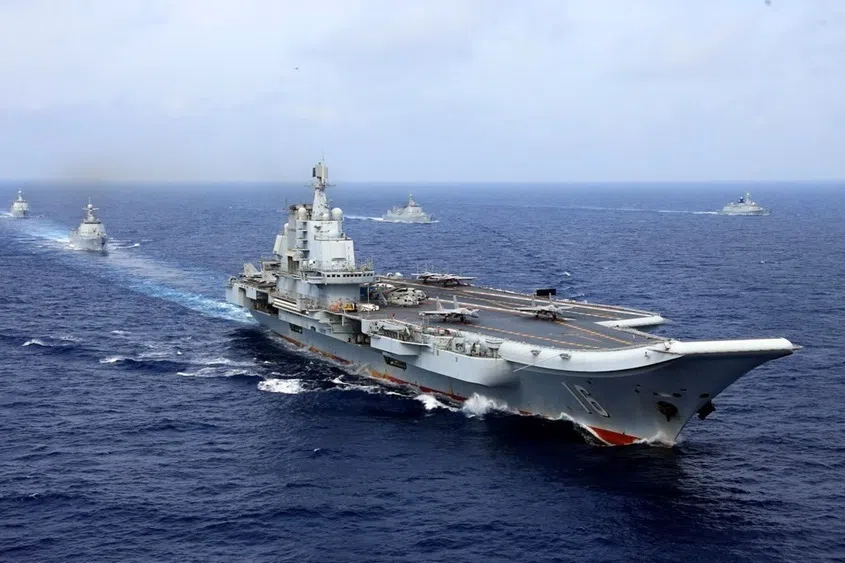
Taiwanese officials and major media reported an unannounced PLA deployment involving forces from the Eastern, Northern and Southern Theater Commands, including the Liaoning carrier group. Taiwan National Security Council Secretary-General Joseph Wu reported more than 100 PLA Navy and China Coast Guard vessels across the Western Pacific on 3 November. A separate report put the wider deployment at about 70 vessels by 13 November, while Taiwan’s defence ministry reported 30 Chinese aircraft sorties, eight naval vessels and three other official vessels around Taiwan in the 24 hours ending at 6 a.m. that day. These figures describe different areas and reporting periods. Taiwan Defence Minister Wellington Koo characterised activity involving the Liaoning as area-denial exercises; reporting on simulated attacks and a Taiwan-isolation rehearsal rests on official or analytical accounts, not public confirmation of Beijing’s purpose. Xi Jinping called for peaceful reunification on 12 November and, on 18 November, expressed a desire for stable US-China relations. Donald Trump arrived in Shenzhen on 18 November; trilateral talks with Xi and Vladimir Putin were scheduled for 19 November.
Change from previous assessment
Since the 17 November prior brief, the core assessment of the PLA deployment and near-term attack risk is unchanged. The supplied reporting adds the 18 November arrival of Donald Trump in Shenzhen, Xi Jinping’s public statement on stable US-China relations, and the trilateral meeting scheduled for 19 November; these developments add diplomatic context but do not establish a change in Beijing’s military posture. The vessel figures are treated as different measures of a broad deployment and daily activity around Taiwan, rather than as directly comparable totals. The submarine-launched missile report remains uncorroborated.
Key judgments
- The early-November PLA and China Coast Guard surge likely began to taper by 13 November, but the available reporting does not establish a full drawdown. Joseph Wu reported more than 100 vessels across the Western Pacific on 3 November, while another report estimated about 70 in the broader deployment by 13 November. Taiwan’s daily count around the island was eight naval vessels and three other official vessels in the 24 hours ending at 6 a.m. on 13 November. That daily figure is not directly comparable with the broader Western Pacific total. (Confidence: medium · ASSESSED)
- I&W: Taiwan’s defence ministry reports around Taiwan remain near the lower level recorded on 9 November, one aircraft and seven naval vessels, with no new multi-command deployment reported. This would support a continued drawdown in activity close to the island. (0-14 days)
- I&W: Taiwan’s National Security Council or defence ministry reports a renewed deployment of more than 100 combined PLA Navy and China Coast Guard vessels across the Western Pacific, or renewed activity by the Liaoning group alongside forces from several theatre commands. This would break the drawdown assessment. (0-14 days)
- Beijing likely used the early-November deployment for coercive signalling and operational training, but the evidence does not establish that it was a single coordinated rehearsal to isolate Taiwan. Wellington Koo described area-denial exercises involving the Liaoning, and a senior Taiwanese security official told Reuters that the exercises included simulated attacks on military forces and cities. ISW and AEI assessed that the activity could simulate isolating Taiwan. An alternative assessment from Taiwan analyst Shen Ming-shih linked the deployment partly to US-Japan Keen Sword 27 exercises held from 19 to 29 October. (Confidence: low · ASSESSED)
- I&W: The PLA or China Coast Guard announces, or Taiwan reports, a coordinated exercise involving several theatre commands, exclusion areas at multiple approaches to Taiwan, and civilian fishing-fleet activity. This would strengthen the assessment of blockade-related training. (0-30 days)
- I&W: Taiwan’s defence ministry reports no renewed multi-command deployment, exclusion areas or coordinated civilian fleet activity for 30 consecutive days. This would weaken the assessment that the November deployment was part of a continuing rehearsal pattern. (1 month)
- A PLA attack on Taiwan in the next 1-3 months is unlikely on the supplied evidence. The reporting describes a large deployment, simulated attacks and continued PLA modernisation, but does not document an attack order or an invasion-specific mobilisation. Xi’s call for peaceful reunification is a public statement of policy, not evidence by itself that Beijing has reduced military pressure. Confidence is low because the reporting does not provide a comprehensive picture of PLA readiness or intent. (Confidence: low · ASSESSED)
- I&W: Taiwan’s defence ministry reports no sustained increase above the 30 sorties recorded on 13 November and no new naval exclusion areas across the Taiwan Strait. This would support the assessment that an attack is unlikely in the near term. (1-3 months)
- I&W: Taiwanese or US-Japanese official reporting identifies a concentration of PLA amphibious ships, including Type 071 landing platform docks, alongside civilian fleet mobilisation and exclusion areas across the Taiwan Strait. This would break the assessment and require an immediate reassessment. (1-3 months)
- The reported launch of an intercontinental ballistic missile by a Chinese submarine from the Yellow Sea into mainland China remains uncorroborated. The account rests on a senior Taiwanese security official cited by Reuters; the supplied reporting provides no independent confirmation of the launch, platform or trajectory. (Confidence: low · REPORTED)
- I&W: A second independent media account, official statement or technical assessment confirms the launch, submarine platform and Yellow Sea origin. This would strengthen the reported account. (0-30 days)
- I&W: Independent evidence establishes that no launch occurred or that the event involved a different platform or missile type. This would break the reported account. (0-30 days)
Outlook & scenarios
Persistent coercive activity below the November peak (55%)
Over the next 1-3 months, the PLA and China Coast Guard sustain intermittent activity around Taiwan, with occasional wider Western Pacific deployments but no publicly announced blockade exercise. This is the most likely course, given the reported taper in vessel numbers by 13 November and the continuing pattern of military and law-enforcement activity described in the reporting.
Lower tempo alongside summit diplomacy (35%)
PLA and China Coast Guard activity around Taiwan falls from the early-November peak while Beijing prioritises engagement with Washington after the Shenzhen meetings. Taiwan’s reported aircraft and vessel counts remain closer to the lower levels recorded on 9 November. A lull would not by itself demonstrate a change in Beijing’s position on Taiwan.
Renewed, more explicit blockade rehearsal (8%)
The PLA again deploys forces from the Eastern, Northern and Southern Theater Commands, potentially including the Liaoning group, while the China Coast Guard operates alongside them. Exclusion areas around several approaches to Taiwan or reported civilian fishing-fleet mobilisation would make a blockade-related rehearsal more evident than in early November.
Wildcard: miscalculation during a large deployment (2%)
A close encounter involving PLA aircraft or ships and Taiwan’s forces during an unannounced deployment escalates before leaders can contain it. This is unlikely but would have high impact, particularly if military activity is difficult to distinguish from routine patrols or exercises.
Recommendations
- Maintain a daily and seven-day record of Taiwan defence ministry reporting. Separate aircraft sorties, median-line crossings, ADIZ entries, naval vessels and other official vessels, and do not compare near-island daily counts with totals for the wider Western Pacific.
- Track reported movements of the Liaoning group, Eastern, Northern and Southern Theater Command forces, China Coast Guard vessels and civilian fishing fleets. Flag deployments that combine several of these elements with exclusion areas around Taiwan.
- Monitor the 19 November Shenzhen talks and subsequent public readouts for statements on Taiwan, arms deliveries and the US-China trade truce. Distinguish confirmed policy changes from assessments about what Xi Jinping sought from the meetings.
- Treat the submarine-launched missile account as unverified in analytic products unless independent reporting or technical evidence confirms the launch, platform and trajectory.
Confidence & uncertainty
Overall confidence is high for the occurrence and broad scale of the early-November deployment and for the reported diplomatic statements. Taiwan official reporting and major-media accounts support the deployment, and the reported vessel decline is consistent with a taper, although counts cover different areas and time periods. Confidence is lower on Beijing’s operational purpose and on the submarine-launched missile report, which remains single-source and uncorroborated.
Alternative analysis (red cell)
The early-November activity may be better understood as a reactive and dispersed signalling effort linked partly to Keen Sword 27 than as a likely dual-purpose training operation, given the competing explanation in claim aefdafd0 and the inferential nature of claims 1198e367 and 32cbd7f. The same evidence also supports a higher near-term risk than the judgment states, because claims 1cda7c1c and 5a902be8 describe a large deployment and simulated attacks, while the absence of an observed attack order does not demonstrate that an attack is unlikely.
Intelligence gaps
- [EEI 1.1 · PARTIAL] Concentration of PLA amphibious warfare vessels exceeding 15 ships in Fujian Province naval ports. Recommended collection: imagery/satellite
- [EEI 1.2 · UNCOVERED] Unplanned surge in encrypted communications traffic from PLA Eastern Theater Command headquarters. Recommended collection: SIGINT
- [EEI 1.3 · UNCOVERED] Movement of PLA airborne unit heavy equipment to airbases within 200km of Taiwan Strait. Recommended collection: imagery/satellite
- [EEI 2.2 · UNCOVERED] Number of active PLA naval live-fire exercise zones in Taiwan Strait international waters. Recommended collection: SIGINT
- [EEI 2.3 · UNCOVERED] Positioning of PLA Type 055 destroyers west of 122°E longitude. Recommended collection: maritime/AIS
- [EEI 3.1 · UNCOVERED] Operational activation of Taiwan's Hsiung Feng III coastal defense missile systems. Recommended collection: SIGINT
- [EEI 3.2 · UNCOVERED] Increased cargo aircraft movements to Penghu Islands military installations. Recommended collection: air/ADS-B
Red cell review: PARTIAL DISSENT
TLP:CLEAR