TLP:CLEAR · Disclosure is not limited.
Taiwan Strait: PLA Activity and Maritime Friction, 13 to 20 October 2026
Time window: Last 7 days · Audience: General analyst · Type: Situation report · DTG: 2026-10-20 11:24Z · Overall confidence: MEDIUM
BLUF
Reporting identifies sustained PLA activity around Taiwan and in nearby seas, alongside the start of Keen Sword 27 and a reported coast guard encounter near the Pratas Islands. This raises the level of operational pressure, but does not establish an imminent attack or blockade; the USS Charleston's route and legal status near Sabina Shoal remain disputed.
Executive summary
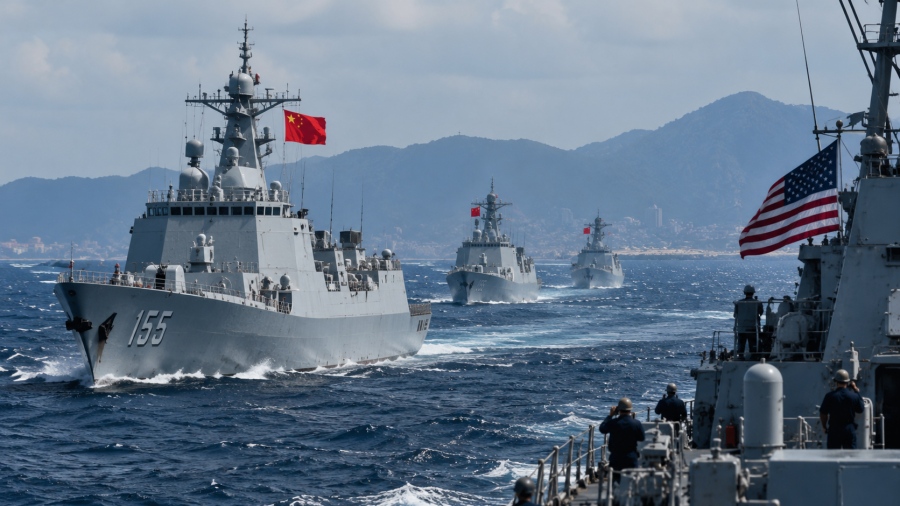
Taiwan's defence authority reported 9 PLA aircraft sorties, 6 naval vessels and 6 official ships around Taiwan over 13 to 14 October, then reported 27 Chinese military aircraft, including H-6 bombers, on 20 October. The PLA Navy announced Western Pacific training by the Liaoning carrier formation on 14 October. Chinese authorities also reported exercise activity across several seas, including a 47-day live-fire period in the southern Yellow Sea. Keen Sword 27 began on 19 October and is scheduled to run through 29 October, with about 45,000 Japanese and 12,000 US personnel and first-time participation by France, Germany, the Netherlands, New Zealand and the Philippines. Accounts differ on whether US missile and air-defence systems had already reached Yonaguni or were still planned. Taiwan's Coast Guard reported a Chinese Coast Guard vessel entering a restricted area near the Pratas Islands. China and the Philippines also gave opposing accounts of the USS Charleston's presence near Sabina Shoal. Taiwanese officials describe Chinese activity east of Taiwan as preparation for a blockade, but the supplied reporting does not document commercial traffic being stopped or diverted. The proposed US$14 billion arms package for Taiwan had not been approved as of 20 October.
Change from previous assessment
Since the prior brief earlier on 20 October, the assessment has shifted from unresolved exercise reporting to a better documented, though still unevenly corroborated, picture of PLA activity. New reporting identifies Taiwan's 20 October count of 27 Chinese aircraft, the Liaoning carrier formation's 14 October Western Pacific training and specific dates and forces for Keen Sword 27. The carrier assessment is now more specific, but the separate report of carrier drills during the week remains unresolved. The brief adds the reported Pratas encounter, the USS Charleston dispute and the east-of-Taiwan blockade concern. The conclusion that an incursion into Taiwan or an imminent blockade is not established remains unchanged. Initial assessment of the new Pratas and arms-package developments.
Key judgments
- PLA activity around Taiwan and in nearby seas was sustained and geographically broad during 13 to 20 October, but it does not establish an imminent attack. Taiwan's defence authority reported 9 aircraft sorties and 6 naval vessels around Taiwan over 13 to 14 October, then 27 Chinese aircraft, including H-6 bombers, on 20 October. The PLA Navy announced Liaoning training in the Western Pacific on 14 October; Chinese notices also described exercises in the East China Sea, Yellow Sea, South China Sea and Bohai Sea. Confidence is medium: Taiwan's reported counts and Chinese military announcements provide specific evidence of activity, but do not independently verify every exercise or establish its purpose. (Confidence: medium · ASSESSED)
- I&W: Taiwan's daily reporting records at least 20 Chinese military aircraft around Taiwan on three consecutive days, confirming sustained high activity. (0 to 14 days)
- I&W: Taiwan's daily reporting records fewer than 10 Chinese military aircraft and fewer than 6 naval vessels around Taiwan on five consecutive days, weakening the assessment of sustained activity. (0 to 14 days)
- Keen Sword 27 is underway in Japan from 19 to 29 October, with about 45,000 Japanese Self-Defense Forces personnel and 12,000 US military personnel reported, and France, Germany, the Netherlands, New Zealand and the Philippines participating for the first time. Reports place US HIMARS on Ishigaki and describe NMESIS and air-defence systems on Yonaguni, about 110 kilometres from Taiwan, but differ on whether the Yonaguni systems were deployed or only planned. Confidence is medium because the exercise and force figures are reported in major media, while deployment status differs across accounts. (Confidence: medium · REPORTED)
- I&W: A US or Japanese after-action release confirms which missile and air-defence systems were physically present on Ishigaki and Yonaguni by the exercise's 29 October end date. (0 to 14 days)
- I&W: A US or Japanese official correction states that the reported Yonaguni systems were not deployed for Keen Sword 27, breaking the claim of an actual deployment. (0 to 14 days)
- A Chinese Coast Guard vessel's entry into a restricted maritime area near the Pratas Islands on 20 October is reported by Taiwan's Coast Guard. Taiwan's vessel Taichung was sent to warn it to leave, and the two sides reportedly exchanged radio messages. Confidence is low because the details rest on a single media account relaying Taiwan's Coast Guard statement, without independent confirmation in the supplied reporting. (Confidence: low · REPORTED)
- I&W: Taiwan or China releases a vessel track or official account confirming the Chinese vessel's entry and the Taichung radio exchange. (0 to 14 days)
- I&W: Taiwan's Coast Guard retracts the entry report or releases a track showing the Chinese vessel did not enter the restricted area. (0 to 14 days)
- The USS Charleston was reported near Sabina Shoal on 20 October, and China said its navy monitored the ship. The Southern Theater Command described the ship's presence as unauthorised, while a Philippine military spokesman said it did not enter Chinese territorial waters and that no prior permission was required for lawful passage through international waters. The ship's presence is supported by opposing official statements, but the supplied reporting provides no coordinates to resolve its route or legal status. Confidence is medium for the reported presence and lower for its precise location. (Confidence: medium · REPORTED)
- I&W: The US Navy, Philippine military or Chinese Southern Theater Command publishes coordinates or a track that clarifies the USS Charleston's route near Sabina Shoal. (0 to 14 days)
- I&W: Independent track data places the USS Charleston outside the waters China described, weakening the Chinese account of its entry. (0 to 14 days)
- A Chinese maritime blockade of Taiwan is unlikely over the next 1 to 3 months on the supplied evidence. Reuters reported increased Chinese activity off Taiwan's east coast since June, and Taiwanese officials assess the use of military, paramilitary and civilian assets there as preparation for a blockade. The reporting documents patrols and aircraft activity, not an attempt to stop, inspect or divert commercial traffic. China and Taiwan also dispute the legal status of waters east of Taiwan. Confidence is medium because the reported patrol trend is supported by major media, while the blockade assessment is attributed to Taiwanese officials and is not corroborated by evidence of interdiction. (Confidence: medium · ASSESSED)
- I&W: Taiwanese authorities or commercial operators report Chinese coast guard or civilian vessels ordering commercial traffic east of Taiwan to stop, divert or submit to inspection, confirming movement towards a blockade. (1 to 3 months)
- I&W: Taiwanese officials report that regular Chinese coast guard patrols east of Taiwan have stopped, with Taiwan's daily reporting showing fewer than 10 Chinese aircraft near the island for 14 consecutive days. (1 to 3 months)
- The proposed US$14 billion arms package for Taiwan remained unapproved as of 20 October. Randall Schriver's expectation of movement in 2027 is a forecast, not a US policy decision. Confidence is medium because the status is attributed to Reuters reporting, while the 2027 expectation is a separate forecast by Schriver. (Confidence: medium · REPORTED)
- I&W: The US government announces approval of the package or takes a formal step towards its transfer to Taiwan. (0 to 3 months)
- I&W: The US government issues a statement that the package remains unapproved and gives no timetable for a decision. (0 to 3 months)
- NASA FIRMS recorded six thermal detections in the Taiwan Strait region over the two days ending 19 October, with none classified as high confidence. The detections do not establish military activity because thermal signatures identify heat, not its cause. Confidence is medium: NASA provides specific official data, but the data does not identify what produced the heat. (Confidence: medium · ASSESSED)
- I&W: Independent, dated imagery identifies a FIRMS detection as a named military activity, breaking the current non-attribution assessment for that detection. (0 to 14 days)
- I&W: NASA revises its feed and removes the six detections from the Taiwan Strait region. (0 to 14 days)
Outlook & scenarios
Continued patrols and exercise signalling (58%)
The most likely outcome is continued PLA air and maritime activity around Taiwan alongside the remaining days of Keen Sword 27. China and Taiwan continue to contest the status of surrounding waters, but neither side attempts to stop commercial traffic.
Localised maritime confrontation (25%)
A further close encounter between Chinese and Taiwanese coast guard vessels near the Pratas Islands or around Taiwan is likely. A warning exchange or disputed entry would raise tension without establishing a blockade or an attack on Taiwan.
Lower visibility after Keen Sword 27 (12%)
PLA activity around Taiwan declines after Keen Sword 27 ends on 29 October, and the reported coast guard encounters do not recur. The current legal and diplomatic dispute continues without a new operational incident.
Wildcard: coercive maritime restrictions (5%)
China uses coast guard, civilian and military assets to order commercial vessels east of Taiwan to stop, divert or submit to inspection. This is a low-probability, high-impact scenario that would mark a shift from patrols and sovereignty claims to direct interference with maritime traffic.
Recommendations
- Maintain a daily, dated tracker of Taiwan Defence Ministry aircraft and vessel counts, Chinese maritime exercise notices, coast guard activity east of Taiwan and reports from the Pratas Islands. Separate confirmed observations from official claims and commentary.
- Seek coordinate-level information from the US Navy, the Philippine military, Taiwan's Coast Guard and China's Southern Theater Command on the USS Charleston incident. Do not characterise it as an entry into Chinese territorial waters without verified route data.
- Use US and Japanese after-action reporting to distinguish systems physically deployed during Keen Sword 27 from systems that were only planned. Record Ishigaki and Yonaguni deployments separately.
- Treat the blockade assessment as a warning hypothesis. Raise its priority if reporting identifies commercial vessels being stopped, diverted or inspected east of Taiwan.
- Track the US$14 billion arms package through formal US government statements, and keep those decisions separate from forecasts of future movement.
- Do not use the six NASA FIRMS detections as evidence of military activity without independent identification of their cause.
Confidence & uncertainty
Official Taiwanese reporting and Chinese military announcements provide specific details on aircraft, vessels, exercises and training, while major-media reporting adds context on Keen Sword 27 and the east-of-Taiwan patrol trend. Confidence is limited by the lack of independent confirmation for the Pratas encounter, the absence of track data resolving the USS Charleston dispute, and conflicting accounts of whether systems reached Yonaguni. The thermal detections do not identify their cause, and the blockade assessment remains an attributed judgement rather than a reported interdiction.
Alternative analysis (red cell)
The evidence can reasonably be read as showing an emerging coercive posture rather than merely routine patrol activity. The increased east-coast activity reported in 4743758d-d06c-4f1b-9c84-92b2e5f46330 and the Taiwanese assessment in 9116eef6-9aea-460f-9e57-97b76dd6ac69 support the possibility of preparatory blockade measures even without current interdiction. Accordingly, the supplied evidence does not justify a confident judgment that a blockade is unlikely over the next one to three months.
Intelligence gaps
- [EEI 1.1 · PARTIAL] Concentration of PLA amphibious warfare vessels exceeding 15 ships in Fujian Province naval ports. Recommended collection: imagery/satellite
- [EEI 1.2 · UNCOVERED] Unplanned surge in encrypted communications traffic from PLA Eastern Theater Command headquarters. Recommended collection: SIGINT
- [EEI 1.3 · UNCOVERED] Movement of PLA airborne unit heavy equipment to airbases within 200km of Taiwan Strait. Recommended collection: imagery/satellite
- [EEI 2.1 · PARTIAL] Daily aggregate count of PLA Air Force sorties within 30km of the median line. Recommended collection: radar
- [EEI 2.2 · UNCOVERED] Number of active PLA naval live-fire exercise zones in Taiwan Strait international waters. Recommended collection: SIGINT
- [EEI 2.3 · UNCOVERED] Positioning of PLA Type 055 destroyers west of 122°E longitude. Recommended collection: maritime/AIS
- [EEI 3.1 · UNCOVERED] Operational activation of Taiwan's Hsiung Feng III coastal defense missile systems. Recommended collection: SIGINT
- [EEI 3.2 · UNCOVERED] Increased cargo aircraft movements to Penghu Islands military installations. Recommended collection: air/ADS-B
Red cell review: PARTIAL DISSENT
TLP:CLEAR