TLP:CLEAR · Disclosure is not limited.
Taiwan Strait: PLA naval surge and Sino-Japanese friction intensify
Time window: Last 1 day · Audience: General analyst · Type: Situation report · DTG: 2026-07-14 14:05Z · Overall confidence: MEDIUM
BLUF
China has very likely stepped up its naval presence around Taiwan, with over 200 Chinese warships counted last month. A diplomatic clash on 14 July over Japanese Coast Guard patrol boats in the strait, together with planned China-Russia joint patrols, likely raises the risk of misjudgment around Taiwan over the coming weeks.
Executive summary
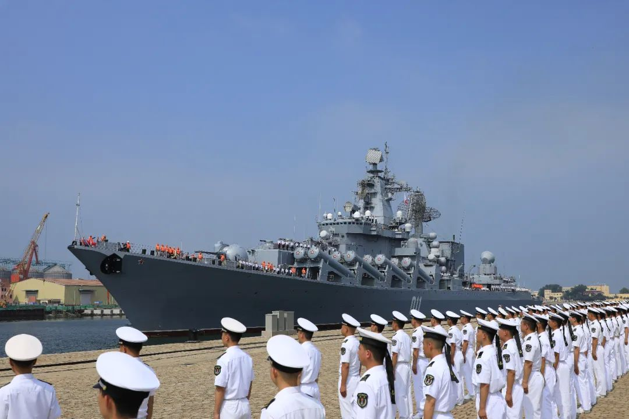
Reporting indicates a marked increase in People’s Liberation Army Navy activity near Taiwan, with over 200 Chinese warships observed last month. On 14 July, Beijing lodged a formal protest after Japanese Coast Guard patrol boats entered the Taiwan Strait, and Tokyo rejected the complaint. Japan is also strengthening its posture along the first island chain, including deployments on Yonaguni and fielding long-range missiles, while expanding training with the United States. Taiwan continues realistic, annualised joint defence training. China and Russia concluded Joint Sea 2026 in the Yellow Sea and plan a follow-on joint maritime patrol into the Pacific, assessed to elevate operational friction in waters adjacent to Taiwan and Japan.
Change from previous assessment
New reporting since 12 July adds specificity to the PLA naval surge around Taiwan with a >200 warship count last month, records a 14 July Sino-Japanese diplomatic clash over Japanese Coast Guard patrol boats in the Taiwan Strait, and details Japan’s deployments on Yonaguni and long-range missile fielding alongside expanded US-Japan training. China and Russia have concluded Joint Sea 2026 and signalled a joint patrol into the Pacific, increasing assessed near-term friction around Taiwan. Confidence is broadly unchanged but supported by fresher, more granular reporting on the Taiwan Strait incident.
Key judgments
- China has very likely increased its naval presence near Taiwan, with over 200 Chinese warships counted last month. (Confidence: medium · REPORTED)
- I&W: Open-source tallies and commercial satellite imagery show PLAN surface and auxiliary hull counts around Taiwan at or above the >200-ship baseline for two consecutive weeks. (0-14 days)
- I&W: Sustained drop in observed PLAN hull counts around Taiwan well below last month’s baseline over a fortnight. (0-14 days)
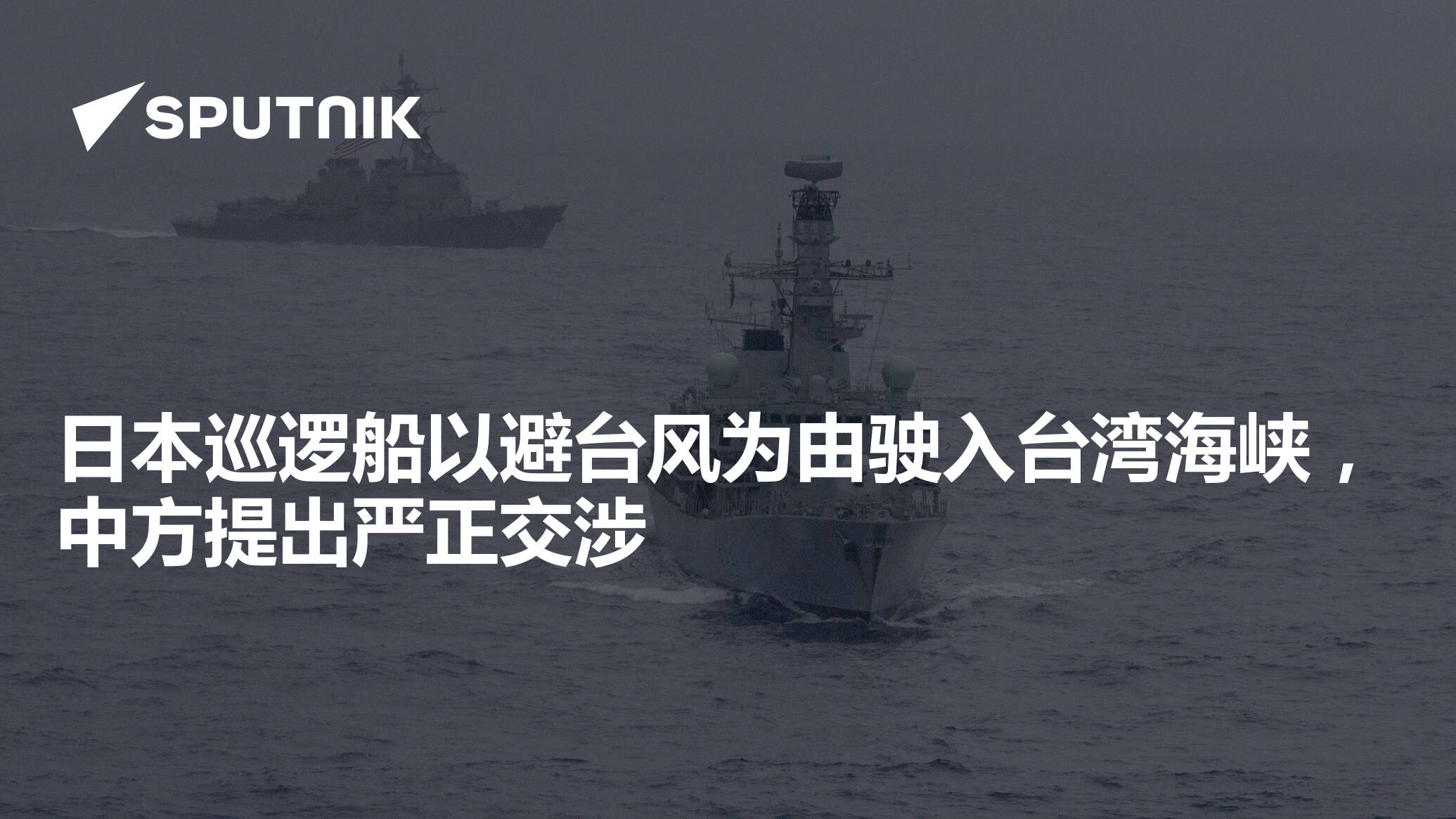
- Friction between Beijing and Tokyo over the Taiwan Strait very likely intensified on 14 July after Japanese Coast Guard patrol boats entered the strait, China protested, and Japan rejected the protest. (Confidence: high · REPORTED)
- I&W: Further Japanese Coast Guard transits in the Taiwan Strait followed by additional Chinese diplomatic protests or summons of Japan’s ambassador. (0-14 days)
- I&W: Public acknowledgement by Beijing or Tokyo of new operational protocols or hotline use for the strait. (1-3 months)
- Japan is likely enhancing its military posture across the first island chain, including deployments to Yonaguni and long-range missiles able to strike Chinese territory, alongside expanded US-Japan training. (Confidence: medium · REPORTED)
- I&W: Official announcements or local reporting of new Japan Self-Defense Forces missile units activating across the Nansei island chain, including Yonaguni. (1-3 months)
- I&W: Published schedules of expanded US-Japan training serials along the first island chain. (0-14 days)
- Taiwan very likely continues realistic joint defence training with real troops and equipment as part of its annual plan, signalling readiness rather than crisis action. (Confidence: high · REPORTED)
- I&W: Taipei issues exercise notices detailing live, real-equipment evolutions across multiple services. (0-14 days)
- I&W: Completion communiqués describing post-exercise assessments without declaration of new emergency deployments. (0-14 days)
- China and Russia are likely to sustain maritime signalling in the Western Pacific after Joint Sea 2026, with planned joint patrols that increase the risk of misjudgment near Taiwan and Japan. (Confidence: medium · ASSESSED)
- I&W: Official notices or spotting reports of combined PLA Navy and Russian Navy surface action groups transiting east of Taiwan toward the Pacific. (0-14 days)
- I&W: Postponement or cancellation of the announced joint cruise into the Pacific by either side. (0-14 days)
- Beijing is likely to continue contesting foreign state vessel transits in the Taiwan Strait on legal grounds, consistent with its assertion that the strait is not international waters. (Confidence: low · ASSESSED)
- I&W: Repeated Chinese Foreign Ministry statements restating that the Taiwan Strait constitutes internal waters, paired with warnings against foreign government vessels. (0-14 days)
- I&W: Chinese public references to the Taiwan Strait as international waters in official readouts or press conferences. (1-3 months)
Outlook & scenarios
Baseline: PLA naval surge endures through late summer (60%)
Chinese warship numbers around Taiwan remain elevated relative to last month’s >200-ship baseline, with routine surface and government vessels operating in proximity to the island. Encounters stay professional but crowded, and rhetoric remains sharp.
Escalatory: Sino-Japanese at-sea confrontation in the Taiwan Strait (30%)
A renewed Japanese Coast Guard presence in the strait triggers aggressive shadowing or dangerous manoeuvres by Chinese units, prompting public protests, emergency hotlines, and rapid deployments by both sides. Close calls increase and diplomatic channels strain.
Theatre broadening: China-Russia joint patrol presses into the Western Pacific (40%)
Following Joint Sea 2026, a combined Chinese-Russian patrol moves into Pacific waters adjacent to the first island chain while US-Japan training expands. Multiple interacting exercises heighten congestion and the risk of misjudgment near Taiwan and Japan.
Limited de-escalation: Operational tempo dips after exercise cycles (20%)
PLA presence near Taiwan tapers below last month’s surge as exercise windows close. Taiwan scales back live evolutions to peacetime rhythms. Friction persists in messaging, but fewer hulls reduce immediate collision risk.
Recommendations
- Maintain a running 14-day baseline of observed PLAN hull counts around Taiwan using open-source tallies and commercial satellite cues; flag any sustained excursions above the >200-ship benchmark for leadership awareness.
- Establish a Sino-Japanese incident tracker for the Taiwan Strait that logs Japanese Coast Guard transits, Chinese protests or ambassadorial summons, and any reported unsafe manoeuvres; brief weekly.
- Map Japan Self-Defense Forces posture along the Nansei islands, including Yonaguni, against known or announced long-range missile deployments and scheduled US-Japan training events; assess coverage gaps and likely exercise corridors.
- Set an alert for official Chinese and Russian notices of a joint maritime patrol route into the Pacific; pre-plot likely tracklines relative to the Bashi Channel and Japanese maritime approaches to identify collision risk windows.
- Prepare a concise indicator deck for Taiwan’s annualised training cycle that distinguishes routine realistic training from crisis signalling; circulate ahead of peak exercise periods to dampen misreadings.
Confidence & uncertainty
Overall confidence is medium. The surge in Chinese warship numbers near Taiwan rests on a single, high-confidence media report, while the 14 July China-Japan diplomatic clash is corroborated by multiple, reliable outlets. Taiwan’s exercise posture is clearly sourced. Judgments about Japan’s enhanced posture and China-Russia follow-on patrols draw on generally reliable but partly think-tank and academic reporting. Legal intent regarding the Taiwan Strait relies on a single-source policy assertion, so that element is low confidence. There are no direct contradictions within the Taiwan-focused set, but the mix of source types and some single-source elements constrain confidence.
Intelligence gaps
- [EEI 1.1 · PARTIAL] Number, type, and precise locations (latitude/longitude or named sea areas) of PLAN surface combatants, amphibious ships, and auxiliaries operating within 200 nautical miles of Taiwan or transiting the Taiwan Strait over the past 72 hours. Recommended collection: maritime/AIS
- [EEI 1.2 · UNCOVERED] NOTAMs, maritime safety warnings, or official PRC civil/maritime notices that close or restrict airspace/sea lanes around Taiwan, and any concurrent cancellation of commercial ferry or airline services to/from Taiwanese ports/airports. Recommended collection: open-source/diplomatic
- [EEI 1.3 · UNCOVERED] Number and sortie patterns of PLA air assets (fighters, bombers, airborne early warning, aerial refuellers) crossing the median line or entering Taiwan ADIZ, including time-on-station and armament indications (e.g., weapons pylons loaded). Recommended collection: air/flight-radar
- [EEI 2.1 · PARTIAL] Location and composition of any PLAN carrier strike groups or task forces within the Western Pacific (carrier identity, escort ships, embarked air wing size and aircraft types) and recent underway replenishment events. Recommended collection: satellite/imagery
- [EEI 2.2 · UNCOVERED] Presence, numbers, and readiness indicators of amphibious assault ships, large landing craft, and pre-positioned amphibious equipment at eastern PRC ports (Fujian, Zhejiang, Guangdong), including evidence of loading, embarkation or training ramps/vehicles staged for embarkation. Recommended collection: maritime/AIS
- [EEI 2.3 · UNCOVERED] Submarine activity: detections or reported transits of PLAN attack or ballistic submarines on routes between mainland bases and patrol areas around Taiwan, and indications of increased sonar/contact reports or anti-submarine warfare activity by regional navies. Recommended collection: undersea/acoustic
- [EEI 3.1 · PARTIAL] Movements and positions of US and allied naval and air forces (carrier strike groups, amphibious ready groups, maritime patrol aircraft) toward the Taiwan region, including orders to sortie, transit times, and change in deployment status. Recommended collection: maritime/AIS
- [EEI 3.3 · UNCOVERED] Commercial indicators of regional escalation: rapid increases in war-risk insurance premiums for Taiwan-related sea lanes, suspension of shipping lines or insurance-backed rerouting, and major port/terminal closures affecting logistic lifelines. Recommended collection: financial/insurance
Cited sources
[1] Última Hora · Taiwán se prepara para el combate con ejercicios de defensa - Última Hora | Noticias de Paraguay y el mundo, las 24 horas. Noticias nacionales e internacionales, deportes, política. Noticias de último momento. (B) · sha256:d853f1c60657 [2] sputniknews.cn · 日本巡逻船以避台风为由驶入台湾海峡,中方提出严正交涉 (B) · sha256:30d5ebb8b4d5 [3] Wikipedia · First island chain (C) · sha256:865996283fcd [4] ynetnews.com · Japan became Putin’s 'spy den' and is building its first intelligence agency (B) · sha256:da3c05ca17f3 [5] 財團法人國防安全研究院 · 中俄「海上聯合2026」演習之觀察 (C) · sha256:fd53ef74ba2c
Source content hashes were computed at collection time; the cited text is preserved unmodified for the life of this product.
TLP:CLEAR