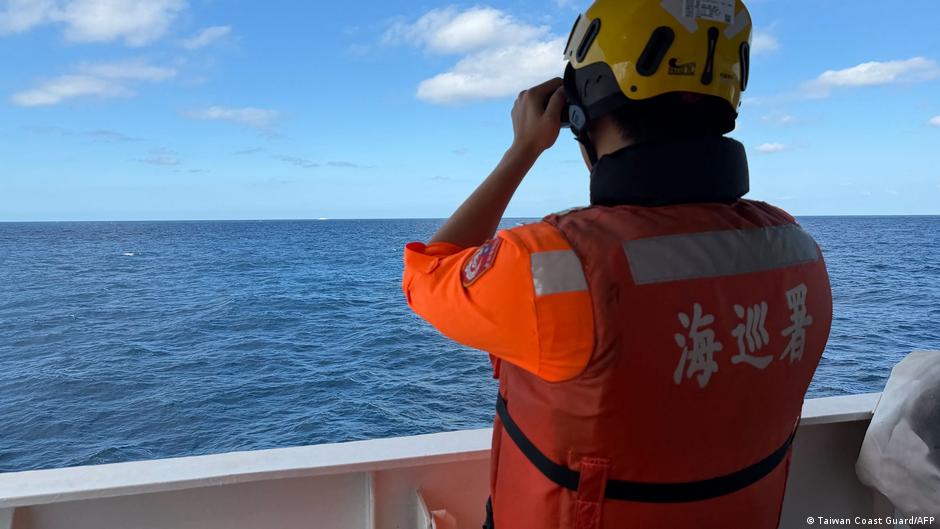
Taiwan Strait: PRC gray-zone maritime pressure intensifies; Taiwan coast guard counters; PLA tracks Dutch frigate; Taipei accelerates anti-ship buildup
Time window: Last 7 days · Audience: General analyst · Type: Situation report · DTG: 2026-06-09 19:10Z · Overall confidence: MEDIUM
BLUF
PRC ‘law-enforcement’ and coast guard operations around Taiwan have intensified in the last two weeks, prompting Taiwan Coast Guard (TCG) deployments and public challenges, while the PLA tracked a Dutch frigate transiting the Strait on 5 June. This pattern very likely persists in the near term, elevating miscalculation risk at sea; however, a major kinetic conflict is unlikely in the immediate window.
Executive summary
Open sources report a recent rise in Chinese coast guard and government vessel activity around Taiwan, including movements from Xiamen and ‘law-enforcement’ operations east of the island. Taiwan’s coast guard has deployed multiple ships, expelled vessels from restricted southern waters, and publicly asserted international-law violations, while senior Taiwanese officials broadcast challenges to PRC ships. On 5 June, the PLA’s Eastern Theater Command reported tracking Dutch frigate HNLMS De Ruyter during its Taiwan Strait transit. Concurrently, Beijing’s ambassador reiterated that Taiwan is a core, non‑negotiable interest and blamed external backing of ‘Taiwan independence’ for instability, signaling continued political rigidity. Taipei continues an asymmetric denial strategy, planning large anti‑ship missile inventories and new force structures through 2029. Satellite thermal detections over Taiwan show no high‑confidence kinetic indicators in the last five days, and highly sensational claims of imminent war lack corroboration.
Key judgments
- Very likely the PRC is intensifying and will sustain gray‑zone maritime pressure around Taiwan, especially east of the island and off the south, through coast guard and state ‘law‑enforcement’ operations, met by continued Taiwan Coast Guard responses. (Confidence: medium)
- Likely the PLA will continue to challenge and publicly track allied naval transits (e.g., HNLMS De Ruyter on 5 June) to signal control while avoiding direct confrontation. (Confidence: medium)
- Almost certainly PRC diplomatic messaging will remain inflexible, framing Taiwan as a core, non‑negotiable interest and condemning external support to ‘Taiwan independence’, which reduces near‑term space for de‑escalatory concessions. (Confidence: high)
- Very likely Taiwan is accelerating an asymmetric maritime‑denial posture built around large stocks of anti‑ship missiles and organizational changes through 2029, increasing prospective costs for PLA amphibious operations. (Confidence: medium)
- Unlikely that large‑scale kinetic conflict is imminent in the current window, despite elevated friction; recent satellite thermal detections over Taiwan show no high‑confidence strike indicators, and highly alarmist claims lack credible corroboration. (Confidence: medium)
- Likely both Taipei and Beijing will intensify ‘lawfare’ and messaging contests at sea, Taiwan asserting PRC activity violates international law and broadcasting challenges, while PRC frames its activity as legitimized ‘law enforcement’. (Confidence: medium)
Outlook & scenarios
Baseline: Sustained gray‑zone standoff at sea, 60%
PRC coast guard and state ‘law‑enforcement’ operations persist east and south of Taiwan, with additional sorties from Xiamen; TCG continues multi‑ship intercepts, public recordings, and legal messaging. PLA publicly tracks allied Strait transits to signal control, avoiding direct clashes. This aligns with reported recent uptick in PRC coast guard activity, TCG deployments and expulsions, and the 5 June tracking of HNLMS De Ruyter.
Maritime incident: Collision or ramming elevates crisis but remains below war threshold, 35%
Close‑quarters interactions in restricted southern waters or east of Taiwan lead to a collision or minor damage, triggering reciprocal force surges, hotlines use, and intensified information operations. Taipei frames violations of international law and broadcasts challenges; Beijing expands ‘law‑enforcement’ coverage. Elevated risk follows the multi‑vessel confrontations and competing legal narratives already observed.
Demonstrative escalation: Large PLA exercise cycle with missile firings, 25%
In reaction to a political trigger, Beijing conducts a short‑notice live‑fire exercise series around Taiwan modeled on August 2022 activities (including missile shots into surrounding waters and patrol announcements), while avoiding direct strikes on Taiwan. Taipei counters with heightened readiness and public diplomacy. This lever has precedent in 2022 drills and subsequent regularized patrols.
Recommendations
- Maintain a live OSINT dashboard of PRC ‘law‑enforcement’ and coast guard activity around Taiwan, tagging departures from Xiamen, declared mission types, and operating boxes east and south of the island, to support incident prediction and deconfliction (sources: detection of four Chinese government vessels from Xiamen; PRC ‘law‑enforcement’ operations east of Taiwan).
- Pre‑brief allied naval units planning Taiwan Strait transits on PLA Eastern Theater Command tracking patterns and messaging; collect standardized post‑transit reporting for trend analysis (reference: PLA tracking of HNLMS De Ruyter on 5 June and related PLA statements).
- Institutionalize a Taiwan FIRMS (NASA) heat‑anomaly watch within the indications-and-warnings layer for rapid triage of suspected strikes or industrial fires, using the Taiwan bounding box and the caveat that thermal detections record heat, not cause (recent five‑day detections: 4, with zero high‑confidence).
- Map Taiwan’s anti‑ship missile procurement and delivery milestones through 2029, including received Harpoons, projected inventories, and the Littoral Combat Command stand‑up, to estimate near‑term and mid‑term sea‑denial capacity and advise on U.S. munitions support pacing.
- Archive and analyze TCG audio/video broadcasts and legal statements to Chinese vessels, and PRC ‘law‑enforcement’ framing, to prepare rapid-response talking points and legal assessments for interagency use during incidents.
- Conduct an interagency tabletop focused on PRC ‘special maritime traffic law‑enforcement’ operations near Pratas and the waters east/south of Taiwan, rehearsing communications, maritime safety advisories, and crisis messaging sequences.
Confidence & uncertainty
Overall confidence is medium. Several key elements, PRC ambassadorial statements and the PLA report on tracking HNLMS De Ruyter, derive from official or high‑reliability outlets. Taiwan coast guard actions and the rise in PRC coast guard activity are corroborated across major media, though vessel counts vary between reports (dispatch of more than five versus seven TCG vessels; expulsion of four PRC ships), lowering precision. Taiwan’s anti‑ship buildup relies on trade/industry reporting with medium reliability. NASA FIRMS data provide high‑reliability negative indicators for major kinetic activity. The most alarmist claim of imminent war is low‑reliability social media and was treated as such. Principal uncertainties are the scale and duration of PRC ‘law‑enforcement’ operations, the PLA’s threshold for demonstrative exercises, and the risk of a single at‑sea incident upscaling beyond intended signaling.