TLP:CLEAR · Disclosure is not limited.
Taiwan Strait SITREP, 15-22 June 2026
Time window: Last 7 days · Audience: General analyst · Type: Situation report · DTG: 2026-06-22 11:27Z · Overall confidence: MEDIUM
BLUF
Escalation indicators remain muted in this window: NASA logged 53 thermal anomalies in the Taiwan Strait that record heat rather than cause, while there is no corroborated evidence of strikes. Beijing retains a proven option to surge to August 2022 levels of coercive drills, and Taipei is leaning into coastal‑denial with HIMARS at the Dajia River mouth, so watch for rapid shifts.
Executive summary
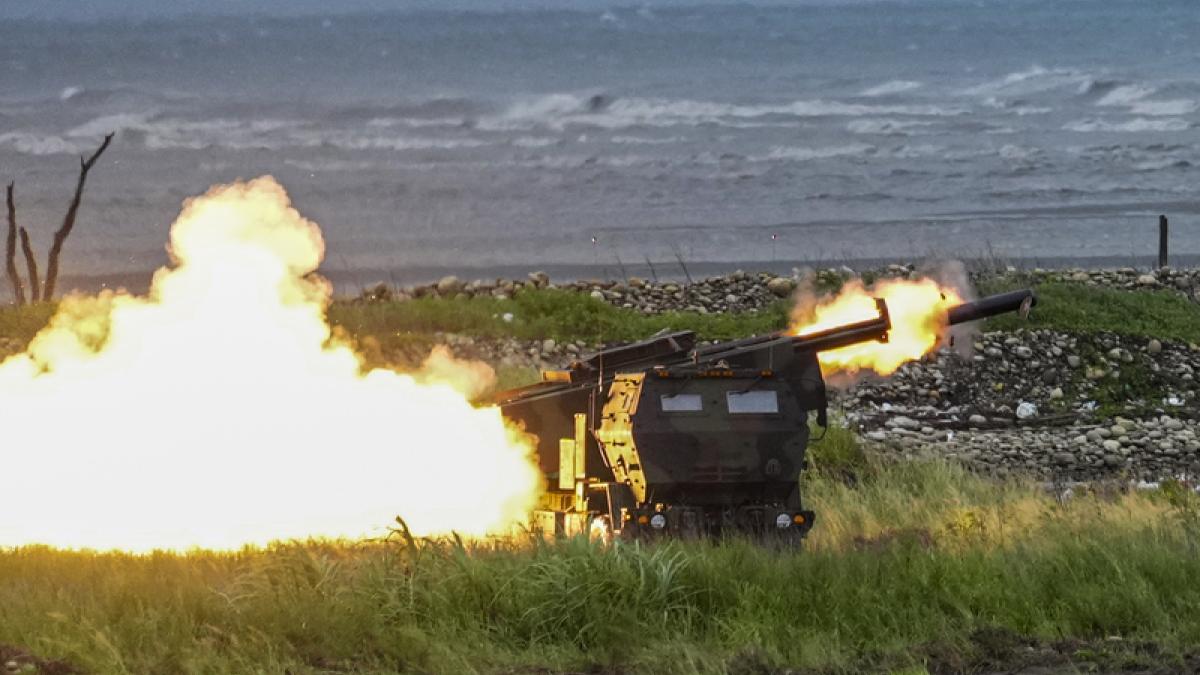
NASA reported 53 thermal anomalies in the Taiwan Strait over 21-22 June using VIIRS, which records heat but not cause, so these detections do not, on their own, evidence combat activity. PLA incursions into Taiwan’s ADIZ remain a sustained pattern since 2020, though this week’s activity is not time‑stamped in the available reporting. Taiwan has showcased coastal‑denial at the Dajia River mouth with HIMARS live fire and deployment on 9-10 June 2023, a site military analysts regard as a high‑probability PLA amphibious avenue, and local analysis frames this as a shift in defence strategy. Beijing publicly casts PLA actions as warnings to “Taiwan independence” and external interference, Washington earlier lifted self‑imposed limits on engagement, and the delivery backlog of 21.5 billion dollars in U.S. arms alongside a new package being prepared will shape Taipei’s near‑term readiness. The PLA’s August 2022 precedent of multi‑day live‑fire drills and 11 missile launches around Taiwan remains the benchmark for sudden escalation.
Change from previous assessment
NASA now records 53 thermal anomalies over 21-22 June in the Taiwan Strait, compared with the prior brief’s lower count and no high‑confidence returns. The analytic line on satellite heat detections remains: they record heat rather than cause. New in this run, we foreground Taiwan’s HIMARS deployment and live fire at the Dajia River mouth as indicators of a coastal‑denial shift, and we add the arms‑delivery backlog versus new package dynamic to the readiness outlook. Headline confidence remains medium given the mix of official, corroborated sources and gaps on time‑specific PLA activity.
Key judgments
- Satellite heat detections in the Taiwan Strait over 21-22 June almost certainly do not, by themselves, evidence strikes or shelling. (Confidence: high · ASSESSED)
- I&W: Independent, geolocated imagery or official reporting links specific detections to weapon impacts at the recorded coordinates and times. (0-14 days)
- I&W: Official attribution of a subset of detections to non‑combat sources such as industrial fires or controlled burn‑offs. (0-14 days)
- PLA incursions into Taiwan’s ADIZ are very likely a continuing pattern of pressure, but available reporting for this week is general and not time‑stamped. (Confidence: low · ASSESSED)
- I&W: Taiwan’s Ministry of National Defense publishes daily bulletins listing PLA aircraft and vessel activity near the island. (0-14 days)
- I&W: A 7‑day pause in MND ADIZ activity reporting. (0-14 days)
- Taiwan very likely prioritises coastal‑denial and counter‑landing fires along the central west coast, evidenced by HIMARS deployment and live fire at the Dajia River mouth, a high‑probability PLA amphibious avenue, and analysis describing a shift in defence strategy. (Confidence: medium · ASSESSED)
- I&W: Further HIMARS deployments or live‑fire training announced along river mouths on Taiwan’s west coast. (1-3 months)
- I&W: Public cancellation or sustained curtailment of HIMARS/coastal artillery training near Dajia. (1-3 months)
- The PLA retains a ready escalatory option to reprise August 2022 ring‑of‑island drills, including multi‑day live fire and at least 11 missile launches around Taiwan. (Confidence: medium · ASSESSED)
- I&W: Eastern Theatre Command or PRC maritime authorities announce exclusion zones or live‑fire areas around Taiwan. (0-14 days)
- I&W: Absence of exclusion‑zone notices and PLA statements emphasising de‑escalation. (1-3 months)
- Taiwan’s near‑term force modernisation is likely constrained by a 21.5 billion dollars backlog of undelivered U.S. arms, even as a new package worth up to 20 billion dollars is being prepared. (Confidence: medium · ASSESSED)
- I&W: New U.S. notifications or letters of offer and acceptance for Taiwan systems publicised. (1-3 months)
- I&W: Taiwan MND acceptance and fielding announcements for items from the existing backlog. (1-6 months)
- Strategic messaging remains confrontational: Beijing publicly frames PLA actions as necessary warnings to “Taiwan independence” and external interference, while Washington previously lifted self‑imposed restrictions on official U.S., Taiwan engagement. (Confidence: high · REPORTED)
- I&W: Publicised U.S., Taiwan senior‑level meetings, visits or calls. (1-3 months)
- I&W: PRC spokesperson language shifts away from “warning” framing in Taiwan‑related briefings. (1-3 months)
Outlook & scenarios
Baseline: grey‑zone pressure without large‑scale escalation (60%)
PLA maintains routine ADIZ incursions and maritime air‑sea presence, while no ring‑of‑island live‑fire drills are announced. NASA FIRMS continues to show mixed‑source thermal anomalies that do not, on their own, indicate combat. This aligns with the sustained ADIZ pattern reported since 2020 and the lack of time‑specific reporting this week.
Show of force: reprise of August 2022‑style drills (25%)
The Eastern Theatre Command announces multi‑day exclusion zones around Taiwan and conducts live‑fire events, including missile splashdowns into surrounding waters, reprising elements of the August 2022 exercise package that featured naval deployments, air sorties and at least 11 missile launches.
Defence signalling: expanded coastal‑denial training (40%)
Taipei increases public coastal‑denial training with HIMARS and heavy artillery along likely amphibious avenues such as the Dajia River mouth, reinforcing a defence‑in‑depth shift and showcasing potential ATACMS‑range coverage of Fujian’s coast.
Economic statecraft: PRC leverages atemoya imports as pressure (30%)
Beijing couples political messaging with offers to step up imports of Taiwanese atemoyas, prompting Taipei’s agriculture ministry warnings about market manipulation risks and domestic political criticism, while cross‑Strait frictions persist in the security sphere.
Recommendations
- Stand up a daily collection line for Taiwan MND ADIZ bulletins and archive aircraft and vessel counts to establish a current‑week baseline and detect any abrupt surge.
- Maintain a geofenced alert on NASA FIRMS for the Taiwan Strait bounding box 22.00,117.00 to 27.00,122.00; cross‑cue detections with verified imagery before treating them as conflict indicators.
- Monitor PLA Eastern Theatre Command statements and maritime safety notices for live‑fire or exclusion‑zone declarations around Taiwan; treat such notices as immediate escalation tripwires.
- Track Taiwanese coastal‑denial training near the Dajia River mouth for recurrence of HIMARS deployments or live fire; flag any expansion to other west‑coast river mouths.
- Map Taiwan’s U.S. arms pipeline: reconcile the 21.5 billion dollars undelivered backlog with any new package announcements, and create delivery‑acceptance timelines to assess near‑term readiness impact.
- Capture PRC and Taiwan public messaging on “Taiwan independence” and cross‑Strait economic levers, including atemoya import offers and Taipei’s sectoral warnings, to assess synchronisation of pressure across security and trade lines.
Confidence & uncertainty
Overall confidence is medium. Several judgments rest on high‑reliability official reporting: NASA’s FIRMS detections and instrument characteristics, as well as official PRC and U.S. statements. The HIMARS deployment and live‑fire at the Dajia River mouth are corroborated by multiple major‑media reports, though they date to 2023 and require analytic inference to project current intent. Assessments regarding this week’s PLA ADIZ activity are weaker because available reporting is generic and not time‑stamped for the period under review. The 2022 PLA exercise precedent is well documented but historical, so its use as an escalation benchmark is inferential.
Alternative analysis (red cell)
Several judgments conflate single events or accounting tallies with durable policy or doctrinal shifts; discrete VIIRS thermal detections and isolated HIMARS training do not, by themselves, prove either kinetic strikes or an institutional shift toward coastal‑denial without corroborating, time‑stamped indicators. The arms‑sales dollar figures describe authorizations and pipeline volume but do not alone quantify operational constraint absent delivery schedules and contract status. Collecting time‑stamped imagery, SIGINT/radar tracks, official doctrinal statements, and detailed delivery timelines would materially clarify or overturn these assessments.
Intelligence gaps
- [EEI 1.1 · PARTIAL] Concentration of PLA amphibious warfare vessels exceeding 15 ships in Fujian Province naval ports. Recommended collection: imagery/satellite
- [EEI 1.2 · UNCOVERED] Unplanned surge in encrypted communications traffic from PLA Eastern Theater Command headquarters. Recommended collection: SIGINT
- [EEI 1.3 · UNCOVERED] Movement of PLA airborne unit heavy equipment to airbases within 200km of Taiwan Strait. Recommended collection: imagery/satellite
- [EEI 2.1 · PARTIAL] Daily aggregate count of PLA Air Force sorties within 30km of the median line. Recommended collection: radar
- [EEI 2.2 · PARTIAL] Number of active PLA naval live-fire exercise zones in Taiwan Strait international waters. Recommended collection: SIGINT
- [EEI 2.3 · UNCOVERED] Positioning of PLA Type 055 destroyers west of 122°E longitude. Recommended collection: maritime/AIS
- [EEI 3.1 · UNCOVERED] Operational activation of Taiwan's Hsiung Feng III coastal defense missile systems. Recommended collection: SIGINT
- [EEI 3.2 · UNCOVERED] Increased cargo aircraft movements to Penghu Islands military installations. Recommended collection: air/ADS-B
Cited sources
[1] NASA · NASA FIRMS thermal detections — Taiwan Strait (2d) (A) · sha256:361c5766bdd6 [2] Wikipedia · Fourth Taiwan Strait Crisis (B) · sha256:36ef98bf8e33 [3] Wikipedia · 2022 Chinese military exercises around Taiwan (B) · sha256:fbc32469e7f2 [4] storm.mg · 首度瞄準解放軍可能登陸路徑實彈射擊演習 專家解析海馬士如何改變台海防衛局勢 | 謝駒蕥 | 新聞 (B) · sha256:50691c5ab78f [5] m.sohu.com · 要做最坏的准备!台海冲突随时可能爆发,中国需要比美国更快一步 (B) · sha256:e54e09e1020e
Source content hashes were computed at collection time; the cited text is preserved unmodified for the life of this product.
Red cell review: PARTIAL DISSENT
TLP:CLEAR