TLP:CLEAR · Disclosure is not limited.
Taiwan Strait: Taiwan runs five-day readiness drill; PLA carrier footage released; no thermal signs of strikes on 22-23 June
Time window: Last 7 days · Audience: General analyst · Type: Situation report · DTG: 2026-06-23 19:11Z · Overall confidence: MEDIUM
BLUF
Taiwan conducted five days of Immediate Combat Readiness Exercises with armour visible in Taoyuan, while China released footage of a Liaoning carrier-group encounter with a Japanese warship. NASA thermal data for 22-23 June recorded low-confidence heat signatures over Taiwan, almost certainly not indicative of kinetic strikes.
Executive summary
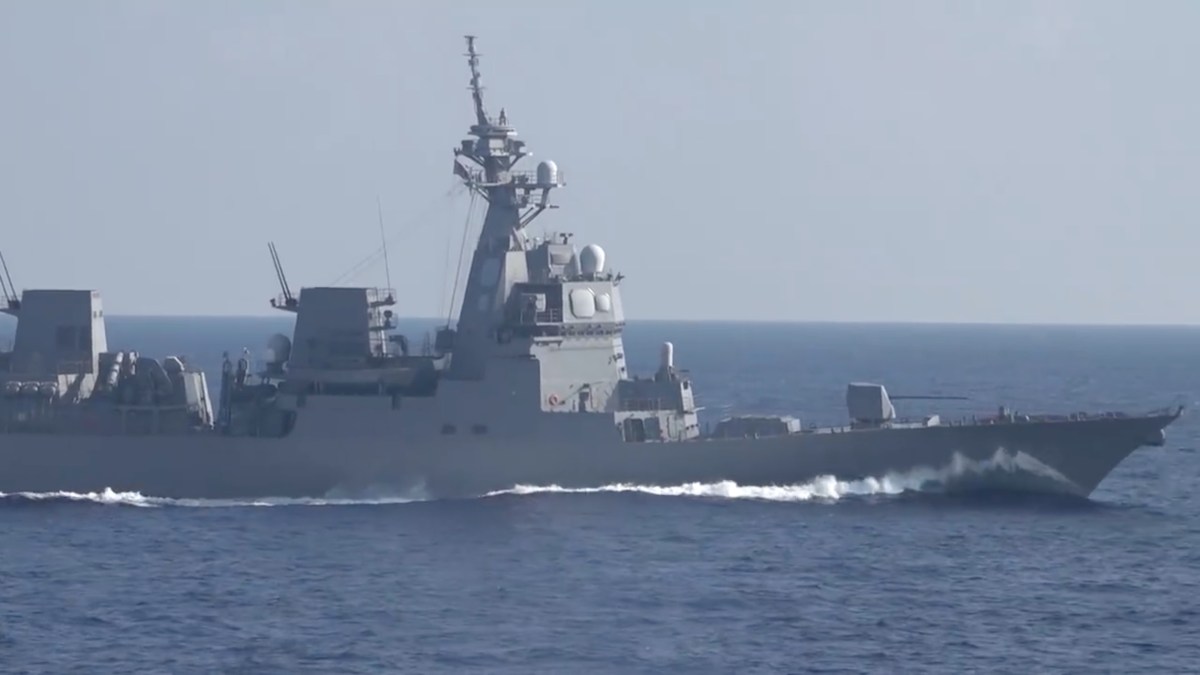
Taiwan kicked off a five-day Immediate Combat Readiness Exercises package this week to test rapid deployment, including tanks on urban roads in Taoyuan. China’s military released video this week of a close encounter between the Liaoning carrier group and a Japanese warship during a recent Western Pacific deployment, aligning with reporting that the group operated for more than 40 days across the South China Sea and Philippine Sea. Taiwan’s Ministry of National Defense continues to document Chinese incursions into its Air Defence Identification Zone, consistent with years-long patterns. NASA’s FIRMS satellites detected eight low-confidence thermal anomalies over Taiwan between 22 and 23 June, which record heat but do not by themselves indicate strikes.
Change from previous assessment
Initial assessment of this topic for this run. New developments since the prior brief include Taiwan launching a five-day Immediate Combat Readiness Exercises package with visible armour movements in Taoyuan, PLA release of Liaoning carrier-group encounter footage during a recent Western Pacific deployment, and NASA FIRMS thermal data for 22-23 June showing only low-confidence anomalies over Taiwan.
Key judgments
- Taiwan conducted a five-day Immediate Combat Readiness Exercises package this week, very likely to test rapid mobilisation and deployment, with armour operating on public roads in Taoyuan. (Confidence: medium · REPORTED)
- I&W: Taiwan MND issues an end-of-exercise communiqué detailing units and timelines for the Immediate Combat Readiness Exercises in Taipei and Taoyuan (0-14 days)
- I&W: Local traffic advisories in Taoyuan for armoured vehicle movements are cancelled before the five-day window closes (0-7 days)
- The People’s Liberation Army Navy very likely maintained a sustained blue-water presence east and south of Taiwan in recent weeks, reflected by the Liaoning carrier group’s more than 40-day deployment across the South China Sea and Philippine Sea and a close encounter with a Japanese warship shown in footage released this week. (Confidence: medium · REPORTED)
- I&W: Japan Joint Staff public releases or PLA imagery geolocate the Liaoning group operating in the Philippine Sea (0-1 month)
- I&W: Port-return imagery confirms the Liaoning group berthed with no further at-sea activity (0-1 month)
- Chinese air and maritime pressure on Taiwan is likely to remain routine, consistent with Taiwan’s Ministry of National Defense reporting of repeated incursions into Taiwan’s Air Defence Identification Zone across multiple years. (Confidence: medium · REPORTED)
- I&W: Taiwan MND daily releases continue to list PLA aircraft and vessels entering Taiwan’s ADIZ or crossing the median line (0-14 days)
- I&W: Consecutive MND daily releases report zero PLA ADIZ entries (0-14 days)
- There is almost certainly no evidence of kinetic strikes in Taiwan during 22-23 June, as NASA recorded eight low-confidence thermal anomalies over Taiwan in that period and satellite thermal detections record heat sources rather than causation. (Confidence: high · ASSESSED)
- I&W: Subsequent NASA FIRMS passes show no high-confidence thermal clusters co-located with official damage reports (0-7 days)
- I&W: Official authorities or credible imagery confirm strike damage at locations matching thermal detections (0-7 days)
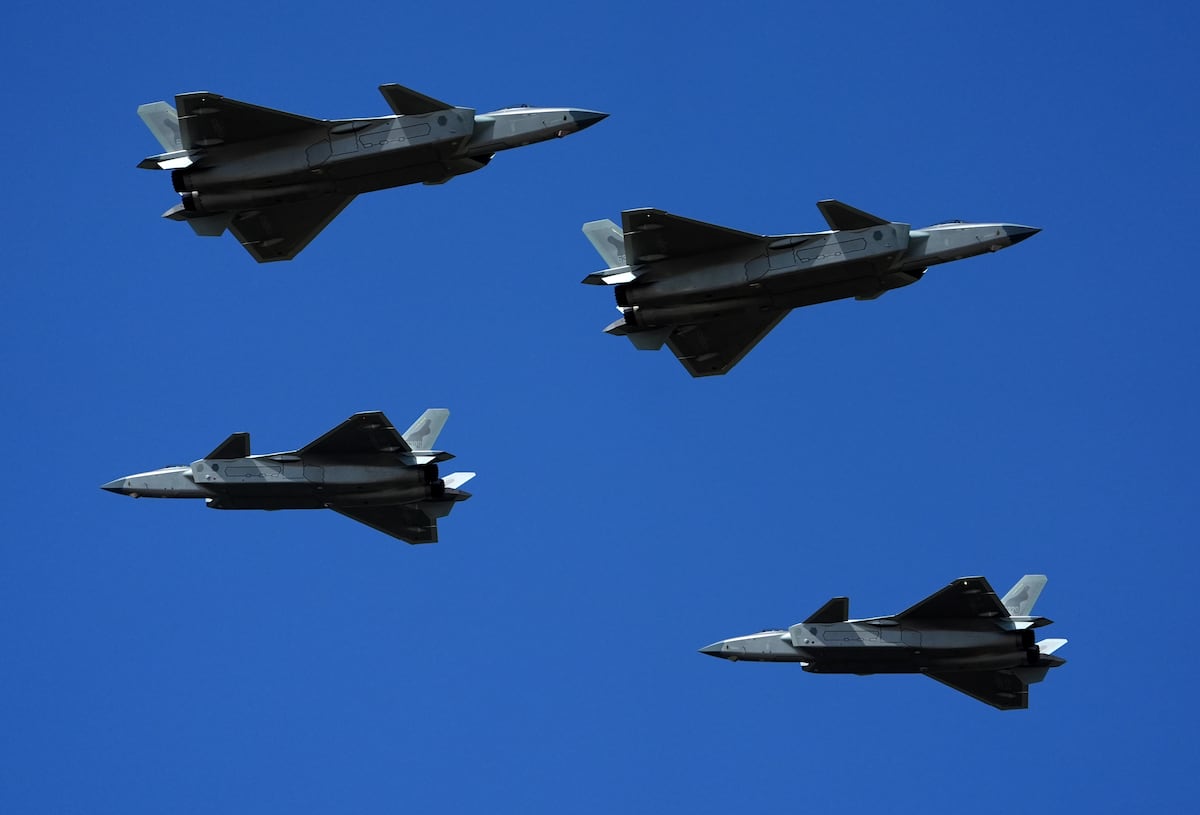
- PLA air-to-air missile developments likely erode Taiwan and allied support-aircraft standoff advantages around the Strait in the near term, given reporting that the PL-16 is designed to target airborne early warning and refuelling aircraft at an estimated 200-300 km and that J-20s may carry increased missile loads alongside 200 km-class PL-15s. (Confidence: medium · ASSESSED)
- I&W: PLA-released footage or exercise reporting shows J-20 sorties with PL-16 loadouts in the Eastern Theatre Command (1-3 months)
- I&W: Absence of PL-16 integration in publicly released training or airshow materials (3-6 months)
- Escalation risks around Taiwan remain, as demonstrated by the 4-11 August 2022 PLA live-fire drills that included at least 11 missile launches into waters around Taiwan, with five reported by Japan in its exclusive economic zone, following a senior US visit. (Confidence: medium · ASSESSED)
- I&W: Announcement of new PLA live-fire closure zones around Taiwan following a high-profile political visit or statement (1-3 months)
- I&W: Comparable political events occur without associated PLA live-fire drill notifications (1-3 months)
Outlook & scenarios
Managed pressure without acute crisis (60%)
PLA sustains routine ADIZ incursions and periodic blue-water deployments while Taiwan increases readiness drills and public civil-defence visibility. Both sides emphasise legal justifications and messaging. No closures or missile launches occur, and thermal and visual indicators show no kinetic activity.
Short-notice PLA show-of-force (35%)
A political trigger prompts joint air-sea drills near Taiwan with temporary exclusion zones and intensified ADIZ activity. Messaging reprises 2022 themes but stops short of missile overflights. Liaoning or other carrier groups operate east of Taiwan concurrently to stress multiple axes.
Capability signalling in the air domain (25%)
PLA publicises integration of PL-16-class missiles on J-20, paired with training focused on targeting support aircraft. Taiwan adapts airspace management and dispersal drills while partners adjust surveillance orbits further from the Strait to mitigate risk.
Recommendations
- Task routine collection against Taiwan MND daily ADIZ updates and cross-reference with commercial ADS-B and AIS to quantify incursion tempo and patterns.
- Maintain a watch on PLA and Japan Joint Staff public releases for Liaoning group location, flight-deck activity rates, and composition to assess readiness cycles.
- Stand up a FIRMS/VIIRS-based alert for Taiwan coordinates, flagging high-confidence thermal clusters and correlating with official damage reports or local media to rapidly assess any putative strike activity.
- Produce a technical brief on PL-16 and PL-15 employment concepts, likely loadouts on J-20, and implications for AWACS and tanker orbits supporting Taiwan, to inform standoff route and basing risk assessments.
- Pre-plan an escalation indicators checklist keyed to live-fire exclusion notices, missile NOTAMs, and maritime safety warnings, enabling a rapid pivot from routine monitoring to crisis posture if triggered.
Confidence & uncertainty
Overall confidence is medium. Taiwan’s drills and the Taoyuan armour movements are supported by reliable wire-service reporting. The Liaoning carrier-group video release and deployment context rest on major-media reporting with limited independent corroboration inside the window. NASA FIRMS thermal detections are high-reliability for recording heat sources, supporting the non-kinetic assessment for 22-23 June, but they cannot alone determine causation. Several contextual claims on 2022 PLA drills are well attested yet outside the current window and contain minor timeline discrepancies, which tempers confidence.
Alternative analysis (red cell)
The reporting mix relies heavily on single-source institutional releases, medium-confidence technical descriptions, and a historical precedent with internal inconsistencies. A more cautious analytic posture is defensible: observed exercises, thermal anomalies, and platform/weapon reports are indicants of activity and emerging capability, but they do not, by themselves, prove sustained maritime presence, definitive erosion of standoff advantages, or current elevated escalation risk without independent, contemporaneous corroboration and resolution of contradictions.
Intelligence gaps
- [EEI 1.1 · PARTIAL] Concentration of PLA amphibious warfare vessels exceeding 15 ships in Fujian Province naval ports. Recommended collection: imagery/satellite
- [EEI 1.2 · UNCOVERED] Unplanned surge in encrypted communications traffic from PLA Eastern Theater Command headquarters. Recommended collection: SIGINT
- [EEI 1.3 · UNCOVERED] Movement of PLA airborne unit heavy equipment to airbases within 200km of Taiwan Strait. Recommended collection: imagery/satellite
- [EEI 2.1 · PARTIAL] Daily aggregate count of PLA Air Force sorties within 30km of the median line. Recommended collection: radar
- [EEI 2.2 · PARTIAL] Number of active PLA naval live-fire exercise zones in Taiwan Strait international waters. Recommended collection: SIGINT
- [EEI 2.3 · UNCOVERED] Positioning of PLA Type 055 destroyers west of 122°E longitude. Recommended collection: maritime/AIS
- [EEI 3.1 · PARTIAL] Operational activation of Taiwan's Hsiung Feng III coastal defense missile systems. Recommended collection: SIGINT
- [EEI 3.2 · UNCOVERED] Increased cargo aircraft movements to Penghu Islands military installations. Recommended collection: air/ADS-B
Cited sources
[1] Associated Press · Taiwan begins 5-day military drill with tanks patrolling streets (A) · sha256:1f0c89489f20 [2] newsweek.com · China shows aircraft carrier’s “dangerous” encounter with Japanese warship (B) · sha256:0da3f1605a21 [3] Wikipedia · 2022 Chinese military exercises around Taiwan (B) · sha256:fbc32469e7f2 [4] Wikipedia · Fourth Taiwan Strait Crisis (B) · sha256:36ef98bf8e33 [5] NASA · NASA FIRMS thermal detections — Taiwan (2d) (A) · sha256:adaaedf89d7b [6] defensenews.com · Can China’s latest air-to-air missile take on its US equivalent? Definitely maybe, experts say. (B) · sha256:a58c3d93180c
Source content hashes were computed at collection time; the cited text is preserved unmodified for the life of this product.
Red cell review: PARTIAL DISSENT
TLP:CLEAR