TLP:CLEAR · Disclosure is not limited.
Taiwan Strait Tensions: Exercise Activity and Cable Security, 15 to 22 October 2026
Time window: Last 7 days · Audience: General analyst · Type: Situation report · DTG: 2026-10-22 19:08Z · Overall confidence: LOW
BLUF
Keen Sword is likely under way in Japan through 29 October, while the reported Type-25 and NMESIS deployment on Yonaguni remains unverified. Taiwan and the Philippines are discussing closer maritime and undersea cable cooperation, but the supplied reporting does not establish that cable incidents were directed by Beijing or justify raising the likelihood of a PLA attack above unlikely.
Executive summary
Reporting for 15 to 22 October describes Keen Sword, planned Japanese and US missile deployments on Yonaguni, and US Army long-range fires activity in the Philippines and Japan. Philippine and Taiwanese officials have also described cooperation on undersea cable protection and Bashi Channel surveillance. Taiwan has stepped up cable protection after reported incidents, including the reported jailing of a Chinese ship captain and a Philippine Coast Guard challenge to a Chinese research ship near cable corridors; the reporting does not establish state direction. NASA FIRMS recorded nine thermal detections over Taiwan on 21 to 22 October, none high-confidence, and the data do not identify their cause. A PLA attack on Taiwan in the next 1 to 3 months remains unlikely on the supplied evidence, but confidence is low because key military claims rely on trade-publication or social-media reporting without independent corroboration.
Change from previous assessment
Since the 21 October brief, reporting adds Philippine and Taiwanese statements on undersea cable protection and Bashi Channel cooperation, a Philippine Coast Guard challenge to a Chinese research ship near cable corridors off northern Batanes, and the reported jailing in Taiwan of a Chinese ship captain over cable damage. The current material specifies Type-25 and NMESIS as the planned Yonaguni systems, but does not verify their deployment. NASA FIRMS now reports nine detections over Taiwan on 21 to 22 October, none high-confidence, compared with seven detections in the previous brief. The assessment that a PLA attack in the next 1 to 3 months is unlikely is unchanged; confidence remains low.
Key judgments
- Taiwan and the Philippines are likely to deepen practical maritime coordination around the Bashi Channel and undersea cable protection. Officials have described discussions on cable security and mutual interests, while a separate report says the two sides intend to improve Bashi Channel surveillance; these statements establish intent, not that joint operations have begun. (Confidence: medium · ASSESSED)
- I&W: CONFIRM: Taipei and Manila announce a joint Bashi Channel surveillance activity or a formal undersea cable protection arrangement. (0 to 3 months)
- I&W: BREAK: A Philippine or Taiwanese official publicly states that the planned surveillance or cable-protection discussions have been suspended. (0 to 3 months)
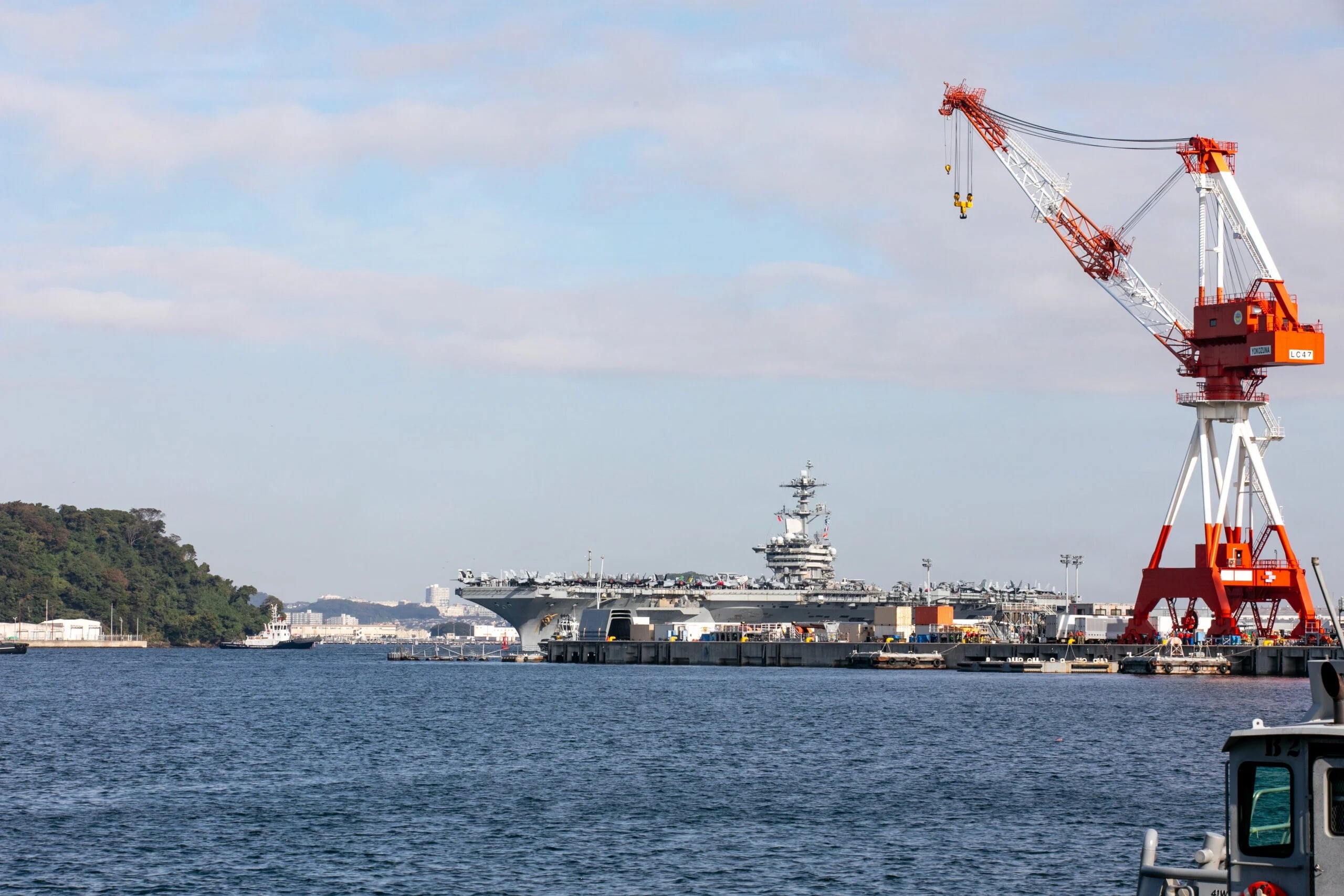
- Keen Sword is likely under way through 29 October, but the planned deployment of Type-25 land-to-ship missiles and the NMESIS ground-based missile system on Yonaguni is not verified as completed. Trade-publication reporting gives force totals of 45,000 Japanese and 12,000 US personnel, names USS Theodore Roosevelt, USS Chosin and USS Decatur as arrivals at Yokosuka, and lists France, Germany, the Netherlands, New Zealand and the Philippines as first-time participants. (Confidence: medium · REPORTED)
- I&W: CONFIRM: Japanese or US exercise documentation, or imagery, identifies Type-25 and NMESIS systems deployed on Yonaguni. (0 to 14 days)
- I&W: BREAK: Japan or the US publicly states that Keen Sword has been cancelled or that the planned Yonaguni missile deployment did not occur. (0 to 14 days)
- US Army long-range fires activity is reported across the Philippines and Japan, including a Typhon presence in the Philippines lasting more than 30 consecutive months, HIMARS exercises at Itbayat and Balabac, and Typhon activity in Japan followed by storage at an Okinawa base in October. The details come principally from one trade-publication account, so the record supports a reported posture but not a fully verified current inventory or operational status. (Confidence: medium · REPORTED)
- I&W: CONFIRM: US Army statements or imagery identify Typhon in the Philippines or confirm the system remains stored at the Okinawa base. (0 to 3 months)
- I&W: BREAK: The US Army publicly confirms Typhon has left the Philippines and Japan and that no further HIMARS activity is planned at Itbayat or Balabac. (0 to 3 months)
- Reported cable-related incidents are driving greater attention to undersea link security, but the supplied reporting does not establish that Beijing directed the alleged interference. Taiwan has stepped up protection after incidents involving cables and China-linked vessels; a Taiwanese representative referred to the jailing of a Chinese ship captain over cable damage, while the Philippine Coast Guard reportedly challenged a Chinese research ship near cable corridors off northern Batanes. (Confidence: medium · ASSESSED)
- I&W: CONFIRM: A Taiwanese investigation or court finding states that evidence is insufficient to link the captain or cable damage to direction from Beijing. (0 to 3 months)
- I&W: BREAK: A Taiwanese investigation or court finding presents evidence linking the captain or the cable damage to direction by Chinese state authorities. (0 to 3 months)
- NASA FIRMS recorded nine thermal detections over Taiwan on 21 to 22 October, with none rated high-confidence. These detections are unlikely to establish military activity because the system records heat, not cause. (Confidence: medium · ASSESSED)
- I&W: CONFIRM: Follow-up reporting identifies the locations as industrial fires, wildfires or other non-military heat sources. (0 to 14 days)
- I&W: BREAK: Taiwan authorities or independently verifiable reporting link a specific detection to a confirmed strike or shelling incident. (0 to 14 days)
- A PLA attack on Taiwan in the next 1 to 3 months remains unlikely on the supplied evidence. Claims that PLA aircraft are flying around Taiwan or that Chinese civilian ferries have military-style ramps come from uncorroborated social-media posts; Taiwan navy beach-mapping plans describe defensive preparation, not evidence of a PLA attack sequence. Confidence is low because the relevant PLA activity claims are thin and not independently verified. (Confidence: low · ASSESSED)
- I&W: CONFIRM: Through 14 November, official Taiwanese or Japanese reporting records no PLA civilian-ferry requisitions, amphibious loading drills or sustained mobilisation linked to an attack on Taiwan. (0 to 14 days)
- I&W: BREAK: Taiwanese or Japanese authorities document PLA civilian-ferry requisitions accompanied by amphibious loading drills at identified ports. (0 to 14 days)
- The report that a Chinese aircraft carrier strike group conducted drills in the western Pacific this week is unverified in the supplied material. The only claim attributes remarks about the drills and Japan's limited monitoring capabilities to Defence Minister Shinjiro Koizumi through a Japan Times post relayed on Mastodon. (Confidence: low · REPORTED)
- I&W: CONFIRM: Japan's Defence Ministry or another official Japanese statement identifies the carrier group and the location and dates of its western Pacific drills. (0 to 14 days)
- I&W: BREAK: Koizumi or Japan's Defence Ministry publicly corrects or denies the reported remarks or drill account. (0 to 14 days)
Outlook & scenarios
Exercise completion and limited cable cooperation (60%)
Keen Sword is likely to conclude on 29 October, with the Yonaguni missile deployment remaining unverified unless Japanese or US reporting confirms it. Taipei and Manila are likely to continue cable-protection and Bashi Channel discussions without a reported cable incident leading to a direct confrontation.
More visible Taiwan-Philippines coordination (30%)
An announcement of joint surveillance or a formal cable-protection arrangement is a plausible next step. Beijing is likely to continue objecting to closer Taiwan-Philippines ties, consistent with its reported warning that Manila should adhere to the one-China principle.
Cable-related encounter escalates (10%)
A further encounter involving a Chinese vessel near cable corridors off Batanes, or a new cable-damage allegation, is a very unlikely but high-impact path to sharper maritime friction. If such an incident occurs, public accusations and competing accounts are likely to complicate efforts to establish responsibility.
Recommendations
- Track Japanese and US public reporting through 29 October for confirmation of Keen Sword force participation and the presence or absence of Type-25 and NMESIS systems on Yonaguni. Keep reported force totals separate from independently verified figures.
- Seek official Japanese confirmation of the reported Chinese carrier group drills before using them in an assessment of PLA activity or Japanese monitoring gaps.
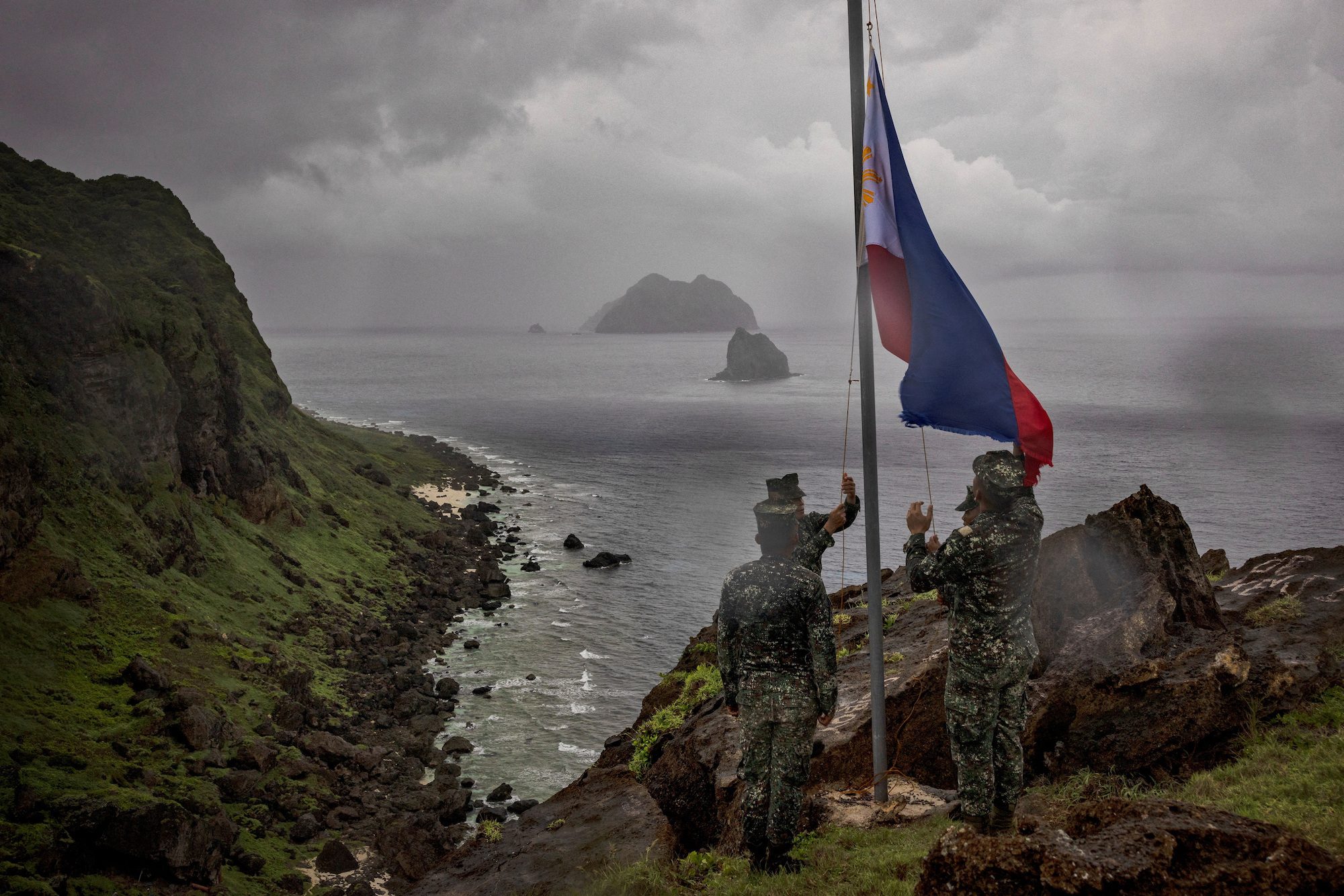
- Maintain a separate incident log for cable damage, vessel activity near cable corridors and coast guard responses around northern Batanes and the Bashi Channel. Distinguish evidence of an incident from evidence of state direction.
- Treat NASA FIRMS detections as heat observations only. Attribute a detection to military activity only when a specific location and cause are independently reported.
- Keep the PLA attack assessment at unlikely unless reporting establishes specific mobilisation indicators, such as civilian-ferry requisitions paired with amphibious loading drills.
Confidence & uncertainty
Overall confidence is low because much of the military reporting relies on a single trade-publication account, while claims about PLA activity and ferry features rely on low-reliability social-media posts. The wire-service reporting on cable incidents and official NASA data are more reliable, but the cable reports do not establish state direction and the thermal detections do not identify a cause. Independent confirmation of the Yonaguni deployment and the reported carrier drills is absent.
Alternative analysis (red cell)
The evidence more defensibly indicates exploratory Taiwan-Philippines engagement than a likely deepening of practical coordination, because, and 75c516c4-c587-47de-b2a1-1bb9dc4e6a53 do not show implementation. Separately, the supplied material does not support estimating a PLA attack as unlikely; it supports only that the available indicators are weak, uncorroborated, and insufficient for a reliable near-term assessment. The appropriate reading is therefore continued uncertainty pending stronger operational or official evidence.
Intelligence gaps
- [EEI 1.1 · PARTIAL] Concentration of PLA amphibious warfare vessels exceeding 15 ships in Fujian Province naval ports. Recommended collection: imagery/satellite
- [EEI 1.2 · UNCOVERED] Unplanned surge in encrypted communications traffic from PLA Eastern Theater Command headquarters. Recommended collection: SIGINT
- [EEI 1.3 · UNCOVERED] Movement of PLA airborne unit heavy equipment to airbases within 200km of Taiwan Strait. Recommended collection: imagery/satellite
- [EEI 2.1 · PARTIAL] Daily aggregate count of PLA Air Force sorties within 30km of the median line. Recommended collection: radar
- [EEI 2.2 · PARTIAL] Number of active PLA naval live-fire exercise zones in Taiwan Strait international waters. Recommended collection: SIGINT
- [EEI 2.3 · UNCOVERED] Positioning of PLA Type 055 destroyers west of 122°E longitude. Recommended collection: maritime/AIS
- [EEI 3.1 · UNCOVERED] Operational activation of Taiwan's Hsiung Feng III coastal defense missile systems. Recommended collection: SIGINT
- [EEI 3.2 · UNCOVERED] Increased cargo aircraft movements to Penghu Islands military installations. Recommended collection: air/ADS-B
Red cell review: PARTIAL DISSENT
TLP:CLEAR