TLP:CLEAR · Disclosure is not limited.
Taiwan Strait tensions: maritime pressure and defensive readiness, 5-12 September 2026
Time window: Last 7 days · Audience: General analyst · Type: Situation report · DTG: 2026-09-12 19:05Z · Overall confidence: MEDIUM
BLUF
China's maritime pressure around Taiwan has broadened east of the island, with China Coast Guard cutters deployed there and commercial vessels reportedly questioned or inspected. Taiwan is increasing anti-landing training, but an active blockade in the next 0-14 days remains very unlikely. Any shift from episodic patrols to sustained inspections would expose Taiwan's natural gas reserves, estimated at about 10 days under blockade conditions.
Executive summary
Reporting this week adds evidence of Chinese law-enforcement activity east of Taiwan, including the Daishan, Baita, Haixun 09 and Haixun 06 vessels and reported questioning or inspection of 198 commercial ships. The frequency of these patrols remains unclear because one account describes them as the first reported since January 2025, while another reports an average of two cutters per month since June. Taiwan has announced live-fire Tianma anti-armor drills at Fongkeng Beach from 16 to 18 September and a 10-day Lu Sheng force-on-force exercise from 14 to 23 October involving the 269th Mechanized Infantry Brigade and 564th Combined Arms Brigade. The reporting does not show an active blockade. A six-second AIS sample showing five vessels is insufficient to establish normal traffic, while NASA thermal detections and higher oil prices do not establish Taiwan Strait military activity. Chinese humanoid-robot work remains an R&D effort rather than a demonstrated operational capability.
Change from previous assessment
This update adds a clearer maritime-pressure judgement based on the China Coast Guard's east-of-Taiwan deployments, the reported inspection of 198 commercial vessels and the first-reported-since-January-2025 framing. It lowers confidence in the scale of that pattern because another report describes recurring deployments averaging two cutters per month. It adds Taiwan's scheduled 16-18 September Tianma drills, the 14-23 October Lu Sheng exercise and delivery of 1,700 TOW 2B RF missiles, 100 Improved Target Acquisition Systems and 100 M1167 Humvees. The assessment that an active blockade is very unlikely in the next 0-14 days remains, but the energy consequences of sustained inspections are now more clearly defined. The humanoid-robot judgement remains a longer-term R&D assessment, and the prior conclusion on oil prices and NASA thermal detections is unchanged.
Key judgments
- China is likely to sustain or expand grey-zone maritime pressure east of Taiwan over the next 1-3 months. The China Coast Guard deployed the 5,000-tonne Daishan and 3,000-tonne Baita cutters east of Taiwan on 1 June, later sent the 10,000-tonne Haixun 09 and 6,600-tonne Haixun 06 around the island, and reportedly questioned or inspected 198 commercial vessels. Confidence is reduced because one report describes the east-of-Taiwan patrols as the first reported since January 2025, while another claims an average of two cutters per month since June. (Confidence: medium · ASSESSED)
- I&W: China Coast Guard identifies the Daishan, Baita, Haixun 09 or Haixun 06 in another east-of-Taiwan patrol, or reports another inspection of commercial shipping. (0-30 days)
- I&W: No additional east-of-Taiwan patrol or commercial-vessel questioning appears in corroborated reporting for three months, weakening the assessment of sustained expansion. (1-3 months)
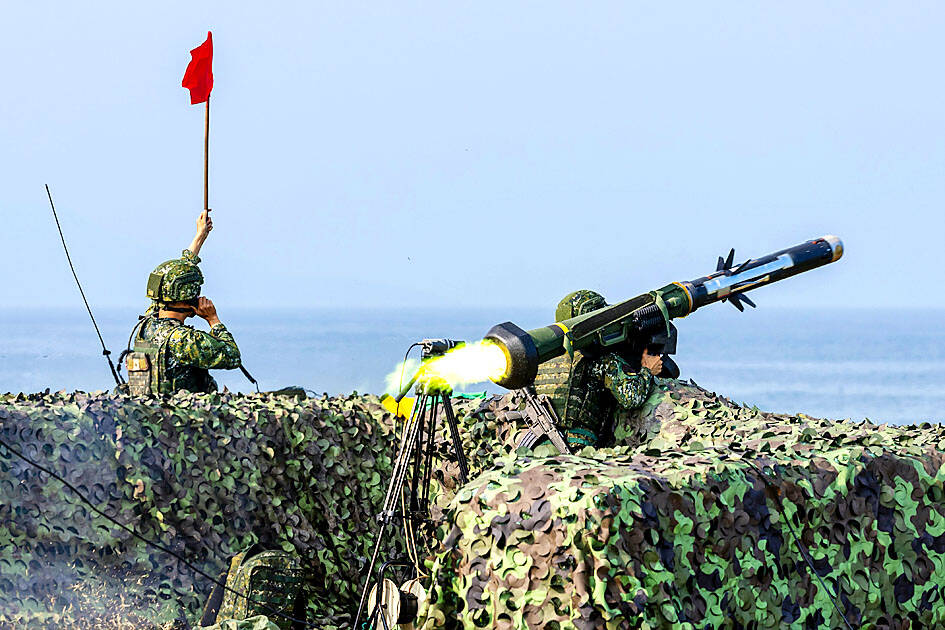
- Taiwan is very likely to conduct the announced anti-landing and force-on-force exercises through 23 October. The 6th Army Command is scheduled to hold live-fire Tianma drills at Fongkeng Beach in Hsinchu County from 16 to 18 September, while the Taiwan Army's Lu Sheng exercise is scheduled for 14 to 23 October with the Taoyuan-based 269th Mechanized Infantry Brigade and the Kaohsiung-based 564th Combined Arms Brigade. These activities indicate increased defensive readiness, not an imminent Taiwanese offensive. (Confidence: high · REPORTED)
- I&W: The 6th Army Command conducts the scheduled 16-18 September Tianma live-fire drills at Fongkeng Beach from 0800 to 1200 daily. (0-14 days)
- I&W: The Taiwan Army begins Lu Sheng on 14 October with the 269th Mechanized Infantry Brigade and 564th Combined Arms Brigade, or officially cancels or materially shortens the exercise. (1-2 months)
- An active blockade of Taiwan is very unlikely in the next 0-14 days, but a sustained Chinese inspection campaign would place Taiwan's energy resilience under severe pressure. Current evidence consists of a roughly six-second AIS sample showing five vessels and a low-confidence assessment of the data's wider utility, not evidence of a blockade. Taiwan imports more than 98 per cent of its energy, while CSIS estimates that natural gas reserves would last about 10 days and coal and oil 7 to 20 weeks under a coast guard and navy blockade scenario. (Confidence: low · ASSESSED)
- I&W: Repeated AIS observations over 24-48 hours continue to show commercial vessels, including RUI NING 3, TAI CHIN 306, LEH SHIAN, NOCC OCEANIC or CHYUAN JIA FWU NO166, moving through the Taiwan area. (0-14 days)
- I&W: The China Coast Guard and Chinese Navy announce or enact an inspection regime or restricted area around Taiwan lasting more than one day, accompanied by repeated evidence of diverted or halted commercial traffic. (0-14 days)
- China is likely to continue political and economic coercion against Taiwan over the next 1-3 months while retaining reunification as a stated national objective. The available reporting documents selective sanctions, suspension of tariff concessions on 145 Taiwan products, repeated reunification language and diplomatic pressure that reduced Taiwan's diplomatic partners. The near-term forecast is thin because the reporting does not identify a new sanction or tariff action during this reporting period. (Confidence: low · ASSESSED)
- I&W: Beijing announces a new selective sanction against a Taiwan business or individual, or suspends tariff concessions on additional Taiwan products. (1-3 months)
- I&W: China publicly removes existing economic measures and reduces official references to reunification as a national objective. (1-3 months)
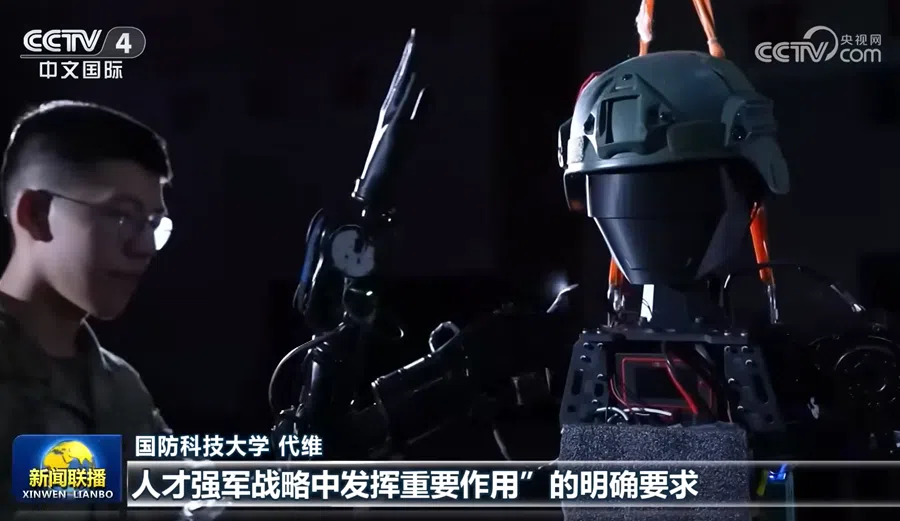
- PLA humanoid-robot activity is likely to remain an R&D effort rather than an operational Taiwan capability over the next 1-3 years. Reuters reported testing against battlefield requirements after reviewing more than 100 Chinese military documents; CCTV showed testing on 1 August, the PLA Daily called on 28 August for faster refinement, and a June procurement document allocated about US$300,000 for data collection. A Xi'an research paper described six robotic combat units for urban building clearance, but expert reporting places practical battlefield use five to ten years away and identifies one to two hours of high-intensity battery endurance as a limitation. This judgement rests partly on single-source reporting and low-confidence technical commentary. (Confidence: medium · ASSESSED)
- I&W: PLA institutions continue procurement, testing or publication activity involving humanoids without evidence of fielded units integrated into operational formations. (6-12 months)
- I&W: China demonstrates a fielded humanoid unit with documented endurance, command integration and participation in a military exercise or operation. (1-3 years)
Outlook & scenarios
Continued grey-zone pressure without blockade (55%)
China Coast Guard patrols and selective inspections east of Taiwan continue intermittently. Taiwan conducts the scheduled Tianma and Lu Sheng exercises. Commercial traffic remains active, and neither Beijing nor Taipei crosses into a sustained blockade or open conflict.
Exercise-linked pressure spike (30%)
Taiwan's September and October exercises produce a short-lived increase in Chinese maritime and political pressure. Chinese activity remains calibrated, with patrols, public warnings or limited vessel interactions rather than sustained interdiction.
Sustained inspection campaign (15%)
China Coast Guard and Chinese Navy forces coordinate repeated inspections around Taiwan. Shipping delays and diversions accumulate, raising concern over Taiwan's roughly 10-day natural gas resilience under blockade conditions. This is a low-probability, high-impact pathway that would mark a clear break from the current evidence.
Recommendations
- Establish a daily maritime watch for China Coast Guard activity east of Taiwan. Record the presence, location and mission of the Daishan, Baita, Haixun 09 and Haixun 06, along with any reported questioning or inspection of commercial vessels.
- Treat AIS evidence as a trend indicator rather than proof of normal traffic. Require repeated observations over 24-48 hours, vessel-routing changes and corroborating official or commercial shipping reports before assessing congestion, diversion or blockade effects.
- Track execution of the 16-18 September Tianma drills at Fongkeng Beach and the 14-23 October Lu Sheng exercise. Separate scheduled training activity from indicators of mobilisation, including changes to exercise duration, participating units or operating areas.
- Maintain an energy-risk watch focused on Taiwan's imported LNG, coal and oil exposure. Report any sustained shipping delay alongside reserve-duration estimates, rather than attributing changes in Brent or WTI prices to Taiwan Strait activity without direct evidence.
- Separate PLA humanoid-robot research from operational capability in future reporting. Require evidence of fielded units, endurance in realistic conditions and integration with named PLA formations before raising the assessment of near-term military utility.
Confidence & uncertainty
Overall confidence is medium because multiple high-reliability reports corroborate Taiwan's announced exercises, anti-armor deliveries and the broad pattern of Chinese maritime pressure, while official NASA and EIA data support the narrow conclusion that thermal detections and oil-price movements do not establish Taiwan Strait military activity. Confidence is lower for the scale and regularity of China Coast Guard patrols because the reporting conflicts and includes low-confidence interpretations. The AIS sample is too brief to establish normal shipping conditions, and the humanoid-robot assessment relies partly on single-source reporting and technical estimates.
Intelligence gaps
- [EEI 1.1 · UNCOVERED] Concentration of PLA amphibious warfare vessels exceeding 15 ships in Fujian Province naval ports. Recommended collection: imagery/satellite
- [EEI 1.2 · UNCOVERED] Unplanned surge in encrypted communications traffic from PLA Eastern Theater Command headquarters. Recommended collection: SIGINT
- [EEI 1.3 · UNCOVERED] Movement of PLA airborne unit heavy equipment to airbases within 200km of Taiwan Strait. Recommended collection: imagery/satellite
- [EEI 2.1 · PARTIAL] Daily aggregate count of PLA Air Force sorties within 30km of the median line. Recommended collection: radar
- [EEI 2.2 · PARTIAL] Number of active PLA naval live-fire exercise zones in Taiwan Strait international waters. Recommended collection: SIGINT
- [EEI 2.3 · UNCOVERED] Positioning of PLA Type 055 destroyers west of 122°E longitude. Recommended collection: maritime/AIS
- [EEI 3.1 · PARTIAL] Operational activation of Taiwan's Hsiung Feng III coastal defense missile systems. Recommended collection: SIGINT
- [EEI 3.2 · UNCOVERED] Increased cargo aircraft movements to Penghu Islands military installations. Recommended collection: air/ADS-B
Red cell review: CONCUR WITH COMMENT
TLP:CLEAR