TLP:CLEAR · Disclosure is not limited.
Taiwan Strait Tensions: Maritime Pressure Broadens East of Taiwan
Time window: Last 7 days · Audience: General analyst · Type: Situation report · DTG: 2026-09-09 19:04Z · Overall confidence: HIGH
BLUF
China Coast Guard activity east of Taiwan is likely becoming a sustained coercive campaign, with patrols covering 27,100 square nautical miles and crews reportedly questioning or inspecting foreign commercial ships. An active blockade is very unlikely in the next 0-14 days, but repeated interference raises the risk of a maritime incident and wider diplomatic escalation.
Executive summary
The clearest new development is the expansion of Chinese maritime activity along Taiwan's Pacific coast. Reports describe an average of two China Coast Guard cutters per month east of Taiwan since June 2026, including patrols 30 nautical miles from Taiwan's eastern coast and the reported questioning or inspection of 198 commercial vessels during a five-day voyage. Japan is strengthening preparations for a prolonged Taiwan contingency through the planned Kure defence hub, wider defence partnerships and debate over Self-Defence Forces authorities. The revised PRC National Defense Mobilization Law, a Taiwanese espionage indictment and unresolved allegations involving COSCO indicate broader pressure below the threshold of open conflict, but do not establish imminent kinetic action.
Change from previous assessment
Since the 8 September 2026 prior brief, the assessment has shifted from a primary focus on PLA air and naval activity to a broader maritime picture centred on China Coast Guard operations east of Taiwan and reported interference with commercial shipping. Confidence in the existence of sustained eastern maritime pressure has increased from medium to high at the pattern level, although confidence in the identity of the vessels involved remains medium because two reports conflict. This brief adds judgments on Japan's Kure defence hub and Self-Defence Forces debate, the PRC mobilisation law taking effect on 1 October, Taiwan's espionage case and the unresolved COSCO allegation. The earlier distinction between coercive pressure and an active blockade remains unchanged.
Key judgments
- China Coast Guard is likely institutionalising a maritime pressure campaign east of Taiwan. Reporting describes an average of two cutters per month since June 2026, patrol coverage of 27,100 square nautical miles with ships 30 nautical miles from Taiwan's eastern coast, the first such reported patrols in data since January 2025, and the questioning of foreign commercial ships, with Chinese state media reporting 198 inspections during a five-day voyage. The exact vessels involved in the June activity remain contested: one report names the 5,000-ton Daishan and 3,000-ton Baita, while another names the 10,000-ton Haixun 09 and 6,600-ton Haixun 06. Confidence is medium because the activity pattern is supported by repeated major-media reporting and ship-tracking calculations, but the vessel discrepancy remains unresolved. (Confidence: medium · ASSESSED)
- I&W: A China Coast Guard announcement or ship-tracking record shows another patrol east of Taiwan that questions or inspects foreign commercial vessels. (0-14 days)
- I&W: No repeat patrol is reported and tracked China Coast Guard vessels leave the eastern approaches without further contact with commercial shipping. (0-14 days)
- An active blockade of Taiwan is very unlikely in the next 0-14 days; the current record instead indicates coercive interference with shipping below the level of sustained closure. The reported activity consists of patrols outside Taiwan-claimed waters, questioning and inspections of commercial ships, rather than reported port closures or general denial of passage. A roughly six-second AIS sample showing KIZUNA21 and TAIPEI EXPRESS is too limited to establish wider shipping continuity. Confidence is medium because the distinction between interference and blockade is an analytic inference from incomplete maritime reporting. (Confidence: medium · ASSESSED)
- I&W: Chinese maritime agencies announce compulsory controls, or commercial operators report denied passage, forced diversion or sustained closure of a Taiwan port. (0-14 days)
- I&W: AIS records and operator reporting show continued passage through Taiwan's eastern approaches while China Coast Guard vessels remain outside Taiwan-claimed waters and conduct no further inspections. (0-14 days)
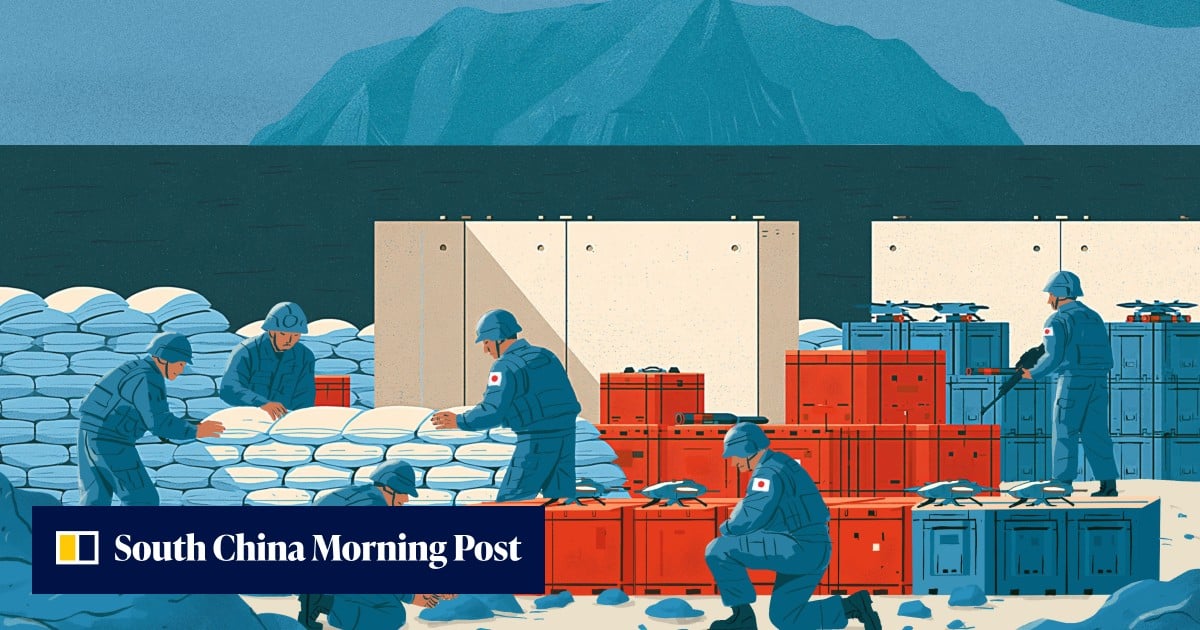
- Japan is likely to continue converting Taiwan contingency planning into sustained defence capacity. Tokyo has purchased a former Nippon Steel site in Kure, Hiroshima Prefecture, for a complex combining military facilities, logistics and defence production; Japan is also widening defence-industrial and operational ties with Australia, the Philippines, North America and Europe. Prime Minister Sanae Takaichi's position that a Taiwan contingency could constitute a survival-threatening situation for Japan, together with reporting that the Self-Defence Forces could act without a direct attack on Japan, indicates a more forward-leaning policy debate. Confidence is medium because the pattern is supported by several major-media reports, but the interpretation of future Japanese behaviour rests largely on reporting from two South China Morning Post articles. (Confidence: medium · ASSESSED)
- I&W: Japan announces further operational or defence-industrial arrangements with Australia, the Philippines, North American partners or European partners that explicitly address a Taiwan contingency. (0-3 months)
- I&W: Tokyo narrows the reported Self-Defence Forces authority or suspends development of the Kure defence hub. (0-3 months)
- Beijing is likely to widen domestic mobilisation and counter-espionage pressure connected to Taiwan competition, but the available evidence is thin and does not establish preparation for imminent war. The PRC National People's Congress passed a revised National Defense Mobilization Law on 28 August 2026, with effect from 1 October, and the revision permits expropriation of private property for PLA use. Separately, Taiwanese prosecutors indicted a Ministry of Health and Welfare researcher on 31 August for allegedly spying for a PRC agent. Confidence is low because the claims come from a single think-tank reporting stream and the espionage allegations remain at the prosecution stage. (Confidence: low · ASSESSED)
- I&W: The revised law takes effect on 1 October and PRC authorities issue implementing measures or orders for expropriation of civilian assets for PLA use. (0-3 months)
- I&W: Taiwanese prosecutors announce additional charges or court filings involving PRC recruitment of officials, researchers or other government personnel. (0-3 months)
- It is unlikely that the current record establishes PRC use of COSCO vessels for signals intelligence collection. Unnamed US officials alleged that COSCO ships carried hidden signals intelligence equipment, while the PRC Embassy in the United States and COSCO denied the allegation. COSCO's reported fleet of 464 container vessels, 271 international routes and calls at 668 ports shows the potential reach of the network but does not corroborate the intelligence claim. Confidence is low because the allegation is single-source, the officials are unnamed and the company and PRC government have directly rejected it. (Confidence: low · ASSESSED)
- I&W: Independent technical evidence, a named official investigation or a documented vessel case links a COSCO ship to signals intelligence equipment or collection. (1-3 months)
- I&W: A US investigation retracts the allegation or identifies a non-COSCO vessel and equipment source. (1-3 months)
Outlook & scenarios
Sustained maritime pressure below blockade threshold (60%)
The most likely course is continued China Coast Guard patrols east of Taiwan, with further questioning or inspection of foreign commercial ships. Beijing maintains pressure without closing Taiwan's ports or imposing general denial of passage. Japan continues work on the Kure defence hub and regional partnerships.
Administrative and security pressure expands (22%)
After 1 October 2026, the PRC applies the revised National Defense Mobilization Law through implementing measures affecting civilian assets. Taiwan announces further espionage cases, while maritime patrols continue. The pressure remains below open conflict but becomes more institutionalised.
Maritime incident triggers a regional crisis (10%)
A China Coast Guard encounter with a foreign commercial ship produces a collision, forced diversion or denial of passage. The United States condemns the action, Japan faces pressure to clarify the role of its Self-Defence Forces, and China sustains its patrols. This is the low-probability, high-impact wildcard.
Temporary operational pause (8%)
China Coast Guard activity falls below the reported average of two cutters per month, with no further reported inspections of commercial ships east of Taiwan. Japan continues long-term defence planning, but the immediate maritime pressure eases without a broader policy change.
Recommendations
- Maintain a daily maritime watch east of Taiwan. Track the Daishan, Baita, Haixun 09 and Haixun 06 separately, and record whether future reports resolve the conflicting accounts of the June deployments.
- Create a dedicated shipping-interference log for foreign commercial vessels questioned or inspected along Taiwan's Pacific coast. Record vessel identity, flag, position, date, nature of contact and the Chinese public justification.
- Use 1 October 2026 as a watchpoint for implementation of the revised PRC National Defense Mobilization Law. Look specifically for measures governing expropriation of civilian property for PLA use.
- Monitor Japanese decisions on the Kure defence hub, Self-Defence Forces authorities and defence cooperation with Australia, the Philippines, North American partners and European partners.
- Keep the COSCO signals intelligence allegation separate from confirmed reporting. Do not treat it as established without independent technical evidence, a named official investigation or a documented vessel case.
- Prioritise warning collection on denial of passage, port closures, forced diversion or repeated inspection of the same commercial route. These developments would mark a shift from maritime signalling towards operational coercion.
Confidence & uncertainty
Overall confidence is high in the assessment that Chinese maritime activity east of Taiwan has broadened and that Japan is strengthening preparations for a prolonged Taiwan contingency. The core pattern is supported by multiple major-media reports, ship-tracking calculations, Chinese state-media reporting and a US public characterisation of the China Coast Guard deployment as deeply destabilising. Confidence is lower on the exact identity of the June vessels, the intent behind the inspections and the COSCO intelligence allegation, which remains contradicted by direct PRC Embassy and COSCO denials.
Intelligence gaps
- [EEI 1.1 · UNCOVERED] Concentration of PLA amphibious warfare vessels exceeding 15 ships in Fujian Province naval ports. Recommended collection: imagery/satellite
- [EEI 1.2 · UNCOVERED] Unplanned surge in encrypted communications traffic from PLA Eastern Theater Command headquarters. Recommended collection: SIGINT
- [EEI 1.3 · UNCOVERED] Movement of PLA airborne unit heavy equipment to airbases within 200km of Taiwan Strait. Recommended collection: imagery/satellite
- [EEI 2.1 · UNCOVERED] Daily aggregate count of PLA Air Force sorties within 30km of the median line. Recommended collection: radar
- [EEI 2.2 · UNCOVERED] Number of active PLA naval live-fire exercise zones in Taiwan Strait international waters. Recommended collection: SIGINT
- [EEI 2.3 · UNCOVERED] Positioning of PLA Type 055 destroyers west of 122°E longitude. Recommended collection: maritime/AIS
- [EEI 3.1 · UNCOVERED] Operational activation of Taiwan's Hsiung Feng III coastal defense missile systems. Recommended collection: SIGINT
- [EEI 3.2 · UNCOVERED] Increased cargo aircraft movements to Penghu Islands military installations. Recommended collection: air/ADS-B
TLP:CLEAR