TLP:CLEAR · Disclosure is not limited.
Tehran De-escalation Talks: Mecca Pact Delegation Seeks Regional Restraint
Time window: Last 7 days · Audience: General analyst · Type: Situation report · DTG: 2026-10-26 18:10Z · Overall confidence: HIGH
BLUF
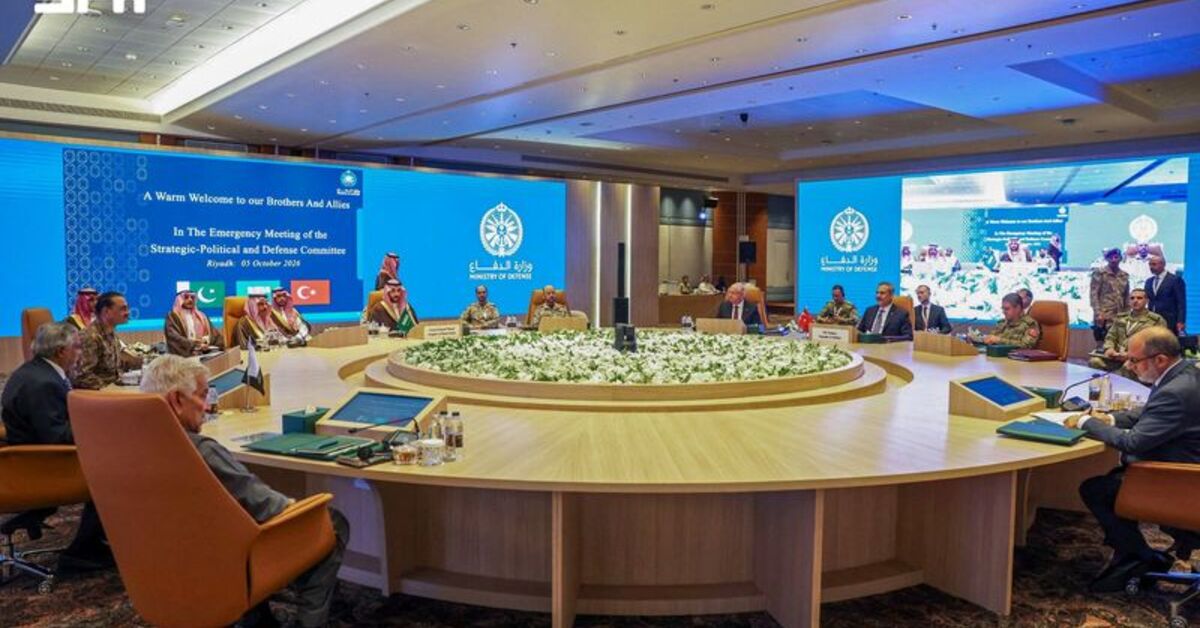
Saudi Arabia, Turkey and Pakistan met Iranian leaders in Tehran on 26 October 2026 and agreed to continue talks. The meeting opens a regional channel, but its mandate to mediate a US-Iran agreement is not established, while renewed strikes and Houthi attacks remain live risks.
Executive summary
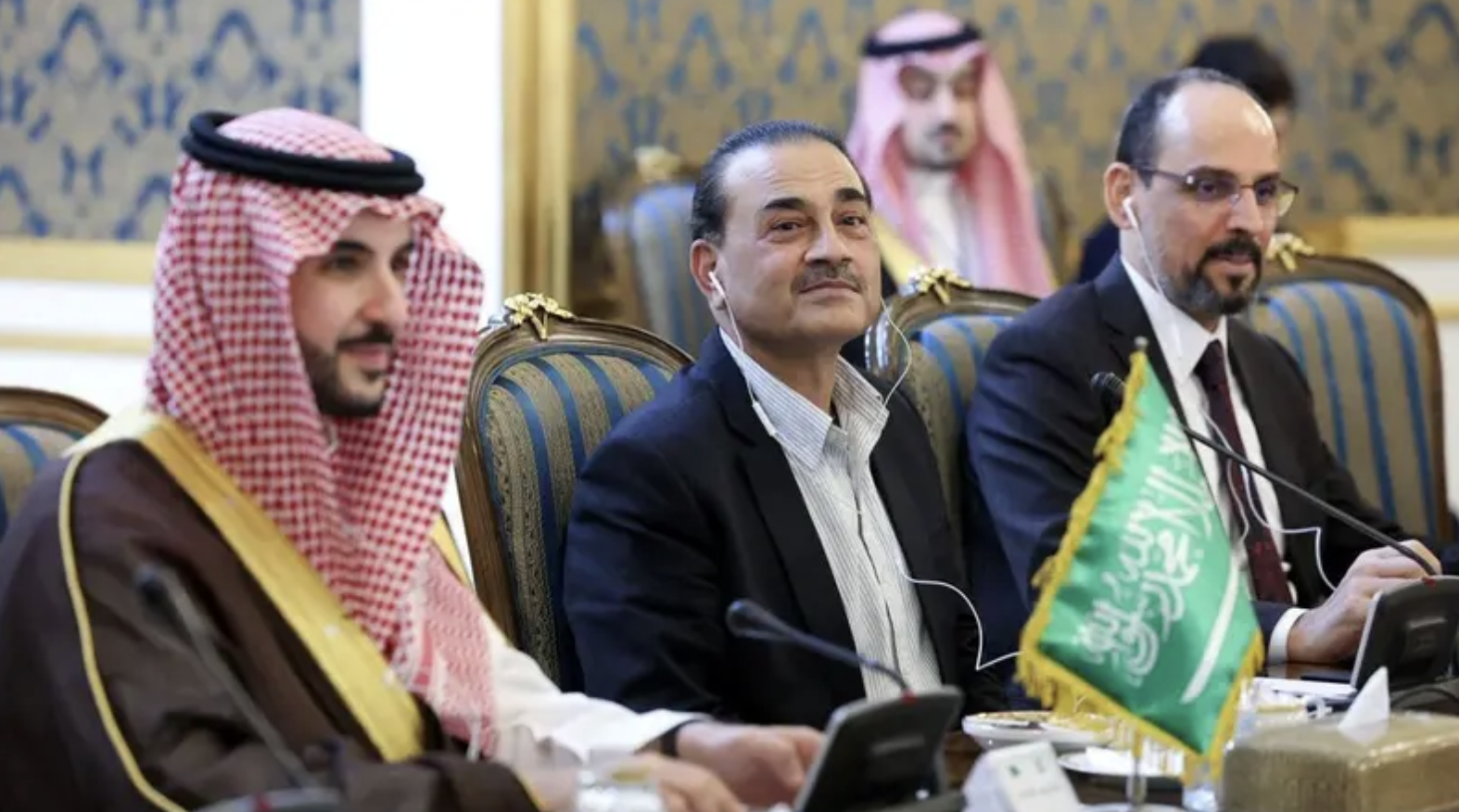
Saudi Defence Minister Prince Khalid bin Salman, Pakistan Army Chief Field Marshal Asim Munir and Turkish intelligence chief Ibrahim Kalin met Iranian President Masoud Pezeshkian and senior Iranian officials in Tehran. The four countries agreed to continue dialogue on regional security. Saudi officials described the visit as a de-escalation effort supporting mediation by Qatar and Pakistan; other reporting said there was not enough information to establish that US-Iran mediation was the meeting's specific purpose. Donald Trump threatened another US operation against Iran, while Iranian Foreign Minister Abbas Araghchi said indirect talks through Pakistan and Qatar were continuing and Tehran was ready to resume fighting. Iran also set conditions for discussing its nuclear programme. Meanwhile, the Houthis claimed attacks on Saudi pipeline pumping stations and Riyadh airport. The Mecca defence pact's practical force posture remains unclear, and reports differ on whether forces have deployed to Saudi Arabia.
Key judgments
- Iran, Saudi Arabia, Turkey and Pakistan held a quadrilateral meeting in Tehran on 26 October 2026 and agreed to continue talks on regional security. Wire-service and major-media reporting, alongside Saudi and Iranian statements, corroborates the meeting. Claims that it was the first high-level contact since the war or the pact was signed remain contested. (Confidence: high · REPORTED)
- I&W: A dated follow-up meeting or joint statement naming the four governments would confirm that the dialogue is continuing. (0-30 days)
- I&W: No follow-up meeting is scheduled and the four governments describe subsequent contact only as separate bilateral exchanges, weakening the assessment of a continuing four-country channel. (0-30 days)
- The Tehran mission is likely part of regional de-escalation, but it is not established that the delegation had an agreed mandate to mediate a US-Iran deal. Saudi statements describe tension reduction and support for mediation, while reporting on the meeting's specific purpose conflicts. (Confidence: medium · ASSESSED)
- I&W: A joint readout names a US-Iran negotiating channel, identifies an intermediary and sets out a follow-up agenda. (0-14 days)
- I&W: The next official readout limits the agenda to regional security or Houthi attacks, and the participants deny a US-Iran mediation role. (0-30 days)
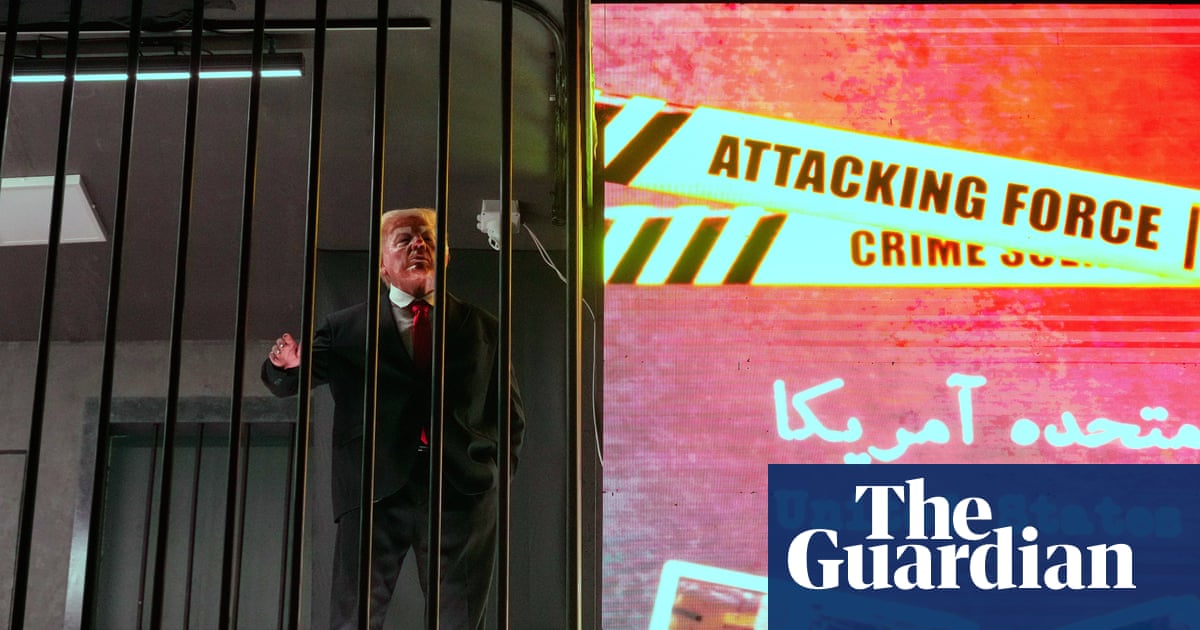
- There is a roughly even chance of a renewed US-Iran strike exchange within 30 days. Donald Trump threatened another operation on 23 October, while Abbas Araghchi said indirect talks through Pakistan and Qatar continued and Tehran was ready to resume fighting. The diplomatic channel and Iran's conditions for discussing its nuclear programme temper the estimate. (Confidence: medium · ASSESSED)
- I&W: The US government announces or carries out new strikes on Iran. (0-30 days)
- I&W: The US, Iran or their named mediators issue a joint or parallel commitment to refrain from strikes and announce a dated negotiating round. (0-30 days)
- Further Houthi attacks on Saudi infrastructure or aviation are likely in the next 14 days. Reports describe intensified attacks, and the Houthis said on 26 October that they had targeted pumping stations on Saudi Arabia's East-West pipeline and Riyadh airport. The reported explosions and the scale of damage from the latest airport incident are not independently established in the available reporting. (Confidence: medium · ASSESSED)
- I&W: The Houthis claim another strike on Riyadh airport, the East-West pipeline or a named Saudi airport, with Saudi authorities or independent reporting confirming an incident. (0-14 days)
- I&W: No Houthi launch or attack claim against a Saudi target is reported for 14 consecutive days and Saudi authorities confirm normal Riyadh airport operations. (0-14 days)
- A Turkish offensive ground mission in Yemen is unlikely in the next three months, but the Mecca pact's wider force posture remains unresolved. Turkey had not completed ratification in the reporting, and accounts conflict over whether Pakistani forces were already in Saudi Arabia or deployment was only being expedited. (Confidence: low · ASSESSED)
- I&W: Turkey's parliament completes ratification, or Saudi Arabia, Pakistan or Turkey publishes a statement specifying forces deployed under the pact, their location and mission. (0-3 months)
- I&W: Turkey publicly confirms no plan to deploy forces to Yemen and Saudi Arabia or Pakistan denies that pact forces are present in the kingdom. (0-3 months)
Outlook & scenarios
Talks continue without a wider agreement (60%)
This is the likely near-term course. Iran, Saudi Arabia, Turkey and Pakistan continue regional security discussions, while Pakistan and Qatar maintain indirect contacts between Tehran and Washington. A broader agreement is unlikely unless Iran's demands over the US blockade of Iranian ports and sanctions on oil exports are addressed; Iran said its nuclear programme would not be discussed before then.
Renewed strikes widen the conflict (30%)
A renewed US operation against Iran would make a further Iran-US exchange likely, given Tehran's stated readiness to resume fighting. Houthi attacks on Saudi targets would add pressure on Riyadh and complicate the Tehran talks. The Saudi-led coalition's reported strikes on Houthi missile infrastructure would add to the risk of further exchanges.
Limited US-Iran de-escalation understanding (15%)
A limited understanding is very unlikely in the near term, but sustained mediation by Pakistan and Qatar, supported by the Tehran channel, could produce a commitment to avoid renewed strikes. Such an understanding would not by itself resolve the dispute over the port blockade, oil sanctions or Iran's nuclear programme.
Iran targets Gulf undersea cables after renewed strikes (8%)
This low-probability, high-impact scenario is very unlikely absent another US or Israeli attack on Iran. Iranian security officials reportedly said Tehran had prepared plans to attack Gulf undersea cables if those strikes resume. If acted upon, the plans would extend retaliation to critical infrastructure beyond the reported military exchanges.
Recommendations
- Track official readouts from Saudi Arabia, Iran, Pakistan and Turkey for a dated follow-up meeting, named intermediaries and any explicit US-Iran negotiating mandate. Do not treat the Tehran visit as established US-Iran mediation without that evidence.
- Maintain a daily incident log for Houthi claims involving Riyadh airport and the East-West pipeline. Separate Houthi statements from independently confirmed impacts, and record airport operating status and any Saudi confirmation.
- Verify the Mecca pact's operational status through Turkish parliamentary action and official Saudi, Turkish or Pakistani statements identifying deployed forces, locations and missions. Distinguish defensive deployments to Saudi Arabia from offensive operations in Yemen.
- Monitor official US statements on further strikes, Iranian statements on resuming fighting and any mediator announcement of a no-strike commitment. Include reported Iranian plans concerning Gulf undersea cables in contingency monitoring, while treating them as conditional reporting rather than evidence of an imminent attack.
Confidence & uncertainty
Overall confidence is high for the core event: wire-service and major-media reporting, alongside Saudi and Iranian statements, corroborates the 26 October meeting and agreement to continue talks. Confidence is lower on the meeting's specific US-Iran mediation mandate, whether it was the first high-level contact, and the defence pact's force posture. Reporting on those points is contested or rests on limited sourcing.
Alternative analysis (red cell)
The available evidence supports a heightened but unquantified risk of renewed US-Iran fighting, not a defensible roughly even chance within 30 days. Trump's threat and Iran's stated readiness to fight are counterbalanced by continuing indirect talks and stated conditions, but the record does not show how these factors translate into a midpoint probability. A lower or wider probability range would better reflect the evidentiary uncertainty.
Red cell review: PARTIAL DISSENT
TLP:CLEAR