TLP:CLEAR · Disclosure is not limited.
U.S.-Iran Conflict Escalates After Breakdown of Ceasefire in Strait of Hormuz
Time window: Last 1 day · Audience: General analyst · Type: Situation report · DTG: 2026-07-08 14:00Z · Overall confidence: MEDIUM
BLUF
U.S. military forces conducted significant strikes against Iranian targets in response to multiple attacks on commercial vessels in the Strait of Hormuz on July 6-7, 2026. Iran retaliated with ballistic missiles and drones against U.S. bases in Bahrain and Kuwait, while announcing plans to target 85 American military sites. President Trump declared the ceasefire with Iran is 'over,' ending the temporary understanding reached on June 17 and raising prospects of wider regional conflict.
Executive summary
The United States and Iran have exchanged major military strikes following attacks on commercial shipping in the Strait of Hormuz on July 6-7, 2026. U.S. Central Command reported hitting more than 80 Iranian targets, including air defence systems and Islamic Revolutionary Guard Corps vessels, while Iran retaliated with two ballistic missiles and 13 drones intercepted by Kuwait. The breakdown of the temporary ceasefire agreement signed on June 17 has occurred amid statements by President Trump that 'the ceasefire is over' and Iran's Parliament Speaker declaring 'the era of bullying and extortion is over.' Regional security assessments for the Strait of Hormuz have been raised to 'Severe,' with three commercial tankers attacked within 24 hours. The conflict has also impacted diplomatic efforts in Gaza and heightened concerns about energy security.
Change from previous assessment
The ceasefire declared on June 17, 2026, has collapsed with both sides conducting substantial military strikes. Contrary to the prior assessment that diplomatic de-escalation was possible, President Trump declared the ceasefire 'over' following attacks on commercial shipping. Maritime risk has been elevated from SUBSTANTIAL to SEVERE as three tankers were attacked within 24 hours. Iran has moved from threatening force against ships outside approved corridors to implementing those threats through direct attacks. The situation has worsened significantly from the prior assessment where we judged that commerce would continue despite elevated risk.
Key judgments
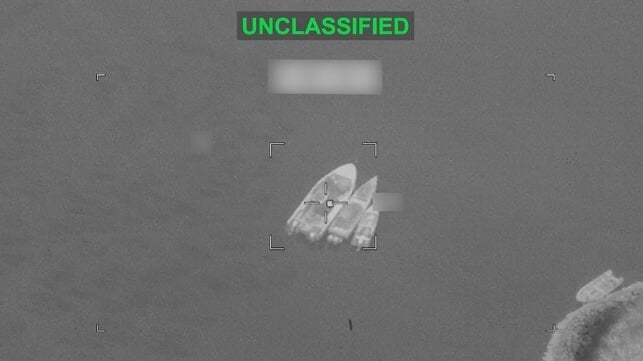
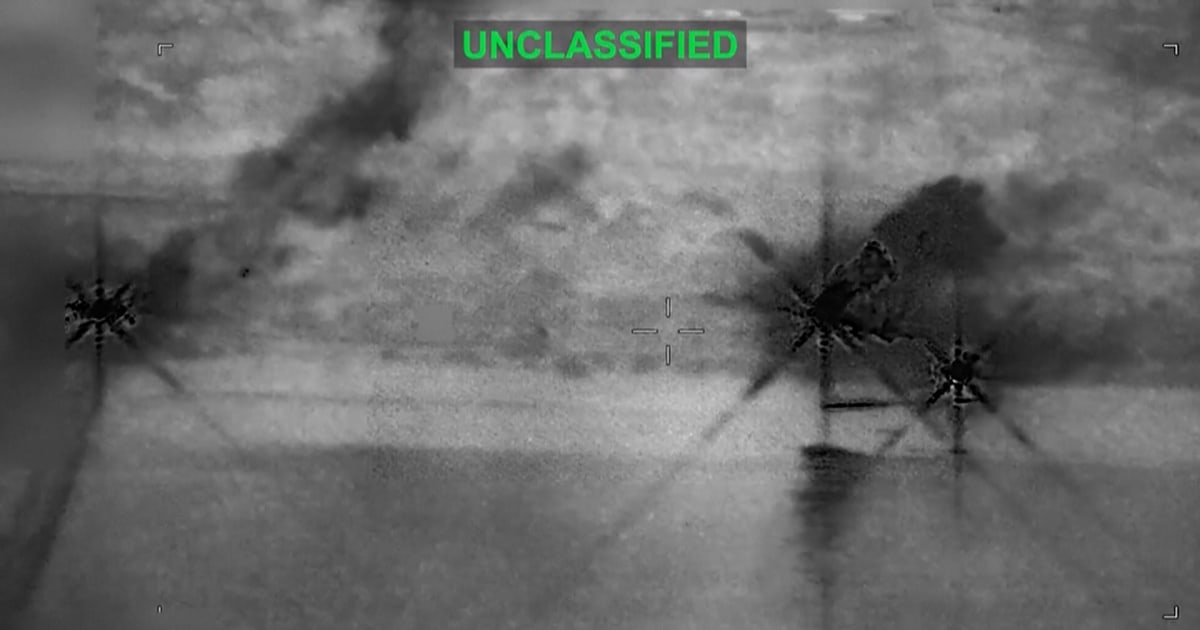
- U.S. military forces conducted substantial strikes against Iranian targets in response to multiple attacks on commercial shipping in the Strait of Hormuz on July 6, 2026, hitting more than 80 sites including air defence systems, coastal radar installations, and approximately 60 IRGC attack boats. (Confidence: high · REPORTED)
- I&W: Verification of damage reports from Bandar Abbas, Qeshm island, and Sirik through commercial satellite imagery within 0-14 days (0-14 days)
- I&W: Iranian state media publishes photographic evidence of damaged U.S. military equipment in Bahrain or Kuwait within 1-3 months (1-3 months)
- Iran has significantly escalated hostilities by conducting coordinated attacks on commercial vessels in the Strait of Hormuz and targeting U.S. military facilities in Bahrain and Kuwait with ballistic missiles and drones on July 6-7, 2026. (Confidence: high · REPORTED)
- I&W: Three or more additional commercial vessels attacked in the Strait of Hormuz within 0-14 days (0-14 days)
- I&W: Iranian Revolutionary Guard Corps claims responsibility for attacks against U.S. personnel in Bahrain or Kuwait within 1-3 months (1-3 months)
- The temporary ceasefire agreement signed remotely between Trump and Iranian President Masoud Pezeshkian on June 17, 2026, has collapsed, with President Trump declaring it 'over' and Iranian officials indicating willingness to continue targeting shipping without U.S. permission. (Confidence: high · ASSESSED)
- I&W: U.S. and Iranian representatives do not resume negotiations within 0-14 days following this escalation (0-14 days)
- I&W: Iran establishes mandatory inspection protocols for all commercial vessels transiting the Strait of Hormuz within 1-3 months (1-3 months)
- The security threat level for shipping in the Strait of Hormuz has been elevated to 'Severe' due to three attacks on commercial tankers within 24 hours, potentially disrupting global energy markets despite continued commercial traffic through both northern and southern corridors. (Confidence: medium · REPORTED)
- I&W: Global crude oil futures rise more than 5 percent within 0-14 days following this assessment change (0-14 days)
- I&W: Over 30 percent of commercial shipping reroutes to avoid the Strait of Hormuz within 1-3 months (1-3 months)
- Iran is likely using the Strait of Hormuz attacks to challenge U.S. security guarantees to Gulf Cooperation Council states and to position itself as the sole authority over critical maritime transit routes, consistent with its recent establishment of a 'Persian Gulf Strait Authority'. (Confidence: medium · ASSESSED)
- I&W: Iranian naval vessels intercept and board non-military vessels transiting the Strait of Hormuz without permission within 0-14 days (0-14 days)
- I&W: Iran imposes tolls or fees for vessels transiting the Strait of Hormuz and enforces collection through Iranian naval vessels within 1-3 months (1-3 months)
- The UK and France's planned de-mining operation in Omani waters faces significant setbacks due to renewed attacks in the Strait of Hormuz, with Oman having granted European powers permission to help clear its southern shipping route. (Confidence: medium · REPORTED)
- I&W: European de-mining vessels are deployed to Omani waters within 0-14 days (0-14 days)
- I&W: Iranian Revolutionary Guard Corps conducts surveillance of European de-mining operations in the Strait of Hormuz within 1-3 months (1-3 months)
Outlook & scenarios
Sustained Limited Conflict (50%)
Military exchanges remain contained to the Strait of Hormuz with both sides avoiding targeting population centres or critical infrastructure. U.S. and European powers establish a security corridor along the Omani coast while Iran continues to assert control over northern routes. Gulf states maintain oil exports despite elevated security assessments, and U.S.-Iran negotiations eventually resume within 60-90 days. This scenario represents continuation of the status quo with periodic escalation but no major expansion of hostilities.
Regional Escalation (30%)
Iran expands attacks to include Israeli and Saudi infrastructure using proxy forces, triggering broader conflict that draws in multiple regional actors. U.S. military casualties in Bahrain or Kuwait prompt expanded strikes against Iranian nuclear facilities. Hezbollah opens a new front in Lebanon, increasing pressure on Israeli northern borders. Oil prices surge above $120 per barrel, triggering global economic concerns and potential intervention by China and Russia to protect energy flows.
Rapid De-escalation (15%)
China brokers an emergency diplomatic intervention using its leverage as Iran's primary oil buyer, leading to an immediate ceasefire within 14 days. Gulf Cooperation Council states mediate a new security understanding for the Strait of Hormuz that preserves Iranian oversight while guaranteeing freedom of navigation. This scenario would require significant diplomatic pressure on the U.S. amid growing concerns about the midterm elections and energy prices affecting voters.
Full-Scale War (5%)
An attack causing significant U.S. military casualties triggers large-scale strikes against multiple Iranian strategic assets, including nuclear facilities. Iran responds by closing the Strait of Hormuz entirely and launching attacks against Israeli territory using missile systems. Gulf Cooperation Council states fracture over whether to support the U.S. position, with potential Saudi and UAE military engagement. Such escalation would likely trigger global energy crisis and possible intervention by external powers to secure maritime routes.
Recommendations
- Monitor commercial shipping rerouting patterns through alternative energy corridors (Suez Canal, Sumed Pipeline) for early signs of market concerns about Strait of Hormuz stability.
- Track diplomatic communications between China, Iran, and the US for indicators of potential third-party mediation efforts.
- Assess Iranian naval deployment patterns in the Strait of Hormuz for evidence of mine-laying operations or attempts to enforce transit requirements.
- Monitor oil futures markets for sustained 10-15 percent increases that would indicate significant market concerns about prolonged Strait of Hormuz disruption.
- Track European naval movements in the Gulf region for indications of de-mining operations and associated security protocols.
Confidence & uncertainty
Confidence is assessed as medium due to multiple corroborated reports from major media sources regarding military exchanges between the U.S. and Iran, though some claims contain date discrepancies between July 6 and 7, 2026. The reporting shows strong consistency about the scale of U.S. strikes hitting over 80 Iranian targets and Iran's retaliatory missile launches. Uncertainties remain about the exact sequence of events due to timing inconsistencies in some reports and limited details about casualty figures. The assessment of regional impact benefits from multiple independent commercial and governmental maritime security reports but is constrained by the short timeframe since these events occurred.
Intelligence gaps
- [EEI 1.1 · UNCOVERED] Detection and characterization of ballistic/cruise missile or rocket launches originating from Iranian territory or from Iran-controlled positions in Iraq/Syria (time, launch coordinates, missile type, flight trajectory/impact area). Recommended collection: satellite/imagery
- [EEI 1.2 · PARTIAL] Movements and posture changes of Iran-backed proxy forces (Hezbollah units in Lebanon, militias in Syria/Iraq): concentrations of personnel, transport of rocket/artillery launchers, visible logistics build-up within operational range of Israel. Recommended collection: human/intel
- [EEI 1.3 · PARTIAL] Israeli defensive and offensive posture changes: reservist call-ups, mobilization orders, sorties/airstrikes attributed to Israel, and domestic activation of missile-defense systems (locations and activation times). Recommended collection: open-source/media
- [EEI 2.1 · PARTIAL] Movements and tasking changes of external military assets: carrier strike groups, amphibious ready groups, expeditionary air wings, or ballistic-missile defense units into the Eastern Mediterranean, Persian Gulf, or Red Sea (vessel/aircraft IDs, routing, on-station times). Recommended collection: maritime/AIS
- [EEI 2.3 · PARTIAL] Changes to force protection or alert levels at foreign bases in the region (e.g., US bases in Kuwait, Qatar, UAE; Russian bases in Syria): activation of additional air defenses, curfews, or reinforcement shipments (personnel/equipment manifests). Recommended collection: signals/intel
- [EEI 3.2 · PARTIAL] Changes in crude oil and refined product flows from key terminals (reported tanker loading delays, terminal closures, throughput volumes at Kharg, Mina al-Ahmadi, Ras Tanura, and major Gulf ports compared to baseline). Recommended collection: commercial/ports
- [EEI 3.3 · PARTIAL] Market and insurance indicators: sudden spikes in war-risk or hull insurance premiums for Middle East routes, large moves in regional FX/stock indices, and notable changes in commodity futures (oil, freight rates) tied to regional risk perceptions. Recommended collection: financial/transactional
Cited sources
[1] military.com · Iran and US Trade Fire and Trump Calls the Ceasefire into Question (B) · sha256:a4518f3f9cf0 [2] newsweek.com · Former NATO commander says Trump has 3 options on Iran amid new strikes (B) · sha256:b48f4e699003 [3] maritime-executive.com · U.S. and Iran Trade Retaliatory Strikes in Contest for Control of Hormuz (B) · sha256:a4022868ccef [4] jpost.com · Iran’s Hormuz escalation tests Gulf states, US resolve - analysis (B) · sha256:d41422676e5d [5] nbcnews.com · CENTCOM releases video of renewed strikes on Iran (B) · sha256:83c1e37321a6 [6] gcaptain.com · Three Tankers Attacked Near Strait of Hormuz as JMIC Warns of 'Severe' Threat (B) · sha256:e24de03a6861 [7] Wikipedia · 2025–2026 Iran–United States negotiations (B) · sha256:58c978bc228c [8] gcaptain.com · Trump Says US Ceasefire With Iran Is ‘Over’ After Strikes (A) · sha256:fb51eb27aee1 [9] Bloomberg · Iran Mining Hormuz to Funnel Ships Into Its Waters, U.S. Navy Says (A) · sha256:d791115064e1 [10] aljazeera.net · لماذا تستهدف إيران ناقلة نفط تابعة للوسيط القطري؟ (A) · sha256:c355fa9d290f [11] gcaptain.com · Hormuz Strikes Threaten Progress on Europe’s De-mining Mission (B) · sha256:39eabf55bccb
Source content hashes were computed at collection time; the cited text is preserved unmodified for the life of this product.
TLP:CLEAR