TLP:CLEAR · Disclosure is not limited.
Ukraine Airstrike Tempo Rises, Kyiv Logistics Under Pressure
Time window: Last 1 day · Audience: General analyst · Type: Situation report · DTG: 2026-08-28 16:39Z · Overall confidence: MEDIUM
BLUF
The record now supports a very likely assessment that Russian forces have conducted a sustained, high-volume strike cycle against Ukraine, centred on the Kyiv region, with more than 20 air-raid alerts and attacks reported for over 40 hours. The campaign is likely placing greater weight on logistics and infrastructure, but exact strike volume and casualty totals remain uncertain because the record conflicts on drone counts and mixes 2026 reporting with entries dated 2023.
Executive summary
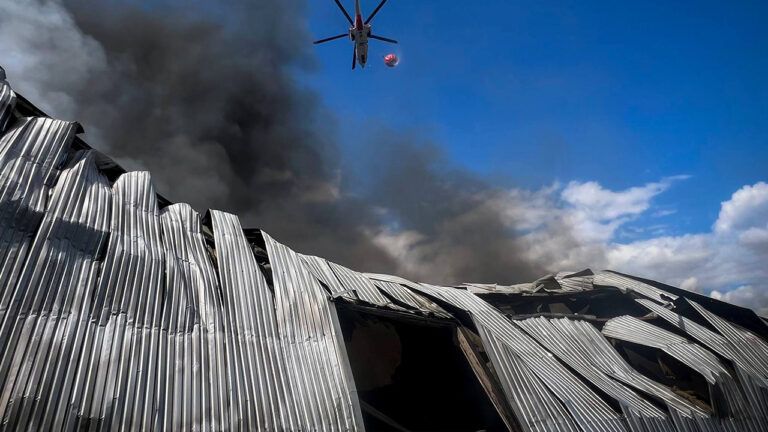
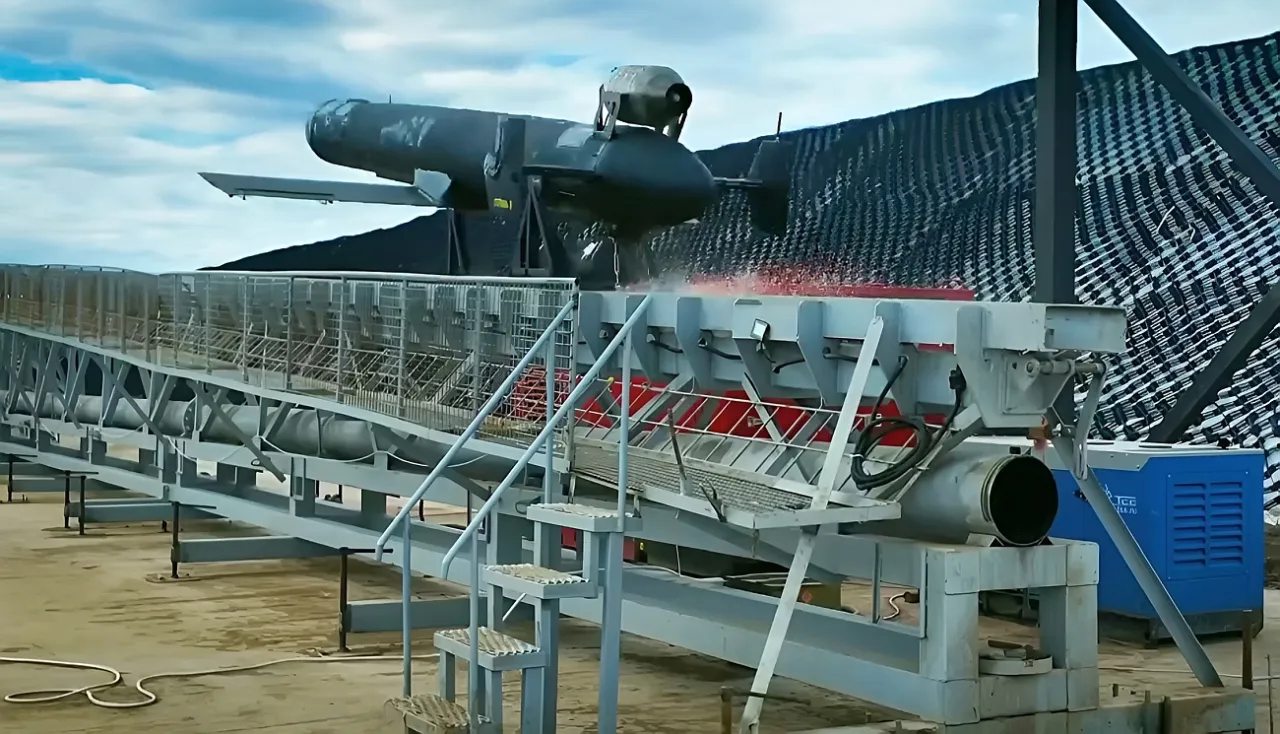
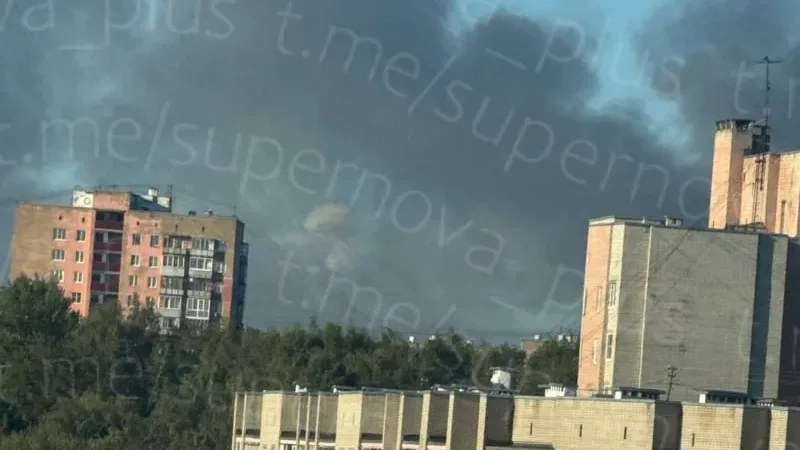
Reporting from 28 August describes Russian attacks on the Kyiv region for a second consecutive day, including more than 20 air-raid alerts in Kyiv and a reported launch of 140 unmanned aerial vehicles. Ukrainian reporting gives conflicting interception or suppression totals of about 120 and 137 drones, while a separate entry dated 28 August 2023 reports 164 drones. Damage reporting names a missile warehouse complex, distribution centres and warehouses in the Kyiv region, alongside deaths and injuries in Bucha, Zmiev, Zaporizhzhia and Fastiv. Russian commentary attributes the campaign to a focus on bridges, logistics hubs and infrastructure. A reported September negotiation channel offers a possible off-ramp, but the supplied record does not show a reduction in attack tempo.
Change from previous assessment
Since the 27 August brief, the assessment has changed from finding no Ukraine-specific support for intensified airstrikes to judging that Russian forces very likely conducted a sustained, high-volume strike cycle centred on the Kyiv region. Confidence remains medium because the new reporting includes direct Ukraine-specific claims but also conflicting drone counts and 2023-dated records. This brief adds judgements on logistics targeting, civilian and infrastructure effects, and the September outlook. The prior NASA thermal-observation judgement is retired because Ukraine-specific reporting is now available.
Key judgments
- Russian forces very likely conducted a sustained, high-volume strike campaign against Ukraine centred on the Kyiv region. The supplied reporting describes attacks lasting over 40 hours, Russian attacks on the Kyiv region for two consecutive days, more than 20 air-raid alerts in Kyiv, and 140 unmanned aerial vehicles launched during one reported attack cycle. Exact volume remains unresolved because other entries report 137 drones intercepted or suppressed and 164 drones launched, with the latter figures dated 28 August 2023 rather than 2026. (Confidence: medium · REPORTED)
- I&W: Confirm: Ukrainian authorities report another Russian attack cycle against the Kyiv region lasting beyond 40 hours or involving more than 20 air-raid alerts and a drone package near 140 aircraft. (0-14 days)
- I&W: Break: Ukrainian authorities record no further Russian attacks against the Kyiv region and no comparable drone launch during the next 14 days. (0-14 days)
- Russia is likely shifting part of its strike effort towards Ukrainian logistics and infrastructure. General Major Vladimir Popov described attacks on bridges across the Kazenyi Torets near Slavyansk, a focus on logistics hubs and the use of multiple strike systems. Separate reporting names a missile warehouse complex in the Kyiv region and damage to the Nova Poshta, Roshen, Budynok Igrashok, Comfy and Kolo facilities. This inference rests heavily on one Russian military commentator, while several supporting damage entries carry no date or a 28 August 2023 date. (Confidence: medium · ASSESSED)
- I&W: Confirm: Russian statements or incident reporting identify additional bridges, logistics hubs, warehouses or distribution centres as strike targets, particularly around Slavyansk or the Kyiv region. (0-30 days)
- I&W: Break: Subsequent reporting shows repeated attacks concentrated away from logistics and infrastructure, while bridges and named distribution facilities remain unaffected. (0-30 days)
- Russia is likely to maintain elevated strike pressure against Ukraine over the next one to three months if negotiations do not resume. The assessment is based on reporting that Russia is preparing to intensify attacks after negotiations reached a dead end, an estimate that Russia produces about 3,000 Shahed drones monthly, and reporting that negotiations on Ukraine might start in September. This is a low-confidence forecast because the intent assessment is largely single-source and the production figure is not independently corroborated in the supplied record. (Confidence: low · ASSESSED)
- I&W: Confirm: Russian forces launch another large drone package and Russian officials or reporting link the attacks to infrastructure after negotiations fail to resume by the end of September. (1-3 months)
- I&W: Break: Russia and Ukraine begin negotiations in September and the Kyiv attack and air-raid tempo falls below the current pattern for at least 14 consecutive days. (1-3 months)
- The available reporting indicates at least two deaths and seven injuries linked to reported attacks in Bucha, Zmiev, Zaporizhzhia and Fastiv, alongside damage to commercial warehouses and distribution centres in the Kyiv region. This is a provisional minimum rather than a consolidated casualty total. Several underlying entries are dated 28 August 2023 or are undated, and the package provides no independent reconciliation of casualties or facility damage. (Confidence: low · REPORTED)
- I&W: Confirm: Local authorities raise casualty totals or report additional deaths and injuries at the named facilities or in Bucha, Zmiev, Zaporizhzhia and Fastiv. (0-14 days)
- I&W: Break: Authorities revise the casualty reports downward or establish that the named facilities relate to earlier, separate attacks rather than the current strike cycle. (0-14 days)
Outlook & scenarios
Continued high-tempo Russian strikes (55%)
Russia sustains attacks against Ukraine, with the Kyiv region remaining a major target and drone launches staying near the reported 140-aircraft level. Russian forces continue using drones and other strike systems against logistics hubs, bridges and storage facilities.
Negotiation-linked reduction (25%)
Russia and Ukraine begin negotiations in September, producing an unlikely but plausible short-term reduction in attack duration and air-raid frequency. Strikes continue, but the reported pattern of uninterrupted attacks lasting over 40 hours does not recur.
Broader infrastructure campaign (15%)
Russia broadens the infrastructure campaign beyond the Kyiv region, prioritising bridges, logistics hubs and commercial storage facilities connected to Ukrainian supply lines. Civilian harm rises if attacks increasingly affect populated areas and distribution centres.
NATO spillover wildcard (5%)
A Russian attack involving Estonia, Latvia or Lithuania triggers a direct NATO crisis while the Ukraine campaign continues. This is a very unlikely, high-impact outcome. Current reporting contains warnings about attacks on those states but also reports no large-scale Russian force concentration around the Baltic states.
Recommendations
- For the next 0-14 days, maintain a single incident timeline for the Kyiv region. Separate reports dated 28 August 2026 from entries dated 28 August 2023 or lacking dates.
- Prioritise reconciliation of the reported figures of 140 launched drones, about 120 intercepted or suppressed, 137 intercepted or suppressed and 164 launched. Treat them as separate claims until the Ukrainian Armed Forces Command or Ukrainian air defence authorities provide a common accounting method.
- Prioritise geospatial collection on the missile warehouse complex, the Nova Poshta depot in Svyatopetrivske, the Roshen warehouse in Chubynske, and the Budynok Igrashok, Comfy and Kolo facilities in the Kyiv region. Assess whether the sites belong to one coordinated targeting pattern or separate incidents.
- Track Russian statements on bridges near Slavyansk, logistics hubs and the use of non-aviation strike systems. Compare those statements with observed damage and transport disruption in Ukraine.
- Monitor September diplomatic activity for evidence that negotiations on Ukraine have actually begun. Pair this with a 14-day rolling count of Russian drone launches, Kyiv air-raid alerts and reported attack duration.
- Brief consumers that casualty figures are provisional and should not be aggregated across the named locations until dates, facilities and reporting chains are reconciled.
Confidence & uncertainty
Overall confidence is medium because multiple wire-service and major-media reports support a sustained Russian attack cycle, repeated Kyiv air-raid alerts and damage to Ukrainian facilities. Confidence is reduced by conflicting drone totals, inconsistent event dates, reliance on local reporting for several casualty and damage claims, and the single-source basis for Russia's stated targeting rationale and future intent. The record supports the direction of the assessment more strongly than the precise scale, timing and likely duration.
Intelligence gaps
- [EEI 1.1 · PARTIAL] Number of airstrikes and aircraft/UCAV sorties per 24-hour period, broken down by administrative region and timestamped geolocation of each strike/strike cluster. Recommended collection: air defense radar/ADS-B
- [EEI 1.2 · PARTIAL] Types of delivery platforms and munitions observed (fixed-wing aircraft model, helicopters, cruise missiles, ballistic missiles, guided bombs, loitering munitions) with visual/forensic confirmation of munition remnants where possible. Recommended collection: satellite/imagery; munition forensics
- [EEI 1.3 · PARTIAL] Airspace access and sortie origin information: airbases, staging areas, tanker/ISR support flights, and routing corridors used in the last 7 days. Recommended collection: airspace/ADS-B; satellite/imagery
- [EEI 1.4 · PARTIAL] Changes in temporal or target-patterns compared to the prior baseline (new target types, time-of-day shifts, concentration on specific infrastructure or front sectors). Recommended collection: open-source media; satellite/imagery
- [EEI 2.2 · UNCOVERED] Functional status reports and capacity of hospitals and emergency services in strike-affected areas (beds available, emergency department functionality, evacuation of patients). Recommended collection: humanitarian organizations/civilian authorities
- [EEI 2.3 · PARTIAL] Operational outages and damage reports for critical infrastructure (power plants/substations, water treatment, telecommunications, rail junctions, bridges) with geolocated pre/post imagery where feasible. Recommended collection: utility operators; satellite/imagery
- [EEI 2.4 · UNCOVERED] Population displacement metrics: numbers and routes of internally displaced persons, shelter occupancy rates, and evidence of mass evacuations or blocked humanitarian access corridors. Recommended collection: humanitarian organizations; social media
- [EEI 3.1 · UNCOVERED] Statements, orders, or internal communications (official or leaked) indicating stated campaign objectives, target prioritization, or changes in rules of engagement. Recommended collection: signals/COMINT; open-source media
- [EEI 3.2 · PARTIAL] Evidence of munitions and parts resupply rates: documented deliveries to forward depots/airbases, rail/road convoys with munitions manifest, or satellite imagery showing stockpile levels over time. Recommended collection: logistics tracking; satellite/imagery
- [EEI 3.3 · PARTIAL] Indicators of escalatory posture or force employment changes: deployment or activation of long-range strike assets, increased sorties of strategic platforms, or movement/deployment of additional surface-to-air systems. Recommended collection: satellite/imagery; air defense radar
- [EEI 3.4 · PARTIAL] Foreign involvement or external support evidence: observed deliveries of strike munitions, presence of foreign contractor personnel at bases, or procurement transactions tied to the campaign. Recommended collection: customs/open-source intelligence; satellite/imagery
Cited sources
[1] fakty.com.ua · Киевщина вторые сутки под постоянными атаками: погиб человек, повреждено 14 складов (B) · sha256:48faf4898030 [2] topwar.ru · Украинские СМИ: дрон «Герань» пролетел почти 1000 км до Волынской области (B) · sha256:8bf4791d9d3b [3] Интерфакс-Украина · Из 140 БпЛА в течение дня сбито/подавлено около 120 ударных дронов – Командование ВС (A) · sha256:56f72de51cca [4] fakty.com.ua · Ночная атака на Украину 28 августа: РФ запустила 164 дрона, половина из них — реактивные (B) · sha256:f0554111bf64 [5] ukraina.ru · Генерал-майор Попов: Британские дроны стали новой угрозой для России, но супероружием их назвать нельзя (B) · sha256:d9eeb431cd1a [6] nemoskva.net · Красный уровень опасности из-за атаки беспилотников в регионах РФ (D) · sha256:18ffc36f14c9 [7] gcaptain.com · Black Sea Tensions Lead Grain Buyers to Tap Baltic States (B) · sha256:e74a829b1260 [8] glavred.info · Трамп лично отправил главу ЦРУ в Москву: что Рэтклифф передал Путину - WSJ (B) · sha256:636bce3653e9
Source content hashes were computed at collection time; the cited text is preserved unmodified for the life of this product.
TLP:CLEAR