TLP:CLEAR · Disclosure is not limited.
Ukraine: Conventional Air War Intensifies as Moscow Weighs Further Strikes
Time window: Last 7 days · Audience: General analyst · Type: Situation report · DTG: 2026-08-29 00:10Z · Overall confidence: MEDIUM
BLUF
Russia is very likely sustaining a more intense conventional phase of the war, with reported advances in Donetsk and Sumy and preparations for stronger ballistic missile strikes against Kyiv and Ukrainian infrastructure. Tactical nuclear use remains very unlikely in the next 14 days, but the reporting contains conflicting assessments and warrants continued monitoring.
Executive summary
Russia and Ukraine have intensified long-range and air attacks. Russia's large-scale attack from 19 to 20 August 2026 killed at least 17 civilians, while further reported incidents in the Kharkiv region and Krasnodar caused additional civilian deaths. Russian forces are reported to have taken Annivka in the Donetsk People's Republic and Pisarivka in Sumy Oblast, while Russian and major-media reporting describes preparations for stronger conventional ballistic missile strikes against Kyiv and infrastructure elsewhere in Ukraine. Peace efforts remain stalled, although Volodymyr Zelenskyy has prepared a draft proposal and CIA Director John Ratcliffe visited Moscow on 27 August. Ukraine is pressing allies for more air defence, while the UK and France are reported to be extending missile-related support.
Key judgments
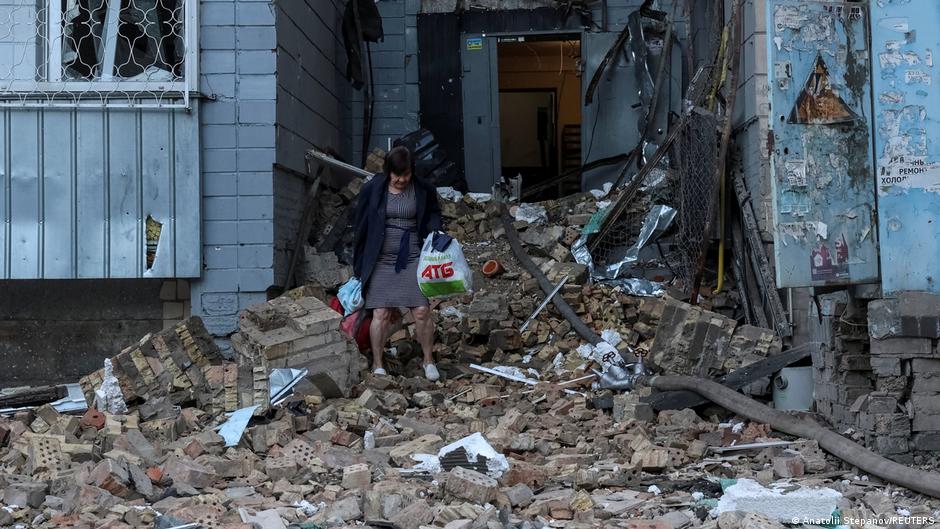
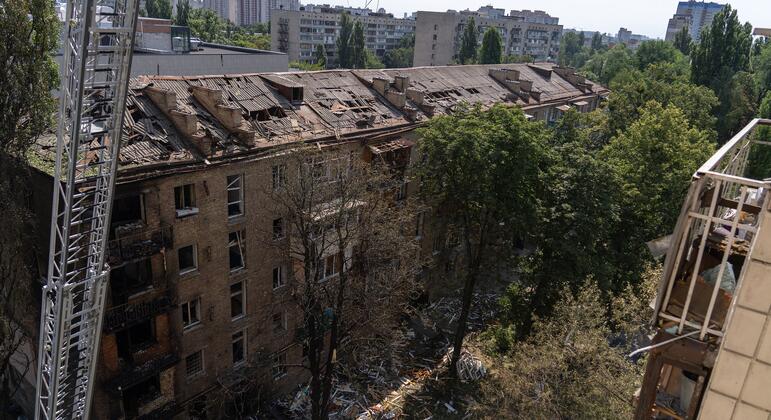
- Russia and Ukraine have very likely intensified long-range and air attacks. Russia's large-scale attack from 19 to 20 August 2026 caused at least 17 civilian deaths, a Russian drone hit an electric train in the Kharkiv region on 23 August killing at least two women and injuring five people, and Russian authorities reported that a 24 August drone attack in Krasnodar killed two children and wounded nine others. UN reporting also indicates that civilian casualties in Ukraine continue to rise. (Confidence: high · REPORTED)
- I&W: Confirm: Russia conducts another large-scale strike against Kyiv or Ukrainian infrastructure, or Ukraine reports further attacks on Russian refineries or logistics sites. (0-14 days)
- I&W: Break: no further large-scale long-range strikes are credibly reported for 30 days and UN reporting records a sustained fall in civilian casualties. (1-3 months)
- Russia is likely to intensify conventional ballistic missile strikes against Kyiv and infrastructure across Ukraine within the next 14 days. Three people close to the Kremlin reportedly linked the preparation to deadlocked peace negotiations, while separate reporting states that Moscow is weighing stronger conventional strikes against Kyiv, including central districts, and against infrastructure in other Ukrainian cities. This judgement rests largely on major-media reporting from Kremlin-adjacent sources and is weakened by Dmitry Peskov's statement on 27 August that Russia does not need military escalation. (Confidence: medium · ASSESSED)
- I&W: Confirm: Russian forces launch conventional ballistic missile strikes against central Kyiv or critical infrastructure in another Ukrainian city. (0-14 days)
- I&W: Break: Russia and Ukraine publicly schedule and conduct a new negotiating session while no intensified Russian strike occurs during the same period. (0-14 days)
- Russia is likely to sustain ground pressure in the Donetsk and Sumy sectors, but the precise extent of its territorial gains remains only medium confidence. Russian forces are reported to have taken Annivka in the Donetsk People's Republic on 25 August and Pisarivka in Sumy Oblast on 26 August. Other reporting places Russian forces at Novokonstantinovka in Sumy, Fedorovka and surrounding high ground in the direction of Kramatorsk, and closer to Ukrainian supply routes near Dobropillya. The judgement relies partly on Russian official battlefield claims and lacks independent confirmation of each reported territorial change. (Confidence: medium · ASSESSED)
- I&W: Confirm: independent imagery or reporting verifies further Russian control shifts around Annivka, Pisarivka, Novokonstantinovka or Fedorovka, or documents disruption to Ukrainian routes near Dobropillya. (0-14 days)
- I&W: Break: Ukrainian forces retain all reported positions and Russian forces show no further movement in the Donetsk and Sumy sectors. (1-3 months)
- Tactical nuclear use in Ukraine is very unlikely within the next 14 days, while conventional missile escalation is likely. Reporting states that there is currently no indication Russia is preparing to use nuclear weapons, and Alexander Gabuev assesses the risk as extremely low. Countervailing reporting says an increasing number of Russian officials believe Vladimir Putin could consider tactical nuclear use as a last resort. The judgement is medium confidence because the nuclear-use reporting is largely single-source, indirect and contested. (Confidence: medium · ASSESSED)
- I&W: Confirm: Russia conducts another conventional missile strike while no Russian authority reports nuclear force preparations. (0-14 days)
- I&W: Break: Russian authorities announce operational preparations for nuclear use or Russia conducts a tactical nuclear detonation in Ukraine. (0-14 days)
- Russia is likely to intensify coercive signalling towards the UK and NATO while avoiding direct combat with NATO over the next 1 to 3 months. Russia has threatened retaliation against the UK for supporting Kyiv, including strikes against military targets inside and outside Ukraine. A reported purpose of John Ratcliffe's Moscow visit was to warn Russia about the consequences of attacking a NATO ally, while Western officials assess that Vladimir Putin wants to avoid direct military confrontation with NATO. The evidence is thin and indirect, so confidence is low. (Confidence: low · ASSESSED)
- I&W: Confirm: a Russian official issues a fresh warning naming the UK or NATO after further Western military support for Kyiv, without a direct strike on NATO territory. (0-14 days)
- I&W: Break: Russia strikes a military or civilian target on NATO territory or announces a direct military operation against a NATO ally. (1-3 months)
Outlook & scenarios
Continued conventional escalation (55%)
Russia sustains missile and drone strikes against Kyiv and Ukrainian infrastructure while maintaining ground pressure in Donetsk and Sumy. Ukraine continues attacks on Russian refineries and logistics sites. Negotiations remain stalled despite further diplomatic contact.
Interim negotiating channel without settlement (23%)
An unlikely but plausible negotiating channel reopens after the Ratcliffe visit and Zelenskyy's draft proposal. The channel produces a limited pause or prisoner-related arrangement, but Russia and Ukraine retain incompatible positions on territory and the broader war.
Cross-border NATO crisis (15%)
An unlikely, high-impact scenario in which Russia acts on threats to strike a military target outside Ukraine after further UK or NATO support for Kyiv. The resulting crisis raises the risk of direct confrontation while Russia still seeks to avoid a full NATO war.
Tactical nuclear threshold crossing (5%)
A very unlikely, high-impact scenario in which Russia uses a tactical nuclear weapon in Ukraine after the continuing exchange of strikes and a perceived battlefield setback. This scenario conflicts with the current absence of reported nuclear preparations and with the assessment that nuclear use carries high political costs.
Recommendations
- Prioritise a 0-14-day watch on Russian conventional ballistic missile activity against Kyiv, central districts and Ukrainian infrastructure. Separate reported planning from confirmed launches and impacts.
- Build a location-specific ground picture for Annivka, Pisarivka, Novokonstantinovka, Fedorovka, Kramatorsk, Slavyansk and the routes near Dobropillya. Require independent corroboration before treating reported control changes as established.
- Track whether the UK, France and other European allies convert stated support into deliveries, production arrangements or additional air-defence assistance. Compare these developments with Ukrainian appeals and reported interceptor shortages.
- Use NASA VIIRS thermal detections as indicators of heat only. Do not treat them as proof of a strike, shelling or industrial cause without corroborating reporting.
- Monitor the diplomatic sequence involving John Ratcliffe's Moscow visit, Zelenskyy's draft proposal, the Kyiv air-defence meeting and Dmitry Peskov's public position. Issue an alert if a new negotiating session occurs alongside a pause in strikes.
- Maintain a separate nuclear warning track. Escalate analytic attention if Russian authorities announce nuclear force preparations, alter public nuclear doctrine or link tactical nuclear use directly to attacks on Russian territory.
- Track Russian threats towards the UK and NATO alongside any drone or missile incident affecting Romania, Poland or Moldova. Treat any confirmed strike on NATO territory as a priority escalation event.
Confidence & uncertainty
Overall confidence is medium. UN reporting and multiple major-media accounts corroborate the rise in civilian harm, the intensification of long-range attacks and the continuing diplomatic impasse. Russian official statements provide detailed battlefield reporting, but independent confirmation of individual territorial changes is limited. Assessments of planned strikes and possible nuclear use rely partly on indirect or single-source reporting, with Peskov's public position and the absence of reported nuclear preparations unresolved against claims of internal Russian concern.
Cited sources
[1] commonspace.eu · Putin prepares to escalate (B) · sha256:dff4b2826eab [2] military.com · Putin Moves to Escalate War in Ukraine as Talks at Dead End (B) · sha256:6d1b87bbc623 [3] United Nations · 联合国:乌克兰战争持续升级,平民伤亡和人道主义需求加剧 (A) · sha256:cde808ab6e6f [4] aljazeera.com · Ukraine’s allies convene in Kyiv as Zelenskyy seeks air defence boost (A) · sha256:48e93a5231b1 [5] Kyiv Post · Russia May Escalate Strikes on Ukraine, Kremlin Sources Say (B) · sha256:27ec2200cfa8 [6] timesnownews.com · Russia-Ukraine War: Putin Signals Escalation as Peace Talks Hit Dead End (B) · sha256:a2e3c5e2636f [7] dw.com · Bloomberg: Россия готовится к эскалации в войне в Украине (A) · sha256:97e27256e4a4 [8] vedomosti.ru · Песков: Россия не нуждается в военной эскалации - Ведомости - 27 августа 2026 (A) · sha256:26d948209ae9 [9] bankingnews.gr · Donetsk frontline: 'Road of death' heavy losses amid fears over Kaliningrad escalation (B) · sha256:5e0fa3d74fc6 [10] The Guardian · Russia says UK ‘playing with fire’ amid reports CIA chief has warned Kremlin not to attack Nato (A) · sha256:b5dc72daad37 [11] BBC News Русская служба · Война в Украине: Зеленский призвал запускать по России 1000 дронов в сутки, Буданов считает скорый мир нереалистичным - BBC News Русская служба (A) · sha256:13e636a51685
Source content hashes were computed at collection time; the cited text is preserved unmodified for the life of this product.
TLP:CLEAR