TLP:CLEAR · Disclosure is not limited.
Ukraine: Escalated Russian Airstrikes and Ukrainian Long‑Range Strikes, 4-5 July
Time window: Last 1 day · Audience: General analyst · Type: Situation report · DTG: 2026-07-05 15:44Z · Overall confidence: MEDIUM
BLUF
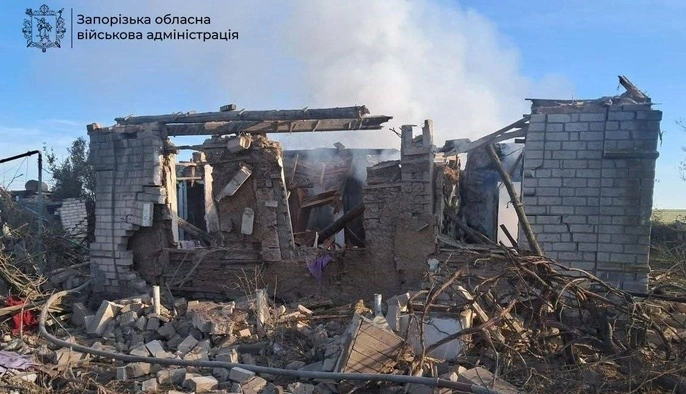
Russia has intensified airstrikes across Ukraine since 4 July, with civilian casualties in Zaporizhzhia and Kramatorsk. Ukraine continued long‑range attacks, including a strike in Russian‑occupied Crimea that killed one and injured two, while parallel calls involving Donald Trump, Vladimir Putin and Volodymyr Zelensky have not produced any observable de‑escalation.
Executive summary
Open sources indicate a marked uptick in Russian air operations beginning 4 July, coinciding with reported civilian harm and infrastructure damage in Zaporizhzhia and Kramatorsk. In parallel, Ukraine sustained its long‑range strike campaign: Russian‑installed authorities in Crimea reported one killed and two injured from a Ukrainian attack, and Rosgvardiya claimed downing Ukrainian UAVs in Kharkiv region and in Luhansk on 4-5 July. Moscow and Kyiv both engaged Donald Trump by phone, and the Kremlin highlighted a conditional openness to diplomacy, but there is no evidence this is suppressing strike activity. Claims about the status of Kostiantynivka remain conflicting, with no independent adjudication.
Change from previous assessment
Since the 4 July brief, reporting added a Ukrainian strike in Crimea with one killed and two injured, Rosgvardiya’s shoot‑downs of Ukrainian UAVs in Kharkiv region and Luhansk on 4-5 July, and fresh civilian casualty and damage tallies in Zaporizhzhia and Kramatorsk. A new claim from 4 July indicates Russia has intensified airstrikes. Calls involving Donald Trump, Vladimir Putin and Volodymyr Zelensky were reported, but without evidence of reduced strike activity. The status of Kostiantynivka remains contested with conflicting official claims. Initial assessment of this topic’s new phase is therefore preserved, with higher specificity on locations and casualty figures.
Key judgments
- Russia has intensified airstrikes in Ukraine since 4 July, with strikes on Zaporizhzhia city and district killing one and injuring 16 alongside 283 reports of damage, and an airstrike on a Kramatorsk supermarket injuring at least five including an 11‑year‑old, reportedly using a FAB‑250 guided bomb. (Confidence: high · REPORTED)
- I&W: Confirm: Zaporizhzhia regional administration bulletins record additional civilian casualties and ≥100 new damage reports within 0-14 days. (0-14 days)
- I&W: Break: State Emergency Service of Ukraine and local authorities report zero new airstrike incidents in Zaporizhzhia city and Kramatorsk for seven consecutive days. (0-14 days)
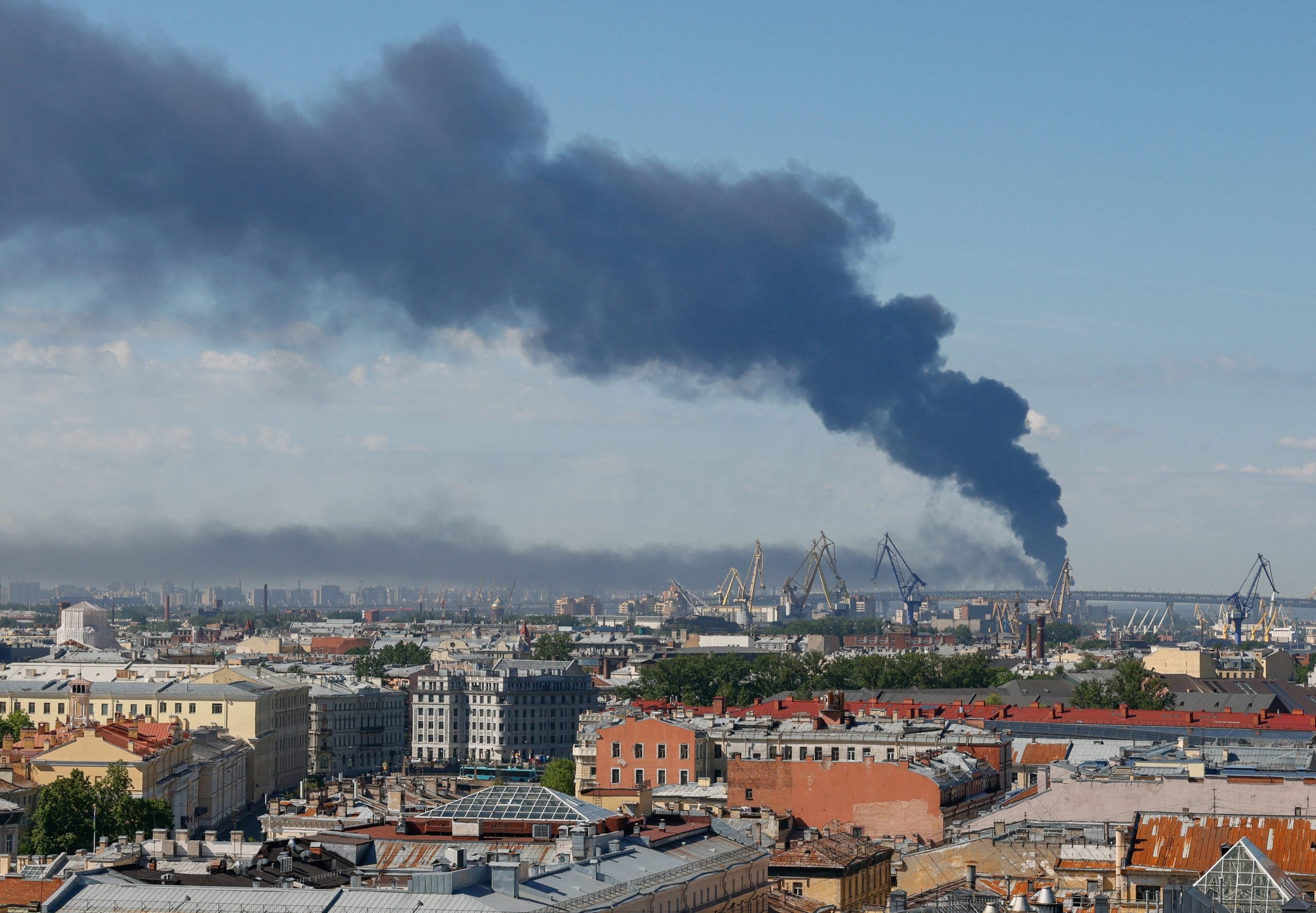
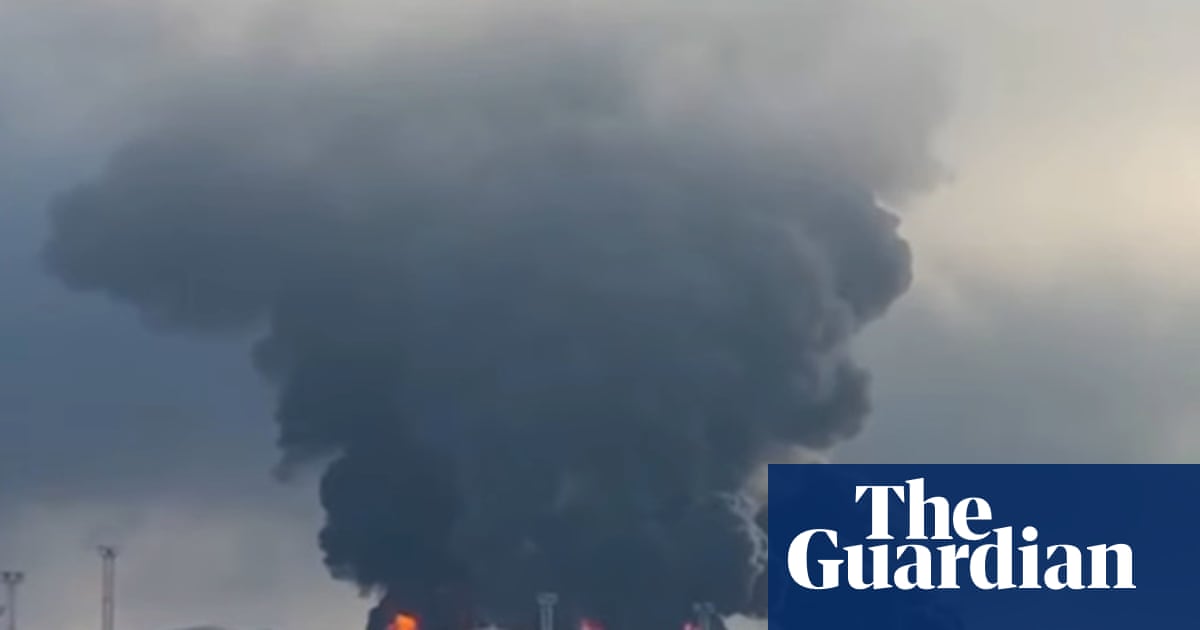
- Ukrainian long‑range activity continued: Russian‑installed officials in Crimea reported one killed and two injured from a Ukrainian strike, and Rosgvardiya reported downing heavy multirotor UAVs in Kharkiv region on 5 July and 19 drones in Luhansk on 4 July. (Confidence: high · REPORTED)
- I&W: Confirm: Additional Crimean occupation authorities’ statements acknowledging casualties or infrastructure damage from Ukrainian strikes. (0-14 days)
- I&W: Break: Rosgvardiya public channels issue no new UAV downing announcements for Kharkiv region and Luhansk for seven consecutive days. (0-14 days)
- Ukraine is likely to keep targeting Russian military and energy infrastructure, including in and around Crimea, to disrupt logistics and revenue, consistent with Kyiv’s stated policy and leadership statements. (Confidence: medium · ASSESSED)
- I&W: Confirm: Local authorities in Crimea acknowledge new strikes on energy substations, oil depots or key bridges, or Ukrainian officials publicly claim such attacks. (0-14 days)
- I&W: Break: Public guidance from Kyiv narrowing target sets away from energy infrastructure, accompanied by a two‑week absence of reported strikes on energy or transport nodes in occupied Crimea. (0-1 month)
- There is a roughly even chance Kostiantynivka remains contested, given conflicting official claims by Vladimir Putin and Ukraine’s General Staff and the absence of independent verification. (Confidence: low · ASSESSED)
- I&W: Confirm: Geolocated imagery from Kostiantynivka’s administrative centre showing enduring Russian checkpoint operations and unit insignia. (0-14 days)
- I&W: Break: Ukrainian General Staff media tour or verified imagery of Ukrainian security forces conducting routine patrolling in Kostiantynivka’s city centre. (0-14 days)
- Active outreach to Donald Trump by both Kyiv and Moscow, and Kremlin talk of conditional diplomacy, are unlikely to curb strike activity in the near term. (Confidence: medium · ASSESSED)
- I&W: Confirm: Official readouts from Moscow or Kyiv reiterate preconditions without concrete de‑escalation steps and daily reporting continues to cite airstrikes. (0-14 days)
- I&W: Break: Jointly acknowledged mechanism for a pause in strikes or a verified reduction in reported air operations for at least two weeks. (0-1 month)
Outlook & scenarios
Escalatory strike cycle holds through July (65%)
Russian glide‑bomb and airstrike activity stays high against Ukrainian urban and logistics nodes, while Ukraine persists with long‑range drone and missile attacks on occupied Crimea and select sites inside Russia. Civilian harm in frontline cities such as Zaporizhzhia and Kramatorsk increases, and Russian‑installed authorities in Crimea continue to report casualties and damage.
Short operational pause after a high‑tempo week (25%)
Following the spike in activity, both sides temporarily reduce strike tempo due to operational reset and re‑tasking. Cross‑border incidents decline for a few weeks, but neither side signals a policy change on target sets, and strikes resume thereafter.
Cross‑border drone incidents intensify NATO air policing strain (20%)
Additional drone incursions and crashes in NATO territory, alongside temporary airport disruptions, lead to more frequent air policing scrambles and heightened public messaging on drone defence. Costs and operational tempo for allied air forces rise without direct military confrontation.
Recommendations
- Prioritise geolocation and imagery analysis of the Kramatorsk supermarket strike site to validate the reported use of a FAB‑250 glide bomb and characterise munition effects.
- Maintain a daily log of Zaporizhzhia city and district casualty and damage reporting, cross‑referenced with crater analysis and first‑responder posts, to quantify civilian harm trends.
- Track Rosgvardiya and regional Russian channels for UAV shoot‑down announcements in Kharkiv region and Luhansk, and correlate with Ukrainian long‑range strike claims to map tempo and routes.
- Monitor Russian‑installed authorities in Crimea for casualty, energy outage and infrastructure repair notices to assess the impact and sustainability of Ukraine’s long‑range campaign.
- Task OSINT collection against bridges, substations and airfields in occupied Crimea for indications of renewed strikes or repairs, aligning with Kyiv’s stated targeting policy.
- Set up an adjudication thread on Kostiantynivka control status that compiles fresh geolocated imagery and unit insignia sightings to resolve the current claim‑counterclaim gap.
- Watch official readouts from Moscow, Kyiv and Donald Trump’s office for any concrete de‑escalation mechanisms; flag immediately if both sides signal a reciprocal pause or verification channel.
- Maintain a standing watch for drone incidents reported in Romania, Lithuania and Germany to anticipate spillover risk and inform allied air policing posture assessments.
Confidence & uncertainty
Overall confidence is medium because multiple high‑confidence items corroborate the core picture: a think‑tank assessment of Russian airstrike intensification aligns with separate reports of civilian casualties and damage in Zaporizhzhia and Kramatorsk, and Russian and Ukrainian channels both report continued cross‑border strike activity in Crimea and UAV interceptions. Confidence is tempered by unresolved contradictions over the status of Kostiantynivka, reliance on statements from parties to the conflict, and some undated or earlier contextual items that do not by themselves establish current tempo.
Alternative analysis (red cell)
Source contradictions indicate reported events may be misdated (2023 incidents attributed to 2026), undermining assertions of recent escalation. Without verified chronology, claims about intensified strikes or diplomacy's impact on operations are unreliable. Current activities likely reflect routine operational patterns rather than new developments linked to political outreach.
Intelligence gaps
- [EEI 1.1 · PARTIAL] Number of airstrikes and aircraft/UCAV sorties per 24-hour period, broken down by administrative region and timestamped geolocation of each strike/strike cluster. Recommended collection: air defense radar/ADS-B
- [EEI 1.2 · PARTIAL] Types of delivery platforms and munitions observed (fixed-wing aircraft model, helicopters, cruise missiles, ballistic missiles, guided bombs, loitering munitions) with visual/forensic confirmation of munition remnants where possible. Recommended collection: satellite/imagery; munition forensics
- [EEI 1.3 · UNCOVERED] Airspace access and sortie origin information: airbases, staging areas, tanker/ISR support flights, and routing corridors used in the last 7 days. Recommended collection: airspace/ADS-B; satellite/imagery
- [EEI 2.2 · PARTIAL] Functional status reports and capacity of hospitals and emergency services in strike-affected areas (beds available, emergency department functionality, evacuation of patients). Recommended collection: humanitarian organizations/civilian authorities
- [EEI 2.4 · UNCOVERED] Population displacement metrics: numbers and routes of internally displaced persons, shelter occupancy rates, and evidence of mass evacuations or blocked humanitarian access corridors. Recommended collection: humanitarian organizations; social media
- [EEI 3.2 · UNCOVERED] Evidence of munitions and parts resupply rates: documented deliveries to forward depots/airbases, rail/road convoys with munitions manifest, or satellite imagery showing stockpile levels over time. Recommended collection: logistics tracking; satellite/imagery
- [EEI 3.3 · PARTIAL] Indicators of escalatory posture or force employment changes: deployment or activation of long-range strike assets, increased sorties of strategic platforms, or movement/deployment of additional surface-to-air systems. Recommended collection: satellite/imagery; air defense radar
- [EEI 3.4 · PARTIAL] Foreign involvement or external support evidence: observed deliveries of strike munitions, presence of foreign contractor personnel at bases, or procurement transactions tied to the campaign. Recommended collection: customs/open-source intelligence; satellite/imagery
Cited sources
[1] understandingwar.org · Russian Offensive Campaign Assessment, July 4, 2026 (B) · sha256:49e76a82a03a [2] apostrophe.ua · В результате атаки на Запорожье один человек погиб, еще 16 ранены (B) · sha256:c355e04987d9 [3] 24tv.ua · Россияне нанесли авиаудар по супермаркету в Краматорске: пострадали 5 человек, в том числе один ребенок (B) · sha256:9a79e3333a3f [4] nypost.com · 1 killed in attack on Crimea as Putin and Zelensky hold separate Trump calls (B) · sha256:200db4e2b053 [5] Федеральная служба войск национальной гвардии · Федеральная служба войск национальной гвардии | Росгвардия (A) · sha256:3b52ac6d2952 [6] Kyiv Independent · Blackouts in Crimea as Kyiv hits military targets across occupied Ukraine overnight (A) · sha256:34eae5ecce1d [7] gcaptain.com · St Petersburg Oil Terminal Hit In Major Ukrainian Drone Attack (A) · sha256:529db6651f7f [8] vietnam.vn · Украина опубликовала видеозапись "уничтожения российского истребителя". (B) · sha256:66bd2c4d8bf2 [9] theguardian.com · Ukrainian drones hit St Petersburg oil terminal and nearby port (A) · sha256:5eff23fe7566 [10] rus.err.ee · 1592-й день войны: Генштаб ВСУ опроверг заявления Путина о взятии под контроль Константиновки (B) · sha256:8738fdb3dab1
Source content hashes were computed at collection time; the cited text is preserved unmodified for the life of this product.
Red cell review: PARTIAL DISSENT
TLP:CLEAR